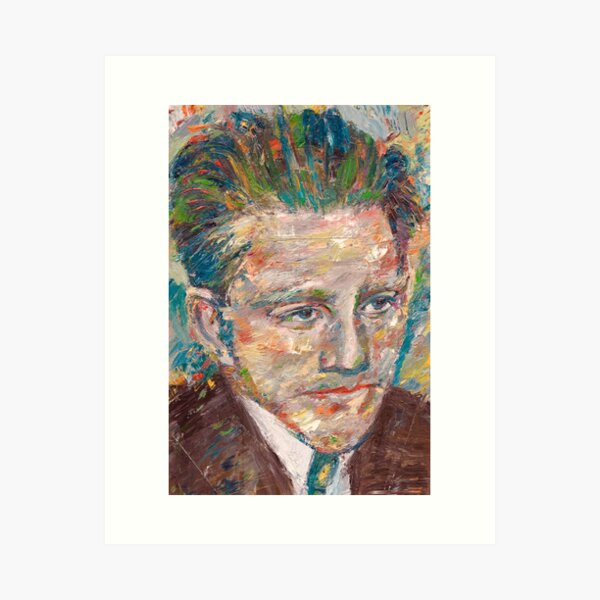
Werner Heisenberg
 Germany
theoretical physicist•mountaineer•non-fiction writer
Birthday
December 5, 1901
Birth Sign
Sagittarius
Birthplace
Würzburg, Germany
Age
Died at 74
About
Werner Heisenberg was a German theoretical physicist and one of the principal architects of quantum mechanics, the revolutionary theory that reshaped humanity's understanding of the subatomic realm. As a young man, he made foundational breakthroughs that established an entirely new framework for physics, and he received the Nobel Prize in Physics in 1932 for his creation of quantum mechanics. Heisenberg is most famous for the uncertainty principle, the profound insight that there are fundamental limits to how precisely certain pairs of physical properties, such as a particle's position and momentum, can be known simultaneously. This idea overturned classical assumptions about determinism and measurement and became one of the most important and widely discussed concepts in all of science. He also contributed to matrix mechanics and theories of the atomic nucleus and other phenomena. His legacy is complicated by his role during the Second World War, when he led aspects of Nazi Germany's nuclear research program. The extent of his commitment to building a bomb, and whether he deliberately slowed the effort, has remained a subject of historical debate ever since. A brilliant but contested figure, he shaped physics while navigating a fraught moral and political landscape. Werner Heisenberg is remembered as one of the architects of quantum theory.
Early Life & Background
Werner Karl Heisenberg was born on December 5, 1901, in Würzburg, Germany, into a family of the German educated middle class. His father, Dr. August Heisenberg, was a professor of Middle and Modern Greek languages at the University of Munich. Heisenberg attended the Maximiliansgymnasium in Munich, where his academic excellence in mathematics and physics became apparent. He briefly considered becoming a mathematician but was drawn to physics after reading Arnold Sommerfeld's works. In 1920, he enrolled at the University of Munich, studying under Sommerfeld. During his undergraduate years, he also became an accomplished mountaineer and pianist. He earned his doctorate in 1923 with a thesis on turbulence, a topic that combined his interests in fluid dynamics and mathematics. Shortly after, he became an assistant to Max Born at the University of Göttingen, where he began his deep dive into quantum theory. The year 1924 saw him travel to Copenhagen to work with Niels Bohr, an experience that profoundly shaped his approach to atomic physics.
Career Growth
Heisenberg's breakthrough came in 1925 when he published his Umdeutung reinterpretation paper, which founded matrix mechanics, the first complete formulation of quantum mechanics. This work, developed with Max Born and Pascual Jordan, replaced the older quantum theory with a rigorous mathematical framework. In 1927, while at the University of Leipzig, he formulated the uncertainty principle, a cornerstone of quantum theory that states the impossibility of simultaneously knowing certain pairs of physical properties with arbitrary precision. For these achievements, he was awarded the Nobel Prize in Physics in 1932. In 1933, he received the Max Planck Medal. During the Second World War, he was appointed head of the German nuclear program (Uranverein) in 1939, a role that has generated extensive historical debate. After the war, he became director of the Kaiser Wilhelm Institute for Physics in Göttingen in 1946, which was renamed the Max Planck Institute for Physics. In 1957, he signed the Göttingen Manifesto, opposing the nuclear armament of West Germany. He oversaw the institute's move to Munich in 1958 and remained its director until his retirement. He continued active research into unified field theory and the nature of elementary particles.
Career Timeline
Public Image & Style
Werner Heisenberg's public persona was that of a reserved, intellectual giant, a quintessential German professor with a slender build, often photographed in dark suits and wire-rimmed glasses. His aesthetic was scholarly and understated, reflecting his focus on theoretical physics. Media portrayed him as the enigmatic father of quantum uncertainty, a figure both celebrated and controversial due to his role in Nazi-era science. Fans and historians regard him with a mix of admiration for his scientific brilliance and scrutiny of his wartime actions. He has no formal fandom name, but his legacy inspires intense debate in physics and history circles. His social media presence is purely institutional, managed by the Max Planck Society, with a tone of academic reverence.
Fame & Fandom (iFAMOUS Rankings)
Werner Heisenberg stands as the 95th most famous person in Germany, a position noted in recent cycles, and holds the 73rd spot among figures in Books & Literature. These placements within the iFANN Global Fame Rankings reflect a legacy that has endured for decades without fading into obscurity. While his fame is anchored in the hard facts of physics, the rankings track how his story continues to resonate across global media coverage and consumption signals worldwide. The data shows he slipped slightly from the 94th rank in his country and moved down from the 69th in his industry since the last update.
Unlike modern celebrities, Heisenberg never cultivated a fanbase with organized groups, rituals, or official names. There are no fan clubs, no birthday campaigns, and no community-driven movements dedicated to his memory. His audience consists entirely of historians, physicists, students, and readers drawn to his scientific contributions and the moral complexities of his life during World War II. The absence of a formal fandom name is not an oversight but a reflection of his reality; he was a scholar who worked in quiet laboratories rather than on stages designed for adoration.
Interesting Facts and Legends
Heisenberg was an accomplished pianist who frequently performed chamber music with colleagues and maintained a lifelong passion for mountaineering in both the Alps and the Himalayas. A student of philosophy, he often engaged deeply with the works of Plato and Kant, while his youth included membership in the German Scout Association. During the war, his Nobel Prize medal was melted down to prevent confiscation by occupying forces, only to be recast later. Notably, he never used the term uncertainty principle himself, preferring the original phrasing of indeterminacy principle.
The cultural mythology surrounding him includes the widely retold story of his development of the uncertainty principle in 1927 while working in Copenhagen and Göttingen, a moment that fundamentally altered our understanding of subatomic particles. Another iconic image is the 1927 Solvay Conference photograph, often called the most intelligent photo ever taken, featuring Heisenberg alongside giants like Einstein and Bohr. Perhaps the most debated narrative involves his leadership of the German nuclear program, where the legend persists that he may have intentionally sabotaged the atomic bomb project, a story cemented by Michael Frayn's play Copenhagen which dramatizes a secret 1941 meeting between Heisenberg and Niels Bohr.
Notable Quotes
“What we observe is not nature itself, but nature exposed to our method of questioning.”
“The first gulp from the glass of natural sciences will turn you into an atheist, but at the bottom of the glass God is waiting for you.”
“Not only is the Universe stranger than we imagine, it is stranger than we can imagine.”
“An expert is someone who knows some of the worst mistakes that can be made in a very narrow field.”
“The solution of the difficulty is that the two mental pictures which experiment lead us to form, the one of the particles, the other of the waves, are both incomplete and have only the validity of analogies which are accurate only in limiting cases.”
Family & Personal Life
Werner Heisenberg was the son of Dr. August Heisenberg, a professor of Byzantine philology, and Annie Wecklein. He had one brother, Erwin, who became a chemist. Heisenberg married Elisabeth Schumacher in 1937. The couple had several children, including Maria, Anna, and Jochen, though their names are not widely publicized. The family lived primarily in Munich and Leipzig. Heisenberg was known to be a devoted father, often taking his children on hiking trips and teaching them to play the piano. Elisabeth Heisenberg later wrote a memoir about their life together.
Notable Connections
Heisenberg collaborated closely with Niels Bohr, Max Born, and Wolfgang Pauli in the development of quantum mechanics. His work was deeply influenced by the Bohr model of the atom and Born's statistical interpretation. He also corresponded with Albert Einstein, though they disagreed on the completeness of quantum theory. Heisenberg mentored several younger physicists, including Carl Friedrich von Weizsäcker.
Relationships & Dating History
Werner Heisenberg married Elisabeth Schumacher in 1937. The couple met through mutual friends in Leipzig and shared interests in music and the outdoors. Their marriage lasted until Heisenberg's death in 1976. Elisabeth was a supportive partner, managing the household and raising their children while Heisenberg pursued his scientific career. She later wrote a memoir, The Inner Exile, about their life under the Nazi regime. As of 2026, Elisabeth Heisenberg is deceased; she passed away in 1998. No other public relationships are documented.
- MarriedElisabeth Heisenberg1937 - 1976Met through mutual friends in Leipzig; married until his death.
Death & Aftermath
Died
February 1, 1976 (aged 74)
Death Place
Unknown
Cause of Death
Unknown
Net Worth (Estate Value)
$2 Million
iFANN Editorial Team estimate
Updated for 2026, iFANN currently estimates Werner Heisenberg's estate at $2 Million. This figure represents the value of assets held following his passing, derived primarily from his academic salary, Nobel Prize winnings, and book royalties accumulated during his lifetime. After his death in 1976, the estate has generated modest revenue through the continued sale of his scientific writings and biographies. The rights to his works remain managed by the Heisenberg family and the Max Planck Society. No major catalog sales or licensing deals have been reported in recent years. The estate's financial trajectory remains stable but modest, reflecting the academic rather than commercial nature of his enduring legacy.
Awards Won (2)
Heisenberg won the Nobel Prize in Physics in 1932 for his creation of quantum mechanics, and the Max Planck Medal in 1933. These two awards represent the highest honors in theoretical physics.
1932 · Physics
Creation of quantum mechanics
1933 · Theoretical Physics
Contributions to quantum theory
Known For
Uncertainty Principle
1927 · Formulator
Matrix Mechanics
1925 · Co-founder
Quantum Mechanics
1932 · Nobel Prize for creation
Keywords
Sources
Quick Facts
- Profession
- theoretical physicist, mountaineer, non-fiction writer
- Born
- December 5, 1901
- Birthplace
- Würzburg, Germany
- Died
- February 1, 1976
- Death Place
- Munich, Germany
- Gender
- Male
- Spouse
- Elisabeth Heisenberg
- Birth Sign
- Sagittarius
Personal Details
- Full Name
- Werner Karl Heisenberg
- Spouse
- Elisabeth Heisenberg
- Children
- Several (names not widely publicized)
- Education
- University of Munich (PhD, 1923)
Frequently Asked Questions
What is Werner Heisenberg most famous for?
What did Werner Heisenberg win the Nobel Prize for?
What was Werner Heisenberg's role in World War II?
What is the uncertainty principle?
Where was Werner Heisenberg born?
Similar People
Join the community
fans discussing