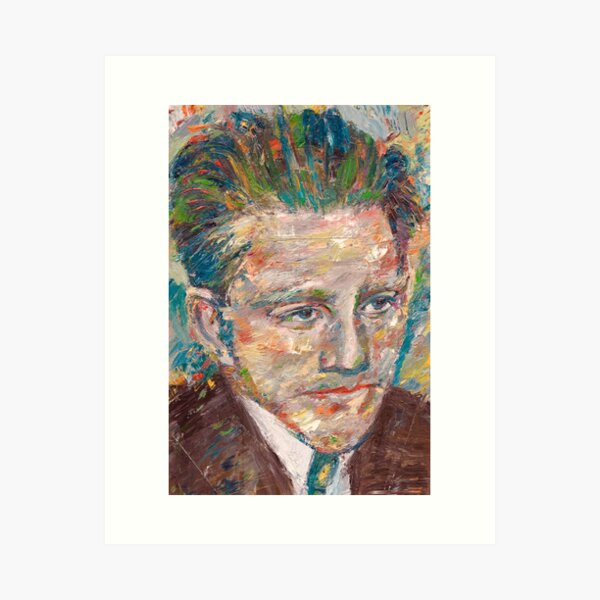
Werner Heisenberg
Awards & Honours
2
Awards Won
4
Honours
2
Rankings
2
Covers
2
Records
Heisenberg's greatest accolade is the Nobel Prize in Physics, awarded in 1932 for his foundational role in creating quantum mechanics. He also received the Max Planck Medal, the highest honor of the German Physical Society. His uncertainty principle is widely regarded as one of the most profound insights in the history of science, and his work on matrix mechanics established the mathematical structure of quantum theory. He was elected to numerous academies, including the Royal Society and the American Academy of Arts and Sciences.
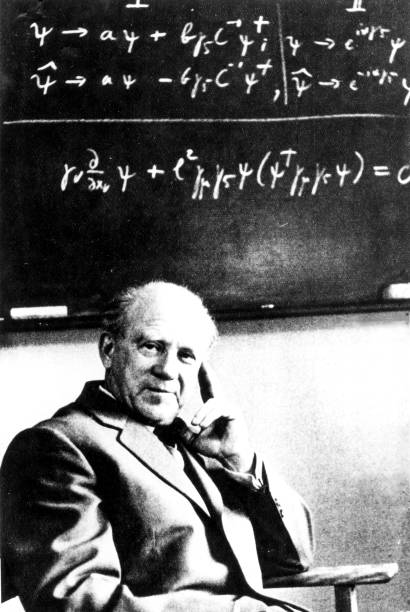
Awards
Honours & Distinctions
Nobel Prize in Physics
Awarded for the creation of quantum mechanics.
Max Planck Medal
Highest honor of the society for theoretical physics.
Foreign Member of the Royal Society
Elected as a foreign member for his contributions to physics.
Pour le Mérite for Sciences and Arts
Order of merit for civil achievements.
Rankings & Lists
Greatest Physicists of All Time
Top 10 Most Important Scientists of the 20th Century
Magazine Covers
Time
July 13, 1959
The Uncertainty Principle: Werner Heisenberg
Der Spiegel
February 9, 1976
Werner Heisenberg: Der Vater der Quantenmechanik
Records & Feats
Youngest Nobel Laureate in Physics at the time
Heisenberg was 31 years old when he won the Nobel Prize in Physics in 1932, making him one of the youngest recipients in the category's history.
First to formulate matrix mechanics
In 1925, Heisenberg published the Umdeutung paper, which laid the foundation for matrix mechanics, the first complete formulation of quantum mechanics.