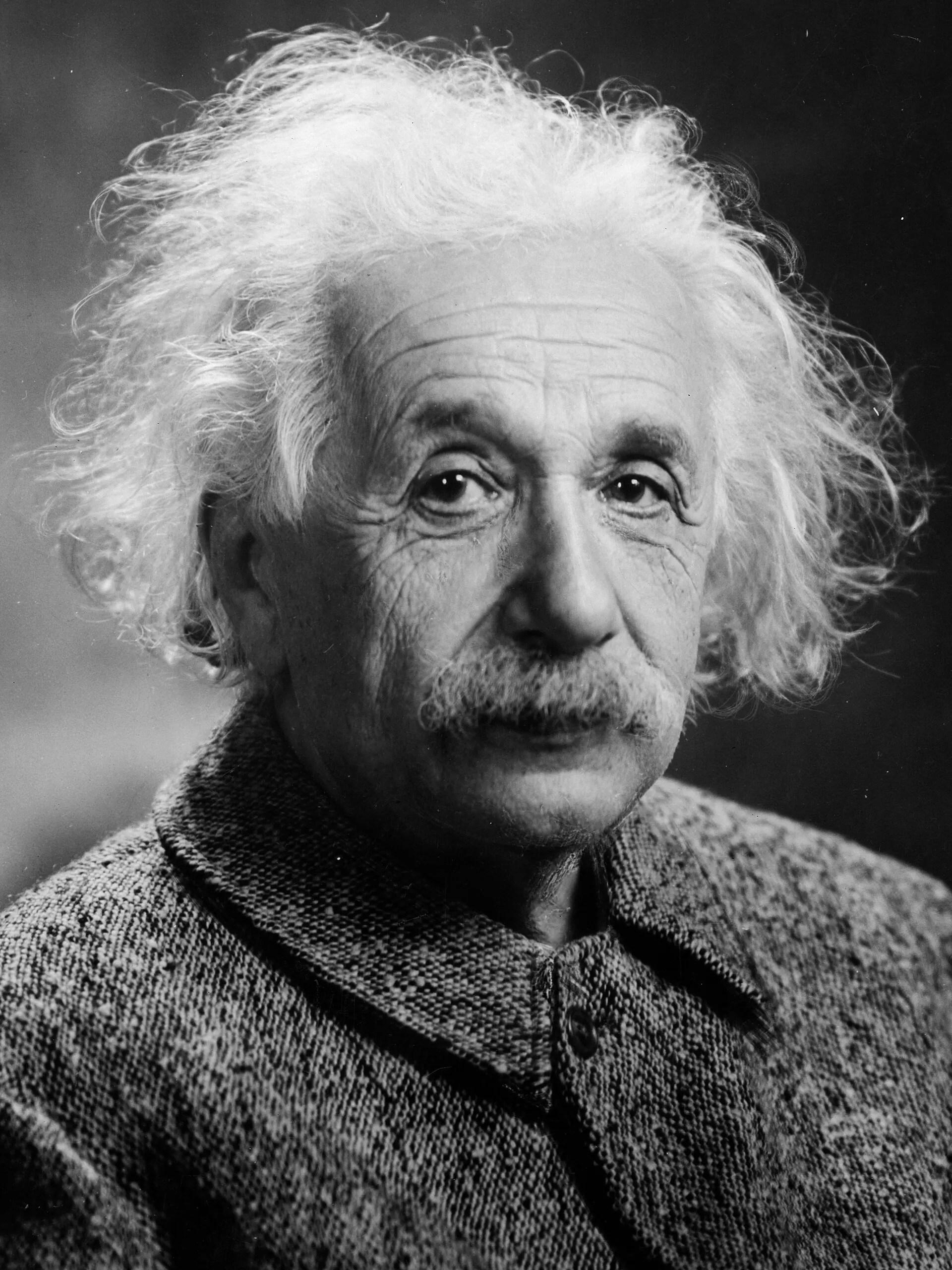
Albert Einstein
 Germany
Theoretical physicist•philosopher of science
Birthday
March 14, 1879
Birth Sign
Pisces
Birthplace
Ulm, Kingdom of Württemberg, German Empire
Age
Died at 76
Height
5 ft 9 in (175 cm)
About
Albert Einstein was a German-born theoretical physicist who reshaped humanity's understanding of space, time, and energy. His mass-energy equivalence formula E=mc² is the most famous equation in the world. He won the 1921 Nobel Prize in Physics for his explanation of the photoelectric effect. Einstein's theories of relativity transformed physics, and his work on quantum theory laid foundations for modern technology. Today, his name is synonymous with genius. His iconic image — wild white hair, mustache, and gentle eyes — appears everywhere, from textbooks to T-shirts. The Hebrew University of Jerusalem manages his estate, which includes rights to his image and unpublished writings.
Early Life & Background
Einstein was born in Ulm, Germany, in 1879. As a child, he was fascinated by a compass his father gave him, sparking a lifelong curiosity about invisible forces. He taught himself Euclidean geometry at age 12. He disliked the rigid German school system and left school at 16. In 1895, he moved to Switzerland, renouncing his German citizenship. He enrolled at the Swiss Federal Polytechnic School in Zurich, graduating in 1900. After struggling to find a teaching job, he took a position as a patent examiner at the Swiss Patent Office in Bern in 1902. This steady job gave him time to think. In 1905, he submitted his PhD dissertation to the University of Zurich and published four revolutionary papers — his "miracle year."
Career Growth
Einstein's 1905 papers introduced the photoelectric effect, Brownian motion, special relativity, and E=mc². In 1915, he completed the General Theory of Relativity, which described gravity as the curvature of spacetime. The theory was confirmed during a solar eclipse in 1919, making him an overnight global celebrity. He received the Nobel Prize in 1922 (for 1921). In 1933, he fled Nazi Germany and joined the Institute for Advanced Study in Princeton. In 1939, he co-signed a letter to President Roosevelt warning about German nuclear research, which helped initiate the Manhattan Project. He spent his later years working on a unified field theory.
Career Timeline
Public Image & Style
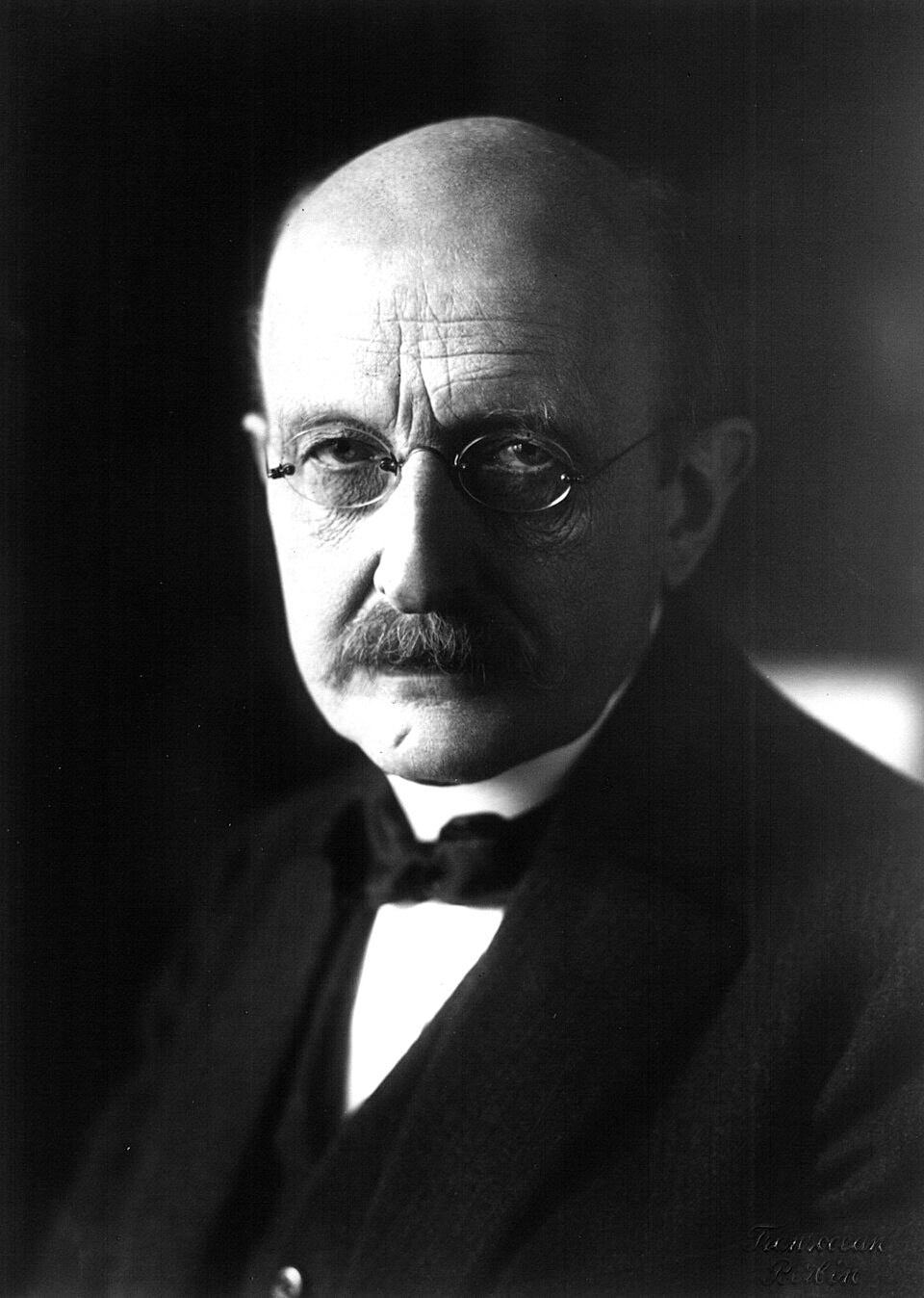
Einstein is the universal symbol of genius. His white hair, mustache, and penetrating eyes are instantly recognizable. Media portray him as the kindly, absent-minded professor — a compassionate humanitarian and revolutionary thinker. He is frequently quoted and parodied. Science enthusiasts celebrate his legacy on Einstein Day (March 14). His official social media accounts post quotes and historical photos, maintaining an air of intellectual curiosity. His image remains one of the most licensed in history, appearing on everything from posters to coffee mugs.
Fame & Fandom (iFAMOUS Rankings)
Albert Einstein remains a figure of enduring global attention, his legacy measured not by fleeting trends but by centuries of sustained reverence. The iFANN Global Fame Rankings confirm his standing as the 25th most famous person in the world, a position holding steady from the previous cycle. Within his homeland, he is recognized as the 5th most famous person in Germany and stands as the 2nd most famous person from Germany. His influence extends across the continent where he ranks as the 12th most famous person in Europe, while within the specific domain of Books & Literature, he is cited as the 2nd most famous person in Books & Literature. These placements reflect a scale of recognition that tracks global attention across media coverage, search, and consumption signals worldwide. Regarding his audience, no formal fandom name exists for Albert Einstein. He does not possess an organized collective of admirers who engage in coordinated campaigns or attend conventions in the manner of modern entertainers. His legacy is sustained by institutional reverence rather than grassroots movements; scholars, students, and the general public honor his scientific contributions through educational initiatives like the Albert Einstein Distinguished Educator Fellows program. While an Instagram account serves as a historical archive, it functions without active fan interaction. The concept of fans in this context refers to those who revere his humanitarian values and theoretical work, yet they do not operate as a unified subculture with rituals or inside jokes.
Interesting Facts and Legends
Albert Einstein did not fail mathematics as a child, a persistent myth; he was actually a late talker who did not speak fluently until age nine. He had a daughter named Lieserl born before his marriage, though her ultimate fate remains unknown. In 1952, he was offered the presidency of Israel but declined the honor. Following his death, his brain was removed during an autopsy and preserved for decades, sparking ongoing study into its cellular structure. Despite being an avid sailor, he never learned to swim. A lover of classical music, he played the violin and held Mozart in high regard. His appearance was famously disheveled, and he rarely wore socks. The exact content of his final words is lost because the attending nurse did not speak German. Cultural lore often cites the 1919 solar eclipse observations by Arthur Eddington as the moment his theory of relativity transformed him from a relative obscurity into a global icon. Another story from his life involves his work as a refugee who used his influence to assist others fleeing Nazi Germany, cementing his reputation as a humanitarian figure alongside his scientific achievements.
Notable Quotes
“God does not play dice with the universe.”
“Imagination is more important than knowledge.”
“The important thing is not to stop questioning.”
“Try not to become a man of success, but rather try to become a man of value.”
“Two things are infinite: the universe and human stupidity; and I'm not sure about the universe.”
Family & Personal Life
Einstein's father, Hermann Einstein, was a salesman and engineer. His mother, Pauline Koch, was a homemaker. He had one younger sister, Maria "Maja" Einstein. The family was non-observant Ashkenazi Jews. Einstein married Mileva Marić in 1903; they had three children: Lieserl (died in infancy), Hans Albert, and Eduard. The couple divorced in 1919. That same year, he married his first cousin, Elsa Einstein, who managed his household and public life until her death in 1936. He was stepfather to Elsa's daughters, Ilse and Margot.
Notable Connections
Einstein collaborated with many notable figures. His first wife, Mileva Marić, was a fellow physicist who contributed to his early work. Max Planck was a mentor in Berlin. Hermann Minkowski mathematically formalized special relativity. Satyendra Nath Bose co-developed Bose-Einstein statistics. Niels Bohr was a frequent intellectual rival on quantum mechanics. Leó Szilárd co-authored the letter to President Roosevelt. Kurt Gödel was a friend and colleague at the Institute for Advanced Study.
Relationships & Dating History
Einstein's first serious relationship was with Mileva Marić, a fellow physics student at the Polytechnic in Zurich. They married in 1903 and had three children together, though their daughter Lieserl died in infancy. The marriage deteriorated due to Einstein's fame and his affair with his cousin Elsa. They divorced in 1919. Later that year, Einstein married Elsa Einstein, his first cousin. She managed his household and public life until her death in 1936. During his marriage to Elsa, Einstein had a short affair with Betty Neumann, the niece of a friend, around 1923–1924. In the 1930s and 1940s, he was romantically linked to Margarita Konenkova, the wife of a Russian sculptor and possible Soviet spy. As of his death in 1955, Einstein was widowed.
- MarriedMileva Marić1903 - 1919Fellow physics student; had three children together; divorced due to his affair with Elsa.
- MarriedElsa Einstein1919 - 1936First cousin; managed his household and public life; died in 1936.
- DatedBetty Neumann1923 - 1924Affair with the niece of a friend; ended to preserve his marriage.
- RumouredMargarita Konenkova1935 - 1945Wife of a Russian sculptor; possible Soviet spy; letters suggest a romantic relationship.
Death & Aftermath
Died
April 18, 1955 (aged 76)
Death Place
Princeton, New Jersey
Cause of Death
Ruptured abdominal aortic aneurysm
On the evening of April 17, 1955, Albert Einstein experienced severe abdominal pain while working on a speech for the dedication of the Yad Vashem memorial in Israel. He collapsed and was transported to Princeton Hospital in Princeton, New Jersey, where he remained until his death the following day at the age of seventy-six. The official cause of death was an abdominal aortic aortic aneurysm that ruptured into the peritoneal cavity, a finding documented by pathologist Dr. Thomas Harvey after an unsuccessful surgical attempt to repair the vessel. Harvey sparked decades of ethical debate regarding scientific specimens. Public reaction to the physicist's passing was immediate and global, with President Dwight D.
Eisenhower issuing a statement praising him as one of the greatest minds of all time and the United Nations declaring a moment of silence. Tributes poured in from the Institute for Advanced Study and the Nobel Prize committee, while thousands gathered for a memorial service at the Hebrew University of Jerusalem. A private funeral took place on April 19, 1955, at Princeton Cemetery attended only by close family and colleagues, featuring no religious ceremonies or public performances. Following the burial, Einstein's body was cremated, and his ashes were scattered in an undisclosed location by his son Hans Albert to prevent the site from becoming a shrine.
Posthumously, Einstein received numerous honors including induction into various halls of fame and the establishment of the Albert Einstein World Award of Science. His estate, managed by his daughter Margot before being transferred to the Hebrew University of Jerusalem, continues to generate revenue through licensing and publications, ensuring his intellectual property remains accessible to scholars worldwide. Recent media coverage has revisited the unique physical structure of his brain, keeping discussions of his legacy active well into the twenty-first century.
Net Worth (Estate Value)
$150 Million
iFANN Editorial Team estimate
Going by 2026 estimates, the Albert Einstein Estate is valued at $150 million according to iFANN editorial analysis. The estate is managed by the Hebrew University of Jerusalem, which Einstein designated as his beneficiary. Revenue streams include royalties from books and scientific publications, licensing agreements for his name and likeness, and merchandise sales. Notable partnerships have included the Baby Einstein brand. Income is also generated through the ongoing publication of the Collected Papers of Albert Einstein. The estate retains rights to his unpublished writings and correspondence, which are periodically released to the public.
Awards Won (5)
Einstein won the Nobel Prize in Physics in 1921 for his discovery of the law of the photoelectric effect. He received the Copley Medal from the Royal Society in 1925, the Max Planck Medal in 1929, the Franklin Medal in 1935, and the James Madison Medal from Princeton University in 1947.
1921 · Physics
Photoelectric effect
1925 · Science
Contributions to physics
Known For
Theory of Relativity
1915 · Creator
Photoelectric Effect
1905 · Discoverer
E=mc²
1905 · Formulator
Keywords
Quick Facts
- Profession
- Theoretical physicist, philosopher of science
- Born
- March 14, 1879
- Birthplace
- Ulm, Kingdom of Württemberg, German Empire
- Died
- April 18, 1955
- Death Place
- Princeton, New Jersey, USA
- Gender
- Male
- Spouse
- Mileva Marić, Elsa Einstein
- Birth Sign
- Pisces
- Height
- 5 ft 9 in (175 cm)
- Children
- Lieserl Einstein, Hans Albert Einstein, Eduard Einstein
- Education
- Swiss Federal Polytechnic School in Zurich (diploma, 1900); University of Zurich (PhD, 1905)
Personal Details
- Full Name
- Albert Einstein
- Height
- 5 ft 9 in (175 cm)
- Spouse
- Mileva Marić, Elsa Einstein
- Children
- Lieserl Einstein, Hans Albert Einstein, Eduard Einstein
- Education
- Swiss Federal Polytechnic School in Zurich (diploma, 1900); University of Zurich (PhD, 1905)
Frequently Asked Questions
What was Albert Einstein's IQ?
Did Albert Einstein invent the atomic bomb?
What is Albert Einstein's most famous equation?
Was Albert Einstein a vegetarian?
Where did Albert Einstein die?
Social Media
Join the community
fans discussing