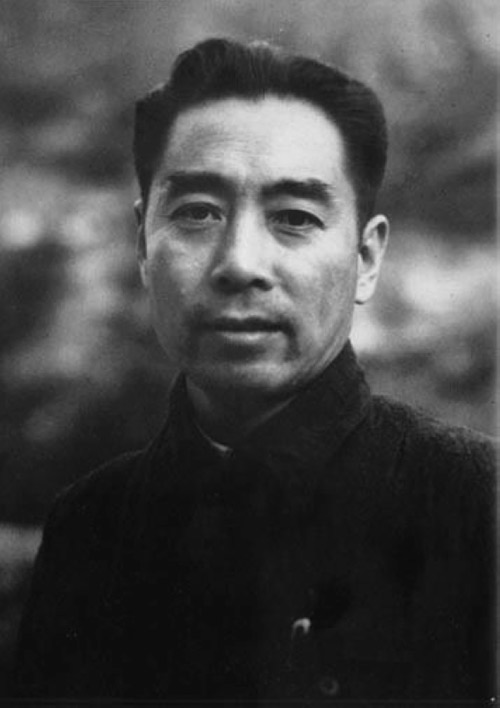
Zhou Enlai
 China
Chinaminister•foreign minister•politician
Birthday
+1898-03-05
Birth Sign
Pisces
Birthplace
Huai'an District
Age
Died at 77
About
Born on March 5, 1898, in Huai'an District, Zhou Enlai was a towering figure in 20th-century Chinese politics. He served as the first Premier of the People's Republic of China from its inception in October 1949 until his passing on January 8, 1976. A key leader within the Chinese Communist Party from its early days, Zhou’s influence, while often overshadowed by Mao Zedong, was instrumental in shaping the nation. His career trajectory saw him rise through the ranks, eventually becoming the PRC's Foreign Minister from 1949 to 1958. In this role, Zhou was a principal architect of China's foreign policy, advocating for peaceful coexistence and engaging with the West. He played a significant role in major international events like the 1954 Geneva Conference and the 1955 Bandung Conference. A defining moment of his diplomatic efforts was orchestrating President Richard Nixon's historic visit to China in 1972, a move that profoundly altered global politics. He skillfully navigated complex relationships with superpowers like the United States and the Soviet Union. As Premier, Zhou Enlai became the backbone of the Chinese government and economy, particularly during the tumultuous years of the Cultural Revolution. While always showing deference to Mao, he worked to lessen the severity of political purges and protect individuals from persecution. Some have suggested that without Zhou's moderating influence, the Cultural Revolution might have been even more destructive. As Mao's health waned, Zhou was designated as Mao's successor in 1973, though he continued to face opposition from factions like the Gang of Four. His public life drew to a close in early 1975 as he began medical treatment, passing away just a year later. The immense public outpouring of grief following his death was a clear signal of the shifting political winds and contributed to the eventual end of the Cultural Revolution.
Fame & Fandom
The first Premier of the People's Republic of China, Zhou Enlai, remains a towering figure in global history despite his passing in 1976. His enduring influence places him as the 33rd most famous person in China, a position that slipped from 31st last cycle but still anchors his legacy within the nation's collective memory. He is also recognized globally as the 26th most famous person from China, holding steady in this ranking while reflecting a consistent international recognition of his diplomatic stature. These placements emerge from the iFANN Global Fame Rankings, which track attention across media coverage and consumption signals worldwide, ensuring that figures like Zhou remain visible long after their active careers end.
Unlike modern pop stars, Zhou does not command a formal fandom with specific names or organized rituals. There are no fan clubs, streaming campaigns, or birthday billboards dedicated to him; his reverence comes through state-sanctioned commemoration and academic study rather than the fervor of a celebrity following. Yet his legend persists through verified historical moments that function as cultural mythology. The Bandung Conference of 1955 stands out as a defining charm offensive where he successfully established an independent foreign policy outside the Soviet sphere. Stories of his wit endure, particularly the anecdote where he told Henry Kissinger it was too early to judge the impact of the French Revolution. His death sparked massive public mourning that evolved into significant political protest, cementing his status as a unifying symbol in Chinese history.
Interesting Facts and Legends
Zhou Enlai served as the first Premier of the People's Republic of China from its inception in October 1949 until his passing on January 8, 1976. A widely retold anecdote from 1972 illustrates his strategic wisdom during a conversation with Henry Kissinger regarding the French Revolution, where Zhou allegedly replied that it was "too early to judge" the event's full impact. Another legendary moment occurred at the Bandung Conference in 1955, where Zhou executed a successful charm offensive to establish China's independent foreign policy outside the Soviet sphere. Historical accounts also preserve stories of his nuanced relationship with the Dalai Lama prior to the exile, highlighting a sympathetic dialogue facilitated by Nehru. Biographical reviews emphasize that Zhou was not merely an executor of Mao Zedong's will but an independent actor who challenged Mao during critical junctures like the Long March. His death marked the end of an era, triggering massive public mourning that later fueled the Tiananmen Incident protests against the Cultural Revolution.
Death & Aftermath
Died
+1976-01-08 (aged 77)
Death Place
Beijing, China
Cause of Death
Bladder cancer with metastasis
Millions of citizens gathered spontaneously in Tiananmen Square and other public spaces to pay their respects, leaving wreaths, flowers, and poems that would later fuel the April Fifth Movement. The announcement of Zhou Enlai's death on January 9, 1976, triggered an unprecedented outpouring of grief across China, marking a moment where official tributes from the Central Committee merged with raw public emotion. This mourning period began with a nationwide minute of silence observed on January 10, reflecting the deep personal connection the populace felt toward the leader who had served since the nation's inception.
Zhou Enlai passed away at 09:57 AM on January 8, 1976, at Beijing Hospital after a prolonged battle with bladder cancer that had metastasized to his lungs and liver. His final months were spent bedridden following a severe stroke in December 1974, which left him partially paralyzed and unable to speak clearly for extended periods. Although he delayed extensive treatment due to political pressures and his own insistence on continuing work, the medical records confirmed the diagnosis established in 1972 as the definitive cause of his decline. The state funeral held on January 11, 1976, featured traditional Chinese elements alongside communist symbolism, drawing thousands of officials and dignitaries including Mao Zedong, who delivered the eulogy.
Following the ceremony, Zhou was cremated in accordance with his wishes, and his ashes were scattered over the Yangtze River, the Yellow River, his hometown of Huai'an, and the sea near Shanghai. Decades later, institutions like the Zhou Enlai Foundation continue to promote his ideals, while new works such as the 2025 biography Zhou Enlai: A Life by Chen Jian draw on archival records to preserve his legacy.
Awards & Accolades
Keywords
Quick Facts
- Profession
- minister, foreign minister, politician
- Born
- +1898-03-05
- Birthplace
- Huai'an District
- Died
- +1976-01-08
- Death Place
- Beijing
- Gender
- Male
- Spouse
- Deng Yingchao
- Birth Sign
- Pisces
Personal Details
- Spouse
- Deng Yingchao
Join the community
fans discussing