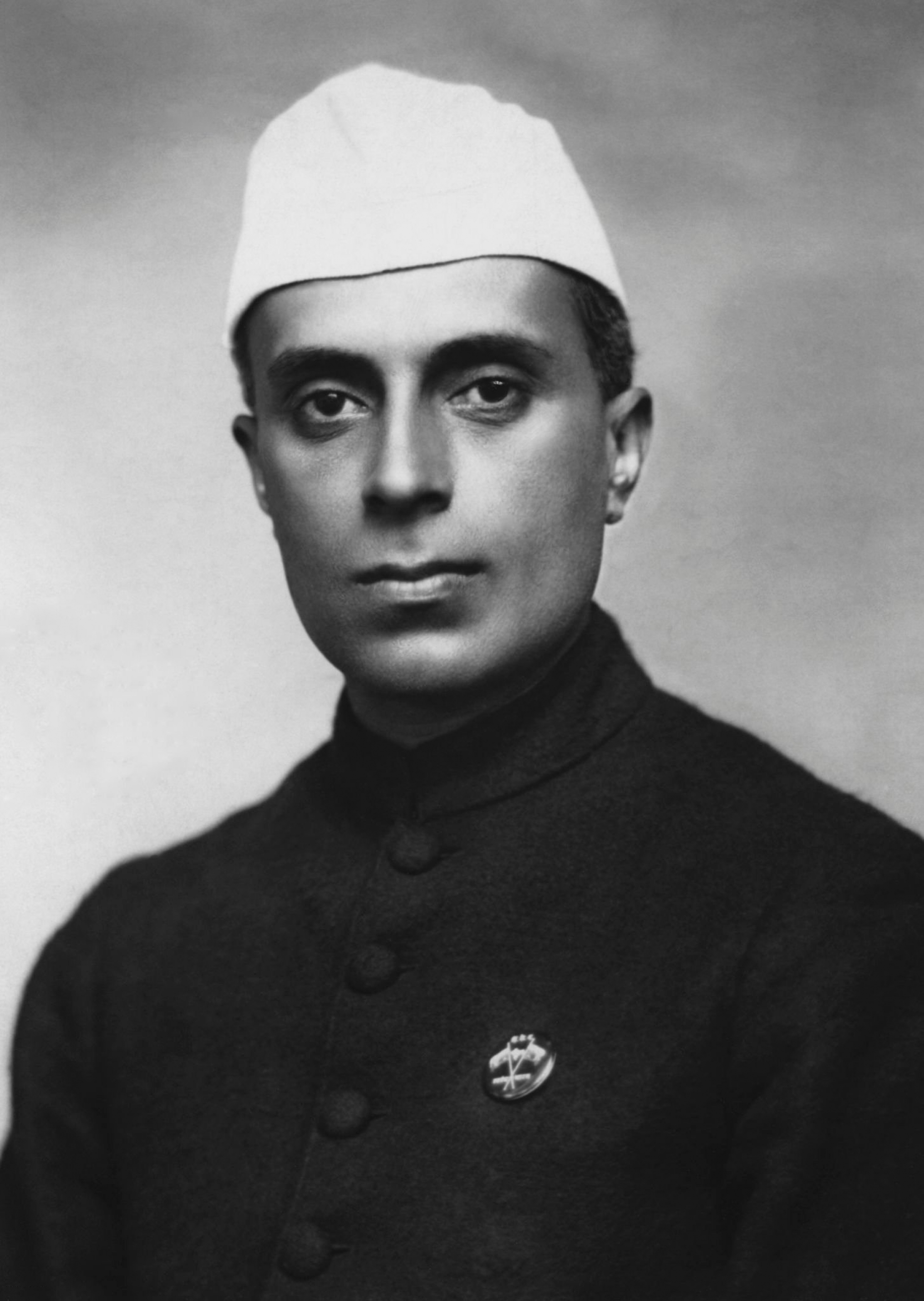
Jawaharlal Nehru
 India
Indiawriter•politician•autobiographer
Birthday
+1889-11-14
Birth Sign
Scorpio
Birthplace
Prayagraj
Age
Died at 74
About
Born in Prayagraj in 1889, Jawaharlal Nehru was a towering figure in India's journey to independence and its early years as a nation. He was a writer, a politician, and an autobiographer, deeply involved in the anti-colonial movement that shaped modern India. Nehru spent his formative years educated in England, attending Harrow School and Trinity College, Cambridge, before training as a barrister. Upon his return to India, his legal career soon gave way to a fervent dedication to national politics. He became a central leader in the Indian National Congress, eventually earning the designation of political heir from Mahatma Gandhi. By 1929, as president of the Congress, Nehru was advocating for complete independence from British rule.
Fame & Fandom
Jawaharlal Nehru remains a colossal presence in global consciousness, anchored by his role as India's first Prime Minister and architect of its modern state. His enduring relevance is quantified by his placement as the 21st most famous person in India, holding steady from the previous cycle, alongside being recognized as the 27th most famous person from India and the 10th most famous person in South Asia, both also holding steady. These placements within the iFANN Global Fame Rankings reflect a legacy that transcends mere historical record, capturing sustained attention across media, education, and political discourse worldwide. Unlike pop stars with organized fan clubs, Nehru does not have a formal fandom name; engagement with his memory flows through state institutions, educational curricula, and the Indian National Congress rather than grassroots campaigns or viral social movements. There are no fan-funded projects or birthday rallies, yet his influence persists through annual recitations of his "Tryst with Destiny" speech and the operation of institutions bearing his name. While digital spaces occasionally churn out misinformation, such as AI-generated images debunked by fact-checkers, the core narrative remains one of reverence for a statesman who shaped a nation. The absence of a specific collective noun for his admirers underscores the distinction between celebrity worship and historical veneration. His legacy is maintained not by chart-topping hits but by the foundational pillars of democracy and science he erected, ensuring his story is retold to every new generation of Indians.
Interesting Facts and Legends
Born in Prayagraj in 1889, Nehru studied at Harrow School and Trinity College, Cambridge, before returning to India to trade his legal career for the fervor of the anti-colonial movement. He served as the political heir to Mahatma Gandhi and became the President of the Indian National Congress in 1929. A defining moment in his life occurred on August 15, 1947, when he delivered the "Tryst with Destiny" speech at the stroke of midnight, declaring India's awakening to freedom after centuries of darkness. This address remains the single most referenced event in Indian history, taught to children nationwide. Following his death from liver failure on May 27, 1964, while still in office, the nation entered a period of massive mourning, cementing his status as the "Father of Modern India." He established the IITs, atomic energy programs, and the planning commission, creating a scientific foundation for the country. Recent folklore includes viral AI-generated images depicting false scenarios, which were quickly debunked, highlighting how modern myths sometimes blur with historical truth. Political debates regarding his role during Partition and the 1962 war with China continue to shape contemporary discourse, proving his legacy remains a living, contested part of India's identity.
Death & Aftermath
Died
+1964-05-27 (aged 74)
Death Place
New Delhi, India
Cause of Death
Heart failure from complications of heart disease
At Teen Murti House in New Delhi, the first Prime Minister of independent India collapsed while working, his body failing under the weight of decades of chronic heart disease. Jawaharlal Nehru passed away on May 27, 1964, at the age of 75, with attending physicians confirming heart failure as the immediate cause following severe chest pain that morning. The nation descended into profound mourning as flags flew at half-mast across the country and millions lined the streets for a funeral procession that stretched through the capital. Heads of state from Britain, the United States, and the Soviet Union sent tributes, while Vice President Sarvepalli Radhakrishnan and Home Minister Govind Ballabh Pant joined thousands of mourners at Raj Ghat.
His daughter Indira Gandhi led the rites before his body was cremated on May 28, 1964, and his ashes were subsequently scattered in the Yamuna River. In the years following his death, educational institutions like Jawaharlal Nehru University emerged in his name, and the Jawaharlal Nehru Memorial Fund was established to support research and scholarship. His extensive writings and letters were archived at the National Archives of India and the Indira Gandhi Memorial Trust, ensuring his literary legacy remained accessible to the public.
Awards & Accolades
Keywords
Quick Facts
- Profession
- writer, politician, autobiographer
- Born
- +1889-11-14
- Birthplace
- Prayagraj
- Died
- +1964-05-27
- Death Place
- New Delhi
- Gender
- Male
- Spouse
- Kamala Nehru
- Birth Sign
- Scorpio
Personal Details
- Spouse
- Kamala Nehru
Join the community
fans discussing