
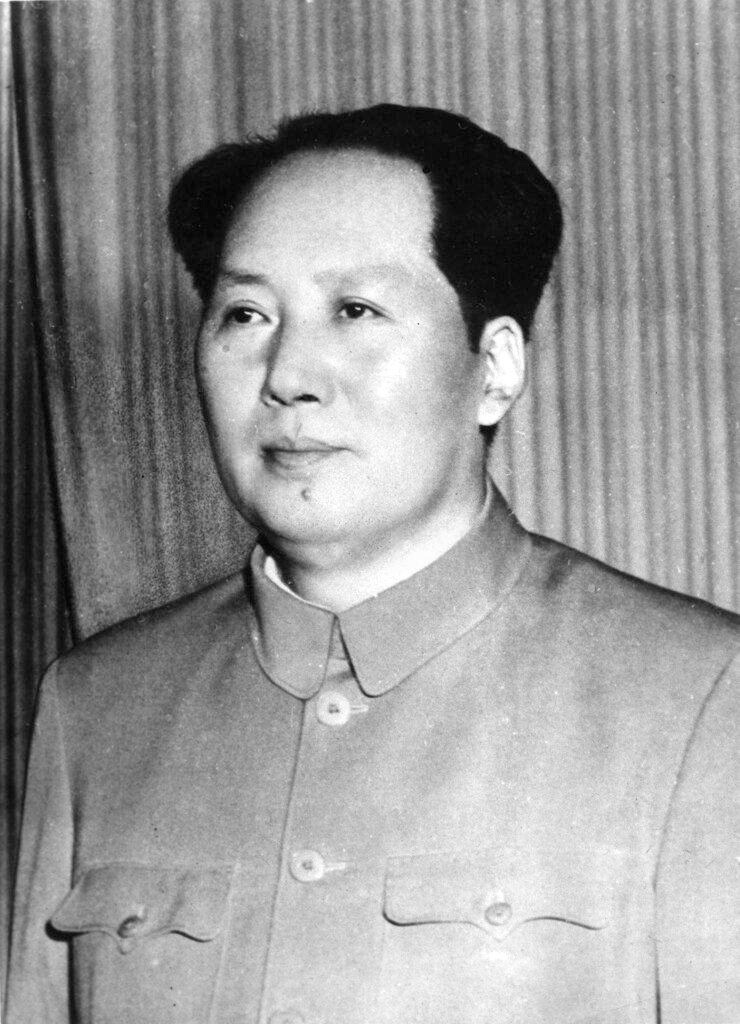
Mao Zedong
 China
ChinaAlso known as: Chairman Mao, Mao Tse-tung
Birthday
December 26, 1893
Birth Sign
Sagittarius
Birthplace
Shaoshan, Hunan, China
Age
Died at 82
About
Mao Zedong was a Chinese communist revolutionary, political theorist, and the founding father of the People's Republic of China. He led the country from its establishment in 1949 until his death in 1976, serving as Chairman of the Chinese Communist Party. His ideological framework, Maoism, adapted Marxism-Leninism to Chinese conditions and became a guiding force for communist movements worldwide.
Born into a peasant family in Shaoshan, Hunan, Mao studied in Changsha and was swept up by the 1911 Revolution and rising nationalist and anti-imperialist sentiments. While working as a librarian at Peking University, he encountered Marxist writings and later joined the May Fourth Movement in 1919. In 1921, he became a founding member of the CCP. During the Chinese Civil War, he helped build the Red Army and pioneered guerrilla warfare tactics. By 1935, Mao had risen to party leadership during the Long March, a harrowing retreat to Yan'an. After a temporary alliance with the Kuomintang against Japan, the civil war resumed, culminating in Mao's victory and the Nationalist retreat to Taiwan in 1949.
As leader, Mao launched sweeping land reforms and industrialization drives, suppressed political dissent, and intervened in the Korean War. The Hundred Flowers Campaign of 1956-57 briefly encouraged criticism, but was quickly crushed. From 1958 to 1962, the Great Leap Forward aimed to rapidly collectivize agriculture and industrialize, leading to the Great Chinese Famine that caused tens of millions of deaths. In 1966, Mao initiated the Cultural Revolution, a decade of violent class struggle, destruction of cultural relics, and intense personality cult. He died on September 9, 1976, at age 82. His legacy is deeply contested: critics point to totalitarian rule and massive human suffering, while supporters credit him with transforming China into a unified, nuclear-armed global power and advancing literacy, women's rights, and basic healthcare.
Early Life & Background
Mao Zedong was born on December 26, 1893, in the village of Shaoshanchong, Shaoshan, Hunan Province, during the final decades of the Qing dynasty. His father, Mao Yichang, was a relatively prosperous farmer and landowner, while his mother, Wen Qimei, was a devout Buddhist. Mao received a traditional Confucian education at a local primary school, memorizing the Four Books and Five Classics. In 1910, he left home to attend a modern primary school in Dongshan, where he was exposed to reformist ideas and the writings of梁启超 and Kang Youwei.
In 1911, Mao moved to Changsha, the provincial capital, to study at the Hunan First Normal School. There, he encountered the 1911 Revolution that overthrew the Qing dynasty, sparking his political awakening. He devoured newspapers and books on Western philosophy and politics, and began writing essays and poems. After graduating in 1918, he traveled to Beijing and secured a job as a library assistant at Peking University. Under the mentorship of Li Dazhao and Chen Duxiu, two pioneering Chinese Marxists, Mao immersed himself in communist literature and participated in the May Fourth Movement of 1919. By 1920, he had fully embraced Marxism-Leninism, and in 1921, he traveled to Shanghai to attend the founding congress of the Chinese Communist Party.
Career Growth
Mao's breakthrough came during the Long March (1934-1935), when he emerged as the de facto leader of the CCP after the Zunyi Conference. From his base in Yan'an, he developed the theory of "people's war" and mobilized peasants for guerrilla warfare against both the Japanese and the Nationalists. After Japan's defeat in 1945, the Chinese Civil War resumed, and Mao's Red Army decisively defeated Chiang Kai-shek's forces. On October 1, 1949, Mao proclaimed the founding of the People's Republic of China from Tiananmen.
In the 1950s, Mao oversaw land reform, the Korean War (1950-1953), and the first Five-Year Plan (1953-1957), which emphasized heavy industry and collectivization. The Hundred Flowers Campaign (1956-1957) briefly encouraged open criticism, but Mao soon cracked down in the Anti-Rightist Movement. The Great Leap Forward (1958-1962) aimed to surpass Western industrial output but led to widespread famine. In 1966, Mao launched the Cultural Revolution, purging rivals and mobilizing youth militias, the Red Guards, to enforce ideological purity. This decade of chaos ended only after Mao's death in 1976.
Career Timeline
Public Image & Style
Mao's public image was carefully crafted as a revolutionary savior and father figure. During the Cultural Revolution, his portrait was ubiquitous, and his Little Red Book of quotations became a mandatory accessory. The "Mao suit" became synonymous with Chinese communism. His persona was that of a humble, wise leader who ate simply and lived among the people. However, his image is deeply polarized: in the West, he is often viewed as a brutal dictator responsible for tens of millions of deaths, while in China, he is officially revered as a great leader who liberated the nation. The personality cult around him, with mass rallies and devotion, was unprecedented in scale. Since his death, his image has been used selectively by the CCP to legitimize political campaigns, though younger generations often view him with more skepticism.
Fame & Fandom (iFAMOUS Rankings)
Mao Zedong commands a unique form of global attention that transcends typical celebrity worship, rooted instead in ideological devotion and historical magnitude. While no formal fan club exists with a self-designated name like those for modern entertainers, his legacy sustains a passionate following among Maoists and leftist movements worldwide. In China, this devotion manifests through state-sanctioned pilgrimages to his mausoleum and the enduring reverence for his writings, while online communities occasionally spark intense debates over his image, as seen when prominent streamers recently invoked his name in political discourse. His influence remains a potent cultural force, bridging the gap between revolutionary history and contemporary political commentary. This enduring presence is quantified by his standing in the iFANN Global Fame Rankings, which track global attention across media coverage, search, and consumption signals worldwide. According to these rankings, he is the 204th most famous person in the world, holding steady from the previous cycle. He ranks as the 4th most famous person from China, maintaining his position from the prior period. Within East Asia, he stands as the 13th most famous person in East Asia, a placement also unchanged. Furthermore, his contributions to literature secure him the spot of the 11th most famous person in Books & Literature, consistent with earlier data.
Interesting Facts and Legends
Beyond his political stature, Mao was a prolific poet and calligrapher whose works remain staples in Chinese schools today. During his time as a library assistant at Peking University, he organized newspapers and journals before joining the May Fourth Movement. A dedicated intellectual, his personal library housed over 100,000 volumes, reflecting a lifelong hunger for knowledge. He rarely wore formal Western suits, preferring the Zhongshan suit that became a global symbol of communism, and he never traveled outside China except for three trips to the Soviet Union in 1949, 1957, and 1958. An avid swimmer, he famously crossed the Yangtze River at age 73. Legends surrounding his life often focus on the Long March, where he emerged as the paramount leader during the epic 6,000-mile retreat that cemented his authority. The founding of the People's Republic of China on October 1, 1949, remains the most iconic moment, witnessed by hundreds of thousands in Tiananmen Square. While the Great Leap Forward and Cultural Revolution are documented catastrophes, they also represent pivotal chapters in the narrative of his leadership and the complex mythology that surrounds his reign.
Notable Quotes
“Political power grows out of the barrel of a gun.”
“The enemy advances, we retreat; the enemy camps, we harass; the enemy tires, we attack; the enemy retreats, we pursue.”
“Let a hundred flowers bloom, let a hundred schools of thought contend.”
“Women hold up half the sky.”
“Every communist must grasp the truth: 'Political power grows out of the barrel of a gun.'”
Family & Personal Life
Mao's father, Mao Yichang, was a stern, thrifty farmer who beat his son and pushed him into an arranged marriage. His mother, Wen Qimei, was kind and religious, often mediating between father and son. Mao had two younger brothers, Mao Zemin and Mao Zetan, both executed by the Kuomintang in the 1940s. Mao's first marriage, to Luo Yixiu in 1907, was arranged and ended with her death in 1910. His second wife, Yang Kaihui, was executed by the Kuomintang in 1930. He had three sons with her: Mao Anying (killed in the Korean War), Mao Anqing (schizophrenic), and Mao Anlong (died young). Mao's third wife, He Zizhen, bore him five children, but only Li Min survived to adulthood. His fourth wife, Jiang Qing, had no children with Mao but raised Li Na, Mao's daughter from a previous relationship. Mao lived in Zhongnanhai, Beijing's leadership compound, and kept pet dogs and a cat.
Notable Connections
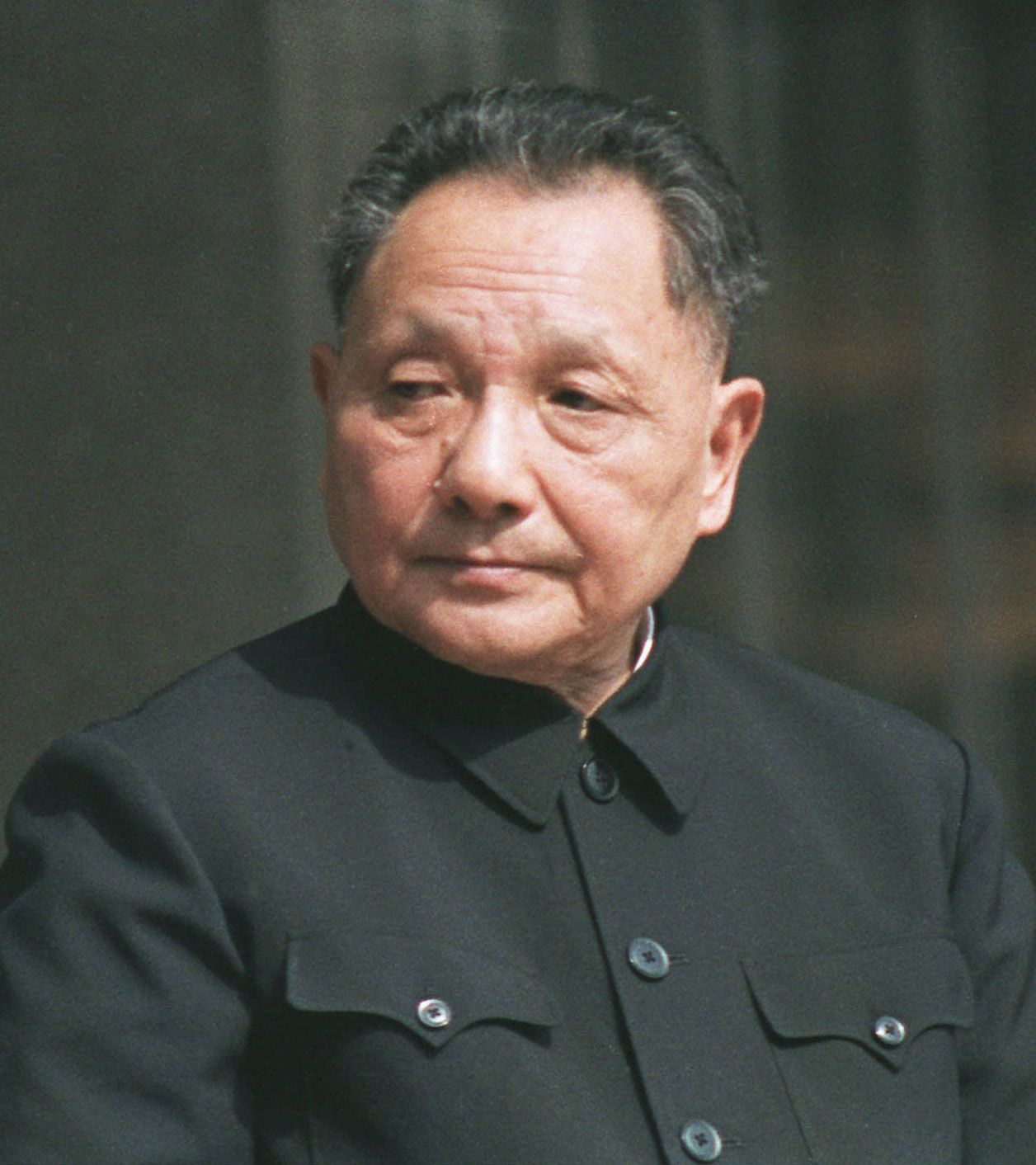
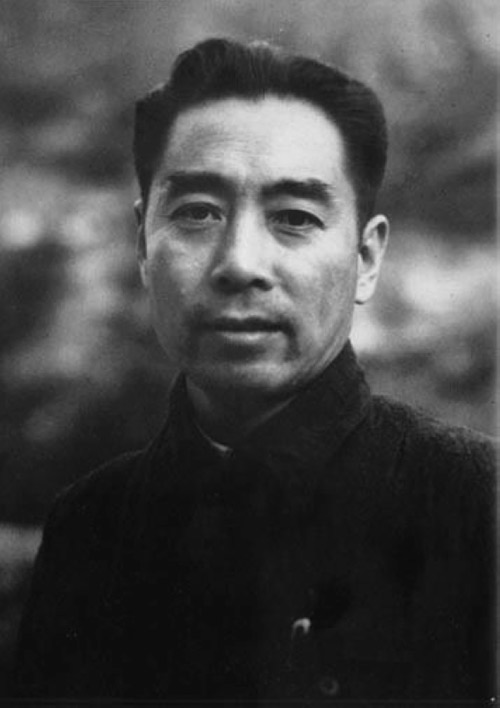
Mao's key associates include Li Dazhao and Chen Duxiu, who introduced him to Marxism at Peking University. Zhou Enlai was his longtime premier and diplomat. Zhu De was his military commander. Lin Biao was a loyal general who later plotted against him. Jiang Qing, his fourth wife, was a central figure in the Cultural Revolution. His rival was Chiang Kai-shek, leader of the Kuomintang. Deng Xiaoping, though purged during the Cultural Revolution, later succeeded Mao and reformed China's economy.
Relationships & Dating History
Mao's marital history is well-documented and deeply intertwined with his political life. His first marriage, to Luo Yixiu in 1907, was arranged by his father; Luo died of illness in 1910. In 1920, Mao married Yang Kaihui, daughter of his mentor Yang Changji; she was captured and executed by the Kuomintang in 1930. In 1928, Mao began a relationship with He Zizhen, with whom he had five children; they separated in 1937 after Mao met Jiang Qing. Mao married Jiang Qing in 1938; she became a powerful political figure and later leader of the Gang of Four. As of 2026, Mao is deceased and was last married to Jiang Qing at the time of his death.
- MarriedLuo Yixiu1907 - 1910Arranged marriage; Luo died of illness.
- MarriedYang Kaihui1920 - 1930Daughter of mentor; executed by Kuomintang.
- MarriedHe Zizhen1928 - 1937Separated after Mao met Jiang Qing; had five children.
- MarriedJiang Qing1938 - 1976CurrentMarried until Mao's death; later leader of Gang of Four.
Death & Aftermath
Died
September 9, 1976 (aged 82)
Death Place
Beijing, China
Cause of Death
Heart attack
Mao Zedong spent his final months largely bedridden and unable to speak, attended by a team of doctors in his residence at Zhongnanhai after appearing frail during a Labor Day celebration on May 1, 1976. The founding chairman of the People's Republic of China passed away at 00:10 local time on September 9, 1976, with the official cause reported as a heart attack following a decline complicated by Parkinson's disease. The Chinese government announced his passing through state media, as the political system did not conduct such reviews for leaders. Public reaction manifested as massive, state-orchestrated mourning across major cities, where millions gathered for memorial gatherings organized by the authorities rather than spontaneous vigils. A period of national mourning followed, suspending all entertainment and sporting events while printing of his portrait and the Little Red Book increased dramatically.
The funeral service took place on September 18, 1976, in Tiananmen Square, featuring a eulogy by Hua Guofeng and three minutes of silence observed by hundreds of thousands. Mao's body was embalmed and placed in a crystal sarcophagus inside the newly constructed Chairman Mao Memorial Hall, which opened to the public in 1977. In the weeks following his death, the Gang of Four was arrested, marking the end of the Cultural Revolution era as Deng Xiaoping eventually superseded Hua Guofeng. His legacy remains enormous, with Selected Works continuously republished and Mao Zedong Thought serving as a core component of the Communist Party's ideology.
Net Worth (Estate Value)
$0
iFANN Editorial Team estimate
Per iFANN's editorial analysis, Mao Zedong's net worth is recorded as $0. As the leader of a communist state, he did not accumulate personal wealth in the conventional sense. He lived in state-owned residences, received a modest salary, and his expenses were covered by the government. After his death, his estate consisted of personal belongings, manuscripts, and royalties from his published works, including the Selected Works of Mao Zedong. These royalties were reportedly donated to the CCP or used for public purposes. No reliable estimate of his net worth exists, and any figure would be speculative.
Awards & Accolades
Known For
Founding of the People's Republic of China
1949 · Founder and Chairman
Maoism
1940 · Theorist
Great Leap Forward
1958 · Architect
Cultural Revolution
1966 · Initiator
Long March
1935 · Leader
Keywords
Sources
Quick Facts
- Profession
- politician, poet, writer
- Born
- +1893-12-26
- Birthplace
- Shaoshan
- Died
- +1976-09-09
- Death Place
- Zhongnanhai
- Gender
- Male
- Spouse
- Luo Yixiu, Yang Kaihui, He Zizhen, Jiang Qing
- Birth Sign
- Sagittarius
- Born
- December 26, 1893
- Birthplace
- Shaoshan, Hunan, China
- Died
- September 9, 1976
- Death Place
- Zhongnanhai, Beijing, China
Personal Details
- Full Name
- Mao Zedong
- Spouse
- Luo Yixiu, Yang Kaihui, He Zizhen, Jiang Qing
- Children
- Mao Anying, Mao Anqing, Mao Anlong, Li Min, Li Na, and others (exact number disputed)
- Education
- Shaoshan Primary School, Hunan First Normal School, Peking University (library assistant)
Frequently Asked Questions
Who was Mao Zedong?
When was Mao Zedong born?
What is Mao Zedong's net worth in 2026?
How many wives did Mao Zedong have?
What was the Cultural Revolution?
Similar People
Join the community
fans discussing