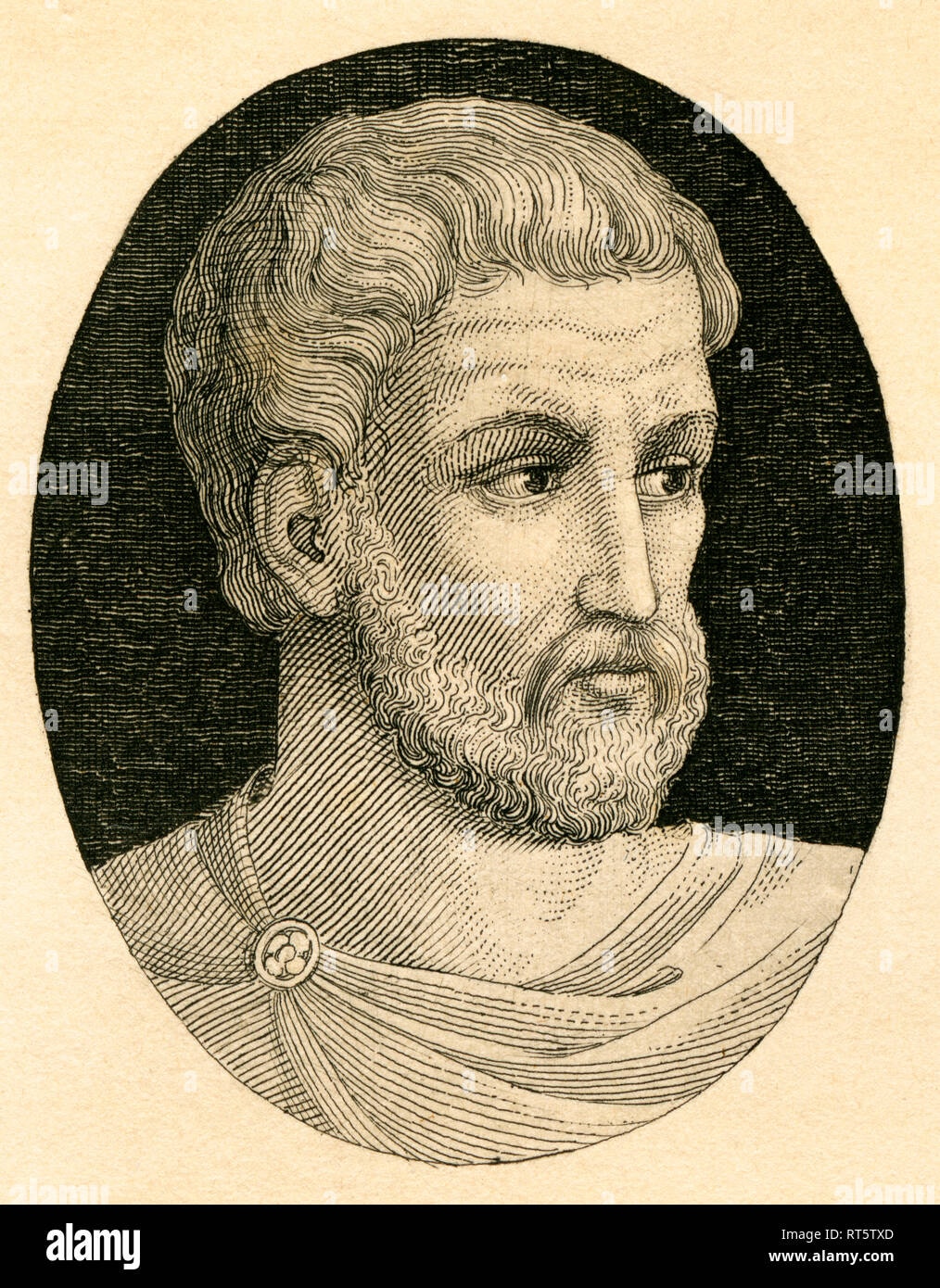
Pythagoras
 Greece
Also known as: Pythagoras of Samos
Birthday
c. 570 BCE
Birth Sign
Birthplace
Samos, Greece
Age
Died at 75
About
Pythagoras of Samos, born around 570 BCE on the Aegean island of Samos, was a philosopher, mathematician, and founder of the Pythagorean movement. He established a school in Croton, southern Italy, around 530 BCE that blended religious ritual, ascetic living, and mathematical inquiry. His central belief that numbers constitute the fundamental reality of the universe shaped Western thought for millennia. He is often credited with coining the term "philosopher," meaning "lover of wisdom."
Pythagoras is best known for the geometric theorem that bears his name, though Babylonian mathematicians knew the concept a thousand years earlier. His school discovered the mathematical ratios underlying musical harmony, proposed that the Earth is spherical, and identified the morning and evening stars as the same planet, Venus. After Croton's victory over Sybaris around 510 BCE, political conflicts led to attacks on Pythagorean communities, and Pythagoras likely died around 495 BCE in Metapontum.
Early Life & Background
Pythagoras grew up on Samos, a wealthy island at the crossroads of Greek, Egyptian, and Near Eastern cultures. His father Mnesarchus, a merchant or engraver from Tyre, provided him with an exceptional education. As a youth he studied under Pherecydes of Syros, who taught him about the immortality of the soul, and with Anaximander and Thales of Miletus. Thales advised him to travel to Egypt for deeper knowledge.
Around 547 BCE, Pythagoras left Samos for Egypt, where he spent 22 years studying mathematics, geometry, astronomy, and religious rituals in temples at Heliopolis and Memphis. After the Persian conquest of Egypt in 525 BCE, he was taken as a prisoner to Babylon, where he spent another 12 years learning from Chaldean astronomers and mathematicians. This roughly 34-year period abroad formed his synthesis of mathematics, religion, and philosophy. When he returned to Samos around 513 BCE, he found the island under the tyranny of Polycrates and decided to emigrate.
Career Growth
Pythagoras's breakthrough came around 530 BCE when he founded his school in Croton, a Greek colony in southern Italy. The institution was both a philosophical academy and a religious community, attracting hundreds of followers including both men and women, a radical departure for the time. The curriculum integrated mathematics, music theory, astronomy, and ethical living, with the core belief that numbers were the fundamental reality of the universe.
His discovery of the mathematical ratios underlying musical harmony, that intervals correspond to simple numerical proportions, was a pivotal achievement linking abstract math to physical reality. The school's political influence grew after Croton's victory over Sybaris around 510 BCE, with Pythagoreans holding significant power. The community developed advanced geometry, including the theorem bearing his name, the theory of proportions, and identification of the five regular solids. His teachings on the spherical Earth and the identity of Venus as both morning and evening star represented significant astronomical advances.
Career Timeline
Public Image & Style
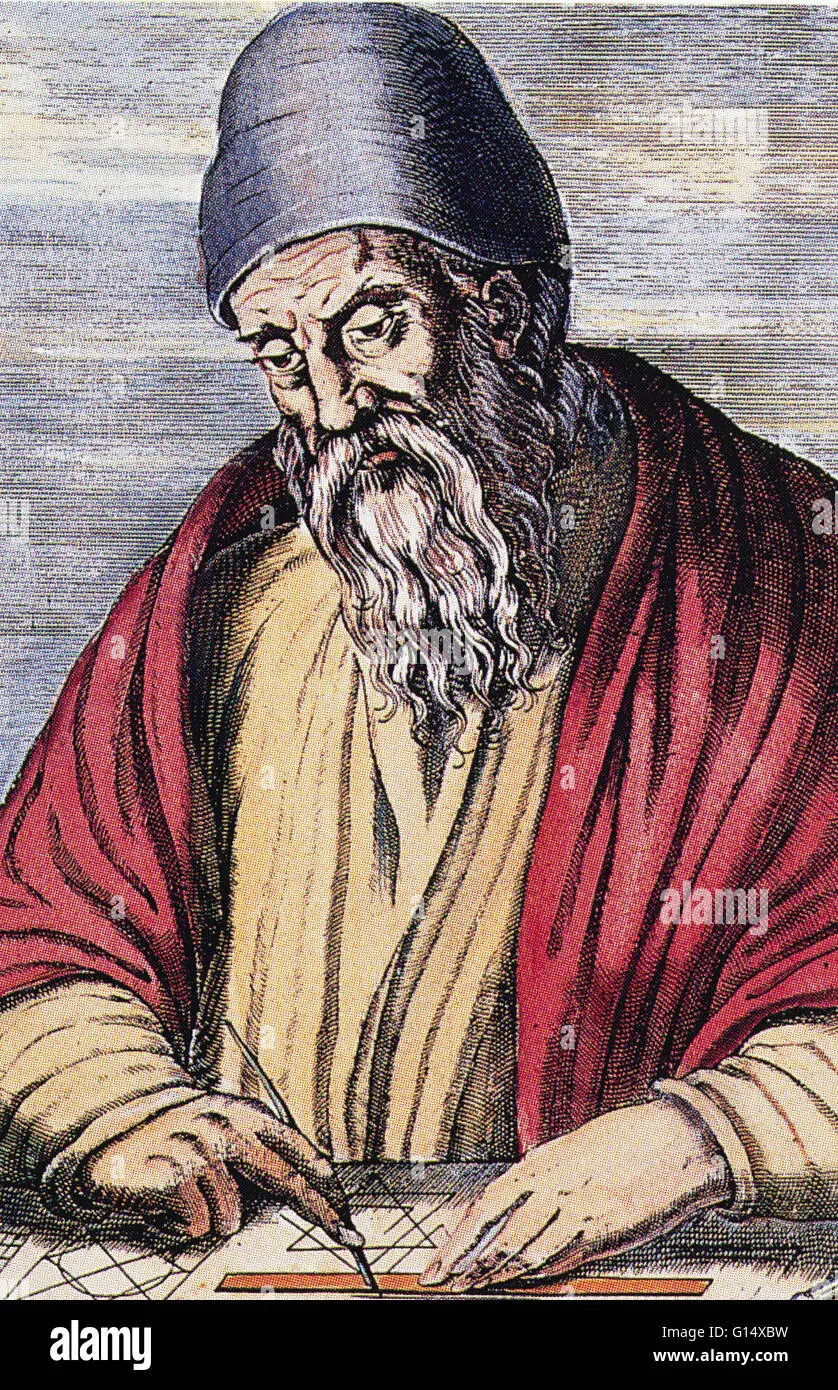
Pythagoras's public image is that of the archetypal ancient sage, bearded, robed, pointing to geometric diagrams. His signature aesthetic is mathematical purity and mystical numerology. Media portrays him as the father of Western mathematics, though modern scholarship emphasizes his school's collective achievements over individual credit. The Pythagorean fandom exists primarily among mathematicians, philosophers, and occult enthusiasts. No official fandom name exists, but "Pythagoreans" refers to his historical followers. Modern fan culture includes online math communities using his theorem as a meme, occult groups reviving numerology practices, and educational channels dedicated to his life and teachings.
Fame & Fandom (iFAMOUS Rankings)
Pythagoras of Samos stands as a singular figure whose influence transcends the boundaries of ancient history to shape the very architecture of Western thought. His followers, known historically as the Pythagoreans, formed a semi-religious brotherhood in Croton that blended mathematical inquiry with ascetic ritual, creating a legacy far more profound than any modern fan club could replicate. Today, the reverence for his work is carried not by organized campaigns or social media trends, but by mathematicians, philosophers, and students who study the ratios underlying music and the geometry of the universe. This audience engages with his teachings through academic rigor rather than performative fandom, treating his aphorisms on animal rights and wisdom as timeless guides. While no official fandom name exists for modern enthusiasts, the collective admiration for his contributions remains a global phenomenon rooted in education and historical preservation. Despite this enduring cultural footprint, iFANN's Global Fame Engine has evaluated Pythagoras and determined he does not currently hold a placement in the published rankings (Global Top 1,000 or a Top-100 scope list).
Interesting Facts and Legends
Pythagoras is credited with coining the term "philosopher," meaning "lover of wisdom." He forbade his followers from eating beans, believing they contained the souls of the dead, and reportedly refused to cross a field of them to escape pursuers, choosing death instead. His belief in metempsychosis led him to claim he remembered past lives, including being a Trojan War hero named Euphorbus. Folklore also tells of a golden thigh he showed to disciples as proof of his divine nature, alongside stories where he convinced a cow not to eat beans. A famous legend involves his student Hippasus discovering irrational numbers; according to the tale, Pythagoras was so disturbed by this contradiction to his beliefs that he had Hippasus thrown overboard at sea. Though historians view this execution story as myth, it remains a staple of mathematical folklore. Recent discussions highlight the "Pythagorean comma," a critical concept in music theory arising from tuning systems.
Notable Quotes
“Number is the ruler of forms and ideas, and the cause of gods and daemons.”
“Friendship is equality.”
“A man is what he thinks about all day long.”
“The oldest, shortest words, 'yes' and 'no', are those which require the most thought.”
“No man is free who cannot control himself.”
Family & Personal Life
Pythagoras married Theano, a philosopher and mathematician who was one of his students at Croton. She is sometimes credited with continuing his school after his death and authoring works on mathematics and ethics. They had four children: Damo, Arignote, Myia, and Telauges, all of whom continued the Pythagorean tradition. His father Mnesarchus was a merchant or engraver from Tyre, and his mother Pythais was a native of Samos.
Notable Connections
Pythagoras was taught by Pherecydes of Syros, Anaximander, and Thales of Miletus. His wife Theano succeeded him as head of the school. Prominent students included Empedocles, Philolaus (who first published Pythagorean doctrines), and Archytas of Tarentum. The athlete Milo of Croton served as protector of the Pythagorean community.
Relationships & Dating History
Pythagoras married Theano, a philosopher and mathematician who was one of his students at Croton, around 530 BCE. They had at least four children: Damo, Arignote, Myia, and Telauges. After Pythagoras's death around 495 BCE, Theano is believed to have taken over leadership of the school and preserved his teachings. No further relationships are recorded in historical sources.
- MarriedTheano-530 - -495Theano was a philosopher and mathematician, one of his students at Croton; they had four children.
Death & Aftermath
Died
c. 495 BCE (aged 75)
Death Place
Metapontum
Cause of Death
Disputed legend: starvation or mob violence
Pythagoras of Samos passed away around 495 BCE in the southern Italian colony of Metapontum, though no official record marks the exact moment or the specific authority that announced his end. Ancient biographers later wove conflicting narratives around his final days, with one tradition claiming he died while fleeing a political mob that had burned his refuge, and another insisting he chose starvation over crossing a field of beans to escape pursuers. These accounts from writers like Diogenes Laërtius remain disputed legends rather than established facts, leaving the true cause of death obscured by centuries of myth.
His followers continued to honor his teachings long after his passing, preserving the oral traditions and mathematical insights that defined the Pythagorean movement. Tradition holds that he was buried in Metapontum, where his tomb eventually became a site of pilgrimage for those devoted to his philosophy of numbers as the fundamental reality.
The legacy of Pythagoras includes the theorem bearing his name and the concept of numbers as the essence of reality. Modern dedications include the Pythagorean comma in music theory and various educational institutions named after him. A modern investment vehicle known as the Pythagoras Music Fund operates today, unrelated to any estate handling or family statements from antiquity, as no formal probate records survive from the era.
Net Worth (Estate Value)
As a historical figure deceased for approximately 2,500 years, Pythagoras has no living net worth. His estate is not commercially managed. The concept does not apply.
Awards & Accolades
View 11 records, honours and achievementsKnown For
Pythagorean theorem
c. 530 BCE · Discoverer/prover
Musical harmony ratios
c. 530 BCE · Discoverer
Spherical Earth theory
c. 530 BCE · Proponent
Pythagorean school
c. 530 BCE · Founder
Keywords
Quick Facts
- Profession
- Mathematician, philosopher
- Born
- c. 570 BCE
- Birthplace
- Samos, Greece
- Died
- c. 495 BCE
- Death Place
- Metapontum, Italy
- Gender
- Male
- Spouse
- Theano
Personal Details
- Full Name
- Pythagoras of Samos
- Spouse
- Theano
- Children
- Damo, Arignote, Myia, Telauges
- Education
- Studied under Pherecydes of Syros, Anaximander, and Thales; spent 22 years in Egypt with priests; 12 years in Babylon with Chaldeans
Frequently Asked Questions
What is Pythagoras most famous for?
Did Pythagoras really discover the Pythagorean theorem?
Why did Pythagoras forbid eating beans?
Was Pythagoras married?
How did Pythagoras die?
Join the community
fans discussing