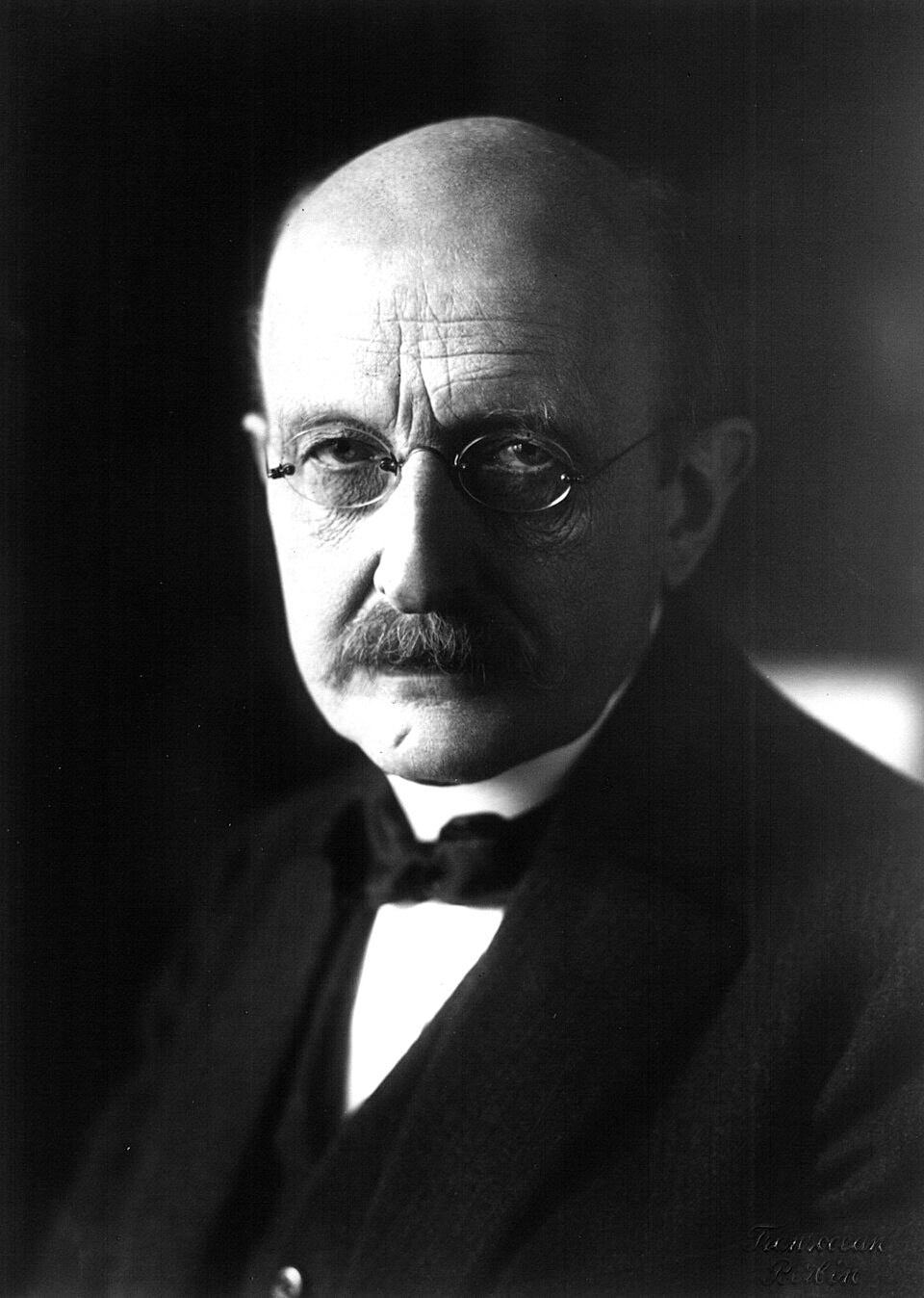
Max Planck
 Germany
theoretical physicist•university teacher•physicist
Birthday
April 23, 1858
Birth Sign
Taurus
Birthplace
Kiel, Duchy of Holstein, German Confederation
Age
Died at 89
Height
5 ft 10 in (178 cm)
About
Max Planck was a German theoretical physicist who founded quantum theory, reshaping our understanding of the atomic and subatomic world. He is best known for discovering energy quanta and introducing the Planck constant (h), a fundamental physical constant. The relation E = hν, which states that a photon's energy is proportional to its frequency, remains a cornerstone of modern physics. Planck received the 1918 Nobel Prize in Physics for this breakthrough, which opened the door to quantum mechanics, semiconductor technology, and cosmology.
Planck served as President of the Kaiser Wilhelm Society from 1930 to 1937, and the organization was renamed the Max Planck Society in 1948, now operating 83 institutes worldwide. He was also a dedicated educator at the University of Berlin. His personal life was marked by profound tragedy, including the loss of his son Erwin in 1945. Planck died on October 4, 1947, in Göttingen, Germany, at age 89. His legacy endures through the Max Planck Society and the foundational role his work plays in all of modern physics.
Early Life & Background
Born in Kiel to Johann Julius Wilhelm Planck, a professor of constitutional law, and Emma Patzig, Max grew up in a strict, religious, and intellectual household. He showed early musical talent, playing piano, organ, and cello, and seriously considered a career as a concert musician before choosing physics. He attended the Maximiliansgymnasium in Munich, where teacher Hermann Müller first sparked his interest in the principle of conservation of energy.
A pivotal moment came when physicist Philipp von Jolly advised him that physics was a nearly finished science with little left to discover. Planck replied that he did not wish to discover new things, only to understand the known fundamentals. He studied at the University of Munich and later the University of Berlin, earning his doctorate in 1879 at age 21 with a thesis on the second law of thermodynamics. He became associate professor at the University of Kiel in 1885 and succeeded Gustav Kirchhoff as professor at the University of Berlin in 1889.
Career Growth
Planck's world-altering breakthrough came in 1900. While trying to solve the ultraviolet catastrophe problem of black-body radiation, he proposed that energy is emitted and absorbed in discrete packets, or quanta. He introduced the Planck constant (h) and the relation E = hν on December 14, 1900, a date now considered the birth of quantum physics. For this discovery, he won the 1918 Nobel Prize in Physics.
His career then shifted to leadership and advocacy. He served as President of the Kaiser Wilhelm Society from 1930 to 1937, using his stature to protect German science during the Nazi era. He also received the Lorentz Medal (1927), the Copley Medal (1929), and the first Max Planck Medal (1929). After his death, the Kaiser Wilhelm Society was renamed the Max Planck Society in his honor in 1948. Today, the society's institutes continue groundbreaking research in fields from quantum computing to astrophysics, directly building on his legacy.
Career Timeline
Public Image & Style
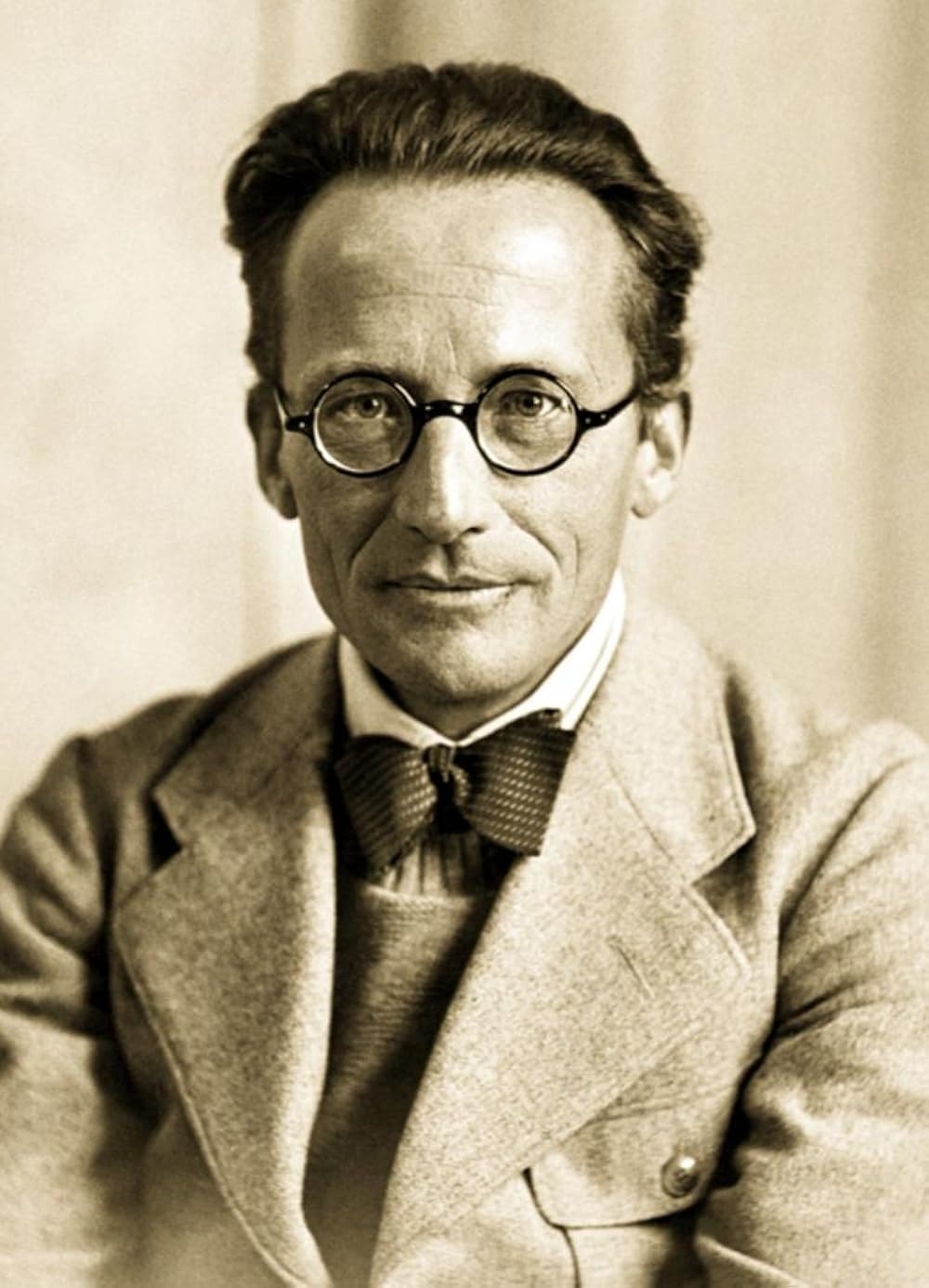
Planck is remembered as the stoic, reluctant revolutionary who accidentally destroyed the foundations of classical physics while solving a technical problem. His public image is that of a dignified, conservative German professor and a tragic hero who lost everything personally but whose legacy changed the world. He is often depicted in formal attire with a beard and spectacles, embodying the 19th-century academic. Physics enthusiasts and historians of science hold him in the highest regard. There is no official fandom, but his name is synonymous with the Max Planck Society, one of the world's most prestigious research organizations. His work is frequently referenced in popular science media, and he was named one of TIME's 100 Persons of the Century in 1999.
Fame & Fandom (iFAMOUS Rankings)
Max Planck commands a global attention that transcends the boundaries of his era, maintaining a steady presence in historical and scientific discourse across media coverage, search activity, and consumption signals worldwide. According to the iFANN Global Fame Rankings, he is currently the 41st most famous person in Germany, a position holding steady from the previous cycle. Within the specific domain of historical science, he ranks as the 14th most famous person in Classical, also maintaining his standing without fluctuation. These placements reflect a consistent, enduring legacy rather than a fleeting cultural moment. Regarding his audience, there is no formal fandom name documented for Max Planck; the concept of a celebrity fanbase does not apply to a theoretical physicist who passed away in 1947. His supporters are not organized into clubs or campaigns but exist as the broader scientific community and the Max Planck Society, which preserves his institutional work. While some might imagine adoring crowds, the reality is one of academic reverence and historical study, with no fan rituals or unofficial names attached to his memory.
Interesting Facts and Legends
Max Planck was an accomplished pianist who frequently performed chamber music alongside Albert Einstein. He held deep religious convictions, believing in a non-personal, omnipotent God revealed through nature's harmony, and engaged in notable debates on this topic with Einstein. During the Nazi regime, he attempted to intervene personally by meeting Adolf Hitler to protest the mistreatment of Jewish physicists, though the encounter yielded no positive results. The tragedy of his later years was compounded when his Berlin home was destroyed by Allied bombing in 1944, resulting in the loss of all his personal scientific papers. His theoretical contributions gave rise to Planck time and Planck length, representing the smallest theoretically measurable units of time and distance respectively. In 2026, a significant controversy erupted when two papers from the 1940s were retracted by journals such as Springer Nature, raising questions about their authenticity. This situation was resolved by July 2026 when the publisher reinstated the works after further review, confirming their validity. A previously unpublished manuscript of Planck's was also discovered in a private archive in 2024, adding new material to the historical record. The story of his musical talent remains widely retold, illustrating his early promise as a composer before he dedicated himself entirely to physics.
Notable Quotes
“A new scientific truth does not triumph by convincing its opponents and making them see the light, but rather because its opponents eventually die, and a new generation grows up that is familiar with it.”
“I regard consciousness as fundamental. I regard matter as derivative from consciousness. Everything that we talk about, everything that we regard as existing, postulates consciousness.”
“An experiment is a question which science poses to Nature, and a measurement is the recording of Nature's answer.”
Family & Personal Life
Planck married his childhood sweetheart, Marie Merck, in 1887. They had four children: Karl (1888), twins Emma and Grete (1889), and Erwin (1893). Marie died of tuberculosis in 1909. In 1911, Planck married her cousin, Marga von Hoesslin, with whom he had a son, Hermann. His personal life was marked by immense tragedy: Karl was killed in World War I in 1916; Emma and Grete both died in childbirth; and Erwin was executed by the Gestapo in 1945 for his involvement in the July 20 plot to assassinate Hitler. Planck outlived all his children except Hermann. The family lived in Berlin until the bombing destroyed their home in 1944.
Notable Connections
Albert Einstein was a close friend and colleague; they played music together and corresponded extensively on quantum theory. Niels Bohr expanded on Planck's quantum concept. Ernst Mach was a contemporary whose positivist philosophy Planck opposed. Hermann von Helmholtz was one of Planck's professors in Berlin. Gustav Kirchhoff was the professor Planck succeeded at the University of Berlin.
Relationships & Dating History
Planck married his childhood sweetheart, Marie Merck, in 1887. They had four children together: Karl, twins Emma and Grete, and Erwin. Marie died of tuberculosis in 1909. In 1911, he married her cousin, Marga von Hoesslin, with whom he had a son, Hermann. Marga survived Planck, dying in 1949. Planck's relationships were marked by deep personal tragedy, as he outlived his first wife and all but one of his children.
- MarriedMarie Merck1887 - 1909Planck's first wife and childhood friend; they had four children together. She died of tuberculosis.
- MarriedMarga von Hoesslin1911 - 1947Married Marie's cousin after her death; they had one son, Hermann. She survived Planck.
Death & Aftermath
Died
October 4, 1947 (aged 89)
Death Place
Göttingen, Lower Saxony, Germany
Cause of Death
Natural causes related to old age
The Kaiser Wilhelm Society was renamed the Max Planck Society in his honor shortly after his passing, a transformation that cemented his legacy as the father of quantum mechanics within Germany's premier research organization. This institutional tribute, established in 1948, stands alongside the biennial Max Planck Medal awarded by the German Physical Society for outstanding achievements in theoretical physics. The scientific community responded to his loss with profound respect from peers and institutions rather than public gatherings, recognizing him as the recipient of the 1918 Nobel Prize in Physics.
Max Planck died on October 4, 1947, in Göttingen, Germany, at the age of 89. He had spent his final years in this city after being forced out of Berlin by the Nazi regime in 1944 due to his son Erwin's involvement in the plot against Hitler. Historical records indicate he passed peacefully due to natural causes related to old age without any acute illness, accident, or foul play. His funeral was held shortly after his death in Göttingen as a private affair attended by family members, colleagues, and university officials.
He was buried in the Göttingen Old Cemetery, a site that has since become a landmark for physicists visiting the city. The estate was handled by his surviving wife Marga von Hoesslin and his children, who managed his intellectual property and personal archives without public dispute. While no films or books specifically detailing his final days were produced, his manuscripts remain preserved in academic archives and his early work continues to be studied following the reinstatement of two papers originally published in Naturwissenschaften in the 1940s.
Net Worth (Estate Value)
$500 Thousand
iFANN Editorial Team estimate
As a historical figure who died in 1947, Max Planck did not accumulate significant wealth from his discoveries. He lived on a university professor's salary and held administrative roles as President of the Kaiser Wilhelm Society. His estate consisted of personal effects, letters, and manuscripts, most of which are held in academic archives. There is no commercial revenue from his work; his papers are in the public domain. Per iFANN's editorial analysis, the estimated net worth of his estate is negligible, around $500 Thousand when adjusted for historical value and the worth of his personal archives. The Max Planck Society manages his intellectual legacy, but it generates no income for his descendants.
Awards Won (6)
Max Planck received the 1918 Nobel Prize in Physics for his discovery of energy quanta. He also won the Lorentz Medal (1927), the Copley Medal (1929), the first Max Planck Medal (1929), the Goethe Prize (1945), and the Harnack Medal (1933). These honors reflect his monumental contributions to theoretical physics and his leadership in German science.
1945 · Arts and Sciences
1933 · Science
Known For
Quantum Theory
1900 · Founder
Planck Constant (h)
1900 · Discoverer
Planck Relation (E = hν)
1900 · Formulator
Nobel Prize in Physics
1918 · Laureate
Keywords
Quick Facts
- Profession
- theoretical physicist, university teacher, physicist
- Born
- +1858-04-23
- Birthplace
- Kiel
- Died
- +1947-10-04
- Death Place
- Göttingen
- Gender
- Male
- Spouse
- Marie Merck, Marga von Hoesslin
- Birth Sign
- Taurus
Personal Details
- Full Name
- Max Karl Ernst Ludwig Planck
- Height
- 5 ft 10 in (178 cm)
- Spouse
- Marie Merck, Marga von Hoesslin
- Children
- Karl Planck, Emma Planck, Grete Planck, Erwin Planck, Hermann Planck
- Education
- University of Munich, University of Berlin
Frequently Asked Questions
How did Max Planck die?
What did Max Planck discover?
Did Max Planck have children?
Was Max Planck religious?
What is the Max Planck Society?
Similar People
Join the community
fans discussing