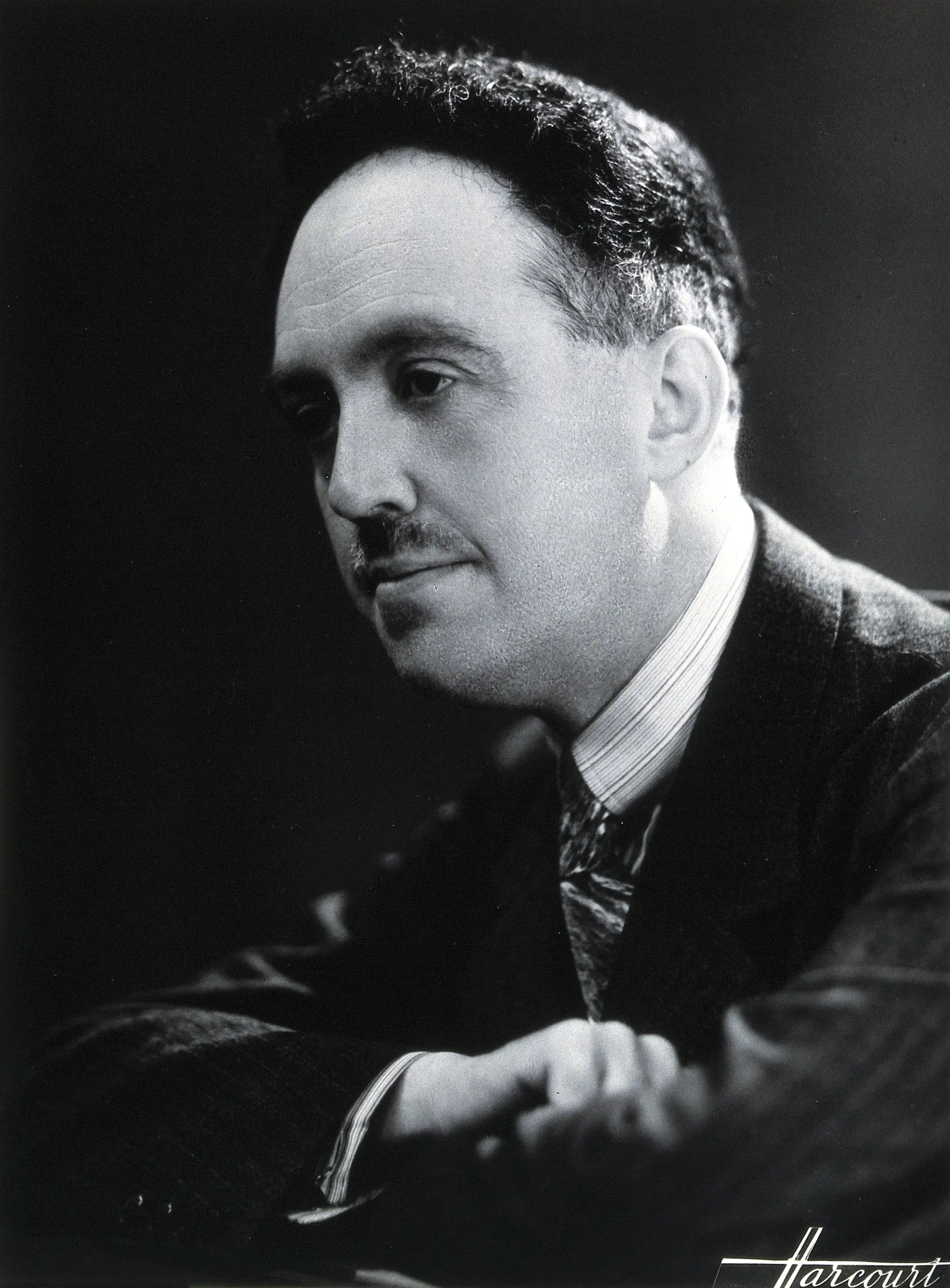
Louis de Broglie
 France
physicist•mathematician•university teacher
Also known as: Louis-Victor-Pierre-Raymond, 7th duc de Broglie
Birthday
August 15, 1892
Birth Sign
Leo
Birthplace
Dieppe, France
Age
Died at 94
About
Louis de Broglie was a French theoretical physicist who reshaped modern physics by proposing that all matter has wave properties. His 1924 doctoral thesis introduced wave-particle duality, a concept that became a cornerstone of quantum mechanics and earned him the 1929 Nobel Prize in Physics. As the 7th Duc de Broglie, he came from an aristocratic lineage but chose a life of scientific inquiry over privilege.
De Broglie's hypothesis inspired Erwin Schrödinger to develop wave mechanics, and experimental confirmation by Clinton Davisson and George Paget Thomson in 1927 validated his ideas. At the 1927 Solvay Conference, he presented an alternative pilot-wave interpretation, though he later abandoned it. Decades after, David Bohm revived the theory into de Broglie-Bohm theory, prompting de Broglie to revisit his own work.
Beyond research, de Broglie was a dedicated science communicator who wrote over 25 books, including The Revolution in Physics and Matter and Light. He was elected to the Académie Française in 1944 and served as Perpetual Secretary of the French Academy of Sciences. He also became the first prominent scientist to call for a multinational laboratory, a proposal that led to the creation of CERN. In 1952, he received the inaugural Kalinga Prize from UNESCO for popularizing science. De Broglie died on March 19, 1987, at age 94, leaving a legacy that continues to influence physics.
Early Life & Background
Louis de Broglie was born on August 15, 1892, in Dieppe, France, into the aristocratic House of Broglie, a family of Italian origin that had served French monarchs for centuries. His father was Victor, 5th duc de Broglie, and his mother was Pauline d'Armaillé, granddaughter of Napoleonic General Philippe Paul, comte de Ségur. He was the youngest of five children. Described as a charming child with a strong memory, his gaiety filled the house, and his sister Pauline recalled that a great future as a statesman was predicted for him.
After his father's death in 1906, his elder brother Maurice arranged for him to attend the Lycée Janson-de-Sailly in Paris for secondary education. He initially pursued literary studies, earning a bachelor's degree in history in 1910 from the Sorbonne. He briefly considered law before being deeply impressed by the writings of mathematician Henri Poincaré. Maurice, an experimental physicist who had converted a room in the family estate into a laboratory, encouraged Louis's turn toward science. De Broglie obtained his degree in physics in 1913.
During World War I, he served in the French Army's wireless section, stationed at the Eiffel Tower, where he devoted spare time to technical problems in radio communications and engineering. After the war, he resumed physics studies and collaborated with Maurice on X-ray and atomic theory research. This period of hands-on work with his brother and exposure to the latest quantum ideas from Einstein and Planck set the stage for his revolutionary doctoral thesis in 1924.
Career Growth
De Broglie's breakthrough came with his 1924 doctoral thesis, Recherches sur la Théorie des Quanta, in which he proposed that particles like electrons have wave properties, introducing wave-particle duality. The thesis, only about 70 pages long, earned his doctorate from the University of Paris and soon inspired Erwin Schrödinger to develop wave mechanics. Experimental confirmation arrived in 1927 when Clinton Davisson, Lester Germer, and George Paget Thomson verified the wave nature of electrons. For this work, de Broglie won the Nobel Prize in Physics in 1929.
He taught at the Sorbonne from 1924 to 1926, then was appointed professor of theoretical physics at the Henri Poincaré Institute in 1928. In 1932, he became professor of theoretical physics at the Faculté des Sciences at the Sorbonne, a position he held until his retirement in 1962. Over the next two decades, he worked on extensions of wave mechanics, including Dirac's electron theory, a new theory of light, and applications to nuclear physics. He also published over 25 books aimed at general audiences, such as The Revolution in Physics and Matter and Light.
In 1944, he was elected to the Académie Française, occupying seat 1, and later served as Perpetual Secretary of the French Academy of Sciences. He became an adviser to the French Atomic Energy Commissariat in 1945. Perhaps his most far-reaching institutional contribution was being the first high-level scientist to call for a multinational laboratory, a proposal that led to the creation of CERN. In 1952, he received the inaugural Kalinga Prize from UNESCO for science popularization.
Career Timeline
Public Image & Style
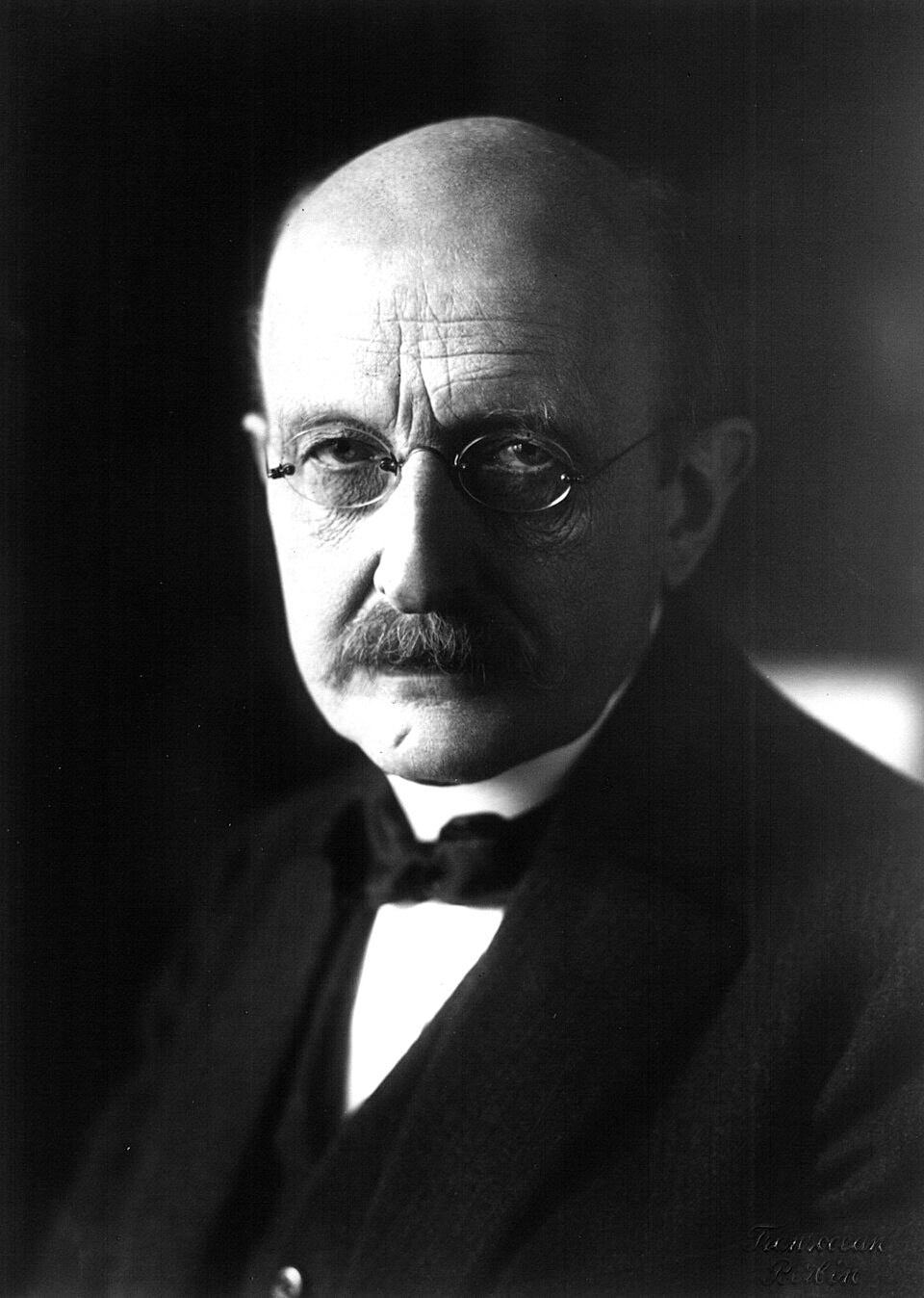
De Broglie's public image is that of an aristocratic intellectual who bridged classical physics and quantum mechanics. Known for elegant writing and clear science communication, he was often portrayed in media as a nobleman who chose the life of a scholar over courtly prestige. His signature contribution, wave-particle duality, is one of the most counterintuitive and celebrated concepts in modern physics. There is no official fandom name, but his work is revered in physics communities. Photographs from the era show a dignified, thoughtful man with a characteristic mustache and formal attire. His legacy is that of a revolutionary thinker who also championed international scientific collaboration and public understanding of science.
Fame & Fandom (iFAMOUS Rankings)
As the 7th Duc de Broglie who traded aristocratic privilege for the quiet intensity of theoretical physics, Louis de Broglie remains a towering figure in the annals of science rather than a household name in global pop culture. The iFANN Global Fame Engine has evaluated his standing, yet he currently holds no placement within the published rankings that define the world's most famous individuals. This absence from the Top 1,000 or any scope-specific list reflects a legacy built on academic reverence rather than mass-market consumption metrics. While his work fundamentally altered our understanding of matter, the public sphere has never rallied around him with the fervor reserved for modern entertainers or cultural icons.
No official fandom name exists for de Broglie, and the scientific community does not organize itself under a branded fanbase dedicated to his memory. There are no birthday billboards, charity drives, or ritualistic gatherings bearing his name; instead, his admirers are physicists, historians, and students who encounter his wave-particle duality hypothesis in textbooks and lecture halls. His influence is diffuse and profound, woven into the fabric of quantum mechanics without the need for a unified fan movement. The lack of a documented following underscores the nature of his life: a solitary pursuit of truth in a laboratory setting, far removed from the spotlight where fame is typically cultivated and measured.
Interesting Facts and Legends
Louis de Broglie initially studied history with plans for a diplomatic career before pivoting to physics during World War I, where he served at the Eiffel Tower operating wireless telegraphy equipment. His doctoral thesis was remarkably concise at just 70 pages, yet it introduced the revolutionary concept of wave-particle duality that would earn him the 1929 Nobel Prize in Physics. He came from an aristocratic lineage as the 7th Duc de Broglie but lived modestly as a professor at the Sorbonne, often collaborating with his brother Maurice in their home laboratory. De Broglie was also a prolific writer, authoring over 25 books aimed at general audiences, and he uniquely held a seat in the Académie Française, an honor usually reserved for literary figures.
The most legendary moment in his career occurred in 1924 when Albert Einstein praised his PhD thesis for having lifted a corner of the great veil of reality. This specific event launched the field of wave mechanics and inspired Erwin Schrödinger to develop his famous equations. Decades later, his abandoned pilot-wave theory saw a surprising resurgence in 2024 and 2025 as researchers explored deterministic alternatives to standard quantum mechanics. De Broglie lived to the age of 94, making him one of the longest-lived Nobel laureates in physics, and he passed away leaving behind a legacy defined entirely by academic respect rather than popular adoration.
Notable Quotes
“Every particle of matter with momentum has an associated wave of wavelength λ = h/p.”
“The electron can no longer be conceived as a single, small granule of electricity; it must be associated with a wave, and this wave is no myth; its wavelength can be measured.”
“The progress of science is like the progress of a wave: it advances by a succession of crests and troughs.”
Family & Personal Life
De Broglie came from the distinguished House of Broglie, a noble family of Italian origin that had served French monarchs for centuries. His father was Victor, 5th duc de Broglie, and his mother was Pauline d'Armaillé. He had four siblings: Albertina (1872–1946), Maurice (1875–1960), who became a famous experimental physicist, Philip (1881–1890, died before Louis's birth), and Pauline, Comtesse de Pange (1888–1972), a noted writer. De Broglie never married and had no children. He inherited the title of 7th duc de Broglie upon his brother Maurice's death in 1960. He lived a quiet, academic life, residing in Louveciennes near Paris in his later years.
Notable Connections
De Broglie collaborated closely with his brother Maurice de Broglie, an experimental physicist. His work inspired Erwin Schrödinger to develop wave mechanics. Experimental confirmation came from Clinton Davisson, Lester Germer, and George Paget Thomson. David Bohm later revived de Broglie's pilot-wave theory. He was influenced by Henri Poincaré and introduced to quantum ideas by his brother, who studied the works of Albert Einstein and Max Planck. He also worked on extensions of Paul Dirac's electron theory.
Relationships & Dating History
Based on all available biographical sources, Louis de Broglie never married and had no publicly documented romantic relationships. Biographies from Nobel Prize records, Britannica, Wikipedia, and other authoritative sources make no mention of any romantic partners, engagements, or marriages. He lived a life dedicated entirely to scientific research and academic pursuits. His sister Pauline's memoirs describe him as a charming child but provide no information about adult romantic relationships. As of 2026, he is deceased and was never married, with no known romantic partners or children.
Death & Aftermath
Died
March 19, 1987 (aged 94)
Death Place
Paris, France
Cause of Death
Natural causes
The scientific community marked the passing of Louis de Broglie with tributes from organizations like the American Physical Society, honoring his foundational role in quantum mechanics and the extension of particle-wave duality to electrons. Decades after his death, a resurgence of interest emerged regarding his pilot wave theory, which initially fell out of favor but returned as a subject of discussion concerning deterministic alternatives to standard quantum mechanics. This enduring legacy was further cemented by posthumous honors, including the naming of the Institute of Physics' Louis de Broglie Medal and his induction into various halls of fame for his contributions to physics.
On March 19, 1987, the 94-year-old physicist passed away in Paris, France, under circumstances recorded simply as natural causes without any mention of foul play or acute illness requiring legal investigation. He had spent his final days at an advanced age, leaving behind no public record of a specific medical event beyond the general consensus of his longevity. The funeral arrangements remained relatively private, with reports indicating he was buried in the family crypt at the Château de Royallieu in Compiègne, France, though the exact date of interment and the nature of the service were not widely publicized.
His death signaled the end of an era for the pioneers of early quantum theory, yet his work continued to be cited in major physics publications and remained central to education. While immediate public gatherings were not documented in biographical sources, the institutions he helped shape carried forward his vision of multinational scientific collaboration. His estate and personal affairs were managed without public fanfare, consistent with his lifelong modesty within academic circles.
Net Worth (Estate Value)
$5 Million
iFANN Editorial Team estimate
While Louis de Broglie held the prestigious title of 7th duc de Broglie, he chose a life of modesty within academic circles rather than accumulating vast personal wealth. His financial stability relied primarily on his salary as a professor at the Sorbonne and his tenure as Perpetual Secretary of the French Academy of Sciences. Additional income flowed from royalties generated by his extensive library of over 25 published books and the prize money awarded upon receiving the Nobel Prize in Physics. In 2026, iFANN currently estimates his estate to be valued at around $5 Million, derived from these continuing book royalties and historical assets managed according to French law. The estate continues to generate revenue through published works and occasional licensing of his name and image for scientific references.
Awards Won (3)
De Broglie won the Nobel Prize in Physics in 1929 for his discovery of the wave nature of electrons. He also received the inaugural Kalinga Prize from UNESCO in 1952 for popularizing science, and the Gold Medal of the French National Scientific Research Centre (CNRS). He was elected to the French Academy of Sciences, the British Royal Society as a Foreign Member, and the Académie Française.
1955 · Science
Contributions to physics
1952 · Science Communication
Popularization of science
Known For
Wave-particle duality
1924 · Proposer
De Broglie wavelength
1924 · Formulator
Nobel Prize in Physics
1929 · Recipient
Pilot-wave theory
1927 · Originator
Keywords
Sources
Quick Facts
- Profession
- physicist, mathematician, university teacher
- Born
- August 15, 1892
- Birthplace
- Dieppe, France
- Died
- March 19, 1987
- Death Place
- Louveciennes, France
- Gender
- Male
- Birth Sign
- Leo
Personal Details
- Full Name
- Louis-Victor-Pierre-Raymond, 7th duc de Broglie
- Education
- Lycée Janson-de-Sailly; Sorbonne (licence ès lettres in history, 1910; licence ès sciences in physics, 1913; doctorate, 1924)
Frequently Asked Questions
Was Louis de Broglie married?
What is Louis de Broglie famous for?
How old was Louis de Broglie when he died?
What is the de Broglie wavelength?
Did Louis de Broglie have children?
Similar People
Join the community
fans discussing