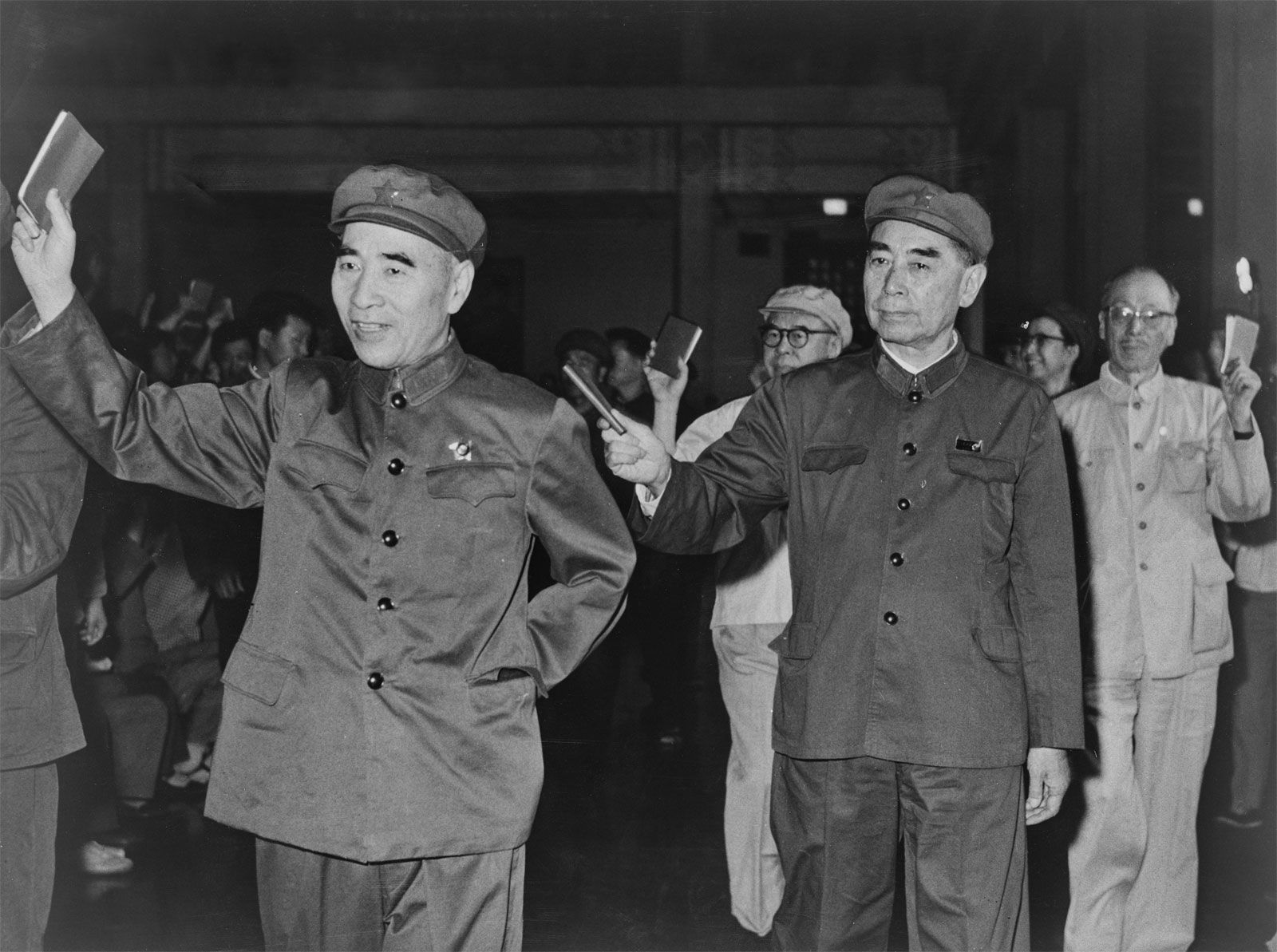
Lin Biao
 China
ChinaAlso known as: Lin Yurong, Lin Piao
Birthday
December 5, 1907
Birth Sign
Sagittarius
Birthplace
Huanggang, Hubei Province
Age
Died at 63
About
Lin Biao was a Chinese politician and military commander who played a pivotal role in the establishment of the People's Republic of China. Born Lin Yurong in 1907, he rose through the ranks of the Communist Party to become one of its most influential generals. He is best known for his strategic victories during the Chinese Civil War, particularly the Liaoshen and Pingjin campaigns, which secured Communist control over northern China. In 1955, he was named one of the Ten Marshals of the People's Republic of China, holding the third-highest rank among them.
His career reached its zenith during the Cultural Revolution, when he was designated as Mao Zedong's successor and became the sole Vice Chairman of the Communist Party. However, his status collapsed abruptly in 1971 following a failed coup attempt against Mao. Lin Biao died in a plane crash in Mongolia under disputed circumstances, and the official narrative branded him a traitor. His legacy remains complex, oscillating between recognition as a brilliant military tactician and condemnation as a conspirator. He holds no formal rehabilitation, and his name still functions as shorthand for the fragility of power in Mao's China.
Early Life & Background
Lin Biao was born Lin Yurong on December 5, 1907, in Huanggang, Hubei Province, into a modest landholding family. He was the youngest of several brothers, and his early exposure to revolutionary ideas came through two cousins, Lin Yunan and Lin Yuying, who were active in the Socialist Youth League. This family connection drew him into the movement around 1925. He entered the Whampoa Military Academy, where he received formal training as an officer and first attracted the attention of Communist leaders.
By his mid-twenties, Lin had participated in the Northern Expedition and the 1927 Nanchang Uprising, which marked the founding armed action of the Red Army. He quickly distinguished himself as a capable commander, leading the Red Army's First Corps. During the Long March and the Jiangxi Soviet period, he earned a reputation as a prodigy of maneuver warfare and became one of Mao Zedong's most trusted field commanders. These early years laid the foundation for his future prominence, establishing his tactical acumen and loyalty to the party cause before he ever held high political office.
Career Growth
During the Second Sino-Japanese War and the subsequent Chinese Civil War, Lin commanded the Northeast (Manchurian) Field Army, later known as the Fourth Field Army. He masterminded the Liaoshen campaign in 1948 and the Pingjin campaign from 1948 to 1949, operations that destroyed Nationalist forces in Manchuria and North China and opened the way for the People's Liberation Army's entry into Beijing. His armies subsequently drove Kuomintang forces from China's southeastern coast.
In 1955, the new state honored his achievements by naming him the third of the Ten Marshals. After 1949, he largely withdrew from politics due to chronic ill health but returned as Vice Premier in 1954. He became a Vice Chairman of the CCP in 1958 and replaced Peng Dehuai as Minister of National Defense in 1959. In this role, he became the chief architect of the Mao personality cult, driving the mass distribution of Quotations from Chairman Mao Tse-tung, known as the Little Red Book. Elevated during the Cultural Revolution, he was designated Mao's sole successor and became the Party's only Vice Chairman. Tensions over succession and the state-chairmanship post peaked around the 1970 Lushan Plenum, and his status collapsed in 1970-1971 amid the alleged "Project 571" assassination plot attributed to his son Lin Liguo.
Career Timeline
Public Image & Style
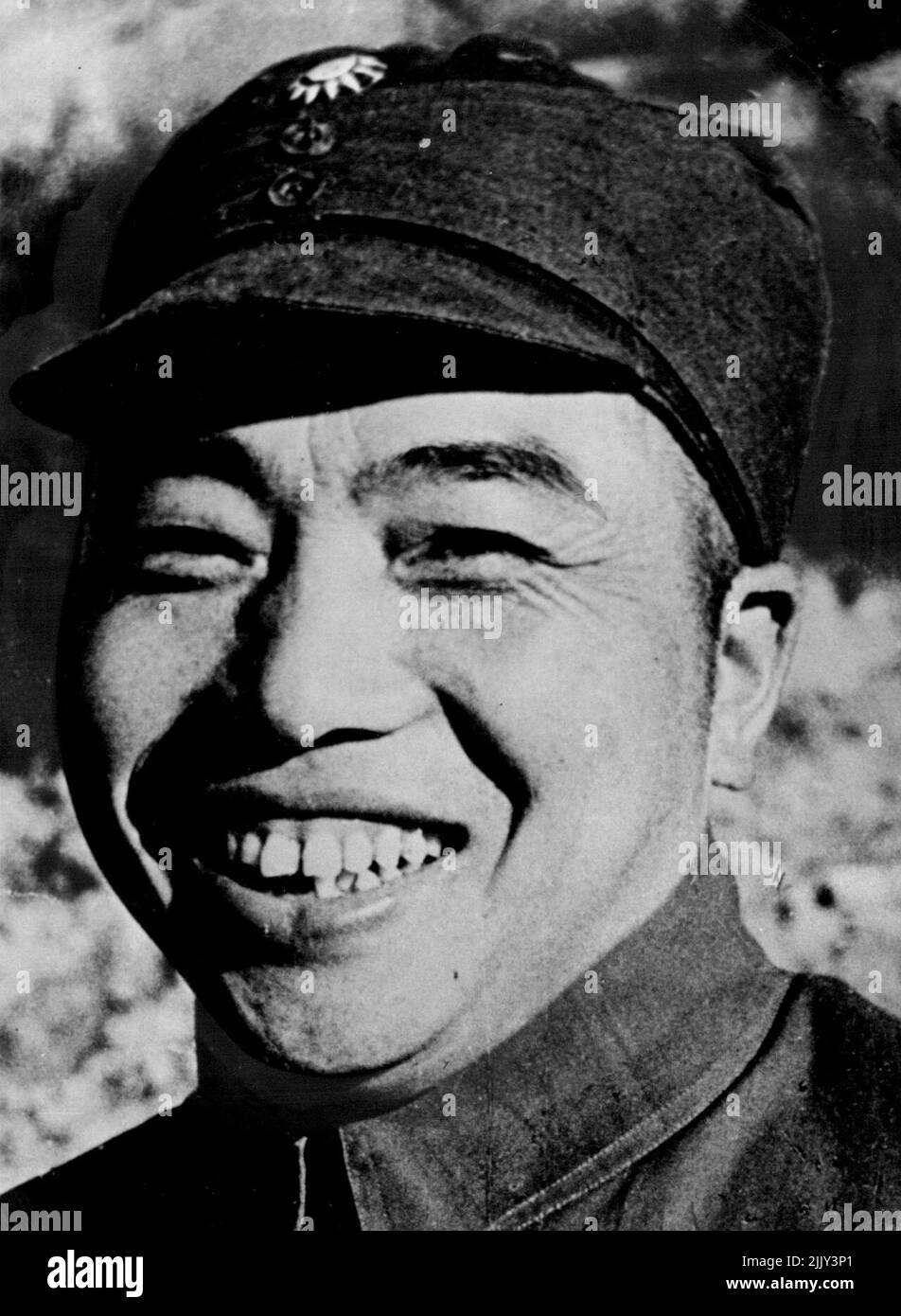
Lin Biao projected the image of an ascetic, hardline revolutionary, embodying military discipline and austere devotion to Mao's ideology. Contemporary accounts describe him as slight and physically frail, of below-average height, with a gaunt face and a reputation for chronic illness, including tuberculosis and neurasthenia, that shaped both his career withdrawals and his public persona. After 1971, official media portrayed him as a traitor and conspirator, blaming him alongside Jiang Qing for the worst excesses of the Cultural Revolution. Internationally, he is remembered as a cautionary tale about the fragility of power in Mao's China.
Fame & Fandom (iFAMOUS Rankings)
Lin Biao's name, once chanted at rallies as Mao's "closest comrade-in-arms," now echoes mostly in history books and conspiracy forums. The man who helped turn the Little Red Book into a global icon has no formal fandom, no fan clubs, no birthday billboards, no organized campaigns. His most devoted followers are historians and political junkies, mostly outside China, who debate the still-unsolved mystery of his 1971 plane crash over Mongolia. That crash, and the alleged coup that preceded it, turned Lin into a cautionary tale, a ghost in the machine of Chinese political memory.
Yet even in disgrace, his fame endures. Lin Biao is currently the 81st most famous person in China, a steady position from the previous cycle. Globally, he holds the 48th most famous person from China, also holding steady since the last ranking. These placements, drawn from the iFANN Global Fame Rankings, track attention across a spectrum of media, search, and consumption signals worldwide. For a man officially erased from the narrative for decades, that's a stubborn kind of immortality.
Interesting Facts and Legends
Lin Biao's most famous attributed statement is his effusive praise of Mao as a "genius" whose thought was the "highest expression" of Marxism-Leninism, language he used to elevate the personality cult in the early 1960s. He also reportedly said, in his final period, that he was "not suited" to political maneuvering, though sourcing for private remarks is weak and most verbatim quotes circulate through official Party documents rather than independent transcripts.
His honours were sweeping and then erased. He was named a Marshal of the People's Republic of China in 1955, the third-ranked of the Ten Marshals, and he sat on the Politburo Standing Committee as the Party's sole Vice Chairman in his final years. All honours were posthumously revoked after 1971; he holds no Hall of Fame, star, or modern award, and no formal rehabilitation has occurred. The other Ten Marshals included Zhu De, Peng Dehuai, He Long, Liu Bocheng, Chen Yi, Luo Ronghuan, Xu Xiangqian, Nie Rongzhen, and Ye Jianying. His career milestones run from joining the Communist Youth movement in 1925 and entering Whampoa, through the 1927 Nanchang Uprising and command of the Red Army First Corps in the early 1930s, the Long March of 1934-35, the 1948 Liaoshen victory, the 1948-49 Pingjin campaign, the 1954 Vice Premiership, the 1955 Marshal rank, the 1958 CCP Vice Chairmanship, and the 1959 Defense Ministry post, to the Cultural Revolution ascent of 1966-69 and the 1970 Lushan Plenum tensions.
Notable Quotes
“Mao Zedong thought is the highest expression of Marxism-Leninism.”
“I am not suited to political maneuvering.”
Family & Personal Life
Lin Biao married Zhang Mei in an arranged marriage during his youth, but the union produced no lasting partnership, and he eventually left her; sources treat the marriage as largely nominal. His principal wife was Ye Qun, a fellow Communist whom he married in the early 1940s. She became a powerful political operator in her own right and died alongside him in the 1971 crash. They had two children: a daughter, Lin Doudou (Lin Xiaolin), born 1941, and a son, Lin Liguo, born 1945. Lin Liguo was a PLA Air Force officer and the alleged organizer of the "Project 571" coup plot. Following Lin's death, his surviving family members, including his daughter, suffered persecution and exile.
Notable Connections
Mao Zedong, Ye Qun, Lin Liguo, Lin Doudou, Peng Dehuai, Zhou Enlai, Jiang Qing, Zhu De, He Long, Liu Bocheng, Chen Yi, Luo Ronghuan, Xu Xiangqian, Nie Rongzhen, Ye Jianying.
Relationships & Dating History
Because Lin died in 1971, there is no modern dating history to report; his romantic life consisted of two marriages. The first was an arranged union with Zhang Mei during his youth, a largely nominal match that produced no lasting partnership. His principal wife was Ye Qun, a fellow Communist whom he married in the early 1940s. She became a powerful political operator in her own right and died alongside him in the 1971 crash. Together they had a daughter, Lin Doudou, born 1941, and a son, Lin Liguo, born 1945, who was a PLA Air Force officer and the alleged organizer of the "Project 571" coup plot. Latest status: deceased, died September 13, 1971; no living spouse, as Ye Qun died with him.
- MarriedZhang Meiunknown - unknownArranged marriage in youth; nominal union ended before major political career.
- MarriedYe Qun1940 - 1971Principal wife and political partner; died with him in plane crash.
Death & Aftermath
Died
September 13, 1971 (aged 63)
Death Place
Öndörkhaan, Mongolia
Cause of Death
Plane crash due to fuel exhaustion
On the night of September 12, 1971, Lin Biao boarded a Hawker Siddeley Trident 1E jet at Shanhaiguan Airport alongside his wife Ye Qun and son Lin Liguo. The aircraft departed for what was intended to be an escape to the Soviet Union but crashed into the Mongolian steppe near Öndörkhaan shortly after midnight on September 13, killing Lin at age 63. Official narratives established by the Chinese government attributed the disaster to fuel exhaustion or a forced landing attempt while fleeing Beijing, though alternative accounts suggesting sabotage, navigational panic, or a Mao-ordered kill remained unverified rumors. His daughter Lin Doudou has argued he was effectively kidnapped by his own son. Soviet and Mongolian investigators reportedly found the bodies and examined the wreckage, but no independent legal inquest was ever held. The death triggered an immediate political purge rather than a legal proceeding. Within days, the Communist Party condemned Lin as a traitor and counter-revolutionary, launching investigations that removed thousands of military officers from power.
For decades, official historiography vilified him, erasing his image from public life while state media mandated nationwide denunciations. Posthumous treatment involved the seizure of his estate and severe persecution of surviving family members, including the exile of his daughter Lin Doudou. While academic re-evaluation began in the 1990s, no formal rehabilitation has occurred. The incident remains a touchstone in political commentary: in 2023, The Diplomat compared Wagner Group leader Yevgeny Prigozhin's death to a "Lin Biao moment," and in 2026 commentators still invoke his purge as a template for understanding Xi Jinping's military purges. His legacy remains one of cautionary tales in published works like On the Other Side of the Desert, serving as a historical warning rather than a subject of honor.
Net Worth (Estate Value)
No credible contemporary net worth estimate exists for Lin Biao. Any figure circulating online is speculative. His estate was seized by the state following his denunciation in 1971, and no estate-management structure, royalties stream, or posthumous licensing operation exists in the Western sense. Treat any dollar figure as unverifiable.
Awards Won (1)
Lin Biao was named one of the Ten Marshals of the People's Republic of China in 1955, receiving the third-highest military honor. All honours were posthumously revoked after 1971; he holds no Hall of Fame, star, or modern award, and no formal rehabilitation has occurred.
1955 · Military Honor
Service to the People's Liberation Army
Known For
Liaoshen Campaign
1948 · Commander
Pingjin Campaign
1949 · Commander
Little Red Book
1964 · Promoter
Keywords
Sources
Quick Facts
- Profession
- politician, military personnel
- Born
- December 5, 1907
- Birthplace
- Huanggang, Hubei Province
- Died
- September 13, 1971
- Death Place
- Öndörkhaan, Mongolia
- Gender
- Male
- Spouse
- Ye Qun, Zhang Mei
- Birth Sign
- Sagittarius
Personal Details
- Full Name
- Lin Yurong
- Spouse
- Ye Qun, Zhang Mei
- Children
- Lin Doudou, Lin Liguo
- Education
- Whampoa Military Academy
Frequently Asked Questions
How did Lin Biao die?
Was Lin Biao a traitor?
Who was Lin Biao's wife?
What was Lin Biao famous for?
Why did Lin Biao fall out with Mao?
Join the community
fans discussing