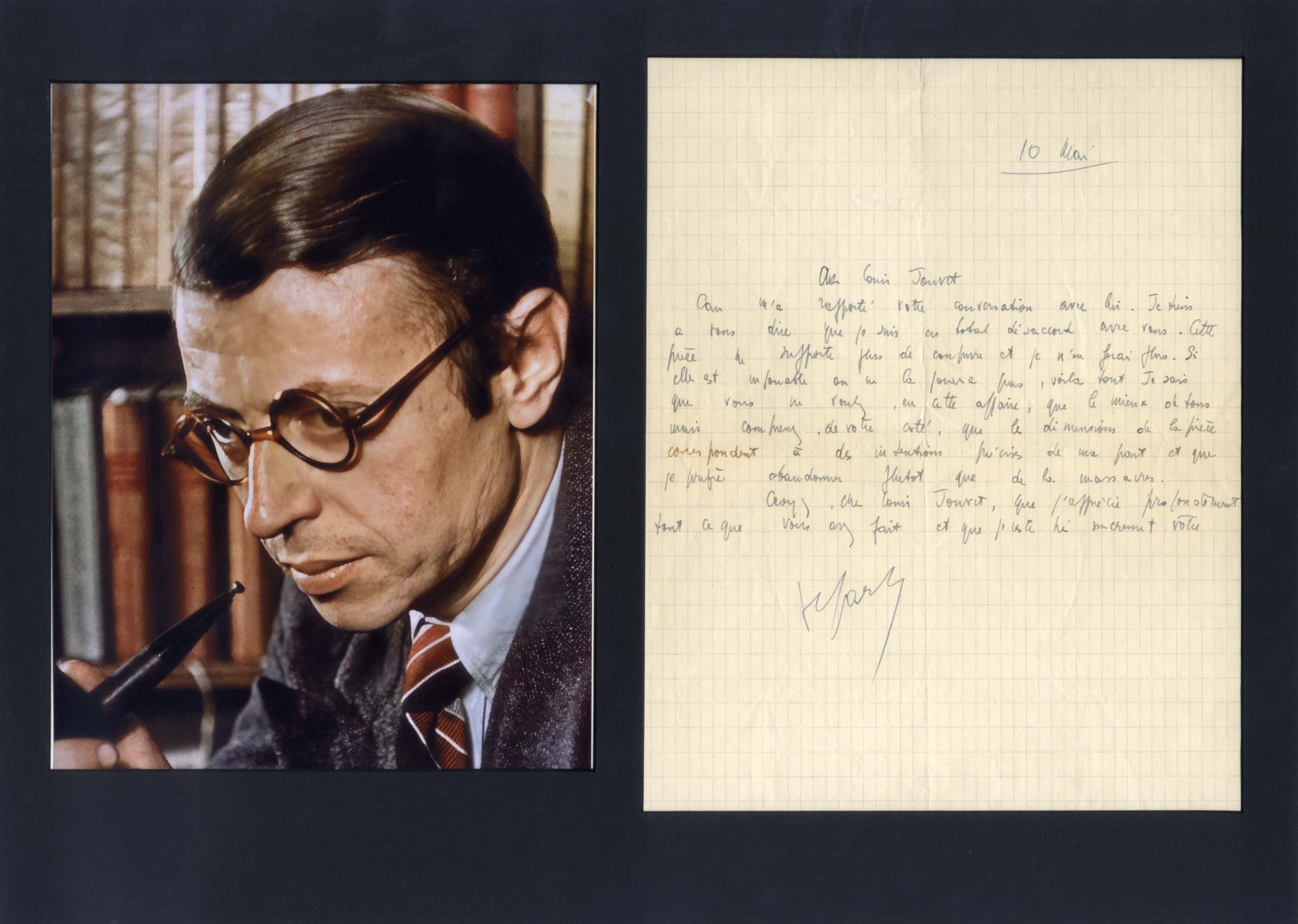
Jean-Paul Sartre
 France
philosopher•playwright•novelist•literary critic•political activist
Also known as: J.P. Sartre, Jean-Paul Charles Aymard Sartre
Birthday
June 21, 1905
Birth Sign
Sagittarius
Birthplace
Paris, France
Age
Died at 74
About
Jean-Paul Sartre was a French philosopher, playwright, novelist, literary critic, and political activist who became the leading figure of existentialism in the 20th century. Born Jean-Paul Charles Aymard Sartre on June 21, 1905, in Paris, he was the only child of Anne-Marie Schweitzer and Jean-Baptiste Sartre. His father died when Sartre was just 15 months old, leaving him to be raised primarily by his maternal grandfather, Charles Schweitzer, a polyglot German teacher who instilled in him a deep love for literature and philosophy. This early loss and the subsequent intense bond with his grandfather shaped Sartre's introspective nature and his lifelong aversion to conventional family structures.
Sartre's intellectual journey began at the prestigious Lycée Henri-IV in Paris, where he excelled in literature and philosophy. He passed the agrégation in 1929 and began his career as a philosophy teacher. During this period, he immersed himself in the works of Edmund Husserl and Martin Heidegger while studying at the École Normale Supérieure. It was here that he met Simone de Beauvoir, a fellow student who would become his lifelong intellectual partner and romantic companion. Their relationship, characterized by an open agreement to avoid marriage and exclusivity, defined his personal life more than any traditional institution could.
Early Life & Background
Born into a family of modest means in Paris, Jean-Paul Sartre lost his father to illness when he was barely a year and a half old. His mother, Anne-Marie, was left to raise him alone, but she quickly relied on her own father, Charles Schweitzer, to take the lead in the boy's upbringing. Charles was a polyglot German teacher who introduced young Jean-Paul to the classics of European literature and philosophy long before he entered formal schooling. This domestic environment fostered a deep sense of introspection and a detachment from the conventional social norms of the time.
Sartre attended the Lycée Henri-IV, one of the most elite schools in Paris, where he demonstrated exceptional aptitude in literature and philosophy. By 1924, he enrolled at the École Normale Supérieure (ENS) to study philosophy. It was during these formative years that he encountered the works of Edmund Husserl and Martin Heidegger, which would fundamentally shape his philosophical outlook. In 1929, he completed his studies and passed the agrégation, the rigorous competitive exam required to teach in French high schools, placing second in his class. He began his teaching career in Le Havre, Laon, and eventually Paris, all while continuing to write and engage in spirited intellectual debates with his peers.
Career Growth
Sartre's breakthrough arrived in 1938 with the publication of his novel Nausea, which introduced existentialist themes to a broader audience. However, his most significant philosophical work, Being and Nothingness (L'Être et le Néant), was published in 1943. This dense treatise established him as a major intellectual force. The war years saw Sartre drafted into the French army in 1939; he was captured by German forces in 1940 and held as a prisoner of war for nine months. Upon his release, he returned to Paris to teach and write, co-founding the influential journal Les Temps modernes in 1946 alongside de Beauvoir and others.
His 1946 lecture "Existentialism Is a Humanism" catapulted him to international celebrity status, drawing massive crowds to the Sorbonne. Throughout the 1950s and 1960s, Sartre's influence expanded beyond philosophy into politics. He became a vocal critic of colonialism, particularly regarding the Algerian War, and aligned himself with leftist causes, attempting to synthesize existentialism with Marxism. In 1964, the Swedish Academy awarded him the Nobel Prize in Literature. In a move that shocked the world, Sartre declined the award, stating that he had always refused official honors and did not want to be "transformed into an institution." Despite this refusal, the prize money was later donated to various organizations.
Career Timeline
Public Image & Style
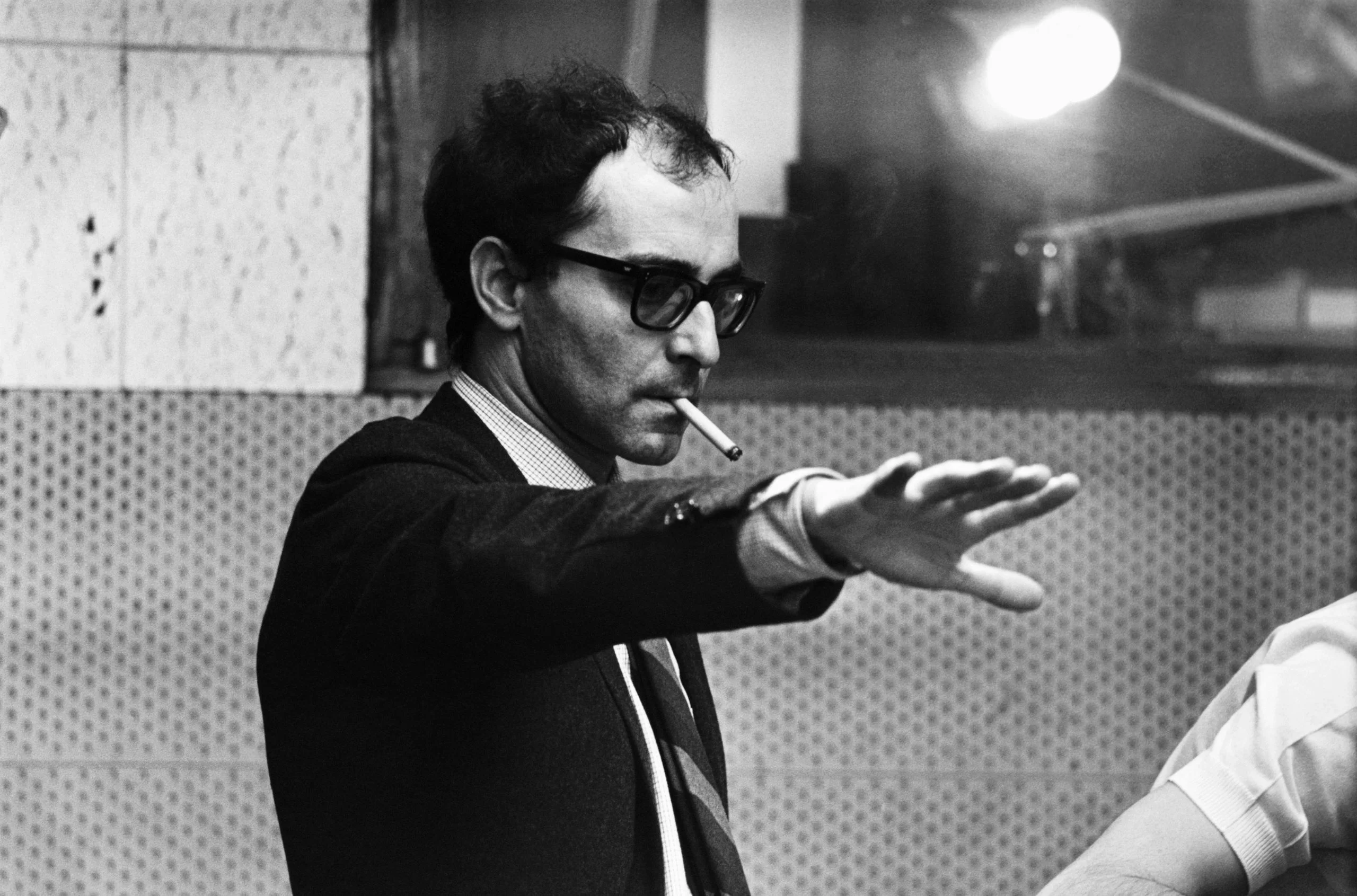
Sartre was known for his distinctive appearance: tall, thin, with a prominent nose and wild, unkempt hair. He was often depicted wearing a dark suit and chain-smoking Gauloises cigarettes, a habit that contributed to his respiratory issues and eventual death. His public persona was that of the engaged intellectual, someone who believed that writing and thinking were acts of political commitment. He rejected the idea of the detached observer, insisting that writers must take sides in the struggles of their time. This stance made him a polarizing figure; admirers saw him as the conscience of the century, while critics viewed him as a troublesome radical who compromised his art for ideology.
Fame & Fandom (iFAMOUS Rankings)
Sartre's admirers have never coalesced under a single moniker, distinguishing his legacy from the organized tribes of modern pop culture. His following remains a diffuse collection of philosophy students, academics, and readers drawn to the enduring power of his concepts rather than a shared identity or ritual. While there are no fan clubs or chart campaigns, the audience manifests through sustained engagement with his work, particularly the regular theatrical revivals of No Exit across the United States. This intellectual devotion keeps the conversation alive without the need for formal structures.
The scope of this cultural footprint is measured by the iFANN Global Fame Rankings, which track global attention across media coverage, search, and consumption signals worldwide. Jean-Paul Sartre stands as the 69th most famous person in France, a position he has climbed from last cycle, reflecting his deep roots in national history. Within the specific realm of Books & Literature, he holds the 39th spot, maintaining his standing among the greats of the industry. These placements confirm that while he lacks a named fandom, his influence remains a dominant force in French culture and literary studies.
Interesting Facts and Legends
Decades after his death, Sartre's refusal of the Nobel Prize in Literature in 1964 remains the defining story of his later life. He declined the honor to avoid being transformed into an institution, a decision that cemented his reputation for fierce independence. Another verified phenomenon from his peak years involves his public lectures, where thousands of Parisians would pack into venues like the Sorbonne. The crowd at his 1945 lecture on "Existentialism is a Humanism" was so immense that people fainted in the crush, creating a legendary image of the philosopher as a magnetic public figure.
While the romanticized myth of Sartre chain-smoking Gauloises in cafés like Les Deux Magots is now part of cultural lore, the reality of his presence there was equally significant. The line "Hell is other people" from his play No Exit has transcended theater to become a universal shorthand for social friction. Even his political activism left a lasting mark; during the May 1968 protests, the elderly philosopher was photographed selling revolutionary newspapers on the streets of Paris, blending his intellectual stature with direct action.
Notable Quotes
“Man is condemned to be free; because once thrown into the world, he is responsible for everything he does.”
“Hell is other people.”
“Existence precedes essence.”
“It's quite an undertaking to start loving somebody. You have to make a leap of faith.”
“Freedom is what you do with what's been done to you.”
Family & Personal Life
Jean-Paul Sartre never married and had no biological children. His primary romantic and intellectual partnership was with Simone de Beauvoir. They met in 1929 at the École Normale Supérieure. Their relationship began in 1929 and lasted until Sartre's death in 1980, spanning over five decades. They signed a "contract" in 1929 agreeing to remain free to pursue other relationships if necessary, though they maintained a core emotional bond. While both engaged in other affairs, Sartre with artists like Bianca Bienenfeld and Olga Kosakiewicz, and de Beauvoir with Nelson Algren, their relationship remained the central axis of their lives. There were no legal marriages or divorces. Sartre's status at the time of his death was effectively widowed by circumstance, as de Beauvoir outlived him by six years.
Notable Connections
Simone de Beauvoir, Albert Camus, Georges Bataille, Francis Jeanson, François Mitterrand.
Relationships & Dating History
Jean-Paul Sartre never married and had no biological children. His primary romantic and intellectual partnership was with Simone de Beauvoir. They met in 1929 at the École Normale Supérieure. Their relationship began in 1929 and lasted until Sartre's death in 1980, spanning over five decades. They signed a "contract" in 1929 agreeing to remain free to pursue other relationships if necessary, though they maintained a core emotional bond. While both engaged in other affairs, Sartre with artists like Bianca Bienenfeld and Olga Kosakiewicz, and de Beauvoir with Nelson Algren, their relationship remained the central axis of their lives. There were no legal marriages or divorces. Sartre's status at the time of his death was effectively widowed by circumstance, as de Beauvoir outlived him by six years.
- DatedSimone de Beauvoir1929 - 1980Lifelong intellectual partner and romantic companion; signed a pact in 1929 to remain free from marital obligations.
- DatedBianca Bienenfeld1937 - 1940Brief affair during the war years.
- DatedOlga Kosakiewicz1937 - 1940Relationship ended with Kosakiewicz's suicide.
Death & Aftermath
Died
April 15, 1980 (aged 74)
Death Place
Paris, France
Cause of Death
Pulmonary edema from chronic heart and respiratory issues
Jean-Paul Sartre died on April 15, 1980, at his home at 48 rue de Rennes in the 14th arrondissement of Paris. The cause of death was pulmonary edema resulting from chronic heart and respiratory issues that had plagued him for decades, exacerbated by a lifelong habit of heavy smoking. He passed away at 4:00 PM, surrounded by Simone de Beauvoir, who had been his constant companion and intellectual partner for over fifty years. The public reaction to his passing was immediate and unprecedented in scale. On April 16, 1980, his funeral procession became one of the largest in modern French history, with estimates ranging from 50,000 to 100,000 mourners lining the streets of Paris to pay their respects. Notable figures in attendance included President François Mitterrand, who delivered a eulogy praising Sartre as the "conscience of the century." The service itself was private, followed by cremation at the Père Lachaise Crematorium, and his ashes were interred at the Cimetière du Montparnasse alongside other notable French figures.
Following his death, sales of his books surged dramatically, with Being and Nothingness and Nausea re-entering bestseller lists worldwide. Tributes poured in from UNESCO and various intellectual institutions globally. Posthumously, his legacy has only grown, with his works remaining staples in university curricula across the globe. His estate is administered by Éditions Gallimard, his longtime publisher, ensuring the continued publication of his works and the management of his intellectual property rights. The enduring commercial success of his bibliography continues to generate significant revenue through book royalties, theatrical licensing fees for plays like No Exit, and academic licensing deals.
Net Worth (Estate Value)
$130 Million
iFANN Editorial Team estimate
As Jean-Paul Sartre died in 1980, his net worth is now part of his posthumous estate value. Unlike modern celebrities with active business empires, Sartre's wealth was modest during his lifetime, derived from book royalties and teaching salaries. However, his estate has generated significant revenue since his death through continuous global sales of his works, licensing deals for his plays (particularly No Exit and The Flies), and translations.
iFANN currently estimates Sartre's estate value at approximately $130 million. This valuation reflects the enduring commercial success of his bibliography and the management by Éditions Gallimard. The estate generates between $5 million and $10 million annually in royalties and licensing fees globally. Revenue streams include book royalties, theatrical licensing fees for plays like No Exit and Huis Clos, film adaptations, and academic licensing. The estate is administered by Éditions Gallimard, Sartre's longtime publisher, and his literary heirs. As of 2026, the accumulated value of the estate, driven by the perpetual demand for existentialist texts and theatrical rights, sits at roughly $130 million.
Awards Won (2)
Jean-Paul Sartre received numerous accolades throughout his life, though he famously declined the most prestigious of them. In 1964, he was awarded the Nobel Prize in Literature for his work promoting human freedom and truth, but he refused the honor to avoid being institutionalized. He was also stripped of the Legion of Honour by the French government in 1964 following his refusal of the Nobel Prize. Despite his refusals, he received honorary doctorates from several universities, including the University of Oxford in 1975 and the University of Cambridge in 1976.
1964 · Literature
Body of Work
1945 · National Decoration
Contribution to French Culture
Known For
No Exit
1944 · Playwright
Being and Nothingness
1943 · Philosophical Treatise
Nausea
1938 · Novel
The Family Idiot
1971 · Biography
Keywords
Sources
Quick Facts
- Profession
- playwright, epistemologist, novelist
- Born
- June 21, 1905
- Birthplace
- Paris
- Died
- April 15, 1980
- Death Place
- 14th arrondissement of Paris
- Gender
- Male
- Birth Sign
- Sagittarius
Personal Details
- Full Name
- Jean-Paul Charles Aymard Sartre
- Children
- Education
- École Normale Supérieure (ENS), Lycée Henri-IV
Frequently Asked Questions
Did Jean-Paul Sartre ever get married?
Why did Jean-Paul Sartre refuse the Nobel Prize?
Who was Jean-Paul Sartre's main partner?
What is Jean-Paul Sartre famous for?
How did Jean-Paul Sartre die?
Similar People
Join the community
fans discussing