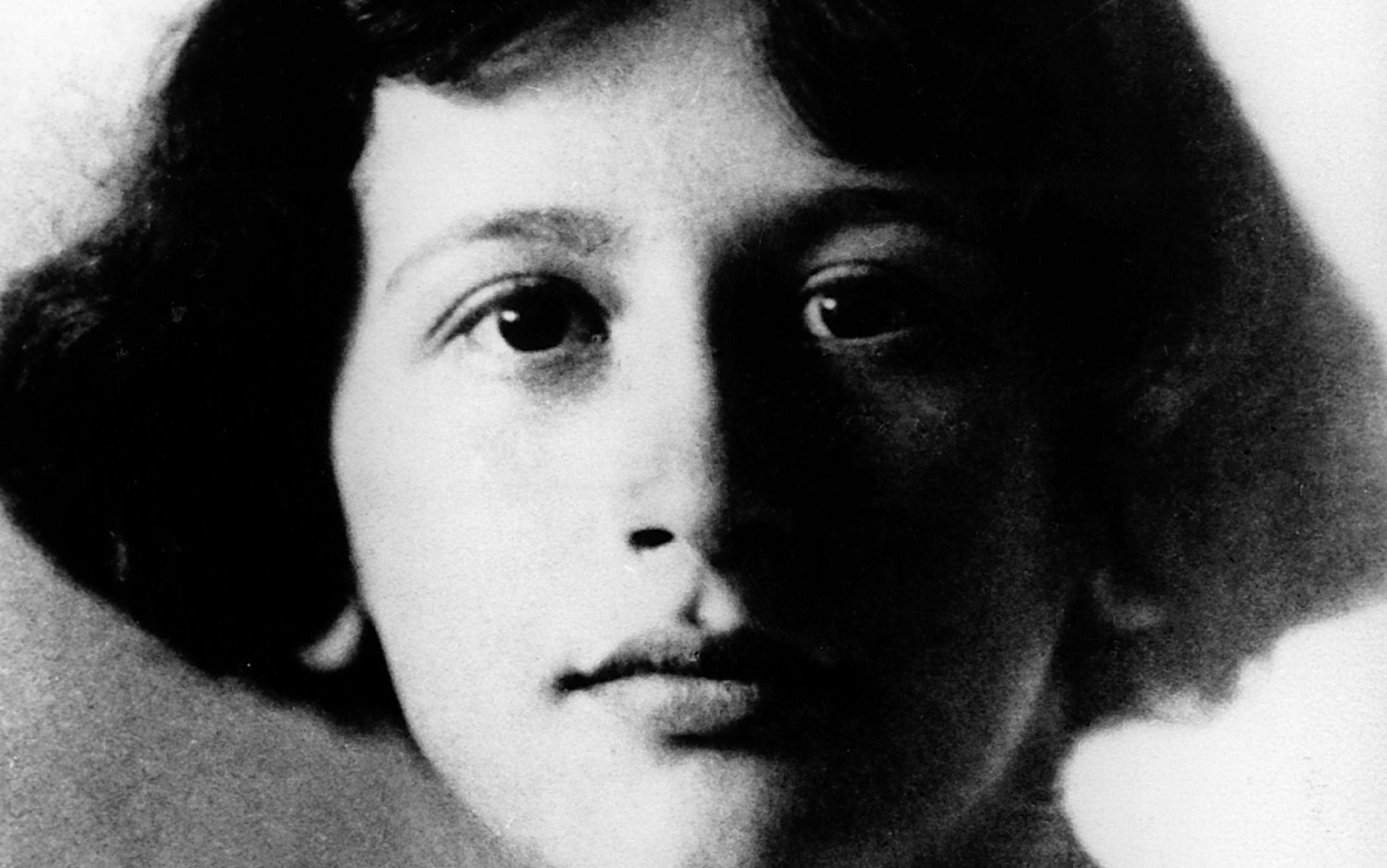
Simone Weil
 France
philosopher•mystic•political activist•laborer
Also known as: Simone Adolphine Weil
Birthday
February 3, 1909
Birth Sign
Aquarius
Birthplace
Paris, France
Age
Died at 34
Height
5 ft 4 in (163 cm)
About
Simone Adolphine Weil was a French philosopher, mystic, political activist, and laborer whose brief life left an outsized mark on contemporary thought. Born in Paris on February 3, 1909, to an Alsatian Jewish family, she grew up in a household that valued intellect; her older brother, André Weil, went on to become a celebrated mathematician. After completing her formal education, Weil became a secondary school teacher, though her career was frequently interrupted by poor health and a restless commitment to political causes.
Throughout the 1930s, she taught intermittently while throwing herself into activism, supporting the trade union movement and famously siding with the anarchists of the Durruti Column during the Spanish Civil War. To better understand the working class, she spent a year working in factories, mostly in car plants, an experience that deeply shaped her social and political philosophy. Her intellectual journey took a spiritual turn as she grew older. She was drawn to the ascetic and egalitarian strands of Christianity, and her later years were marked by intense religious and mystical experiences.
In 1943, while working for the Free French government in exile in Britain, she died of heart failure at age 34. Her death was likely hastened by her own self-denial: she restricted her food intake to show solidarity with those suffering under Nazi occupation in France. Her uncompromising ethics, which some saw as extreme, were a hallmark of her character. Though Weil wrote prolifically throughout her life, most of her work remained unpublished until after her death. In the 1950s and 1960s, her writings gained widespread recognition across continental Europe and the English-speaking world. Her philosophical and theological ideas continue to inspire scholarship in fields as varied as politics, society, feminism, science, education, and classics.
Early Life & Background
Simone Weil was born into a secular, assimilated Jewish family in Paris, but her upbringing was defined by rigorous intellectual engagement rather than religious observance. Her father, Gustave Weil, a distinguished physician and professor of medicine, and her mother, Catherine Weil, a pianist, fostered an environment where critical thinking was paramount. This atmosphere produced a prodigy who entered the Lycée Henri-IV at age twelve, where she excelled in philosophy and mathematics. By the time she reached the prestigious École Normale Supérieure, she had already established herself as one of the top students in her cohort, graduating in 1929 as one of the first women to do so.
Her early career as a secondary school teacher began in 1931, teaching in provincial towns like Montferrand and Clermont-Ferrand. Weil found the rigid structure of the French educational system stifling and often clashed with administrators over their lack of attention to individual student needs. Her health suffered under the strain, leading to frequent periods of illness that forced her to take breaks from teaching. These interruptions were not merely physical; they reflected a growing dissatisfaction with the abstract nature of academic life and a desperate need for direct contact with reality.
A pivotal shift occurred in 1934 when she briefly joined the Communist Party, only to leave quickly due to its authoritarian tendencies. The defining moment of her pre-fame era arrived between 1935 and 1936. Rejecting the safety of her academic position, she abandoned her teaching post to work in factories, including Renault, to understand the physical and spiritual toll of industrial labor. This decision was radical for a woman of her background. She endured grueling shifts, severe exhaustion, and fainting spells, viewing this suffering as a necessary bridge between the intellectual elite and the proletariat. This period of manual labor fundamentally altered her worldview, grounding her philosophy in the harsh realities of the working class.
Career Growth
Weil's career trajectory shifted dramatically from secular activism to mystical philosophy following her experiences in the factory and the Spanish Civil War. In 1936, she traveled to Spain to fight for the Republic, joining the Durruti Column. Her involvement was short-lived; after only two weeks, she was wounded in the neck by a stray bullet. During her recovery in a hospital in Barcelona, she experienced a profound mystical vision of Christ on the cross. This event marked a turning point, shifting her focus toward Christian mysticism while retaining her Jewish identity.
Returning to France, she continued to write and teach intermittently, producing influential essays on politics, religion, and labor. Her work during this period explored the concepts of "gravity" and "grace," distinguishing between the forces that bind humanity to material suffering and the divine love that lifts it beyond. In 1938, she published a series of articles on the condition of workers, solidifying her reputation as a unique voice in social theory.
In 1942, despite her frail health, she moved to London to work for the Free French government under Charles de Gaulle. There, she worked tirelessly on propaganda and intelligence analysis, often ignoring medical advice regarding her diet. She voluntarily restricted her food intake to share the suffering of starving French citizens under Nazi occupation. This final act of solidarity led to her collapse and subsequent death in 1943. Although she died young, her posthumous publications, particularly Gravity and Grace and The Need for Roots, cemented her status as a major figure in 20th-century thought.
Career Timeline
Public Image & Style
Simone Weil cultivated a public persona defined by radical integrity and asceticism. She rejected the comforts of her privileged background to live in conditions that mirrored the suffering of the working class. Her image is that of a solitary figure, driven by an uncompromising moral compass that demanded personal sacrifice. Unlike many contemporaries who sought political power or academic prestige, Weil chose isolation and hardship as her path to truth.
Her writing style is dense, poetic, and often paradoxical, reflecting her struggle to articulate mystical experiences through rational language. Media portrayals of her often emphasize her tragic end and her refusal to compromise her principles. She is remembered not as a celebrity but as a saintly figure in the realm of philosophy, someone who lived her ideas with such intensity that her life became a testament to her beliefs. Her aesthetic was one of simplicity and austerity, mirroring her internal state and her rejection of material excess.
Fame & Fandom (iFAMOUS Rankings)
Simone Weil never courted a crowd, nor did she ever cultivate a legion of devotees who plastered her face on subway ads or orchestrated birthday chart pushes. Her life ended in 1943 at the age of thirty-three, long before the machinery of modern celebrity could turn a thinker into an icon. The people who engage with her work today are not fans in the pop-culture sense; they are scholars, theologians, and activists who study texts like Gravity and Grace rather than stream songs or attend meet-and-greets. There is no official moniker for her audience, no organized fanbase that gathers to celebrate her legacy with rituals or inside jokes. Her influence remains a quiet, intellectual current flowing through philosophy and religious thought, defined by the intensity of her witness to suffering rather than the noise of public adoration.
While her name resonates deeply within academic circles, the 100th most famous person from France according to the iFANN Global Fame Rankings. Simone Weil is not featured on the August 2026 iFAMOUS Rankings flagship list. Her legacy is sustained by the continuous translation of her manuscripts and the organization of symposia dedicated to her ideas, rather than commercial metrics or viral trends.
Interesting Facts and Legends
One notable anecdote involves Weil refusing to take a shower because she believed it was a luxury that distracted from the suffering of others. Her philosophy influenced many prominent thinkers, including Hannah Arendt and Jean-Paul Sartre, despite her relatively small body of published work during her lifetime. She was a pacifist who nonetheless felt compelled to fight in the Spanish Civil War, a contradiction that highlights the complexity of her ethical stance. Another interesting fact is that she once weighed only 60 pounds (27 kg) at the time of her death, a physical manifestation of her voluntary starvation.
Her quote, "Attention is the rarest and purest form of generosity," has become widely cited in modern discussions on mindfulness and the attention economy. In September 2026, an article titled "Rights that call for duties: Simone Weil and the need of a declaration of obligations toward the human being" was published in *Frontiers in Education*, highlighting her continued relevance. Additionally, discussions on "Simone Weil & Animal Suffering" appeared in *Philosophy Now* in August 2026, exploring her ethical views on non-human life.
Notable Quotes
“Imaginary evil is romantic and varied; real evil is gloomy, monotonous, barren, boring.”
“Attention is the rarest and purest form of generosity.”
“To love one's neighbor is to see him as he is, and to wish him well.”
“The true miracle is that we can think.”
“We must learn to see the world as it is, not as we wish it to be.”
Family & Personal Life
Simone Weil was born into a prominent secular Jewish family in Paris. Her father, Gustave Weil, was a distinguished physician and professor of medicine, while her mother, Catherine Weil, was a pianist. The household was steeped in intellectual rigor and cultural appreciation. Her older brother, André Weil, became one of the most celebrated mathematicians of the 20th century, known for his foundational work in number theory. Despite their shared brilliance, Simone and André had very different paths; while he pursued pure mathematics, she sought truth through suffering and activism.
After her death, her brother André managed her estate, ensuring the preservation of her manuscripts and overseeing the posthumous publication of her works. The household was known for its high standards of intellectual pursuit, where discussions on philosophy and art were commonplace. André's success in mathematics provided a stark contrast to Simone's path of physical and spiritual struggle, yet the bond between them remained strong throughout their lives.
Notable Connections
André Weil (brother, mathematician), Albert Camus (friend, philosopher), René Char (poet, friend), Charles de Gaulle (political leader)
Relationships & Dating History
Simone Weil never married and had no children. Throughout her life, she remained celibate and focused entirely on her intellectual and spiritual pursuits. While she had close friendships with various intellectuals, including Albert Camus and René Char, there are no records of romantic relationships, dating history, or engagements. Her life was characterized by a total dedication to her philosophy and a rejection of conventional domesticity. As of 2026, she remains deceased, and her status is single.
Death & Aftermath
Died
August 24, 1943 (aged 34)
Death Place
Northwood, Middlesex, England
Cause of Death
Tuberculosis exacerbated by chronic malnutrition and exhaustion
Simone Weil died on August 24, 1943, at Barnes Hospital in Northwood, Middlesex, England. Her body had been worn down by a voluntary adherence to strict fasting intended to share the suffering of starving populations in occupied France. The attending physicians ruled the cause as tuberculosis, a condition severely exacerbated by chronic exhaustion and severe malnutrition resulting from her self-imposed diet and work with the French Resistance. She collapsed from weakness in late July or early August before being admitted to the hospital, where she passed away at age thirty-four.
Immediate reaction among her peers was one of profound shock and mourning within the intellectual circles of the French Resistance and the Catholic community. Albert Camus, a close friend and fellow philosopher, was deeply affected and later organized the posthumous publication of her works. A private funeral took place shortly after her death, followed by cremation. Her ashes were scattered in the sea off the coast of Weymouth, Dorset, England.
Following her passing, her brother André Weil managed her estate to ensure the preservation of her manuscripts. Her literary legacy expanded rapidly with the 1947 publication of Gravity and Grace and the 1949 release of The Need for Roots. These collections transformed her from a little-known mystic into a globally influential philosopher. Numerous foundations and academic institutes have since been dedicated to her name, and her works continue to be studied extensively in philosophy, theology, and political science.
Net Worth (Estate Value)
$0
iFANN Editorial Team estimate
As a deceased philosopher from the mid-20th century, Simone Weil does not have a net worth in the modern sense of liquid assets or salary. Her estate, managed initially by her brother André Weil and later by publishers and foundations, generates revenue through book royalties, licensing deals, and academic publications. Exact figures are not publicly disclosed, but her estate is estimated to generate millions of dollars annually in royalties globally.
Major revenue sources include the sale of her collected works (Oeuvres complètes), translations, and academic editions. The estate is managed by her publishers, such as Gallimard in France and New Directions in the US, along with various foundations dedicated to preserving her legacy.
Awards & Accolades
View 6 records, honours and achievementsKnown For
Gravity and Grace
1947 · Author
The Need for Roots
1949 · Author
Waiting for God
1951 · Author
Keywords
Sources
Quick Facts
- Profession
- philosopher, secondary school teacher, writer
- Born
- February 3, 1909
- Birthplace
- Paris, France
- Died
- August 24, 1943
- Death Place
- Northwood, Middlesex, England
- Gender
- Female
- Birth Sign
- Aquarius
Personal Details
- Full Name
- Simone Adolphine Weil
- Height
- 5 ft 4 in (163 cm)
- Children
- Education
- Lycée Henri-IV; École Normale Supérieure (graduated 1929)
Frequently Asked Questions
Who was Simone Weil?
Why did Simone Weil die?
Did Simone Weil have children?
What is Simone Weil's most famous book?
Was Simone Weil a Christian?
Join the community
fans discussing