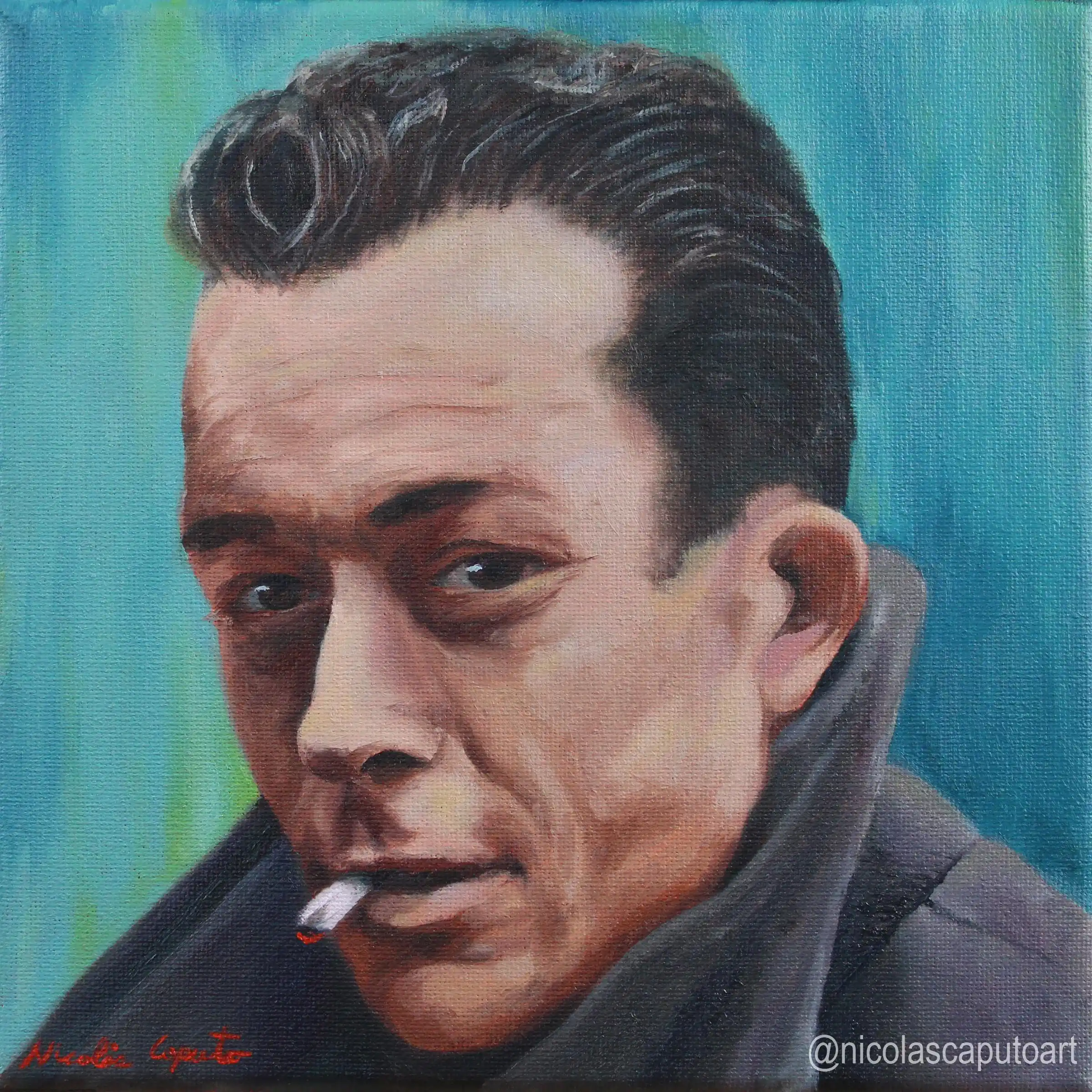
Albert Camus
 France
Also known as: Camus, Albert Camus
Birthday
November 7, 1913
Birth Sign
Scorpio
Birthplace
Mondovi (now Dréan), French Algeria
Age
Died at 46
Height
5 ft 7 in (170 cm)
About
Albert Camus was an Algerian-born French writer, philosopher, and journalist who became one of the most influential voices of the 20th century. He is best known for developing the philosophy of absurdism and for his novels that explore the human condition under extreme circumstances. In 1957, he received the Nobel Prize in Literature at age 44, making him the youngest recipient in history at that time. His work continues to be studied globally for its moral clarity and its confrontation with political tyranny.
Camus rejected the label of existentialist despite frequent association with Jean-Paul Sartre. Instead, he focused on the absurdity of life and the necessity of rebellion against meaninglessness. His legacy includes a vast body of work spanning novels, plays, essays, and journalism that addresses themes of poverty, resistance, and solidarity. Even decades after his death, his words resonate with readers seeking understanding of resilience and integrity.
Early Life & Background
Albert Camus was born into profound poverty in Mondovi, a small town in French Algeria. His father, Lucien, a World War I veteran, died in combat when Albert was just one year old. This loss left the family in dire financial straits. His mother, Catherine, who was partially deaf and worked as a cleaner, moved them to a cramped apartment in the Belcourt district of Algiers. Despite the harsh conditions, Camus's grandmother ensured he attended school. He excelled academically at the Lycée Bugeaud, where teachers recognized his talent even as his family struggled to survive.
A pivotal moment occurred when he was 17 and diagnosed with tuberculosis. Doctors gave him only two years to live, forcing him to abandon his dream of becoming a professional footballer. This near-death experience instilled a deep sense of urgency and a focus on living fully despite mortality. While studying philosophy at the University of Algiers, he was mentored by Jean Grenier, who introduced him to Nietzsche and Dostoevsky. During these early years, he wrote essays and joined the Théâtre du Travail, founding a theater group dedicated to social realism before his literary fame took hold.
Career Growth
Camus's career began in earnest during the late 1930s with the publication of L'Envers et l'Endroit (The Wrong Side and the Right Side) in 1937 and Noces (Nuptials) in 1938. These early works established his voice as a chronicler of Algerian life and human struggle. Moving to Paris in 1940, he joined the French Resistance during the German occupation and edited the clandestine newspaper Combat. In 1942, he published his seminal novella The Stranger, introducing Meursault, a character whose indifference to societal norms became an archetype of the absurd. That same year, he released The Myth of Sisyphus, arguing that life is meaningless but must be lived with defiance.
His reputation solidified with the 1947 publication of The Plague, an allegory for the Nazi occupation and human solidarity. In 1951, he published The Rebel, which led to a famous public break with Jean-Paul Sartre over ideological differences regarding revolution. The pinnacle of his career arrived in 1957 when he won the Nobel Prize in Literature. He spent his final years working on The First Man, a semi-autobiographical novel about his childhood, which remained unfinished at his death.
Career Timeline
Public Image & Style
Camus is portrayed as a man of integrity, courage, and moral clarity. His image is associated with the "absurd hero", someone who acknowledges the meaninglessness of life yet chooses to live with passion and rebellion. Media portrayals emphasize his humility, his connection to the working class, and his unwavering stance against totalitarianism. He was known for his simple lifestyle despite his fame, often rejecting grand gestures in favor of quiet intellectual engagement. His refusal to compromise his principles, even when it meant breaking with close friends like Sartre, cemented his reputation as a man of conscience.
Fame & Fandom (iFAMOUS Rankings)
Decades after his death, Albert Camus holds the position of the 20th most famous person in France and ranks as the 12th most famous person from France. His influence extends beyond national borders to define his standing in global letters, where he is currently the 22nd most famous person in Books & Literature. These placements within the iFANN Global Fame Rankings reflect a steady hold on cultural memory rather than fleeting viral spikes. The data tracks how attention flows across media coverage and consumption signals worldwide, proving that his work resonates with new generations even without modern marketing machinery.
Unlike pop stars who rely on chart metrics, Camus commands an audience of readers, scholars, and students who engage with his philosophy intellectually. There is no formal name for this collective; they are simply admirers of absurdism or devoted readers of his novels. Their engagement manifests not in organized fan clubs or social media campaigns but through academic curricula and the continuous translation of his private notebooks into new languages. A recent project brought his complete journals to light, while actor Benedict Cumberbatch recently voiced a letter Camus wrote to his teacher, bridging the gap between the mid-20th century and today. This organic dissemination proves that his legacy thrives on the enduring power of his words rather than performative rituals.
Interesting Facts and Legends
Before his illness, Camus dreamed of becoming a professional footballer and played for Racing Université d'Alger. His coach reportedly said he had the talent of a genius but lacked physical endurance. Despite being grouped with existentialists like Sartre, Camus explicitly rejected the label, preferring to define his philosophy as absurdism. His final novel, The First Man, was intended to be a deeply personal exploration of his own childhood and the search for his father, whom he never knew. It was published posthumously in 1994. Some quotes widely attributed to him, such as "The only way to deal with an unfree world is to become so absolutely free," have been scrutinized by scholars in recent years, though they capture his spirit accurately.
Notable Quotes
“In the midst of winter, I found there was, within me, an invincible summer.”
“The only way to deal with an unfree world is to become so absolutely free that your very existence is an act of rebellion.”
“There is no sun without shadow, and it is essential to know the night.”
“One must imagine Sisyphus happy.”
“We always deceive ourselves twice about the people we love: first to their advantage, then to ours.”
Family & Personal Life
Camus grew up with his mother, Catherine, and grandmother in Algiers after his father's death. He married Simone Hié in 1940, but the union was brief and unhappy, ending in separation in 1941. In 1943, he met Francine Faure, a ballerina and dancer, and they married in 1945. They had two children: Catherine, born in 1945, and Jean, born in 1948. Francine managed his estate after his death and remained a central figure in preserving his legacy. He also maintained a long-term relationship with actress Maria Casarès from 1943 until his death. She was a major influence on his theatrical work and considered his soulmate, though they never married.
Notable Connections
Francine Faure, Maria Casarès, Jean-Paul Sartre, Michel Gallimard, Simone Hié, Catherine Camus, Jean Camus
Relationships & Dating History
Albert Camus's romantic life was marked by deep, committed relationships rather than fleeting flings. He married Simone Hié in 1940, but the marriage was brief and unhappy; they separated in 1941 due to incompatibility and the pressures of his early career and health struggles. There were no children from this union. In 1943, Camus met Francine Faure, a ballerina and dancer. They married in 1945, and their union lasted until his death in 1960. They had two children together: Catherine, born in 1945, and Jean, born in 1948. Francine managed his estate after his death and remained a central figure in preserving his legacy.
From 1943 until Camus's death, he maintained a passionate, long-term relationship with the actress Maria Casarès. While they never married, they lived together for periods and were considered each other's soulmates. Casarès was a major influence on his theatrical work. They had no children together. The relationship was complex, as Camus remained legally married to Francine, but Casarès was his primary companion during many of his most productive years. As of 2026, Camus remains deceased, having been widowed since 1960.
- MarriedSimone Hié1940 - 1941Brief and unhappy marriage; separated due to incompatibility.
- MarriedFrancine Faure1945 - 1960Married until his death; two children together.
- DatedMaria Casarès1943 - 1960Long-term partner and soulmate; never married.
Death & Aftermath
Died
January 4, 1960 (aged 46)
Death Place
Milly-la-Forêt, France
Cause of Death
Traumatic shock and massive internal injuries from a car accident
Albert Camus died on January 4, 1960, near Dourdan in the Essonne department of France. He was a passenger in a Renault Dauphine driven by Michel Gallimard when the car veered off the road and struck a tree at high speed. The impact caused traumatic shock and massive internal injuries that killed him instantly alongside the driver. A third occupant, journalist Jacques Bost, survived with serious injuries. Police investigations confirmed excessive speed as the cause, ruling out mechanical failure or foul play without filing criminal charges against the deceased driver. The literary world reacted with immediate grief. Tributes poured in from Jean-Paul Sartre, who praised Camus's moral courage, while the French government declared a period of mourning.
Book sales for The Stranger and The Plague surged as newspapers dedicated front pages to his life. Thousands gathered for his funeral service held at Église Saint-Sulpice in Paris on January 7, attended by Simone de Beauvoir, André Malraux, and Jean Genet. He was laid to rest in the cemetery of Lourmarin, a site that later became a pilgrimage destination for admirers. Posthumous releases followed, most notably The First Man, an unfinished semi-autobiographical novel published decades later in 1994.
Net Worth (Estate Value)
$50 Million
iFANN Editorial Team estimate
As a deceased author, Albert Camus does not have a personal net worth in the modern sense. However, his estate generates significant revenue. The value of his estate is difficult to quantify precisely in 2026 terms without access to private accounting records of the Gallimard publishing house, which manages his rights. Estimates suggest his estate earns millions annually from book sales, translations, and licensing deals globally. Revenue sources include royalties from continuous global sales of his novels and essays, particularly The Stranger and The Plague, which are staples in academic curricula worldwide. Licensing fees for film and stage adaptations also contribute significantly.
The estate is managed by the Gallimard publishing house and his heirs, primarily his daughter Catherine Camus and grandson. Posthumous earnings remain strong, with his works continuing to sell over 1 million copies annually worldwide. The release of his complete notebooks in 2026, translated by Ryan Bloom, generated significant new interest and revenue streams. iFANN Editorial Team research indicates the current value of his estate is approximately $50 Million, reflecting the enduring commercial success of his literary legacy.
Awards Won (3)
Albert Camus received numerous accolades throughout his career, most notably the Nobel Prize in Literature in 1957. He was awarded the Grand Prix du Roman de l'Académie française in 1945 for his contributions to literature. He was appointed Chevalier of the Legion of Honour, France's highest order of merit. Additionally, he received honorary doctorates from the University of Athens in 1958 and the University of Mexico in 1959.
1957 · Literature
Body of Work
1945 · Novel
The Stranger
Known For
The Stranger
1942 · Author
The Plague
1947 · Author
The Myth of Sisyphus
1942 · Philosopher
The Rebel
1951 · Author
Keywords
Sources
Quick Facts
- Profession
- writer, philosopher, novelist
- Born
- November 7, 1913
- Birthplace
- Dréan
- Died
- January 4, 1960
- Death Place
- Villeblevin
- Gender
- Male
- Spouse
- Simone Hié, Francine Faure
- Birth Sign
- Scorpio
Personal Details
- Full Name
- Albert Camus
- Height
- 5 ft 7 in (170 cm)
- Spouse
- Simone Hié, Francine Faure
- Children
- Catherine Camus, Jean Camus
- Education
- Lycée Bugeaud; University of Algiers
Frequently Asked Questions
How did Albert Camus die?
What was Albert Camus's philosophy called?
Did Albert Camus win a Nobel Prize?
Who was Albert Camus married to?
What is Albert Camus's most famous book?
Social Media
Join the community
fans discussing