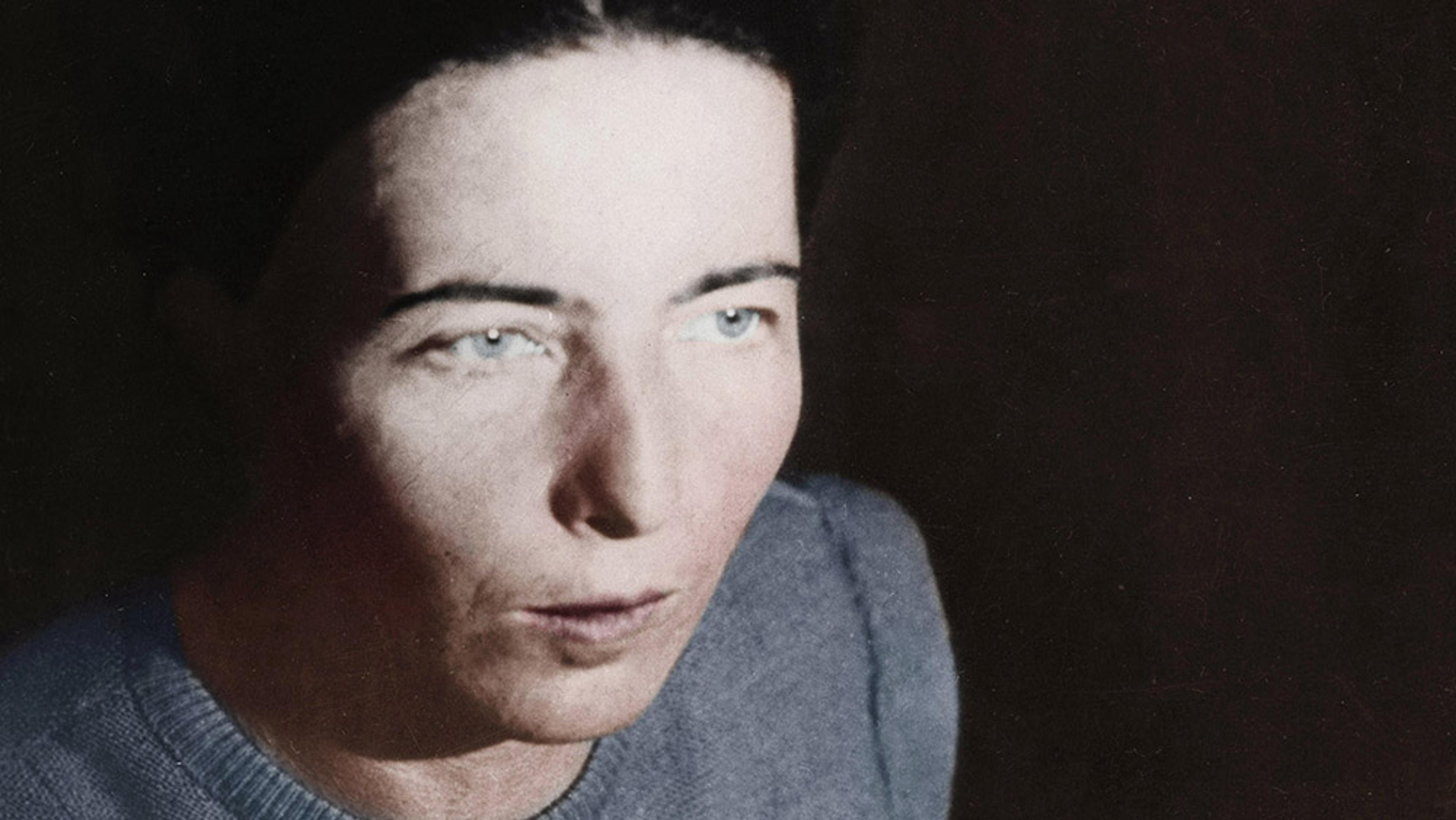
Simone de Beauvoir
 France
political philosopher•journalist•novelist
Also known as: Simone Lucie Ernestine Marie Bertrand de Beauvoir, Beauvoir
Birthday
January 9, 1908
Birth Sign
Capricorn
Birthplace
Paris, France
Age
Died at 78
About
Simone de Beauvoir was a French writer, intellectual, existentialist philosopher, and political activist. Born in Paris in 1908, she became one of the most influential thinkers of the 20th century. Her work as a novelist and memoirist explored complex themes of human freedom and morality. She is best remembered for The Second Sex, a foundational text of modern feminism that challenged societal norms regarding gender roles.
Throughout her life, she maintained a prominent public presence as a voice for social justice and women's liberation. Her philosophical writings continue to shape contemporary debates on ethics and identity. De Beauvoir died in 1986, leaving behind a vast body of literature that remains widely studied in universities around the world.
Early Life & Background
Simone Lucie Ernestine Marie Bertrand de Beauvoir entered the world on January 9, 1908, into a bourgeois Catholic family in the 6th arrondissement of Paris. Her father, Georges Bertrand de Beauvoir, worked as a stockbroker with modest means, while her mother, Françoise de Beauvoir, came from an aristocratic lineage that had lost its fortune due to her marriage beneath her station. The household experienced a steady decline in financial status during Simone's childhood, a shift that deeply influenced her perspective on class and independence.
She received her early education at the Institut Catholique de Paris and later transferred to the Institut Sainte-Marie. Academic excellence defined her school years, but a pivotal moment occurred during her adolescence when she lost her faith in God at age 14. Declaring herself an atheist, she vowed to dedicate her life entirely to intellectual pursuits and personal freedom rather than religious dogma. This rejection of traditional piety set the stage for her future philosophical inquiries.
De Beauvoir attended the Lycée Molière before enrolling at the Sorbonne to study philosophy. Her academic trajectory accelerated rapidly, culminating in 1929 when she became the youngest person ever to pass the agrégation in philosophy, ranking second in her class. This prestigious qualification allowed her to begin teaching at various lycées across France, including institutions in Marseille and Rouen. It was during this period of early professional life that she met Jean-Paul Sartre, sparking an intellectual connection that would define the rest of her existence.
Career Growth
Her breakthrough into literary prominence arrived with the publication of *She Came to Stay* (*L'Invitée*) in 1943. This novel examined themes of consciousness and interpersonal conflict, establishing her reputation as a serious fiction writer. However, her most enduring contribution came with *The Second Sex* (*Le Deuxième Sexe*), published in 1949. This groundbreaking analysis of the historical and social construction of womanhood became a foundational text for modern feminism. Its controversial nature led to it appearing on the Vatican's Index of Forbidden Books, yet its impact was immediate and global.
In 1954, de Beauvoir won the prestigious Prix Goncourt for her novel *The Mandarins*. This work depicted the moral and political struggles of intellectuals in post-war Paris, cementing her status as a leading figure in French letters. Throughout the 1950s and 1960s, she continued to write extensively on politics, ethics, and women's rights. Her activism extended beyond writing to include public campaigns against capital punishment and for reproductive rights.
Later in her career, she published a series of memoirs starting with *Mémoires d'une jeune fille rangée* in 1958. These works provided intimate glimpses into her life and the intellectual circles she inhabited. She received the Jerusalem Prize in 1975 for her contributions to human rights and the Austrian State Prize for European Literature in 1978. Even after the death of Jean-Paul Sartre in 1980, she remained active until her own passing, focusing on final works that reflected on aging and mortality.
Career Timeline
Public Image & Style
De Beauvoir's public persona was defined by intellectual rigor and a commitment to social justice. She was known for her signature style of wearing simple, practical clothing and her sharp wit in interviews and public debates. Her image as a fearless advocate for women's rights and existentialist philosophy made her a polarizing yet respected figure in French society.
Media coverage often focused on her unconventional lifestyle and her open relationship with Jean-Paul Sartre. She cultivated a reputation for being unapologetically honest about her views on gender, sexuality, and politics. Her presence in public spaces was characterized by a quiet authority that commanded attention without requiring loud declarations. Critics and admirers alike acknowledged her influence on shaping modern thought regarding gender and freedom.
Fame & Fandom (iFAMOUS Rankings)
Simone de Beauvoir's admirers have never coalesced under a single self-designated label, distinguishing her legacy from modern celebrity fandoms. Her readership remains diffuse and intellectual, comprising scholars, feminists, and existentialist enthusiasts who engage with her work through university courses and literary societies rather than organized fan clubs or social media hubs. While she maintained no direct interaction with contemporary audiences following her death in 1986, her ideas persist as living reference points in cultural discourse, appearing in recent philosophical essays and political debates that span the globe. This enduring influence is quantified by the iFANN Global Fame Rankings. In the August 2026 cycle, de Beauvoir holds the position of the 74th most famous person in France, a placement holding steady from the previous period. Within her specific domain, she ranks as the 76th most famous person in Books & Literature, having moved up one spot from her prior standing. These metrics reflect a sustained reverence for her contributions to philosophy and feminist theory, confirming her status as a central figure in Western thought without relying on transient viral trends.
She was featured at No. 41 in the August 2026 iFAMOUS Rankings, highlighting her continued relevance in the cultural landscape. Recent articles from 2026 highlight her continued relevance, with discussions on her influence on modern gender theory and feminist movements. Her work continues to be cited in academic circles and popular discourse, reflecting her enduring impact on gender theory and existentialism.
Interesting Facts and Legends
One of the most enduring stories about de Beauvoir involves her rejection of traditional marriage. She and Jean-Paul Sartre formed a lifelong partnership they called an "essential love," which allowed them both the freedom to pursue other romantic relationships while maintaining their primary bond. This unconventional arrangement became a cornerstone of her legend and a subject of fascination for biographers.
Another notable fact is her advocacy for women's reproductive rights long before such topics entered mainstream political discourse. She fought openly for the legalization of abortion in France during a time when it was strictly prohibited. Her aphorisms have achieved viral status in the digital age, particularly the observation that no one is more arrogant toward women than the man anxious about his virility. These verified statements continue to circulate widely on quote platforms and in contemporary discussions regarding gender and equality.
Notable Quotes
“One is not born, but rather becomes, a woman.”
“No one is more arrogant toward women than the man anxious about his virility.”
“Equality is not achieved when women become like men, but when every person is free to be themselves.”
Family & Personal Life
Simone de Beauvoir was born to Georges Bertrand de Beauvoir, a stockbroker, and Françoise de Beauvoir, née Brasseur. Her mother came from an aristocratic background but had been disinherited for marrying beneath her station. Simone grew up in a household marked by financial decline and strict religious observance that she later rejected.
She never married and did not have any biological children. Despite this, she was deeply involved in the lives of some of her friends' children and maintained close bonds with her sister, Hélène de Beauvoir. Her relationship with her parents was complex, particularly given her rejection of their Catholic faith and their initial disapproval of her lifestyle choices. She lived primarily in Paris throughout her adult life, moving between apartments in the Latin Quarter and the Left Bank.
Notable Connections
Jean-Paul Sartre, Nelson Algren, Bianca Bienenfeld, Albert Camus, Maurice Merleau-Ponty.
Relationships & Dating History
Simone de Beauvoir's personal life was defined by her lifelong partnership with Jean-Paul Sartre, whom she met in 1929. They never married but lived together for decades, maintaining a commitment to each other while engaging in other relationships. Their bond was described as an "essential love" that allowed them both the freedom to pursue other romantic entanglements while maintaining a deep emotional and intellectual connection. This arrangement defied conventional marriage norms and became a defining feature of their public image.
De Beauvoir had several significant romantic partners outside of Sartre. The most notable was Nelson Algren, an American writer with whom she began a passionate, though non-exclusive, affair in 1947. Their relationship lasted until 1953, and although they did not have children together, Algren remained a close friend and correspondent throughout his life. Another notable relationship was with Bianca Bienenfeld, a younger woman with whom de Beauvoir had a brief but intense romance in the late 1950s. Despite these connections, de Beauvoir and Sartre maintained their primary bond until Sartre's death in 1980. After Sartre's passing, de Beauvoir withdrew further from public life, focusing on her memoirs and final works.
- MarriedJean-Paul Sartre1929 - 1980Lifelong partner in an open relationship; never legally married but lived together until his death.
- DatedNelson Algren1947 - 1953American writer; passionate affair that lasted six years.
- DatedBianca Bienenfeld1958 - 1959Brief but intense romance in the late 1950s.
Death & Aftermath
Died
April 14, 1986 (aged 78)
Death Place
Paris, France
Cause of Death
Complications arising from pneumonia
Simone de Beauvoir passed away on April 14, 1986, in Paris at the age of 78. Her death resulted from complications stemming from pneumonia, a respiratory illness that had weakened her health over several weeks. She spent her final days under medical care before succumbing to the infection. The news of her passing prompted an outpouring of tributes from intellectuals, feminist organizations, and political figures across the globe who recognized her monumental contributions to existentialism and women's rights.
A private funeral service was held shortly after her death in Paris, attended by close friends, family members, and fellow philosophers. Following the ceremony, she was cremated, and her ashes were interred alongside those of Jean-Paul Sartre at the Cimetière du Montparnasse. This final resting place symbolized their lifelong intellectual partnership and shared commitment to freedom. In the decades since her death, her estate has been carefully managed to preserve her literary legacy. Continuous academic citation, new editions of her works, and ongoing cultural discourse ensure that her ideas remain vital to modern discussions on gender theory and ethics.
Net Worth (Estate Value)
$5 Million
iFANN Editorial Team estimate
As a deceased individual whose estate continues to generate income, Simone de Beauvoir's net worth is estimated by the iFANN Editorial Team at approximately $5 million. This figure reflects the ongoing value of her literary estate, which includes royalties from book sales, licensing deals for her works, and academic citations. Her estate is managed to preserve her literary and philosophical legacy, ensuring her writings remain accessible through continuous publication and cultural reference.
Revenue streams for the estate include posthumous releases, merchandise featuring her quotes, and rights to adaptations of her novels. The estate has seen steady growth over the years due to the enduring popularity of *The Second Sex* and other key texts. Unlike living celebrities, her wealth accumulation is driven by the timeless nature of her ideas rather than active employment or endorsements. The management of her assets ensures that her contributions to philosophy and feminism are preserved for future generations.
Awards Won (3)
Simone de Beauvoir received numerous accolades throughout her career. She won the prestigious Prix Goncourt in 1954 for her novel *The Mandarins*. Additional honors include the Jerusalem Prize in 1975 for her contributions to human rights and the Austrian State Prize for European Literature in 1978. She also received honorary degrees from several universities, including the University of Toronto and the University of California, Berkeley.
1954 · Best Novel
The Mandarins
1975 · Human Rights
Lifetime Achievement
Known For
The Second Sex
1949 · Author
She Came to Stay
1943 · Author
The Mandarins
1954 · Author
Keywords
Sources
Quick Facts
- Profession
- political philosopher, journalist, novelist
- Born
- January 9, 1908
- Birthplace
- Paris, France
- Died
- April 14, 1986
- Death Place
- Paris, France
- Gender
- Female
- Birth Sign
- Capricorn
Personal Details
- Full Name
- Simone Lucie Ernestine Marie Bertrand de Beauvoir
- Children
- Education
- Institut Sainte-Marie; University of Paris (Sorbonne)
Frequently Asked Questions
What is Simone de Beauvoir best known for?
Who was Simone de Beauvoir's partner?
Did Simone de Beauvoir have children?
When did Simone de Beauvoir die?
What is Simone de Beauvoir's net worth?
Similar People
Join the community
fans discussing