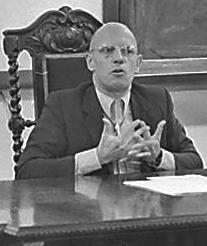
Michel Foucault
 France
anthropologist•psychologist•historian
Birthday
+1926-10-15
Birth Sign
Libra
Birthplace
Poitiers
Age
Died at 57
About
Born in Poitiers, France, on October 15, 1926, Michel Foucault was a formidable French historian of ideas, philosopher, and activist. His intellectual journey, which spanned until his death on June 25, 1984, was dedicated to dissecting the intricate relationships between power, knowledge, and individual liberty. Foucault's work challenged conventional thinking, examining how societal institutions wielded these forces for social control. Though often linked to structuralism and postmodernism, he maintained his own distinct intellectual path, always questioning authority without imposing rigid limits on his own critique. Foucault's academic career saw him teaching and lecturing at various institutions, including the University of Clermont-Ferrand and the University of Tunis, before he took a prominent position heading the philosophy department at the experimental University of Paris VIII. In 1970, he was appointed to the prestigious Collège de France, a role he held throughout the remainder of his life. During this period, he became deeply involved in left-wing activism, campaigning against racism and human rights violations, with a particular focus on penal reform. His influential writings, such as The History of Madness (1961), The Birth of the Clinic (1963), and The Order of Things (1966), introduced his unique historiographical method known as "archaeology." Later works like Discipline and Punish (1975) and The History of Sexuality (1976) further developed his analytical tools, emphasizing the pervasive role of power in shaping social structures. Foucault's influence extended far beyond philosophy and history. His theories resonated deeply within fields like anthropology, criminology, cultural studies, feminism, literary theory, and sociology. His public stance against homophobia and racial prejudice also informed critical theory and Marxist thought. Foucault passed away in Paris at the age of 57 due to complications from HIV/AIDS. He was the first public figure in France to succumb to the illness, and his prominent status brought increased public awareness to the pandemic. His partner, Daniel Defert, honored his memory by founding the AIDES charity, an organization dedicated to fighting HIV/AIDS.
Fame & Fandom
Michel Foucault's intellectual footprint extends far beyond the academy. According to the iFANN Global Fame Rankings, he is currently the 7th most famous person in AI, up from 8th last cycle, a remarkable placement for a thinker who died in 1984, yet one that underscores how his ideas on power and surveillance now permeate discussions of algorithms and data. His influence, tracked across global media coverage and cultural discourse, places him among the most discussed historical figures in contemporary tech debates.
But Foucault's fame is not that of a pop star; there are no fan clubs, no coordinated campaigns, no birthday billboards. His following is composed of academics, students, and activists who engage with his work as a living body of thought rather than as a personality cult. There is no formal name for this community, no 'Foucaultians' in the fan-club sense, though the term 'Foucauldian' describes those who apply his theories. His 'iconic moments' are not concert meltdowns but televised debates, such as the 1971 clash with Fons Elders, and his controversial embrace of the Iranian Revolution, which remains a touchstone for discussions of intellectual responsibility. His legacy is sustained through citations, courses, and the continued relevance of his critiques of institutional power.
Interesting Facts and Legends
Michel Foucault was born in Poitiers, France, and dedicated his life to dissecting the relationships between power, knowledge, and individual liberty until his death in 1984. A widely retold story from his career involves his brief support for the Iranian Revolution, where he viewed the uprising as a form of political spirituality challenging Western rationalism. This stance became a subject of intense debate and is often cited as a pivotal moment in his intellectual journey. Another notable event was his televised debate with Dutch philosopher Fons Elders in 1971, which focused on themes of truth and power rather than human nature alone. These intellectual engagements, including lectures at McGill University where he met with Quebec separatists, highlight his commitment to public discourse. The centenary of his birth in 2026 sparked renewed interest in his foresight regarding technology and power structures, cementing his status as one of the most influential thinkers of the 20th century.
One enduring legend is his journey to Iran in the late 1970s, where he reported on the revolution for Italian and French newspapers, famously describing it as an expression of 'political spirituality.' He later distanced himself as the regime turned repressive, a story often retold as a cautionary tale about intellectual romanticism. Another tale, more personal, involves a recent discovery of a car once owned by Foucault, traced through a receipt, a small but telling example of the material fascination his life still holds for collectors and historians.
Death & Aftermath
Died
+1984-06-25 (aged 57)
Death Place
Paris, Île-de-France, France
Cause of Death
Complications from AIDS
Michel Foucault passed away in Paris, France, on June 25, 1984, at the Hôtel-Dieu hospital. The French philosopher and historian had been hospitalized since late May following a sudden collapse that medical staff identified as an opportunistic infection linked to AIDS, a condition his partner Daniel Defert confirmed to the family and the public. His final public appearance occurred earlier that year during the lecture series titled The Government of Self and Others at the Collège de France, delivered in January and February before his health deteriorated significantly. Tributes poured in from intellectual peers including Jacques Derrida and Gilles Deleuze, while institutions like the Collège de France held special sessions to honor his contributions to critical theory.
Sales of his works, particularly History of Sexuality volumes and Discipline and Punish, surged globally following the news of his passing. A private funeral took place on June 27, 1984, attended by a small group of close friends and colleagues who respected his desire for privacy regarding his illness. He was cremated and interred in the columbarium section of Père Lachaise Cemetery, marked by a simple stone. Posthumously, his legacy expanded as several lecture courses were transcribed and published, including Security, Territory, Population and The Birth of Biopolitics, based on archives managed by the Michel Foucault Foundation established by Defert in 1985.
Awards & Accolades
Keywords
Quick Facts
- Profession
- anthropologist, psychologist, historian
- Born
- +1926-10-15
- Birthplace
- Poitiers
- Died
- +1984-06-25
- Death Place
- 13th arrondissement of Paris
- Gender
- Male
- Birth Sign
- Libra
Join the community
fans discussing