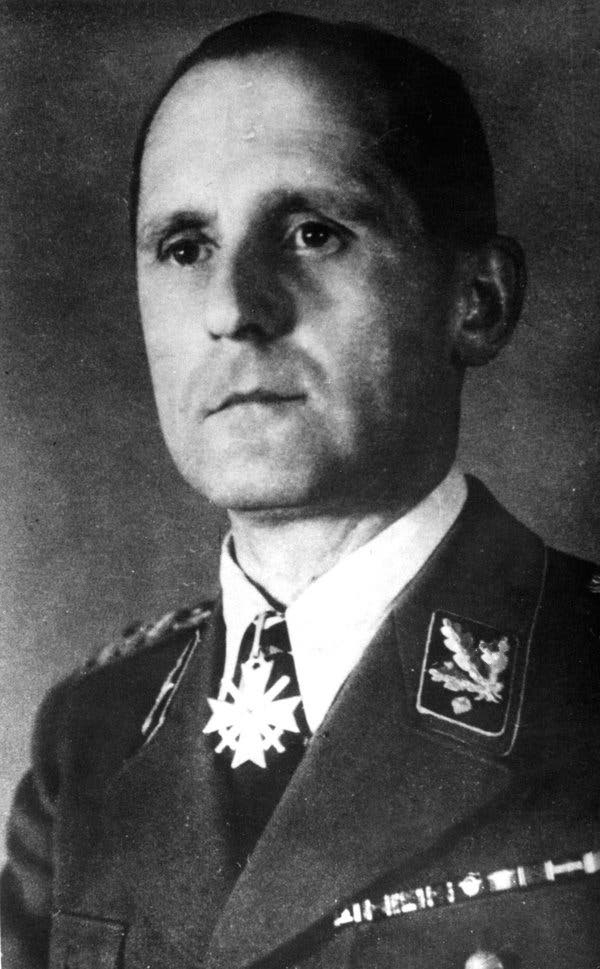
Heinrich Müller
 Germany
police officer•politician•aircraft pilot
Birthday
+1900-04-28
Birth Sign
Sagittarius
Birthplace
Munich
Age
Died at 45
About
Heinrich Müller, born on April 28, 1900, in Munich, was a high-ranking German Schutzstaffel (SS) and police official during the Nazi era. He served as the chief of the Gestapo, the secret state police of Nazi Germany, for most of World War II in Europe. Müller was instrumental in planning and executing the Holocaust, and he attended the January 1942 Wannsee Conference, where the "Final Solution to the Jewish question" was formalized. To distinguish him from another SS general named Heinrich Müller, he was often referred to as "Gestapo Müller." He was last seen at the Reich Chancellery in Berlin on May 1, 1945, and remains the most senior Nazi figure who was never captured or confirmed dead.
Fame & Fandom
The story of Heinrich Müller does not unfold in the vibrant, chaotic energy of a fanbase but rather in the quiet, persistent shadow of historical mystery. Unlike modern icons who cultivate devoted followings through social media or charitable campaigns, Müller's legacy is defined by his terrifying role as the head of the Gestapo and the enigma of his final days. There is no organized community dedicated to him, no fan clubs gathering for birthdays, and no rituals born from admiration; he remains a figure of historical study and grim fascination rather than popular adoration. The narratives surrounding him are strictly archival accounts of his disappearance from the Führerbunker and the decades-long hunt that followed, culminating in the 2013 revelation of his burial in a Jewish cemetery, a detail often cited for its dark irony rather than celebrated as folklore. For nearly seventy years, he held the title of the highest-ranking Nazi who got away, a moniker that fueled countless conspiracy theories about escapes to South America or the Soviet Union, yet these stories were speculative threads woven by historians and investigators, not fans generating legends. This lack of a formal audience means there are no fandom names, no viral moments, and no chart pushes to track. He exists outside the sphere of contemporary celebrity culture, remembered only for the weight of his crimes and the resolution of his fate. Consequently, iFANN has evaluated his global standing and found no current placement within the published rankings. Heinrich Müller is currently the EVALUATED_UNRANKED subject, holding no position in the Global Top 1,000 or any Top-100 scope list.
Interesting Facts and Legends
Heinrich Müller was last definitively seen at the Reich Chancellery in Berlin on May 1, 1945, vanishing just days before the fall of the Third Reich. While long believed to have escaped to Argentina or the Soviet Union, researchers confirmed in October 2013 that he actually died in Berlin shortly after leaving the bunker, likely from an infection, and was secretly buried in a mass grave at the Jewish cemetery on Schönhauser Allee. This discovery ended the sixty-eight-year-old mystery, revealing the grim historical irony that the architect of the Holocaust rested in a Jewish graveyard. His absence during the final days of the war earned him the unofficial title of the "highest-ranking Nazi who got away," a label that dominated post-war investigations until recent archival findings debunked the narrative of his successful evasion. Despite being a convicted war criminal and central figure in the Wannsee Conference, his story remains one of the most compelling historical puzzles of the era, shifting from a tale of miraculous escape to a verified account of death in the city he helped destroy.
Death & Aftermath
Died
+1945-05-01 (aged 45)
Death Place
Berlin, Germany
Cause of Death
Unknown
The revelation that the architect of the Holocaust's police apparatus was buried in a Jewish cemetery sparked outrage and debate about the ethics of his burial location. For over sixty years, the fate of Heinrich Müller remained one of the great mysteries of World War II, with his last known appearance occurring in the Führerbunker on May 1, 1945, where he reportedly gave orders before disappearing into the chaos of Berlin's fall. The mystery was resolved in October 2013 when German historian Dr. Jürgen Zarusky announced findings from declassified Soviet archives indicating Müller died in Berlin sometime in April or early May 1945 rather than in the bunker.
His body was disposed of in a mass grave at the Jüdischer Friedhof Weißensee alongside approximately 2,400 other bodies during the collapse of the Third Reich. No specific medical cause of death was ever made public in the primary documents, as the discovery relied solely on a burial record. Following the 2013 confirmation, numerous documentaries and articles detailed the resolution of his fate, while the association overseeing memorials to German resistance fighters emphasized that Müller would remain unburied in a mass grave rather than receiving a dignified state funeral.
Awards & Accolades
Keywords
Quick Facts
- Profession
- police officer, politician, aircraft pilot
- Born
- +1900-04-28
- Birthplace
- Munich
- Died
- +1945-05-01
- Death Place
- Berlin
- Gender
- Male
- Birth Sign
- Sagittarius
Join the community
fans discussing