
Adolf Eichmann
 Germany
politician•police officer•military officer
Also known as: Otto Adolf Eichmann, Ricardo Klement
Birthday
March 19, 1906
Birth Sign
Pisces
Birthplace
Solingen, Germany
Age
Died at 56
Height
5 ft 9 in (175 cm)
About
Otto Adolf Eichmann was a German-Austrian SS-Obersturmbannführer and one of the principal architects of the Holocaust. Born in Solingen, Germany, he became a central figure in the Nazi regime's "Final Solution," responsible for organizing the mass deportation of Jews to ghettos and extermination camps. His legacy is defined not by fame in the traditional sense, but by his role as the embodiment of bureaucratic evil, a concept famously articulated by philosopher Hannah Arendt in her 1963 work Eichmann in Jerusalem: A Report on the Banality of Evil. He was executed by hanging in 1962 after being convicted of war crimes in Israel.
Early Life & Background
Otto Adolf Eichmann was born on March 19, 1906, in Solingen, Rhineland, Germany. He was the son of Karl Eichmann, an accountant, and Maria Eichmann, née Hössler. In 1914, the family moved to Austria when his father took a job at the Austrian Alpine Mining Company in Linz. Eichmann attended elementary school in Linz and later enrolled in a technical high school known as a Realschule. He briefly studied mechanical engineering at the Technical University of Linz but dropped out without graduating due to financial difficulties and a lack of interest.
Before joining the Nazi Party, Eichmann worked as a traveling salesman for the Vacuum Oil Company in Austria. He struggled with steady employment during these early years and often relied on his parents' support. His political awakening occurred during the rise of Nazism in Austria; he joined the National Socialist German Workers' Party (NSDAP) and the Schutzstaffel (SS) in 1932, motivated by anti-Semitic ideology and a desire for career advancement within the party structure. This decision set him on a path that would lead to one of the darkest chapters in human history.
Career Growth
Eichmann's career trajectory was entirely consumed by his service to the Nazi state, specifically regarding Jewish affairs. In 1933, he transferred to the Sicherheitsdienst (SD), the intelligence agency of the SS, initially working in Munich. From 1935 to 1939, he served as the head of the Central Office for Jewish Emigration in Vienna, Austria. In this role, he forced over 150,000 Jews to emigrate through aggressive legal and economic pressure, confiscating their assets. In 1939, he moved to Berlin to head the Reich Security Main Office (RSHA) Department IV B4, which dealt with Jewish affairs and evacuation.
Eichmann played a key logistical role in the Wannsee Conference held on January 20, 1942, where senior Nazi officials formalized the plan for the "Final Solution." While he did not set policy, he was the primary organizer of the logistics required to implement it. Between 1942 and 1944, he oversaw the deportation of millions of Jews from across occupied Europe to ghettos and death camps like Auschwitz, Treblinka, and Sobibor. In 1944, he was sent to Hungary to accelerate the deportation of Hungarian Jews. Between March and July 1944, he oversaw the transport of approximately 437,000 Hungarian Jews to Auschwitz, resulting in the murder of roughly 427,000 of them. As Allied forces closed in, Eichmann fled Germany in May 1945. He spent time in various hiding places in Bavaria before being captured by American forces in May 1945. He escaped interrogation by claiming to be a farmer named "Otto Heninger" and was released in June 1945.
Career Timeline
Public Image & Style
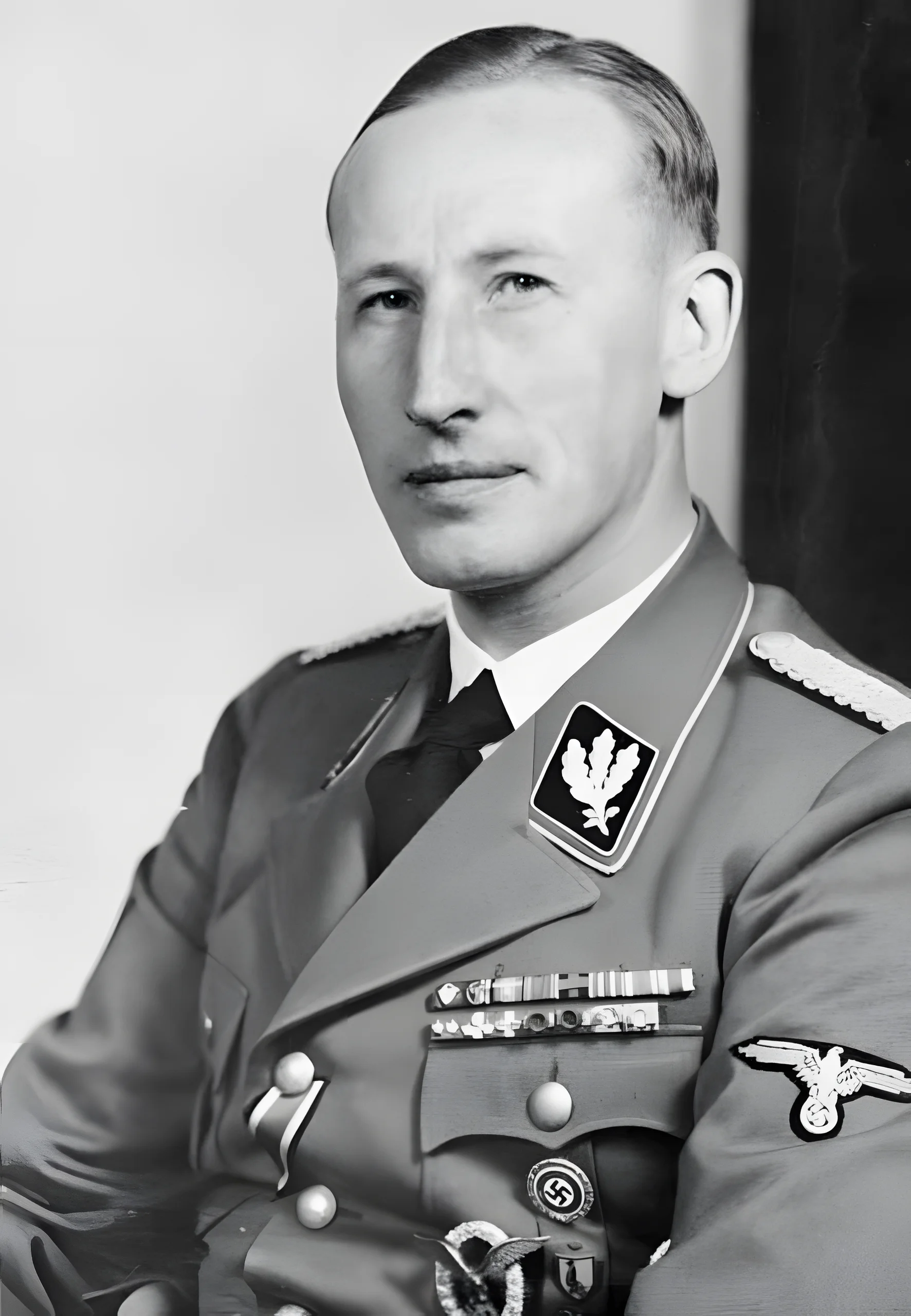
Adolf Eichmann is portrayed in media and history as the archetype of the "banal" killer, a man devoid of malice but utterly devoid of conscience. He is not celebrated but studied as a warning against blind obedience and bureaucratic indifference. His image is consistently linked to the machinery of genocide, often depicted in black-and-white photographs wearing a suit and glasses, looking ordinary yet monstrous. He is frequently cited in historical rankings of the most dangerous or influential figures of the 20th century due to the scale of his crimes.
Fame & Fandom
Within the iFANN Global Fame Rankings, which tracks influence across media coverage and consumption signals worldwide, Adolf Eichmann holds specific, verified positions that reflect his status as a primary subject of historical study. As of the September 2026 rankings, he is recognized as the 39th most famous person from Germany, a standing that has held steady from the previous cycle, and stands as the 3rd most famous person in True Crime, also maintaining its position without fluctuation. These placements confirm his persistent relevance in both national history and the broader genre of criminal biography. Despite this high visibility within specific categories, the entity surrounding Adolf Eichmann possesses no formal fandom name; the audience engaged with his legacy consists of historians, students, and legal scholars rather than an organized fanbase, and there are no documented rituals, campaigns, or unofficial groups dedicated to him. His presence in the cultural consciousness is defined entirely by the weight of his actions and the subsequent judicial proceedings, lacking the celebratory elements typical of other public figures.
Interesting Facts and Legends
Adolf Eichmann lived under the alias "Ricardo Klement" in Argentina for over a decade after World War II. The abduction of Eichmann from a suburb of Buenos Aires on May 11, 1960, by Mossad agents is one of the most famous intelligence operations in history. Agents disguised themselves as utility workers and drove him away in a Volkswagen Beetle, smuggling him onto a plane bound for Israel. This event shocked the world and demonstrated the reach of the Israeli state. The trial in Jerusalem was one of the first major trials to be broadcast live on television, reaching millions of viewers worldwide. His execution remains the only one carried out under Israel's 1950 Nazis and Nazi Collaborators (Punishment) Law. In modern discourse, his name serves as a metaphor for bureaucratic evil, occasionally invoked in discussions regarding international tribunals and legal defenses.
Notable Quotes
“I never killed a Jew.”
“I was only following orders.”
“I am not a monster; I am just a little man.”
Family & Personal Life
Adolf Eichmann was married only once to Veronika Liebl, the daughter of a Lutheran pastor. They met in Vienna and married in 1935. She accompanied him to Argentina in 1950, living under the alias "Verena Klement." She remained loyal to him throughout his trial and execution. After Eichmann's execution, Veronika returned to Germany, while the sons largely lived in Argentina or elsewhere in South America. They had five sons: Klaus (born 1936), Dieter (born 1938), Horst (born 1940), Ricardo (born 1955), and Esteban (born 1956). All were raised in Argentina under the surname Klement.
Notable Connections
Adolf Eichmann is closely associated with Reinhard Heydrich, his superior in the RSHA who assigned him the task of Jewish emigration. He is also linked to Hannah Arendt, the philosopher who wrote Eichmann in Jerusalem, defining his legacy. Gideon Hausner, the prosecutor in the trial of Adolf Eichmann, and Adolf Hitler, the leader of the Nazi regime under whom Eichmann served, are other key figures in his story.
Relationships & Dating History
Adolf Eichmann was married only once. He wed Veronika Liebl in 1935 in Vienna. She was the daughter of a Lutheran pastor. They remained together until his death. She accompanied him to Argentina in 1950, living under the alias "Verena Klement." She remained loyal to him throughout his trial and execution. After Eichmann's execution, Veronika returned to Germany, while the sons largely lived in Argentina or elsewhere in South America. There are no records of romantic relationships prior to or outside of this marriage.
- MarriedVeronika Liebl1935 - 1962She accompanied him to Argentina and remained loyal until his execution.
Death & Aftermath
Died
May 31, 1962 (aged 56)
Death Place
Ramla Prison, Israel
Cause of Death
Hanging
Following his capture in Buenos Aires on May 11, 1960, Adolf Eichmann was flown to Israel and put on trial in the Jerusalem District Court. The proceedings, which began in April 1961, were broadcast globally and brought the details of the Holocaust into the public consciousness of a generation that had not experienced it firsthand. On December 15, 1961, he was found guilty of crimes against the Jewish people, crimes against humanity, war crimes, and membership in criminal organizations. His appeal to the Supreme Court of Israel was rejected on May 29, 1962.
At approximately 1:00 AM on May 31, 1962, Eichmann was hanged in the courtyard of Ramla Prison. The execution was carried out by Sergeant Meir Feinstein, who had previously been executed by the British in 1947. His body was cremated immediately after the execution. To prevent his grave from becoming a shrine for neo-Nazis, his ashes were scattered into the Mediterranean Sea in international waters off the coast of Israel. Public reaction among Jewish communities and Holocaust survivors was one of relief and vindication rather than mourning, with events in Israel marked by somber reflection on the victims of the Holocaust. Posthumously, his name became synonymous with the bureaucratic machinery of genocide, featured prominently in works such as Hannah Arendt's 1963 book Eichmann in Jerusalem: A Report on the Banality of Evil.
Net Worth (Estate Value)
$0
iFANN Editorial Team estimate
As a deceased individual whose life ended in 1962, and given his status as a fugitive and convicted criminal, Adolf Eichmann left no estate with a measurable net worth in the modern sense. During his life, he earned a standard salary as a civil servant and SS officer. In Argentina, he worked as a low-level employee for private companies. There is no evidence of significant investments, real estate holdings, or business ventures that generated wealth. No estate exists. Any assets he possessed were likely confiscated or abandoned upon his flight. The Israeli government did not seek to seize his assets, as they held none of value. Research by the iFANN Editorial Team puts his fortune at around $0, reflecting the absence of any surviving financial legacy.
Awards & Accolades
View 4 records, honours and achievementsKnown For
Eichmann in Jerusalem: A Report on the Banality of Evil
1963 · Subject
The Trial of Adolf Eichmann
1961 · Defendant
Keywords
Sources
Quick Facts
- Profession
- politician, police officer, military officer
- Born
- March 19, 1906
- Birthplace
- Solingen, Germany
- Died
- May 31, 1962
- Death Place
- Ramla Prison, Israel
- Gender
- Male
- Spouse
- Veronika Liebl
- Birth Sign
- Pisces
Personal Details
- Full Name
- Otto Adolf Eichmann
- Height
- 5 ft 9 in (175 cm)
- Spouse
- Veronika Liebl
- Children
- Klaus Eichmann · Dieter Eichmann · Horst Eichmann · Ricardo Eichmann · Esteban Eichmann
- Education
- Technical High School (Realschule), Technical University of Linz (dropped out)
Frequently Asked Questions
Who was Adolf Eichmann?
How did Adolf Eichmann die?
Where was Adolf Eichmann born?
What is the banality of evil?
Did Adolf Eichmann have children?
Similar People
Join the community
fans discussing