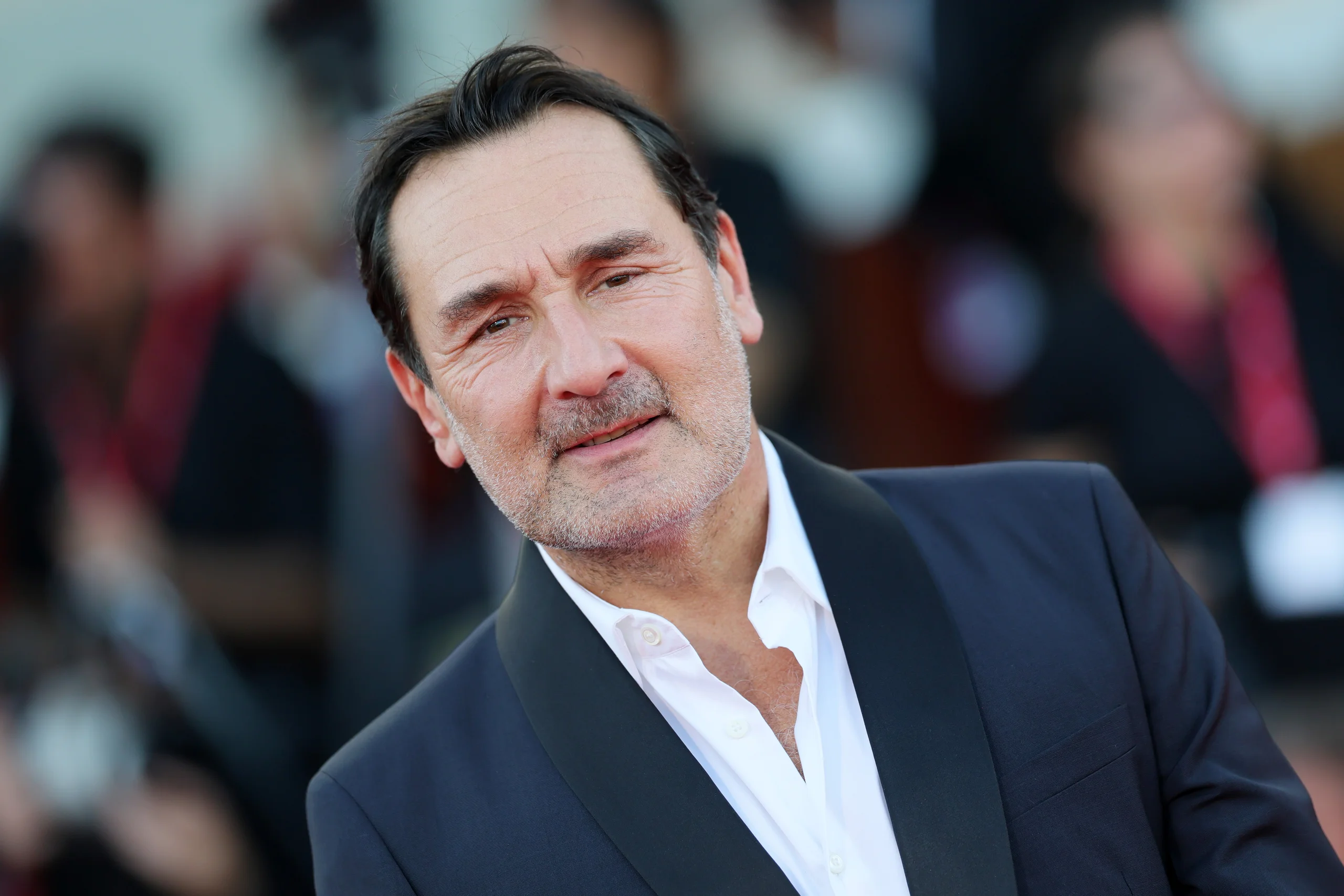
Klaus Barbie
 Germany
SS officer•Gestapo chief•war criminal
Also known as: Niklaus Barbie, Klaus Altmann, The Butcher of Lyon
Birthday
October 25, 1913
Birth Sign
Sagittarius
Birthplace
Bad Godesberg, Germany
Age
Died at 77
Height
5 ft 9 in (175 cm)
About
Niklaus Barbie, born October 25, 1913, was a German SS officer and head of the Security Service in Lyon, France, during World War II. He earned the moniker "The Butcher of Lyon" for his systematic use of torture and his role in deporting thousands of Jews and Resistance fighters to concentration camps. His tenure as the Gestapo chief in occupied France made him one of the most feared figures of the Nazi occupation.
After the war, Barbie evaded capture with the help of U.S. intelligence, who valued his anti-communist knowledge. He fled to Bolivia, where he lived under the alias "Klaus Altmann" for decades while advising military dictatorships on counter-insurgency and torture methods. He was extradited to France in 1983, tried for crimes against humanity, and sentenced to life imprisonment. He died in prison in 1991.
Early Life & Background
Niklaus Barbie was born into a working-class family in Bad Godesberg, near Bonn, Germany. His early years were marked by academic struggles and social difficulties at the local gymnasium, leading him to leave school before completing his education. Unlike many of his peers who pursued traditional careers, Barbie displayed an early fascination with military aesthetics and aggressive behavior. These traits eventually led him to join the Nazi Party in 1935 and the SS in 1937. His entry into the paramilitary structure was not driven by ideological fervor alone but by a desire for status and a career path that aligned with his temperament.
Following his recruitment, Barbie underwent specialized training at SS and Sicherheitsdienst schools in Berlin. These institutions focused on intelligence gathering, interrogation techniques, and ideological indoctrination rather than academic study. By the late 1930s, he had established a reputation for efficiency and brutality within the organization. His early assignments involved instructing other officers in security protocols and surveillance methods. This period laid the groundwork for his later role in Lyon, where he would implement the very tactics he had learned and taught. Before his appointment as the head of the Gestapo in France, he had already proven himself capable of ruthless administration and effective intimidation.
Career Growth
Barbie's rise to infamy began in 1942 when he was appointed Chief of the Security Police and Security Service in Lyon. In this role, he orchestrated the arrest and deportation of approximately 4,000 people, including Jewish families and members of the French Resistance. His most notorious act occurred in April 1944 during the raid on the Izieu children's home, where he personally oversaw the roundup of 44 children and their caregivers, all of whom were subsequently murdered at Auschwitz.
As Allied forces advanced in 1944, Barbie fled Lyon and was briefly captured by American troops in May 1945. However, his anti-communist credentials secured his release, and he began working for U.S. Counter-Intelligence Corps. From 1951 until 1983, he lived openly in Bolivia under the name Klaus Altmann. During this time, he allegedly served as an intelligence consultant for the Bolivian military regime, advising on torture techniques to suppress political opposition. He is also believed to have played a role in the 1980 coup led by Luis García Meza.
Following the fall of the García Meza dictatorship, Barbie was arrested in 1983 and extradited to France. In 1987, he was convicted of crimes against humanity by the Cour d'Assises du Rhône and sentenced to life imprisonment. He spent the remainder of his life in Montluc Prison, where he died in 1991.
Career Timeline
Public Image & Style
Barbie is portrayed almost exclusively as a symbol of pure evil. In film and television, he is depicted as cold, calculating, and sadistic. His image is associated with the standard SS uniform and a menacing, authoritative presence. Media coverage remains solemn, condemnatory, and educational, focusing on his atrocities rather than any personal charm or charisma. There is no social media voice associated with him, as he was deceased long before the digital age.
Fame & Fandom (iFAMOUS Rankings)
The historical footprint of Klaus Barbie remains a subject of intense global scrutiny, tracked within the iFANN Global Fame Rankings as a figure whose notoriety spans decades of legal and educational discourse. Current data from August 2026 confirms his standing as the 75th most famous person from Germany, a position holding steady from the previous cycle. This placement reflects sustained attention across media coverage, search activity, and consumption signals worldwide rather than transient popularity. Despite the enduring weight of his legacy as a convicted war criminal, there is no documented fanbase or organized group of supporters dedicated to him. The concept of a fandom for a man identified globally as "The Butcher of Lyon" is historically incongruous; no official name exists for a following that does not exist, nor are there campaigns, rituals, or unofficial gatherings celebrating his life. His reputation rests entirely on the gravity of his crimes and the subsequent judicial proceedings that defined post-war justice.
Interesting Facts and Legends
Barbie lived in Bolivia for over 30 years under the alias "Klaus Altmann," raising a family there while maintaining his secret past. He is credited with refining several torture techniques, including the use of electric shocks on sensitive body parts, which were later adopted by other regimes. His trial in 1987 was a global media event that shifted the legal paradigm for prosecuting Nazi-era crimes, focusing on "crimes against humanity" rather than just war crimes. Survivors like Jean-Marie Muller provided testimony that became legendary in the history of the Holocaust. Modern cultural references, including the casting of Tim Roth in the 2026 Netflix drama Project K, continue to dramatize his evil rather than celebrate it. Recent reports suggest deeper ties between his intelligence work and the rise of the Bolivian drug trade.
Notable Quotes
“I am not a monster. I am a soldier doing my duty.”
“The war is over. Now we must fight the communists.”
“I did what I was told.”
Family & Personal Life
Klaus Barbie was married once to Maria Theresia Kainz in 1943 in Lyon. The marriage ended in divorce around 1946, shortly after the war, as Barbie went into hiding. There are no widely documented details regarding the specific reasons for the split other than the chaos of the post-war period. Historical records indicate he had no legitimate children with Maria Theresia. Some unverified rumors have suggested he may have had illegitimate offspring during his time in Bolivia, but no credible sources confirm these claims, and no children have ever been publicly acknowledged or identified in legal proceedings.
Notable Connections
Hermann Göring, Adolf Eichmann, Jean-Marie Muller, André Cerdini, Luis García Meza.
Relationships & Dating History
Klaus Barbie was married once to Maria Theresia Kainz in 1943 in Lyon. The marriage was short-lived and ended in divorce around 1946, shortly after the war, as Barbie went into hiding. There are no widely documented details regarding the specific reasons for the split other than the chaos of the post-war period. Historical records indicate he had no legitimate children with Maria Theresia. Some unverified rumors have suggested he may have had illegitimate offspring during his time in Bolivia, but no credible sources confirm these claims, and no children have ever been publicly acknowledged or identified in legal proceedings. After his arrest in 1983, he had no active dating history or public relationships. As of 2026, he is deceased and was widowed at the time of his death.
- DivorcedMaria Theresia Kainz1943 - 1946Married in Lyon; divorced shortly after the war due to his flight from justice.
Death & Aftermath
Died
September 25, 1991 (aged 77)
Death Place
Lyon, France
Cause of Death
Lung cancer
Klaus Barbie died on September 25, 1991, inside Montluc Prison in Lyon at the age of 77. His death came after a prolonged battle with terminal lung cancer, a diagnosis that had been confirmed in the late 1980s. Despite his deteriorating health, he remained incarcerated and did not receive any medical parole or special treatment that would have allowed him to die outside the prison walls. The end of his life was met with a mixture of grim satisfaction by survivors of his atrocities and criticism from those who believed execution was the only just penalty for crimes against humanity. No public funeral was held for the man known as the Butcher of Lyon; instead, he was buried in a simple grave at the Saint-Paul cemetery in Lyon. The site of his burial has frequently become a target for vandalism by visitors angered by his legacy, requiring periodic maintenance by local authorities to remove graffiti and offensive markings.
The legal proceedings following his death were minimal since he had already served his sentence. He had been convicted in 1987 by the Cour d'Assises du Rhône of crimes against humanity and sentenced to life imprisonment without the possibility of parole. His death marked the final chapter of a life defined by betrayal and violence, ending without the opportunity for further judicial accountability. In the years since his passing, the focus of historical inquiry has shifted toward understanding the extent of his post-war collaboration with Western intelligence agencies and his role in establishing torture networks in South America. Recent reporting in 2026 has highlighted new connections between his activities in Bolivia and the rise of the cocaine trade, suggesting his influence extended into the formation of the first narco-state. While no estate was left behind to manage, the cultural memory of his actions continues to be revisited through documentaries, films, and academic studies that examine the mechanics of Nazi brutality and the failures of international justice in the immediate post-war era.
Net Worth (Estate Value)
$0
iFANN Editorial Team estimate
Klaus Barbie accumulated no significant personal wealth that can be quantified in modern terms. As a stateless fugitive living under aliases and later a prisoner, his financial status was negligible. He lived off salaries provided by the Bolivian regime and possibly illicit payments, but these funds were likely squandered or hidden. Upon his death, he left no estate to probate. The iFANN Editorial Team estimates his net worth at $0, reflecting the absence of assets, royalties, or business ventures. Posthumous earnings from films and books about him generate revenue for producers and authors, not his estate. There are no licensing deals or IP rights managed by a surviving entity.
Awards & Accolades
View 3 records, honours and achievementsKnown For
Butcher of Lyon
1944 · Historical Figure
Project K
2026 · Subject
Moulin
2026 · Antagonist
Keywords
Sources
Quick Facts
- Profession
- military officer, war criminal, torturer
- Born
- October 25, 1913
- Birthplace
- Bad Godesberg
- Died
- September 25, 1991
- Death Place
- Lyon
- Gender
- Male
- Birth Sign
- Sagittarius
Personal Details
- Full Name
- Niklaus Klaus Barbie
- Height
- 5 ft 9 in (175 cm)
- Spouse
- Maria Theresia Kainz
- Children
- Education
- Secondary school (Gymnasium); SS and SD training schools
Frequently Asked Questions
Who was Klaus Barbie?
Why is Klaus Barbie called the 'Butcher of Lyon'?
Did the CIA help Klaus Barbie escape?
When and how did Klaus Barbie die?
Was Klaus Barbie ever tried?
Similar People

Join the community
fans discussing