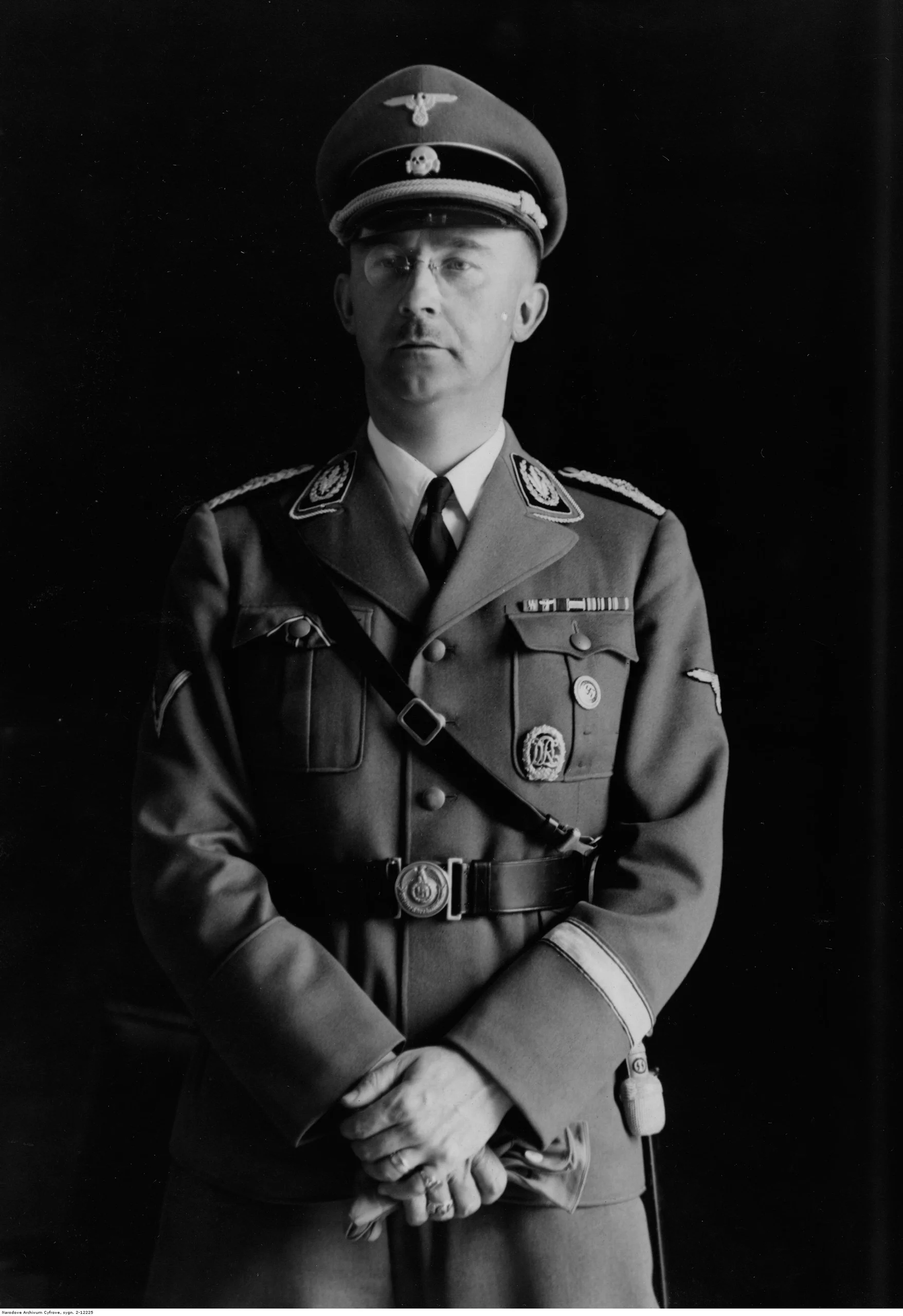
Heinrich Himmler
 Germany
Also known as: Heinrich Luitpold Himmler, Himmler, Reichsführer-SS
Birthday
October 7, 1900
Birth Sign
Libra
Birthplace
Munich, Germany
Age
Died at 44
Height
5 ft 9 in (176 cm)
About
Heinrich Himmler was a German politician who served as Reichsführer of the Schutzstaffel (SS) from 1929 until his death in 1945, and who stands as one of the principal architects of the Holocaust. He took a bodyguard unit of a few hundred men and built it into a state within a state, absorbing the police, the security services, and eventually the Waffen-SS combat branch under his personal authority.
His name is inseparable from the machinery of genocide: the concentration and extermination camp system, the Einsatzgruppen mobile killing squads, and the bureaucratic apparatus of the Final Solution all ran through his office. An estimated 5.5 to 6 million Jews were murdered, along with millions of Roma, Slavs, disabled people, and political prisoners. He was captured by British forces in May 1945, identified, and died by suicide with a cyanide capsule before he could be interrogated. No fanbase, no tributes, no memorials. His legacy is documentation, scholarship, and the ongoing cultural reckoning with what he did.
Early Life & Background
Gebhard Himmler was a schoolteacher in Munich, and later a headmaster, when his middle son was born on October 7, 1900. The family was conservative, Catholic, and respectable rather than rich. Heinrich kept diaries from adolescence that show a pedantic, self-serious boy, awkward in company and physically unremarkable, nursing a fantasy life of military glory. When World War I came, he was too young for the front. He enlisted near the end, went through basic training, and never saw combat, a humiliation he carried for the rest of his life.
After the war he studied agriculture at the Technical University of Munich and graduated with a diploma in agronomy in 1922. He worked as a fertilizer salesman and then as a laboratory assistant at a nitrogen-processing plant. He drifted into right-wing paramilitary circles, and in November 1923 he marched in the Beer Hall Putsch as a standard-bearer. The putsch failed, and he lost his job. He joined the Nazi Party in 1925 and quickly became one of Hitler's most obedient early followers, alongside Joseph Goebbels and Hermann Göring. In 1926 he was named the party's deputy propaganda leader. The following year he became deputy to the chief of the SS, a small bodyguard formation that almost nobody outside the party took seriously. That was the job that mattered. In 1929, Hitler handed him the whole thing.
Career Growth
When Himmler took over the SS in 1929 it numbered a few hundred men. He set about turning it into an elite: racial screening, absolute loyalty oaths, its own intelligence service. In 1931 he founded the Sicherheitsdienst (SD) under Reinhard Heydrich and established the SS Race and Settlement Main Office. After Hitler came to power in 1933, Himmler moved quickly, taking control of the political police in Bavaria and then of police forces across the German states. In 1934 he helped orchestrate the Night of the Long Knives, which destroyed the SA leadership and left the SS answerable to Hitler alone. By 1936 he was Chief of German Police, with the Gestapo folded into his authority. In 1939 he became Reich Commissioner for the Consolidation of German Nationhood, and the SS and SD became the core apparatus of occupation and racial policy in the East.
The war years brought more. In 1943 he was named Reich Minister of the Interior, adding criminal police and all police oversight to his portfolio, and he commanded the Waffen-SS. In 1944 he took over the Replacement Army and was given field commands, first Army Group Upper Rhine and then Army Group Vistula. His military performance was poor, and Hitler dismissed him from the Vistula command. In the final months he secretly opened peace feelers to the Western Allies through intermediaries including Count Folke Bernadotte. Hitler found out, stripped him of every office, and ordered his arrest. Himmler went into hiding in a farm laborer's uniform and was caught by British forces on May 21 and 22, 1945.
Career Timeline
Public Image & Style
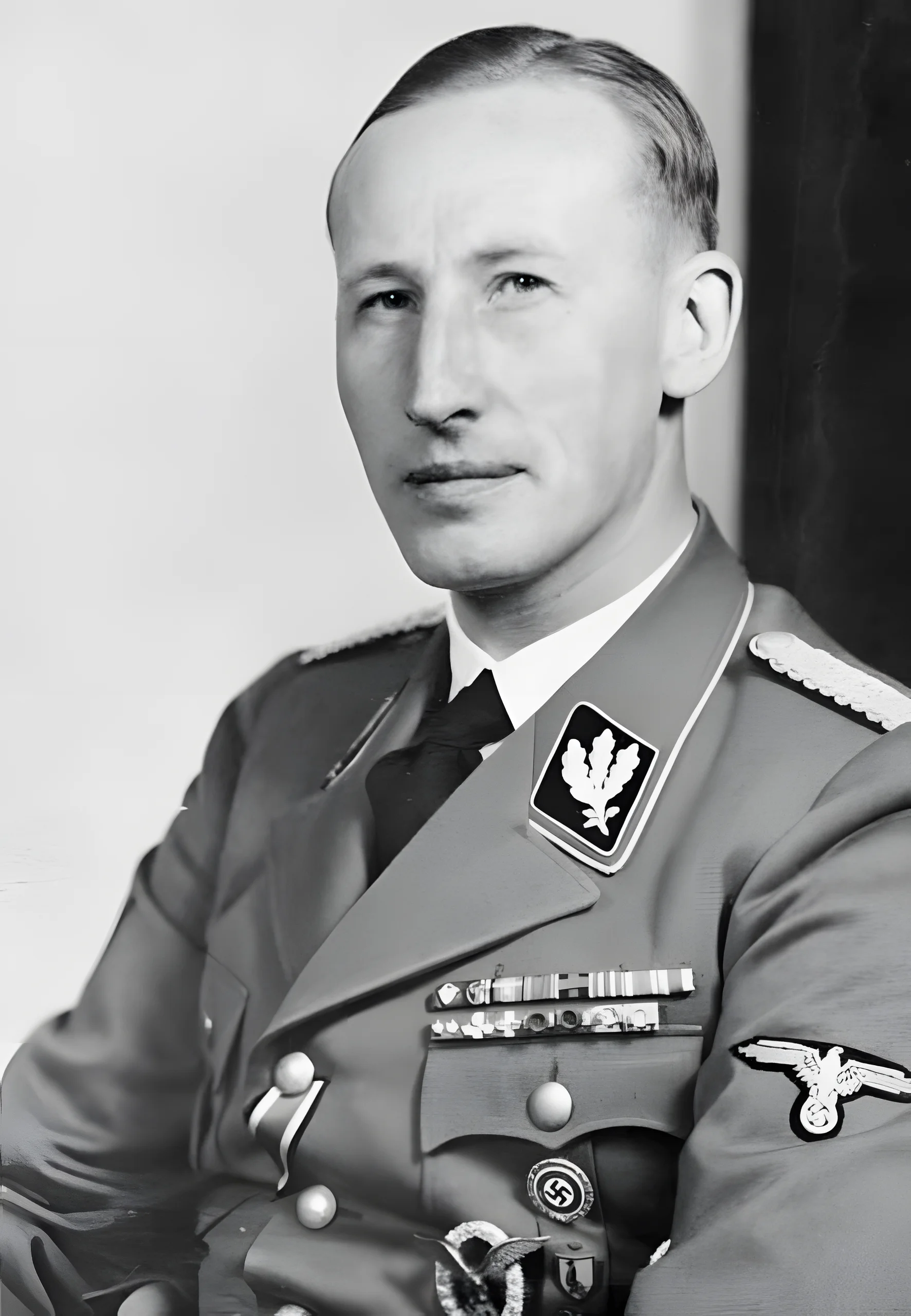
Contemporaries and historians alike describe a slight, bespectacled man with a weak chin and a receding hairline, about 5 feet 9 inches tall, physically unimpressive and at odds with the militaristic image he cultivated. He was the bureaucratic face of terror: pedantic, cold, endlessly meticulous, and utterly remorseless. Where Göring was flamboyant and Goebbels was a demagogue, Himmler was the administrator. He turned paperwork into a weapon and treated mass murder as a matter of correct procedure. Media portrayals pick up on exactly that: the obsession with racial purity, the pseudo-scientific occultism, the fanatical loyalty to Hitler, the flat affect. He is remembered not as a charismatic villain but as the man who made genocide routine. That is the image that has stuck, and it is the one the historical record supports.
Fame & Fandom (iFAMOUS Rankings)
There is no fandom here, and that absence is the point. No fan name, no conventions, no campaigns, no charity drives, no birthday billboards. The only public engagement with Heinrich Himmler is involuntary and educational: documentaries, museum exhibitions, scholarly books, and dramatizations. People encounter him because they are studying the Holocaust, not because they are celebrating a figure. That is a defining feature of his legacy rather than a gap in it.
What he does have is attention, measured coldly. In the September 2026 iFANN Global Fame Rankings, he is the 34th most famous person from Germany, holding steady from the previous cycle, and the 64th most famous person in Books & Literature, also holding steady. The numbers reflect the sheer volume of books, films, and exhibitions that keep returning to him. No fanbase claims him. No one organizes around him. The audience for his name is an audience of reckoning, and that is exactly as it should be.
Interesting Facts and Legends
His nickname in the family was never "The Decent One," despite what people sometimes assume; that phrase is the title of a 2014 documentary, not a contemporary epithet. He was a licensed agronomist who never farmed at any real scale, yet he built an entire racial ideology around blood and soil. His personal annotated copies of Hitler's Mein Kampf, held by the Museum of Jewish Heritage, contain marginalia including a reference to "the girl in the red coat." The most retold story about him is not a story of charisma but of a man who turned the SS into a state within a state and then, at Posen in October 1943, told a room full of SS generals exactly what was being done to the Jews, on the record, as a matter of pride and secrecy. That speech is the moment history keeps returning to. The second most retold is his end: the disguise, the dental records, the cyanide capsule, and the ashes in the Isar with no marker. In 2026, Claes Bang starred in I Is Another, a film built around a masseur who claimed to have treated Himmler and heard his private talk of magic and Buddha.
Notable Quotes
“I am talking about the evacuation of the Jews, the extermination of the Jewish people.”
“We shall never be brutal where it is not necessary, but we must be clear: we are the master race.”
“The SS is a National Socialist order of soldiers of Nordic descent, selected according to particular principles.”
Family & Personal Life
Himmler's father, Gebhard, was a schoolteacher and headmaster in Munich; his mother was Anna Maria Heyder. He was the middle of three brothers, Gebhard Ludwig and Ernst, and the household was comfortable, conservative, and Catholic. In July 1928 he married Margarete Boden, a nurse seven years his senior and the daughter of a well-off landowner. They shared an interest in herbal medicine and alternative health, bought a small farm near Munich, and later ran a business selling herbal products. Their only child, Gudrun, was born on August 8, 1929, and was known in the family as "Püppi." She stayed fiercely loyal to her father's memory for the rest of her life.
The marriage soured over the years, and the couple effectively separated during the war without ever divorcing. From about 1940 until the end, Himmler had a long-term relationship with his personal secretary, Hedwig Potthast, with whom he had two children: a son, Helge, born in 1942, and a daughter, Nanette-Dorothea, born in 1944. Margarete outlived him and died in 1967. In 2025, a grandson, a German pastor living in Spain, publicly revealed that he had discovered Himmler was his grandfather, a disclosure that drew international coverage and caused him significant personal distress.
Notable Connections
Adolf Hitler, his patron and ultimate authority. Reinhard Heydrich, his chief deputy and the architect of the SD, assassinated in 1942. Joseph Goebbels and Hermann Göring, fellow early Nazi leaders. Margarete Himmler, his wife. Hedwig Potthast, his long-term partner. His children Gudrun, Helge, and Nanette-Dorothea.
Relationships & Dating History
Himmler's public romantic history is short and documented. In July 1928 he married Margarete Boden, a nurse seven years his senior and the daughter of a well-off landowner. They shared an interest in herbal medicine and alternative health, bought a small farm near Munich, and later ran a herbal products business together. Their only child, Gudrun, was born on August 8, 1929. The marriage deteriorated over the years and the couple effectively separated during the war, though they never divorced.
From roughly 1940 until the end of the war, Himmler had a long-term relationship with his personal secretary, Hedwig Potthast. They had two children: a son, Helge, born in 1942, and a daughter, Nanette-Dorothea, born in 1944. There is no evidence of other documented public relationships. Himmler was married to Margarete at the time of his death in May 1945. Margarete outlived him and died in 1967. As of 2026 the only live question in this area is genealogical: a grandson, a German pastor living on Spain's Costa del Sol, publicly discovered in 2025 that Himmler was his grandfather, a revelation that drew wide coverage and caused him significant personal trauma.
- MarriedMargarete Boden1928 - 1945Married in July 1928; they had one daughter, Gudrun, and effectively separated during the war without divorcing. She was his wife at the time of his death.
- DatedHedwig Potthast1940 - 1945His personal secretary and long-term partner during the war; they had two children, Helge (1942) and Nanette-Dorothea (1944).
Death & Aftermath
Died
May 23, 1945 (aged 44)
Death Place
Lüneburg, Lower Saxony, Germany
Cause of Death
Suicide by cyanide poisoning
British soldiers pulled Heinrich Himmler out of a farm laborer's disguise near Bremervörde on May 22, 1945, and sent him to a field hospital at Lüneburg. Major Robert Kieffer is credited with recognizing him by his hands and dental records. Facing interrogation rather than the American custody he had apparently expected, Himmler bit into a glass capsule of potassium cyanide hidden in his mouth. He collapsed within moments and died roughly two hours later on May 23, despite medics trying to make him vomit. Officers recorded the empty capsule, and a coroner ruled the death a suicide by cyanide poisoning.
British military authorities cremated the body and scattered the ashes in the Isar River near Munich, with no marker, no ceremony, and no grave. The decision was deliberate: they did not want a burial site that sympathizers could turn into a shrine. No funeral was held. No tributes, vigils, or memorials followed, and survivors and Allied governments greeted the news with relief rather than mourning. He received no posthumous awards, honours, or dedications, and no foundation or institution carries his name. What survived instead was documentation. The Posen Speech of October 1943 and the administrative records of the SS became central evidence at Nuremberg and in the decades of scholarship that followed. His annotated personal copies of Hitler's Mein Kampf, including marginalia referencing "the girl in the red coat," ended up at the Museum of Jewish Heritage in New York. In 2025, a German pastor living on Spain's Costa del Sol publicly revealed that he had discovered Himmler was his grandfather, a story covered by El País, Sky News, and The Times of Israel. The 2026 film I Is Another, starring Claes Bang, dramatized a masseur who claimed to have treated Himmler and heard his private fantasies about magic and Buddha. There is no estate to manage and no licensing income; German law prohibits profiting from Nazi propaganda, and his image and writings sit with state archives and historical institutions.
Net Worth (Estate Value)
There is no credible modern net worth for Heinrich Himmler, and the iFANN Editorial Team does not publish one. He was a state official, not a private wealth figure, and any dollar figure circulating online is fabricated or speculative. He left no significant estate, no investment portfolio worth discussing, and no estate management structure. There are no posthumous releases, no licensing deals, no royalty streams, and no merchandise. His image and his writings are controlled by the German state and by archives, and profiting from Nazi propaganda is illegal in Germany. Any site claiming a 2026 net worth for him should be treated as unreliable. The honest answer is that the number does not exist in any meaningful sense, and printing one would be inventing data rather than reporting it.
Awards Won (4)
Himmler received Nazi-era state decorations, including the Golden Party Badge, the Blood Order for his part in the 1923 Beer Hall Putsch, the NSDAP Long Service Award, and the SS Long Service Award. These are awards of a criminal regime, not civilian or artistic honours. He holds no legitimate awards, hall-of-fame inductions, honorary degrees, or national honours from any democratic institution.
1933 · Nazi Party decoration
Nazi Party service
1934 · Nazi Party decoration
Participation in the 1923 Beer Hall Putsch
Known For
Reichsführer-SS
1929-1945 · Head of the Schutzstaffel
Chief of German Police
1936 · Consolidated all German police forces, including the Gestapo
Reich Minister of the Interior
1943 · Added criminal police and all police oversight to his portfolio
Posen Speech
1943 · Explicit on-the-record acknowledgment of the genocide before SS generals
Keywords
Sources
Quick Facts
- Profession
- Politician, Reichsführer-SS
- Born
- October 7, 1900
- Birthplace
- Munich, Germany
- Died
- May 23, 1945
- Death Place
- Lüneburg, Lower Saxony, Germany
- Cause of Death
- Suicide by cyanide poisoning
- Gender
- Male
- Spouse
- Margarete Himmler
- Children
- Gudrun Himmler, Helge Potthast, Nanette-Dorothea Potthast
- Birth Sign
- Libra
- Height
- 5 ft 9 in (176 cm)
- Education
- Technical University of Munich
Personal Details
- Full Name
- Heinrich Luitpold Himmler
- Height
- 5 ft 9 in (176 cm)
- Spouse
- Margarete Himmler
- Children
- Gudrun Himmler, Helge Potthast, Nanette-Dorothea Potthast
- Education
- Technical University of Munich (diploma in agronomy, 1922)
Frequently Asked Questions
How did Heinrich Himmler die?
Who was Heinrich Himmler?
What was Heinrich Himmler's role in the Holocaust?
Did Heinrich Himmler have children?
Who is Heinrich Himmler's grandson?
Similar People
Join the community
fans discussing