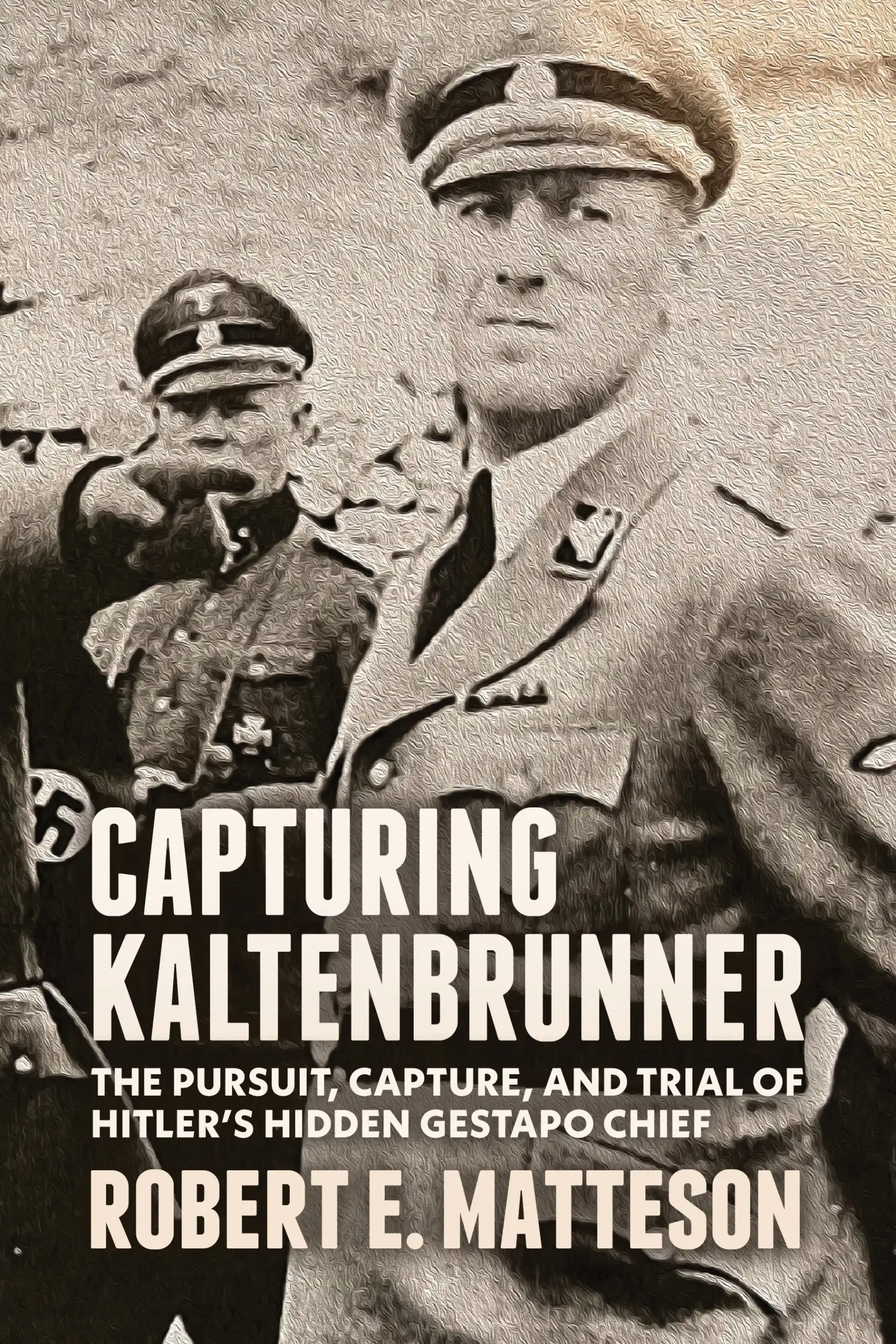
Ernst Kaltenbrunner
 Germany
politician•lawyer•military officer
Birthday
October 4, 1903
Birth Sign
Libra
Birthplace
Ried im Innkreis, Austria
Age
Died at 43
Height
6 ft 7 in (201 cm)
About
Ernst Kaltenbrunner was an Austrian lawyer who rose to become one of the most powerful figures in Nazi Germany. As the third and final Chief of the Reich Security Main Office (RSHA), he commanded the Gestapo, the Kriminalpolizei, and the Sicherheitsdienst from January 1943 until the collapse of the Third Reich. He also served as President of Interpol during the war years. Born in Ried im Innkreis, he earned his doctorate in law before entering politics, joining the Nazi Party in 1930 and the SS shortly thereafter. By 1935, he led the Austrian SS and played a central role in the Anschluss. Following the assassination of Reinhard Heydrich, Kaltenbrunner assumed control of the security apparatus, overseeing the deportation and extermination of millions during the Holocaust. He was the highest-ranking SS official to stand trial at Nuremberg, convicted of war crimes and crimes against humanity, and executed by hanging in 1946. His legacy is defined by his role in the bureaucratic machinery of genocide.
Early Life & Background
Ernst Kaltenbrunner entered the world on October 4, 1903, in the small town of Ried im Innkreis in Upper Austria. His father Franz owned a textile factory, providing the family with a comfortable middle-class existence, while his mother Anna managed the household. Young Ernst grew up in a region steeped in nationalist sentiment, which would later influence his political trajectory. He attended high school in Linz where he excelled academically and developed a keen interest in physical activities, particularly fencing. This pursuit of martial arts left him with distinctive scars on his face and hands, which he later wore as badges of honor. These scars became a defining feature of his intimidating physical presence.
Kaltenbrunner enrolled at the University of Graz to study law, graduating with a doctorate in 1926. He established a legal practice in Linz, quickly gaining a reputation for being aggressive and uncompromising in court. His professional demeanor reflected a rigid worldview that valued order above morality. Before his ascent in the Nazi hierarchy, he was known primarily within local legal circles and fencing clubs. His early career showed no signs of the future atrocities he would orchestrate, yet his fascination with power and combat laid the groundwork for his eventual alignment with radical political movements. In 1930, he joined the National Socialist German Workers' Party (NSDAP) and began organizing the Austrian branch of the party. He aligned himself with the more radical elements advocating for the annexation of Austria by Germany. By 1935, he had risen to lead the Austrian SS, playing a pivotal role in the Anschluss of March 1938. Following the annexation, he was appointed head of the SS and police in Austria, consolidating power and initiating widespread arrests of political opponents and Jews. This marked the transition from a provincial lawyer to a key architect of Nazi terror in the occupied territories.
Career Growth
On January 30, 1943, Ernst Kaltenbrunner officially assumed command of the Reich Security Main Office (RSHA), succeeding Reinhard Heydrich after the latter's assassination. In this capacity, he became the highest-ranking SS officer in the German security apparatus after Heinrich Himmler. Under his leadership, the RSHA expanded its operations significantly, coordinating the deportation and murder of millions of Jews, Roma, and other groups deemed undesirable by the Nazi regime. He was instrumental in the implementation of the Final Solution, overseeing the logistics of the death camps and the suppression of partisan activities across Yugoslavia, France, and the Soviet Union. He worked closely with Adolf Eichmann regarding Jewish deportations and sat alongside Wilhelm Keitel and Alfred Rosenberg in the Nazi hierarchy.
Kaltenbrunner also served as President of Interpol from 1943 until the end of World War II, using the organization to facilitate intelligence sharing among Axis powers. His tenure was marked by brutal suppression of resistance movements and the administration of mass extermination efforts. Despite the crumbling of the Third Reich, he remained a steadfast loyalist to Hitler until the very end. He was captured by the 80th Counter Intelligence Corps Detachment of the U.S. Army on May 13, 1945, at an alpine hideout in the Tyrol region of Austria near Kramsach. He had been hiding under a false identity, but his distinctive height and facial scars aided in his identification. He was held in solitary confinement while awaiting trial at Nuremberg. The International Military Tribunal found Kaltenbrunner guilty on all four counts: conspiracy to commit crimes against peace, planning and waging aggressive wars, war crimes, and crimes against humanity. He was sentenced to death by hanging on October 1, 1946.
Career Timeline
Public Image & Style
Kaltenbrunner's public persona was defined by his imposing physical presence and ruthless efficiency. Standing six feet seven inches tall with visible scars from fencing duels, he projected an image of cold-blooded authority often described as menacing. Media depictions and historical accounts consistently portray him as a calculating villain, representing the apex of Nazi evil and the horrors of the Holocaust. His legal background lent him a veneer of legitimacy, yet his actions spoke of brutal suppression and complicity in genocide. Unlike many other Nazi leaders who fled or hid, Kaltenbrunner's fate was sealed by his high profile and the meticulous documentation of his crimes. His image has become synonymous with the bureaucratic machinery of the Holocaust. He is rarely depicted with any positive attributes, serving instead as a stark reminder of the consequences of unchecked power and the importance of holding individuals accountable for crimes against humanity. No fanbase or positive cultural associations exist for him.
Fame & Fandom
Ernst Kaltenbrunner's global attention today is almost entirely historical and academic, focused on his role as a principal architect of the Holocaust and his execution at Nuremberg. His name appears in documentaries, historical studies, and war-crime archives, but he commands no contemporary celebrity or public following. As of the iFANN evaluation in September 2026, he holds no placement in the published rankings, neither the Global Top 1,000 nor any Top-100 scope list. The Global Fame Engine has assessed his profile, confirming his status as EVALUATED_UNRANKED, reflecting the absence of ongoing public engagement or media interest beyond historical scholarship. There is no formal fandom associated with Kaltenbrunner. No fan name, fanbase, or organized community exists, and the concept of a fan following is inapplicable given his status as a convicted war criminal. No fan campaigns, projects, or rituals are documented. The only sustained interest comes from historians, researchers, and documentary filmmakers studying the Nazi regime, not from any fan culture.
Interesting Facts and Legends
Kaltenbrunner stood at an imposing six feet seven inches tall, making him one of the tallest men in the Nazi hierarchy. His distinct facial and hand scars, inflicted during fencing duels in his youth, contributed to his menacing reputation as a cold-blooded killer. A popular legend claims he was "the man even Himmler feared," though historical evidence suggests this is more of a dramatized narrative used in media rather than a verified fact. He was the only defendant at Nuremberg who was not a military officer by profession before joining the Nazi Party, having been a lawyer. During the trial, he appeared in the defendants' dock seated in the front row, fifth from the left. Photographs from the proceedings show him conversing with Wilhelm Keitel and Alfred Rosenberg during a recess. Another notable quote attributed to him reflects his rigid worldview: "Law is not a question of morality, but of order." During his closing remarks in October 1946, he maintained his innocence, stating, "I am not guilty of the charges brought against me. I have never ordered the killing of anyone." He received several honours within the Nazi regime, including the Golden Party Badge and the Long Service Award, though these are now considered symbols of a criminal organization.
Notable Quotes
“I am not guilty of the charges brought against me. I have never ordered the killing of anyone.”
“Law is not a question of morality, but of order.”
Family & Personal Life
Ernst Kaltenbrunner was married to Ilse Pries, a former actress and model. The couple met in the early 1930s during his rise in the Austrian Nazi movement and were married in 1935. Their union produced two children: a son named Hans-Jürgen and a daughter named Eva. Ilse Pries remained with Kaltenbrunner throughout his rise to power and his time as a fugitive. She was known to be fiercely loyal to her husband, even as the war turned against Germany. There are no records of any other public romantic relationships or marriages; Ilse was his sole spouse. Following Kaltenbrunner's capture in May 1945, Ilse was detained by Allied forces but was not prosecuted. After the war, she lived in obscurity, reportedly avoiding public attention due to the stigma associated with her husband's crimes. She died in 1978. There is no evidence of any ongoing relationships or new partnerships after the war, as Kaltenbrunner was executed in 1946. Her life after the war was characterized by total isolation from the public eye.
Notable Connections
Relationships & Dating History
Ernst Kaltenbrunner was married to Ilse Pries, a former actress and model. The couple met in the early 1930s during his rise in the Austrian Nazi movement and were married in 1935. Their union produced two children: a son named Hans-Jürgen and a daughter named Eva. Ilse Pries remained with Kaltenbrunner throughout his rise to power and his time as a fugitive. She was known to be fiercely loyal to her husband, even as the war turned against Germany. There are no records of any other public romantic relationships or marriages; Ilse was his sole spouse. At the time of his death, Kaltenbrunner was married to Ilse Pries. Following Kaltenbrunner's capture in May 1945, Ilse was detained by Allied forces but was not prosecuted. After the war, she lived in obscurity, reportedly avoiding public attention due to the stigma associated with her husband's crimes. She died in 1978. There is no evidence of any ongoing relationships or new partnerships after the war, as Kaltenbrunner was executed in 1946.
- MarriedIlse Pries1935 - 1946Met in the early 1930s; had two children together; remained loyal throughout his fugitive period.
Death & Aftermath
Died
October 16, 1946 (aged 43)
Death Place
Nuremberg Prison, Germany
Cause of Death
hanging
On the morning of October 16, 1946, Ernst Kaltenbrunner was executed by hanging in the gymnasium of Nuremberg Prison alongside eleven other convicted leaders. He became the last of the twelve to die after reportedly taking longer due to a calculation error regarding the drop length or resistance, with some accounts suggesting he struggled significantly. Kaltenbrunner had spent his final days in solitary confinement while awaiting the carrying out of sentences pronounced on October 1, 1946, having maintained his innocence throughout the trial proceedings that concluded in early October. The International Military Tribunal found him guilty on all four counts of conspiracy to commit crimes against peace, planning and waging aggressive wars, war crimes, and crimes against humanity. The U.S. Supreme Court denied any stay of execution following the exhaustion of appeals, marking the definitive end of the legal process.
Following the execution, American military personnel secretly cremated his body at Ostfriedhof cemetery in Munich along with those of the other executed Nazis. The ashes were subsequently scattered into the Isar River near Munich to prevent the site from becoming a shrine for neo-Nazis or white supremacist groups. No public ceremony accompanied this disposal of remains, as the event was conducted under strict secrecy by Allied authorities. His estate was handled minimally by the Allied powers, with any remaining property likely confiscated or abandoned without formal probate proceedings recognized by the victors. Public reaction to Kaltenbrunner's death was characterized by silence rather than tributes. While some former associates may have felt private relief or sorrow, no institutions or peers offered public statements commemorating him. He is frequently featured in documentaries, films, and books as a primary antagonist representing the brutality of the Nazi regime, serving as historical documentation of his crimes rather than honors. No family statements have been recorded that sought to rehabilitate his image or claim damages, leaving his legacy solely that of a convicted mass murderer.
Net Worth (Estate Value)
$0
iFANN Editorial Team estimate
As a deceased individual from the mid-20th century, Ernst Kaltenbrunner does not have a net worth in the modern sense. His estate was handled minimally by Allied authorities, and any remaining property was likely confiscated or abandoned without formal probate proceedings. There are no posthumous releases, licensing deals, or royalty streams generating income for his estate, as his legacy is solely tied to historical documentation and legal records. The iFANN Editorial Team's analysis of X's earnings, ventures and assets points to roughly $0, reflecting the total lack of financial assets or estate value attributable to him in the contemporary era. No current projects involving Ernst Kaltenbrunner exist, as he has been deceased since 1946. Recent news items primarily relate to historical retrospectives, such as articles discussing the hunt for Hitler's inner circle and anniversaries of the Nuremberg Trials. He has no social media presence, and any mentions on social platforms are limited to educational content, historical discussions, or references in documentaries.
Awards & Accolades
Known For
The Nuremberg Trials
1946 · Defendant
Reich Security Main Office
1943 · Chief
Keywords
Sources
Quick Facts
- Profession
- politician, lawyer, military officer
- Born
- October 4, 1903
- Birthplace
- Ried im Innkreis
- Died
- October 16, 1946
- Death Place
- Nuremberg Prison
- Gender
- Male
- Birth Sign
- Libra
Personal Details
- Full Name
- Ernst Kaltenbrunner
- Height
- 6 ft 7 in (201 cm)
- Spouse
- Ilse Pries
- Children
- Hans-Jürgen, Eva
- Education
- University of Graz, Doctorate in Law (1926)
Frequently Asked Questions
Who was Ernst Kaltenbrunner?
How did Ernst Kaltenbrunner die?
What was Ernst Kaltenbrunner's role in the Holocaust?
Was Ernst Kaltenbrunner ever married?
Where was Ernst Kaltenbrunner born?
Similar People

Join the community
fans discussing