“An exceedingly well-made action picture that maintains suspense through ingenious plot complications and Willis's relatable heroism.”
Janet Maslin
The New York Times
 United States
"One man. One tower. No shoes. No problem."
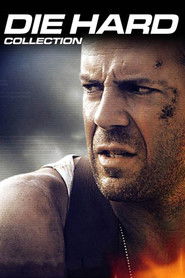
Part of a Collection
Die Hard Collection
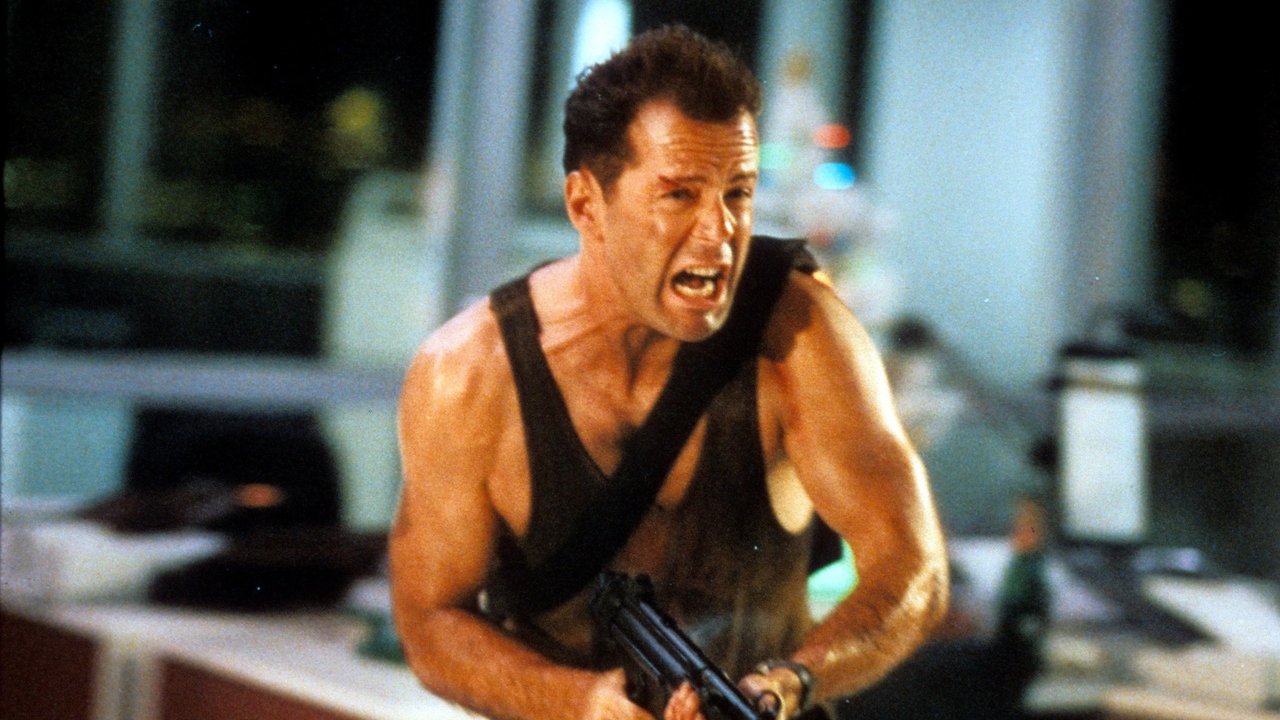
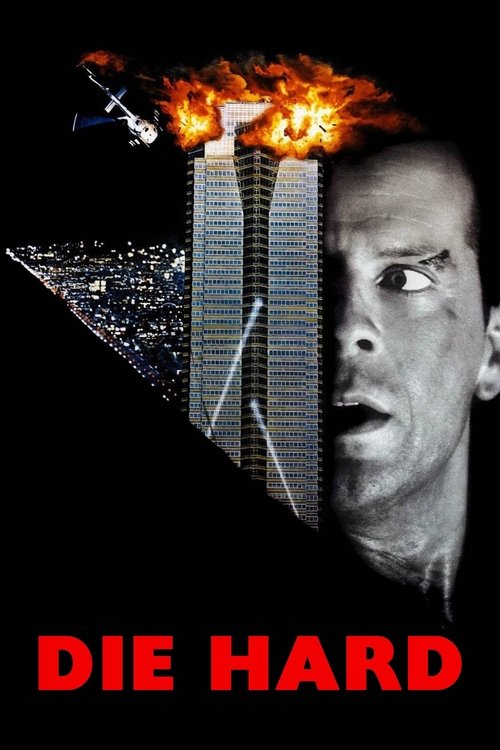
New York cop John McClane flies to Los Angeles hoping to patch things up with his wife Holly during her company's Christmas party at Nakatomi Plaza. But the festive mood shatters when a group of well-armed criminals, led by the smooth and calculating Hans Gruber, seize the building. Taking everyone hostage, they claim to be terrorists, but their real goal is a massive heist. McClane, barefoot and outgunned, becomes their worst nightmare. He moves through floors, air ducts, and elevator shafts, picking off henchmen one by one while relaying taunts over the building's radio system. With only a rookie cop, Al Powell, on the outside to trust, McClane has to stop the thieves before they escape with a fortune in bearer bonds.
Director John McTiernan keeps the tension tight inside the steel-and-glass tower, balancing explosive shootouts with McClane's weary wisecracks. Bruce Willis turned the everyman action hero into a smart-mouthed survivor, and Alan Rickman made Hans Gruber one of cinema's most memorable villains. Bonnie Bedelia brings warmth as Holly, while Reginald VelJohnson's Al Powell provides a steady counterpoint. Produced on a $28 million budget, Die Hard earned $140.8 million worldwide and became the cornerstone of a long-running franchise. The film's claustrophobic setting, sharp dialogue, and relentless pace defined a new kind of action thriller. Decade after decade, audiences still argue whether it counts as a Christmas movie. With a rating that hovers near 7.8 out of 10, it holds up as a smart, brutal, and surprisingly funny holiday staple.
Availability and pricing can change. Confirm on the provider's site before purchasing.
On Christmas Eve, NYPD detective John McClane flies from New York to Los Angeles, hoping to repair his strained marriage to his wife Holly Gennaro McClane, who has moved west for a high-powered executive job at the Japanese corporation Nakatomi. McClane is uneasy about flying and about the emotional distance between them, but he carries a teddy bear and a small hope that the holidays will help them reconcile.
McClane is driven from the airport by upbeat limo driver Argyle, who explains Los Angeles' glitz and excess as they head to Nakatomi Plaza, an almost-empty skyscraper where Holly's company is holding an after-hours Christmas party on the upper floors. At the building, McClane learns that Holly has reverted to using her maiden name, Gennaro, underlining the rift between them. In her office, they spar over her career moves, his refusal to transfer to L.A., and the toll on their children, but the old chemistry is still there. Before they can resolve anything, Holly is called away to deliver a speech at the party, leaving John alone in a private bathroom to cool off and change.
As the party continues, a large box truck pulls into the building's underground garage. A disciplined, heavily armed team of men, led by the suave and chilling Hans Gruber, emerges. They silently take out the building security guards and seize control of the lobby and elevator systems with the help of their fast-talking, tech-savvy hacker Theo. The crew methodically cuts off all external phone lines and sabotages communications, isolating the building from the outside world.
Upstairs, Gruber and his men crash the celebration, firing warning shots and corralling the employees as hostages. Holly's boss, Joseph Takagi, the dignified Nakatomi executive, is specifically targeted as the only one familiar with the codes and data behind the building's vast vault, which holds hundreds of millions of dollars in bearer bonds. Gruber presents himself as a political terrorist with ideological demands, but his operation is clearly precise, practiced, and heavily resourced.
McClane, having been barefoot and jacketless in the bathroom, hears the gunfire and shouting. Acting on instinct, he slips into the stairwell before the gunmen can sweep the floor, instantly changing from party guest to fugitive inside the tower. Unarmed, under-dressed, and outnumbered, he begins to move between floors, using the building's construction levels, elevator shafts, and mechanical rooms as cover while he observes the terrorists' patterns.
Realizing that the hostages and especially Holly are in grave danger, McClane starts improvising. He picks off isolated members of Gruber's crew when he can, taking their weapons and radios and learning more about their plan. His first kills draw the wrath of Karl, Gruber's towering, vengeful lieutenant, whose personal grudge against McClane becomes a parallel conflict that plays out throughout the film.
Using a walkie-talkie stolen from one of the gunmen, McClane contacts outside emergency services, trying to raise the alarm despite the building's cut lines and the dispatcher's skepticism. His call eventually brings Sergeant Al Powell of the LAPD to the scene, a desk-bound patrol officer on a mundane errand who slowly realizes something is very wrong at Nakatomi. Initially, the local police and later the FBI underestimate the situation, treating it as a conventional hostage crisis and doubting McClane's warnings about the sophistication of Gruber's team.
McClane and Powell develop a rapport over the radio, with Powell becoming McClane's lifeline and confidant on the outside while bureaucratic superiors, like the blustering Deputy Police Chief Dwayne T. Robinson, second-guess every move. As Gruber and Theo work through a series of security layers protecting the vault, McClane's guerrilla campaign inside the building forces them to accelerate their timetable and adapt their strategy.
Meanwhile, among the hostages, Holly tries to maintain calm, subtly stepping into a leadership role that puts her on Gruber's radar. Sleazy Nakatomi executive Harry Ellis attempts to broker a deal with Hans by exploiting his knowledge of McClane's identity, introducing a new layer of psychological pressure. Outside, morally flexible TV reporter Richard Thornburg smells a ratings bonanza and begins sensationalistic live coverage that complicates matters for McClane and his family.
As the night unfolds, the battle inside Nakatomi escalates from covert cat-and-mouse skirmishes to larger-scale confrontations involving explosives, SWAT assaults, rooftop showdowns, and delicate mind games between McClane and Gruber over the radio. McClane is progressively wounded, exhausted, and pushed to his limits physically and emotionally, especially as his connection to the hostages is revealed and Gruber starts to understand his opponent. The core conflict becomes whether McClane, trapped alone in a sealed high-rise surrounded by enemies and hindered by the very authorities meant to help him, can unravel Gruber's true objective and prevent a meticulously planned crime from ending in catastrophe.
Die Hard (1988) Original Trailer
The Greatest Christmas Story
30th Anniversary Trailer
Critical Consensus
Critics widely regard Die Hard as a benchmark of the modern action film, praising its tight plotting, inventive set-pieces, and John McTiernan's precise direction. Bruce Willis's vulnerable, witty John McClane and Alan Rickman's cultured villain Hans Gruber elevated the genre, while the film's Christmas-Eve siege setting and confined high-rise backdrop gave it enduring rewatch value and cultural resonance.
“An exceedingly well-made action picture that maintains suspense through ingenious plot complications and Willis's relatable heroism.”
Janet Maslin
The New York Times
“Technically proficient but lacking in the wit and imagination of the very best thrillers.”
Roger Ebert
Chicago Sun-Times
“Relentless pacing and spectacular set-pieces; Willis brings everyman humor and vulnerability to a role that could have been generic.”
Variety Staff
Variety
“The definitive high-rise hostage thriller; its blend of gritty realism, smart quips and structural perfection set the template for an entire generation of action movies.”
Empire
Empire
“A near-perfect machine of suspense; the tight geography, emotional stakes and sly Christmas trappings make it far richer than its imitators.”
The Guardian
The Guardian

Bruce Willis
John McClane

Alan Rickman
Hans Gruber
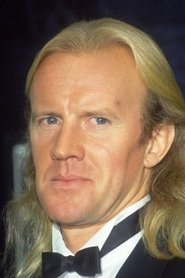
Alexander Godunov
Karl

Bonnie Bedelia
Holly Gennaro McClane
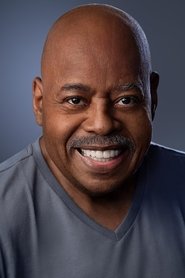
Reginald VelJohnson
Al Powell
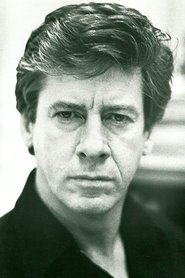
Paul Gleason
Dwayne Robinson
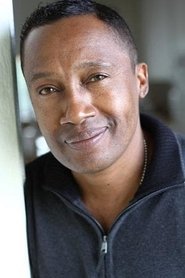
De'voreaux White
Argyle
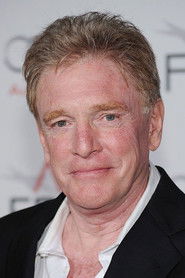
William Atherton
Richard Thornburg
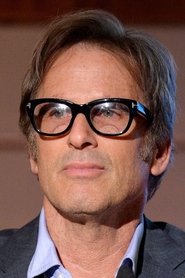
Hart Bochner
Harry Ellis
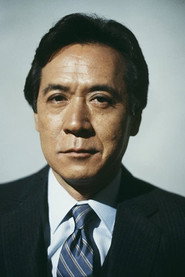
James Shigeta
Joseph Yoshinobu Takagi
Bruno Doyon
Franco

Andreas Wisniewski
Tony
Reginald VelJohnson
Sergeant Al Powell
Paul Gleason
Deputy Police Chief Dwayne T. Robinson
Andreas Wisniewski
Tony Vreski
Clarence Gilyard Jr.
Theo
Robert Davi
Special Agent Johnson
Grand L. Bush
Special Agent Johnson
Paul Gleason
Deputy Chief Dwayne T. Robinson
Robert Davi
Special Agent Big Johnson
Grand L. Bush
Special Agent Little Johnson
Director
John McTiernan
Writers
Jeb Stuart, Steven E. de Souza, Roderick Thorp
Composer
Michael Kamen
Cinematographer
Jan de Bont
Producers
Lawrence Gordon, Joel Silver, Beau Marks
Academy Award (1989)
Best Film Editing: Nominated
Academy Award (1989)
Best Sound: Nominated
Academy Award (1989)
Best Sound Effects Editing: Nominated
Academy Award (1989)
Best Visual Effects: Nominated
Join the community
fans discussing