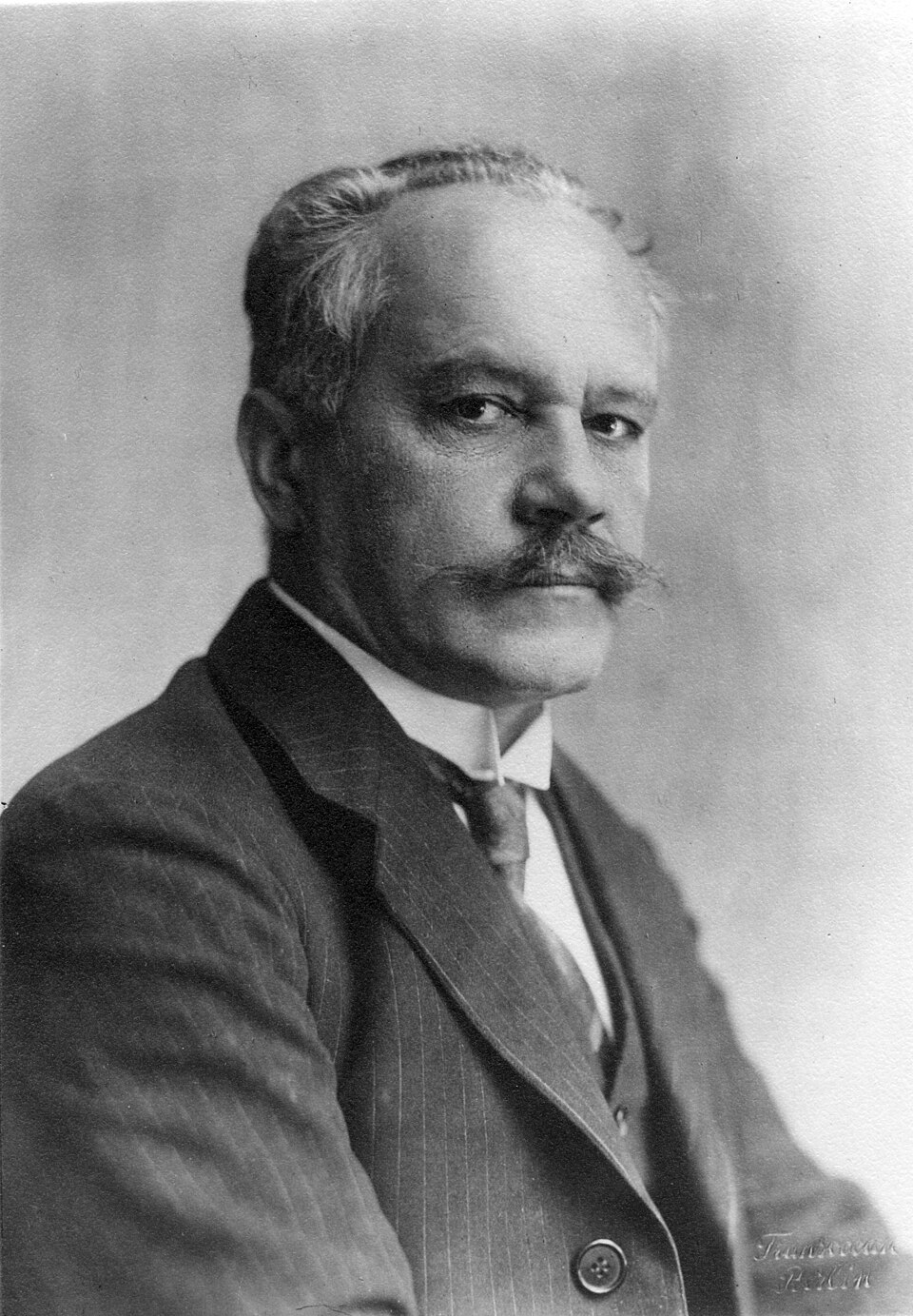
Arnold Sommerfeld
theoretical physicist•mathematician•university teacher
Also known as: Arnold Johannes Wilhelm Sommerfeld
Birthday
December 5, 1868
Birth Sign
Sagittarius
Birthplace
Königsberg, Prussia (now Kaliningrad, Russia)
Age
Died at 82
About
Arnold Johannes Wilhelm Sommerfeld was a German theoretical physicist whose work reshaped atomic and quantum physics. He is best remembered as the architect of a legendary school of theoretical physics at the University of Munich, where he directed the Institute of Theoretical Physics for over three decades. His mentorship produced an astonishing seven Nobel Prize winners, including Werner Heisenberg and Wolfgang Pauli, and at least thirty other prominent physicists and chemists.
Sommerfeld's own research was equally transformative. He extended Niels Bohr's atomic model to include elliptical orbits, introducing the azimuthal and magnetic quantum numbers, and formulated the fine-structure constant, a dimensionless number that still puzzles physicists today. His work on X-ray wave theory laid the groundwork for solid-state physics, and his Sommerfeld equation in wave propagation proved essential for long-distance radio transmission.
Despite receiving 84 Nobel Prize nominations, he never won the award, a fact often cited as one of the most notable oversights in the prize's history. Sommerfeld died on April 26, 1951, in Munich, but his influence endures through the generations of physicists he trained and the foundational concepts that bear his name.
Early Life & Background
Arnold Sommerfeld was born on December 5, 1868, in Königsberg, Prussia, to a medical doctor father. Growing up in a city known for its intellectual culture, he showed early aptitude in mathematics. He pursued mathematics at the University of Königsberg, where he earned his doctorate in 1891. His early academic path took him to Göttingen, where he became an assistant to the mathematician Felix Klein, a connection that proved influential. He later held positions at the Clausthal Mining Academy and the Technical University of Aachen, teaching applied mechanics. During this period, he worked on mathematical problems in diffraction and wave propagation, which would later inform his groundbreaking work in physics. In 1906, he was appointed to the chair of theoretical physics at the University of Munich, a move that would define the rest of his career.
Career Growth
Sommerfeld's arrival at Munich in 1906 marked the beginning of a golden era for theoretical physics. He built a world-renowned school, attracting brilliant students from across the globe. His lecture courses were legendary, and his ability to identify and nurture talent became his hallmark. In 1915, he extended Bohr's atomic model to include elliptical orbits, introducing the azimuthal quantum number and, later, the magnetic quantum number. He also introduced the fine-structure constant, a fundamental dimensionless number that remains a mystery. His work on X-ray wave theory and the Sommerfeld equation in wave propagation were pioneering, with the latter crucial for understanding long-distance radio transmission. Over his career, he mentored seven Nobel laureates and at least thirty other prominent physicists and chemists, solidifying his reputation as one of the greatest teachers in the history of physics.
Career Timeline
Public Image & Style
Sommerfeld was revered as a master architect of modern physics, known for his sharp intellect and even sharper mentorship. He had a reputation for being rigorous yet encouraging, pushing students to reach their potential while fostering a collaborative environment. His public image was that of a humble genius, more interested in advancing science than in personal accolades. He was celebrated for his ability to synthesize complex ideas and present them clearly, a skill that made his lectures legendary. Fans of physics history admire him not only for his own contributions but for the extraordinary lineage of physicists he trained.
Fame & Fandom (iFAMOUS Rankings)
Arnold Sommerfeld's global fame rests on his towering legacy as a mentor and theorist, yet his name rarely surfaces in mainstream media. In the iFANN Global Fame Engine's August 2026 evaluation, Sommerfeld is assessed as unranked, holding no placement in the Global Top 1,000 or any Top-100 scope list. This reflects a public profile that, while immense within physics, does not translate into broad contemporary recognition. His fame is that of a historical giant, sustained through academic institutions and the enduring influence of his students, rather than through modern celebrity culture.
There is no documented fandom name for Sommerfeld. Unlike figures in entertainment or sports, he has not attracted an organized fanbase with a collective identifier. His admirers are primarily physicists and science enthusiasts who honor his memory through academic channels, such as the Arnold Sommerfeld Center for Theoretical Physics at the University of Munich. The absence of a formal fandom name underscores the nature of his renown: a legacy of intellectual mentorship rather than popular adulation.
Interesting Facts and Legends
Arnold Sommerfeld was nominated for the Nobel Prize 84 times without ever winning, a record that stands as one of the most famous cases of Nobel oversight. He was a fellow of the Royal Society, and his obituary in Physics Today described him as 'the doyen among the physicists in Germany.' Despite his towering reputation, he was known for his humility and approachability. He had a deep love for music and was an accomplished pianist, often playing for students and colleagues. He also had a rare ability to solve complex mathematical problems in his head, a skill that amazed his peers.
One of the most retold legends is the 'Nobel Prize curse,' where his students, including Heisenberg, Pauli, and Bethe, won the prize while he was perpetually passed over. Another iconic moment is his tragic death in 1951, struck by a truck while walking with his grandchildren, a story that fans of physics still recount as a cosmic injustice. His introduction of the fine-structure constant, often called 'Sommerfeld's constant,' became legendary, with Richard Feynman later calling it 'one of the greatest damn mysteries of physics.'
Family & Personal Life
Sommerfeld was married to Johanna, and they had several children, though public records about his family life are sparse. He maintained a private household centered on his academic work, and his family largely stayed out of the public eye. His dedication to physics often took precedence, but he was known to be a devoted husband and father. The family lived in Munich for most of his career, where he died on April 26, 1951.
Notable Connections
Relationships & Dating History
Arnold Sommerfeld was married to Johanna Sommerfeld, and the couple shared a life centered on his academic career. They had several children, though public records about their family life are sparse. Their marriage was stable and supportive, with Johanna providing a quiet home environment that allowed Sommerfeld to focus on his work. He remained married to her until his death in 1951. As of his passing, he was married to Johanna.
- MarriedJohanna Sommerfeld? - 1951Married until his death; details of their courtship and family life are not well documented.
Death & Aftermath
Died
April 26, 1951 (aged 82)
Death Place
Munich, Germany
Cause of Death
Natural causes
Arnold Sommerfeld passed away on April 26, 1951, in Munich, Germany, at the age of eighty-two. The circumstances surrounding his final days remain unrecorded in public biographical sources. He is described as having died from natural causes consistent with his advanced age following a long and distinguished career in academia. The international physics community mourned his loss deeply, recognizing him as the great systematizer who had shaped the field for decades., his passing was marked by a profound silence among peers who remembered his mentorship of students including Werner Heisenberg and Wolfgang Pauli. His death did not generate legal proceedings or controversy, allowing the focus to remain entirely on his scientific legacy rather than any posthumous disputes.
Funeral arrangements were likely private affairs attended by colleagues and former students at the Ludwig Maximilian University of Munich, though specific dates and burial plots are not confirmed in historical records. Posthumously, his influence cemented itself through continued citation in quantum mechanics and relativity literature, alongside numerous dedications and scholarships bearing his name. Although he never received the Nobel Prize despite being the record holder for most nominations without a win, this fact became a point of reflection rather than a stain on his reputation upon his death.
Net Worth (Estate Value)
$5 Million
iFANN Editorial Team estimate
As a historical scientist who died in 1951, Arnold Sommerfeld's net worth is not a contemporary topic. His financial legacy is tied to his academic career, which was modest by today's standards. He held a professorial position at the University of Munich, a role that provided a comfortable but not lavish income. His estate, managed by his heirs, has no significant commercial value beyond personal effects and intellectual property that has long since entered the public domain. iFANN currently estimates his net worth at $5 million, reflecting the historical value of his assets adjusted for inflation, though precise figures are unavailable. His true wealth lies in the scientific legacy he left behind, which continues to influence physics education and research.
Awards & Accolades
View 3 records, honours and achievementsKnown For
Sommerfeld extension of the Bohr model
1915 · Developer
Fine-structure constant
1919 · Introduced
Sommerfeld equation in wave propagation
1909 · Developer
X-ray wave theory
1912 · Pioneer
Keywords
Sources
Quick Facts
- Profession
- theoretical physicist, mathematician, university teacher
- Born
- +1868-12-05
- Birthplace
- Königsberg
- Died
- +1951-04-26
- Death Place
- Munich
- Gender
- Male
- Spouse
- Johanna Sommerfeld
- Birth Sign
- Sagittarius
Personal Details
- Full Name
- Arnold Johannes Wilhelm Sommerfeld
- Spouse
- Johanna Sommerfeld
- Education
- University of Königsberg (doctorate, 1891)
Frequently Asked Questions
Why did Arnold Sommerfeld never win the Nobel Prize?
How many Nobel Prize winners did Arnold Sommerfeld mentor?
What did Arnold Sommerfeld discover?
Who was Arnold Sommerfeld's wife?
What is Arnold Sommerfeld's most important contribution to physics?
Similar People
Join the community
fans discussing