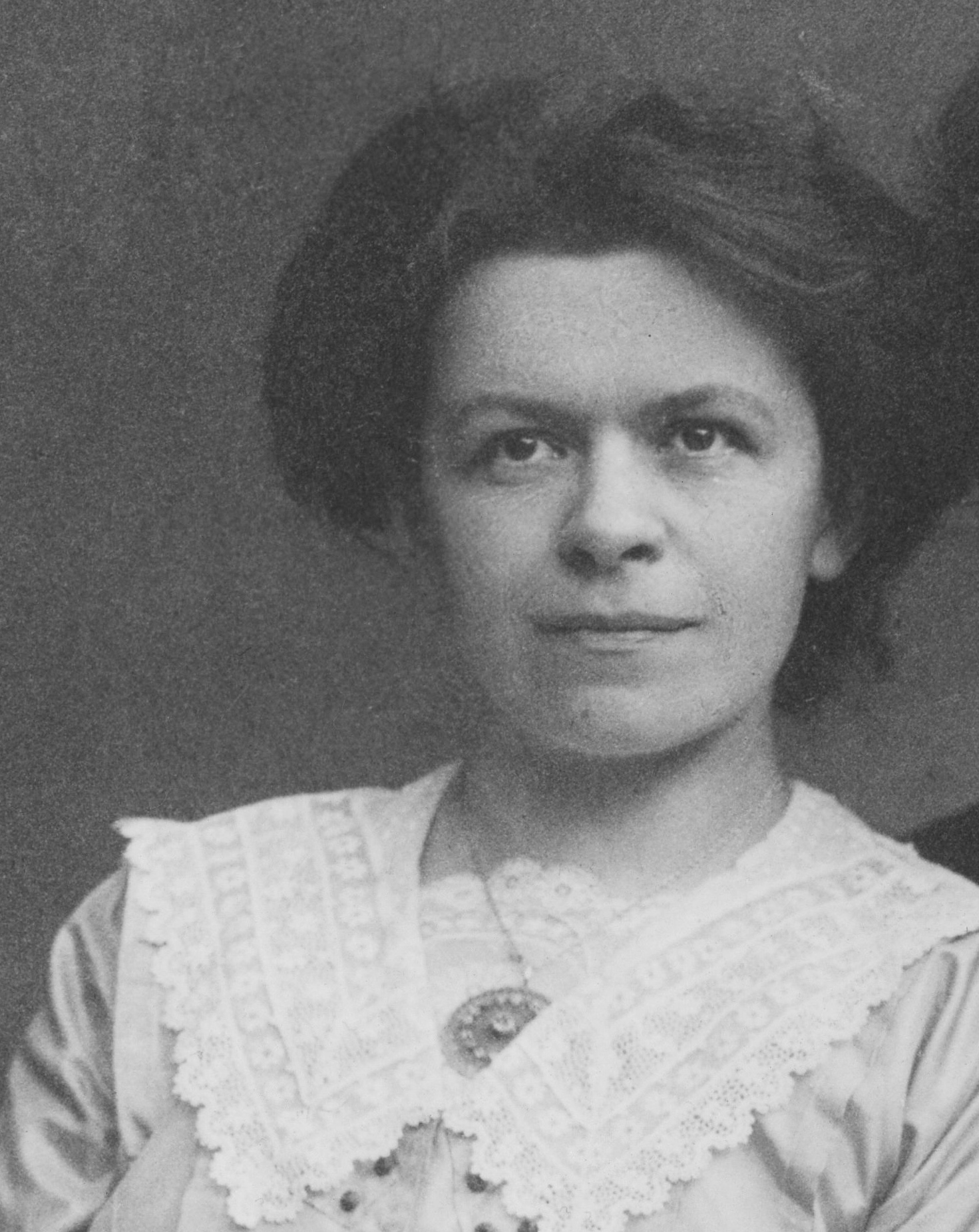
Mileva Marić
 Serbia
physicist•mathematician•teacher
Also known as: Mileva Marić-Einstein, Mileva Marić-Ajnštajn
Birthday
December 19, 1875
Birth Sign
Sagittarius
Birthplace
Titel, Vojvodina, Austria-Hungary (now Serbia)
Age
Died at 72
About
Mileva Marić was a Serbian physicist and mathematician born in Titel in 1875. She holds a unique place in history as the first wife of Albert Einstein and the only woman admitted to the mathematics and physics section of the Zurich Polytechnic. Despite her academic brilliance, she never secured a permanent professorship or research position, spending much of her later life working as a teacher to support her family. Her legacy is defined by the complex intersection of her own untapped potential and her association with one of the most famous scientists in human history.
Historians continue to debate the extent of her intellectual contribution to Einstein's work, particularly the theories published during his Annus Mirabilis year of 1905. While she was undoubtedly a supportive partner and likely a sounding board for his ideas, there is no concrete evidence she co-authored his major papers. Her life story remains a poignant example of the barriers women faced in science during the late nineteenth and early twentieth centuries.
Early Life & Background
Born in the village of Titel within the Austro-Hungarian Empire, now part of modern-day Serbia, Mileva Marić entered a world where higher education for women was virtually non-existent. Her father, Petar Marić, was a teacher and engineer who encouraged her studies, recognizing her sharp mind despite societal norms that discouraged female scholars. She excelled in mathematics and physics during her secondary education, eventually gaining admission to the prestigious Zurich Polytechnic in 1896. This achievement marked a rare breakthrough for a woman in Europe at the time, placing her in a program dominated entirely by men.
Her early years at the university were marked by isolation and skepticism. As the sole female student in the mathematics and physics department, she faced constant scrutiny and resistance from both faculty and peers. Records indicate she struggled to secure laboratory access and was often excluded from informal study groups. Despite these hurdles, she graduated in 1900 with high honors, earning the nickname "the girl" among her classmates due to her gender. Although she performed exceptionally well, she was denied a doctorate solely because she was a woman. Before her marriage to Albert Einstein, she worked briefly as a substitute teacher and tutor, but her career trajectory was cut short by personal obligations and the societal expectations placed upon married women.
Career Growth
Mileva Marić's professional recognition came primarily through her academic achievements at the Zurich Polytechnic rather than a traditional career path. She graduated alongside Albert Einstein in 1900, demonstrating a mastery of advanced mathematics and theoretical physics that rivaled her peers. During their time together, she contributed to the intellectual environment that surrounded Einstein's early work, though she did not publish under her own name for major discoveries. After marrying Einstein in 1903, she largely stepped back from formal research to manage their household and raise their children.
Following her divorce in 1919, she moved to Belgrade, Serbia, where she worked as a teacher of mathematics and physics to support herself and her two sons. She taught at various schools until her health began to fail in the 1930s. Unlike many of her contemporaries, she never sought to reclaim her scientific reputation or claim credit for Einstein's work during her lifetime. Her later years were spent in relative obscurity, focusing on her family and her teaching duties until her death in 1948. It was only decades after her passing that scholars began to seriously examine her potential role in the development of relativity theory.
Career Timeline
Public Image & Style
Mileva Marić is remembered today as a tragic figure of untapped potential. Her public image shifted dramatically over the last century, evolving from a forgotten footnote in Einstein's biography to a symbol of the "hidden women of science." Portraits from her youth show a serious, intelligent woman with dark hair, dressed in the modest, practical clothing typical of early twentieth-century academic women. Media coverage of her life has often oscillated between viewing her as a mere assistant to genius and elevating her as a co-discoverer of relativity, though historians generally settle on a middle ground acknowledging her support without confirming direct authorship.
Fame & Fandom (iFAMOUS Rankings)
iFANN has not yet collected fame data for this person. As of the August 2026 rankings, she does not appear in the global celebrity charts.
While she lacks a traditional fanbase, Mileva Marić has inspired a dedicated community of historians, feminist scholars, and science enthusiasts who advocate for her recognition. These groups focus on correcting historical narratives that erased women from the history of physics. Academic campaigns often demand that textbooks acknowledge her role as a pioneer and discuss the gender biases of her era. There are no organized fan clubs or viral social media movements specifically named after her, but she frequently appears in lists of overlooked women in science and continues to be a subject of renewed interest in educational contexts.
Interesting Facts and Legends
The fate of Mileva and Albert's first child, Lieserl, remains one of the great mysteries of the family history. Born in 1902, she disappears from all known records shortly after birth. Historians believe she likely died of scarlet fever in infancy or was given up for adoption, leaving no grave or definitive documentation of her life.
Despite her academic prowess, Mileva was denied a doctorate degree simply because she was a woman. She graduated with honors in 1900 but was barred from pursuing further doctoral studies at the Zurich Polytechnic, a restriction that would have otherwise allowed her to continue her research career.
A letter written by Mileva to Einstein in 1914 reveals the depth of her frustration with their relationship dynamic. In it, she famously wrote, "I am your wife, but I am also your slave," highlighting the shift from intellectual partnership to domestic servitude that characterized their later years.
Notable Quotes
“I am your wife, but I am also your slave.”
“You treat me like a servant.”
Family & Personal Life
Mileva was born to Petar Marić, an engineer and teacher, and Milica Marić, who supported her daughter's education against the grain of tradition. She had three children with Albert Einstein: Lieserl, born in 1902; Hans Albert, born in 1904; and Eduard, born in 1910. Her relationship with her husband became strained over time, leading to a separation in 1914 and a finalized divorce in 1919. After the split, she dedicated her life to raising her two sons while working as a teacher. Her son Eduard suffered from schizophrenia and spent much of his adult life in psychiatric institutions. Mileva maintained a close bond with her sons throughout her life, particularly Hans Albert, who managed her estate after her death.
Notable Connections
Relationships & Dating History
Mileva Marić had one documented romantic relationship that resulted in marriage: Albert Einstein. They met in 1896 while both were students at the Zurich Polytechnic. Their relationship began as a deep intellectual partnership and friendship before evolving into romance around 1899. They married on January 6, 1903, in Bern, Switzerland. The couple had three children together: Lieserl, Hans Albert, and Eduard. The marriage produced a complex dynamic where Mileva initially served as both a wife and a scientific collaborator, but tensions grew as Einstein's career ascended and his attention shifted elsewhere.
By 1914, the couple had effectively separated, with Einstein moving to Berlin while Mileva remained in Zurich with the children. The divorce was finalized on February 14, 1919, driven by Einstein's infidelity and the irreconcilable differences in their lifestyles. In the settlement, Einstein agreed to pay Mileva a stipend and gave her his Nobel Prize money, though he retained custody of his intellectual property. After the divorce, Mileva remained single, dedicating her life to raising her sons and working as a teacher until her death in 1948. There are no records of other romantic partners or flings.
- MarriedAlbert Einstein1903 - 1919They were study partners and lovers before marriage; divorced in 1919 after Einstein's infidelity.
Death & Aftermath
Died
August 4, 1948 (aged 72)
Death Place
Zurich, Switzerland
Cause of Death
Kidney failure and diabetes
Mileva Marić passed away on August 4, 1948, in Zurich at the age of seventy-two. The official medical records attribute her death to kidney failure and complications from diabetes, though some family accounts suggest a fall may have worsened her declining health in her final years. She had lived in modest circumstances for decades, relying on income from teaching mathematics and physics in Belgrade and Zagreb after her divorce from Albert Einstein. Her funeral was a private affair attended only by close family members and friends, with no major public tributes or vigils held at the time.
Following her death, her estate was managed by her son Hans Albert Einstein. Unlike her ex-husband, who willed his vast intellectual property and royalties to the Hebrew University of Jerusalem, Mileva left behind no patents, copyrights, or significant financial assets to generate posthumous revenue. Her legacy has grown far beyond her lifetime through academic re-evaluation rather than commercial ventures. Scholars and feminist historians have increasingly focused on her life story, publishing books and articles that explore the "lost women of science" narrative. While she never received a Nobel Prize during her life, modern discourse often highlights her role as a pioneering woman in a male-dominated field and questions the historical erasure of her contributions to early twentieth-century physics.
Net Worth (Estate Value)
$0
iFANN Editorial Team estimate
Mileva Marić died in 1948 with negligible personal wealth. Her financial standing consisted of savings accumulated from her work as a teacher and the divorce settlement from Albert Einstein, which included a stipend and his Nobel Prize money. Unlike her ex-husband, she owned no patents, copyrights, or intellectual property rights that could generate posthumous revenue. The vast majority of the Einstein family's assets, including royalties and papers, were willed to the Hebrew University of Jerusalem and do not belong to her estate.
Since her passing, there have been no commercial releases or licensing deals attributed solely to her work. Any estimates of "wealth" associated with her name today refer to the value of the Einstein estate or the cultural impact of her story, not actual liquid assets. Her estate was managed by her son Hans Albert, but by the time of his death, her holdings had long been liquidated or transferred. Therefore, her net worth in 2026 is effectively zero in terms of active assets.
Awards & Accolades
Known For
The Theory of Relativity
1905 · Potential Collaborator
Annus Mirabilis Papers
1905 · Supportive Partner
Keywords
Sources
Quick Facts
- Profession
- teacher, physicist, mathematician
- Born
- December 19, 1875
- Birthplace
- Titel
- Died
- August 4, 1948
- Death Place
- Zurich
- Gender
- Female
- Spouse
- Albert Einstein
- Birth Sign
- Sagittarius
Personal Details
- Full Name
- Mileva Marić
- Spouse
- Albert Einstein
- Children
- Hans Albert Einstein, Eduard Einstein, Lieserl Einstein
- Education
- ETH Zurich (Zurich Polytechnic)
Frequently Asked Questions
Did Mileva Marić help Einstein discover relativity?
What happened to Mileva Marić's daughter Lieserl?
Why didn't Mileva Marić get a Nobel Prize?
Where did Mileva Marić die?
Was Mileva Marić a scientist or just Einstein's wife?
Join the community
fans discussing