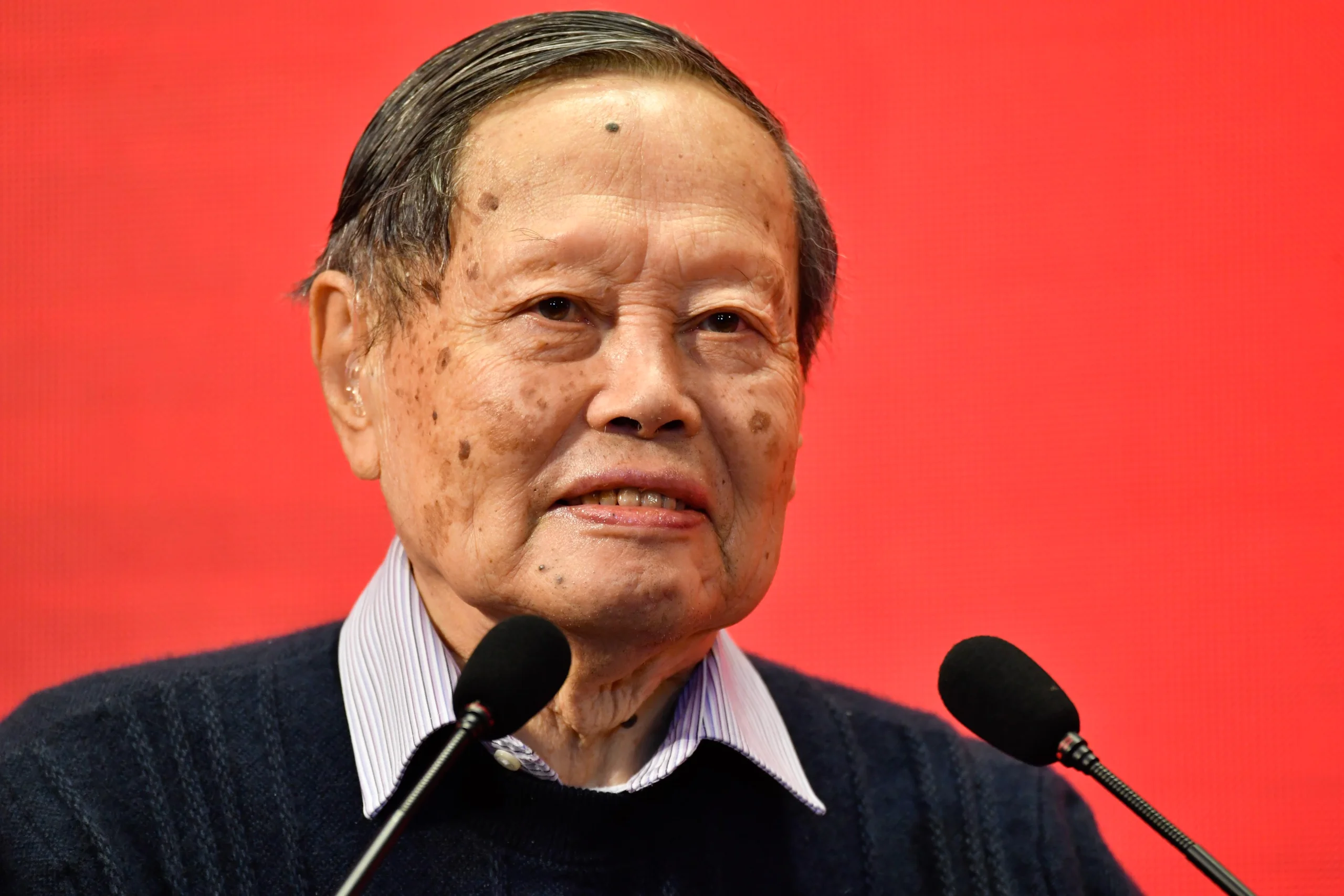
Zhang Dejiang
 China
ChinaAlso known as: Zhang Dejiang, 张德江
Birthday
November 4, 1946
Birth Sign
Scorpio
Birthplace
Tai'an County
Age
79 years old
About
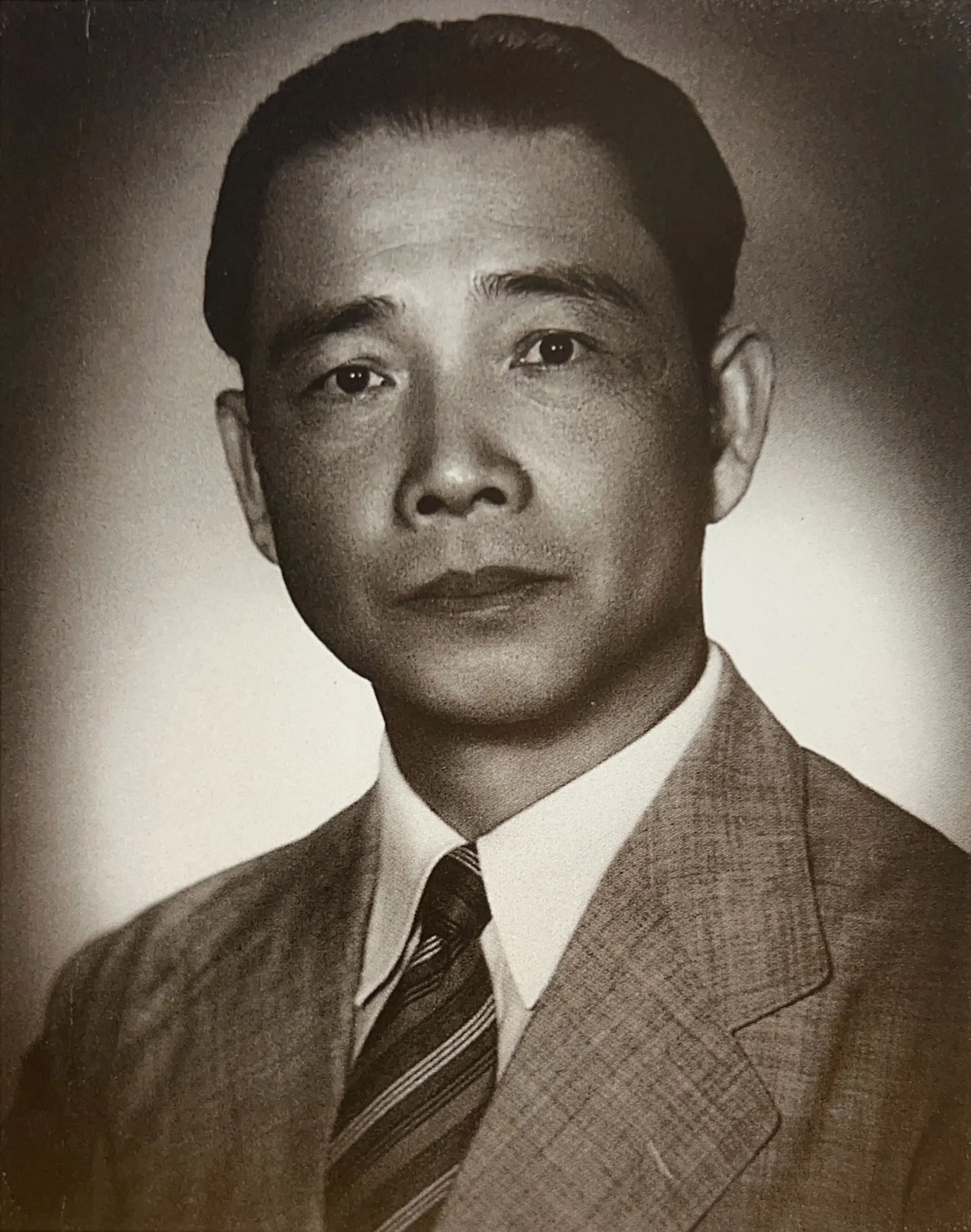
Zhang Dejiang is a retired Chinese Communist Party politician who spent 35 years inside the machinery of the People's Republic, ending his career as the third-ranking member of the Politburo Standing Committee and, from 2013 to 2018, chairman of the Standing Committee of the National People's Congress.
He held the Hong Kong and Macau affairs portfolio during the most turbulent years of that relationship, and he served as deputy head of the National Security Commission. Before Beijing, he ran three provinces and a municipality, and he was the official sent in to steady Chongqing after Bo Xilai's fall in 2012.
He is 79 now, out of public life since 2018, and married to Xin Shusen. No fanbase surrounds him, no merchandise carries his name, and no chart tracks his standing. He remains a subject of scholarly and journalistic interest rather than popular adoration, which is exactly the profile he cultivated.
Early Life & Background
The town was Tai'an, in Liaoning Province, and the date was November 4, 1946. That is where Zhang Dejiang's story starts, in the industrial northeast of a country that would not exist in its current form for another three years.
His student years took an unusual turn. He enrolled at Yanbian University, in the Korean Autonomous Prefecture of Jilin, and studied the Korean language. From there he went abroad, to Kim Il Sung University in Pyongyang, where he earned a degree in economics. The combination was rare for a Chinese official of his generation, and it shaped everything that followed: his first political postings were in Korean-populated territory, where his fluency made him useful.
He entered the workforce in November 1968, during the Cultural Revolution, and joined the Communist Party of China in January 1971. For the next dozen years he worked as a functionary rather than a public figure, and the record of those years is thin. The paper trail resumes in 1983, when he entered politics properly as deputy party secretary of Yanji, the prefectural capital. He then moved up to the same role for the entire Yanbian Korean Autonomous Prefecture, a posting that made his name inside the party apparatus if not outside it.
Provincial rank came next. Jilin made him its Party Secretary in 1995. Zhejiang followed in 1998. By the time the 16th Party Congress convened in 2002, he was a known quantity in Beijing: a provincial chief with a foreign education, no factional base in the capital, and a reputation for executing orders without drama.
Career Growth
The 2002 promotion put him on the Politburo and into the Guangdong Party Secretary's chair, and within a year he faced the crisis that would define his record. Severe acute respiratory syndrome broke out in the province in late 2002 and early 2003. Investigative work published later, including a widely read Quartz account, alleged that the provincial response suppressed information about the spread, and that the delay worsened the outbreak when it reached Hong Kong. Zhang has never publicly addressed the allegation in detail.
Beijing moved him to the State Council in 2008 as Vice Premier with the energy, telecommunications and transportation portfolios. The job was troubleshooting, and he did it in public: he directed the response to the 2009 Heilongjiang mine explosion and the 2011 Wenzhou high-speed rail collision, both of which drew national anger.
In March 2012 he was dispatched to Chongqing to replace Bo Xilai as Party Secretary after Bo's scandal. He stayed only months, long enough to stabilize the municipality before the leadership transition.
The 18th Party Congress in November 2012 elevated him to the third-ranking seat on the Politburo Standing Committee, and in March 2013 the National People's Congress elected him chairman of its Standing Committee at age 66, the ninth person to hold the post since 1949. He also became deputy head of the National Security Commission and took charge of Hong Kong and Macau affairs.
His 2016 visit to Hong Kong brought protesters into the streets and pan-democrats into a meeting with him. In May 2017 he set out plans to tighten Beijing's control over the territory. That year he met Vladimir Putin in Moscow and Hun Sen in Beijing, and in March 2018 he delivered the Standing Committee's work report to the 13th NPC. He left the Politburo in 2017 and handed the NPCSC chairmanship to Li Zhanshu in 2018.
Career Timeline
Public Image & Style
Zhang Dejiang's public image is bureaucratic and deliberately low-contrast. He wears the standard dark suit and tie of the Chinese leadership, speaks in the measured cadence of a state report, and has never cultivated a personal brand. His communications ran through Xinhua, CCTV and People's Daily, not through a personal account.
Media coverage splits along predictable lines. Chinese state outlets frame him as a steady administrator and a reliable executor of central policy. Hong Kong and international press frame him as the face of Beijing's tightening grip, and his name appears in protest coverage more often than in profiles.
He has no verified social media presence, no follower counts, and no public persona beyond the office he held. The absence is itself the image: a man who wanted to be known for the institution, not for himself.
Fame & Fandom (iFAMOUS Rankings)
Among the roughly 1.4 billion people born in China, Zhang Dejiang ranks as the 100th most famous person from China in the iFANN Global Fame Rankings, holding steady from the previous cycle. That placement reflects a career whose visibility came almost entirely from the offices he held rather than from anything he did to court attention. He is not on the September 2026 iFAMOUS Rankings flagship list.
There is no fandom, and no fan name, because there was never anything to be a fan of in the usual sense. No one organizes streaming pushes for a National People's Congress work report. No birthday billboards go up for a retired Politburo Standing Committee member. The people who follow his career closely are analysts, journalists, China-watchers and Hong Kong policy specialists, and they read him the way they read a budget document: for what the text reveals about power.
What passes for a following is really a readership. His Wikipedia entry draws thousands of views a month, weighted heavily toward Chinese-language readers, with smaller audiences in Japanese, Vietnamese and English. The attention spikes around legislative sessions, Hong Kong announcements and any retrospective on the 2003 SARS response. That is the shape of his fame: institutional, periodic, and entirely without adoration.
Interesting Facts and Legends
He is one of the few senior Chinese officials of his generation to have earned a degree abroad, at Kim Il Sung University in North Korea, and he studied the Korean language at Yanbian University before that.
His 2003 handling of SARS in Guangdong is the story that follows him. Investigative outlets have argued the provincial government withheld information as the virus spread, and the accusation resurfaces in every retrospective of his career.
When Bo Xilai fell in 2012, Zhang was the man sent to Chongqing. He held the post for barely half a year, a caretaker rather than a builder.
His 2016 Hong Kong trip produced scuffles and street protests, a rare public confrontation for a figure who otherwise avoided the spotlight entirely.
He took the NPC Standing Committee chair at 66, old by the standards of recent appointees, and retired on schedule five years later.
Family & Personal Life
Zhang Dejiang is married to Xin Shusen, and that is essentially the whole of what the public record contains about his family. No children are documented in reliable sources, and no parents or siblings have been named in the reporting.
The silence is not accidental. Senior Chinese officials of his rank keep their households out of view, and Zhang's file is unusually bare even by that standard. He has never given an interview about his upbringing, his marriage, or his home life, and state media profiles stick to postings and dates.
He and Xin Shusen remain married as of 2026, with no separation, divorce or widowhood reported at any point in his career. Where the couple lives now, after his 2018 retirement, has not been publicly disclosed.
Notable Connections
Zhang's career is inseparable from the officials around him: Premier Wen Jiabao, whom he served as a troubleshooting Vice Premier; Bo Xilai, whom he replaced in Chongqing in 2012; Li Zhanshu, his successor at the NPC Standing Committee; and diplomatic counterparts including Vladimir Putin and Hun Sen. Bamanga Tukur of Nigeria's PDP also met him in 2013.
Relationships & Dating History
The public record on Zhang Dejiang's personal life contains exactly one relationship: his marriage to Xin Shusen. There is no documented first marriage, no divorce, no separation, and no publicly acknowledged romantic involvement with anyone else at any point in his career.
That is unusual even for a senior Chinese official, whose marital status is normally at least a matter of record. Zhang's file is simply closed on the subject. He has never discussed his marriage in an interview, and state media profiles do not mention Xin Shusen beyond confirming that she exists.
No tabloid pairing, no rumored attachment, and no high-profile fling has ever surfaced in reliable reporting. The absence is consistent with how he ran his entire public life: minimal exposure, no loose ends, nothing for opponents to use.
As of 2026, he remains married to Xin Shusen. No separation, divorce, or widowhood has been reported, and no children are documented in the available sources.
- MarriedXin ShusenCurrentZhang's only publicly documented relationship; the couple remain married as of 2026 with no separation or divorce reported.
Salary, Net Worth In 2026
No credible net worth figure exists for Zhang Dejiang, and the reason is structural rather than a gap in reporting. Senior Chinese officials do not disclose personal finances the way elected leaders in many other countries do, and celebrity net worth outlets do not track them. There is no property register, no stock disclosure, and no salary schedule in the public domain that would support an estimate.
What can be said is that his income during his working life came from state salaries tied to his rank, first as a provincial Party Secretary, then as Vice Premier, then as chairman of the NPC Standing Committee. Those are comfortable by Chinese civil service standards and modest by the standards of the entertainment and business figures iFANN usually profiles.
Since retiring in 2018 he has held no commercial roles, no board seats, and no advisory positions that would generate outside income. He has not published memoirs, given paid speeches, or licensed his name to anything. No assets, investments, or real estate holdings have been reported in any credible outlet.
iFANN does not publish an estimate where the underlying data does not exist, and in this case it does not. Any figure circulating online for Zhang Dejiang's wealth should be treated as unsourced.
Awards & Accolades
Known For
Chairman of the Standing Committee of the National People's Congress
2013 · Chairman (2013-2018)
Politburo Standing Committee of the Communist Party of China
2012 · Third-ranking member (2012-2017)
Party Secretary of Guangdong
2002 · Party Secretary (2002-2007)
Vice Premier of the State Council
2008 · Vice Premier for energy, telecommunications and transportation (2008-2013)
Party Secretary of Chongqing
2012 · Party Secretary (March-November 2012)
Keywords
Sources
Quick Facts
- Profession
- politician
- Born
- November 4, 1946
- Birthplace
- Tai'an County, Liaoning, China
- Gender
- Male
- Spouse
- Xin Shusen
- Birth Sign
- Scorpio
- Education
- Yanbian University; Kim Il Sung University
- Party
- Communist Party of China (joined 1971)
- Highest Office
- Chairman, NPC Standing Committee (2013-2018)
- Retired
- 2018
Personal Details
- Spouse
- Xin Shusen
- Education
- Yanbian University; Kim Il Sung University
Frequently Asked Questions
Who is Zhang Dejiang?
Is Zhang Dejiang still alive?
Who is Zhang Dejiang's wife?
What was Zhang Dejiang's role in the SARS outbreak?
When did Zhang Dejiang retire?
Join the community
fans discussing