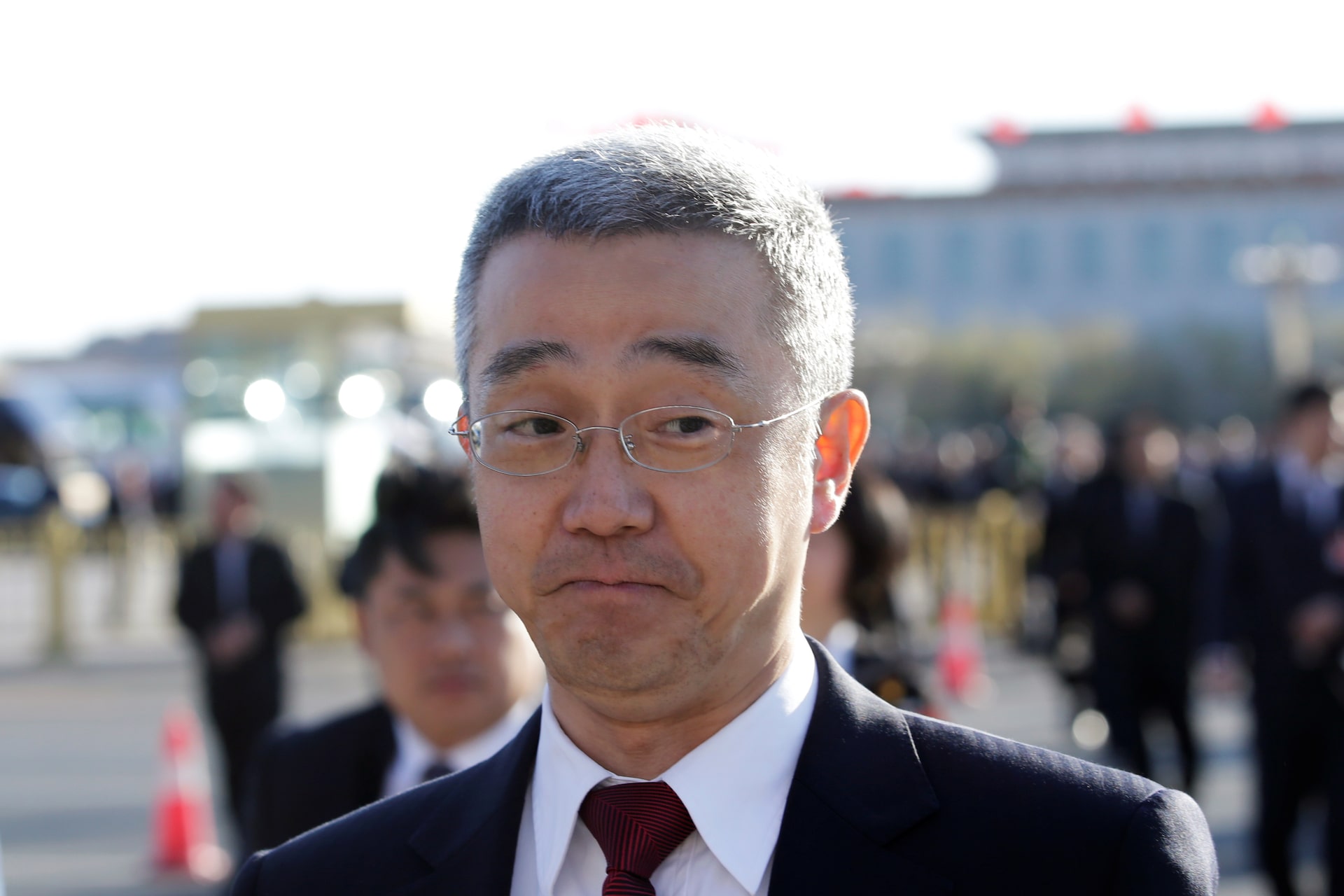
Hu Jintao
 China
Also known as: Hu Jin Tao, Hujintao, Jintao Hu, General Secretary Hu Jintao, Hu Jin-tao
Birthday
December 21, 1942
Birth Sign
Sagittarius
Birthplace
Jiangyan District, Taizhou, Jiangsu, China
Age
83 years old
About
Hu Jintao is a retired Chinese politician and engineer who served as paramount leader of the People's Republic of China from 2002 to 2012, holding the offices of General Secretary of the Chinese Communist Party, President of the PRC, and Chairman of the Central Military Commission. He remains the only living former paramount leader of the PRC.
His decade in power saw China's economy roughly triple in size, the expansion of national healthcare coverage, and the signing of the 2010 Economic Cooperation Framework Agreement with Taiwan. He governed under the banner of the Scientific Outlook on Development and the goal of a Harmonious Society.
Today he lives in retirement, out of public view. His reserved style and quiet exit from power in 2012 and 2013 made him an unusual figure in modern Chinese politics, and the October 2022 Party Congress incident remains the most discussed moment of his later life. As a state leader rather than an entertainer, his honours are diplomatic and state-level rather than ceremonial-industry awards, including numerous foreign state decorations conferred during his presidency. He does not appear on cultural greatest lists, holds no Walk of Fame star, and has no Hall of Fame induction.
Early Life & Background
Hu Jintao was born on December 21, 1942 in Jiangyan, a district of Taizhou in Jiangsu province. His mother died when he was young, and relatives largely raised him. That modest upbringing, far from the political dynasties that often produce Chinese leaders, shaped the famously reserved public persona he carried for the rest of his life.
He was a standout student and entered Tsinghua University in 1959, graduating in 1965 with a degree in hydraulic engineering. He joined the Communist Party in 1964 while still a student. After graduation he briefly served as a political counselor at Tsinghua, then moved to Gansu province, where he worked as an engineer in the Construction Department and rose through the Communist Youth League apparatus.
A pivotal early break came when he was selected for the Youth League's national leadership in Beijing, which brought him to the attention of the party establishment. He later served as Party Committee secretary in Guizhou from 1985 to 1988 and then in the Tibet Autonomous Region from 1988 to 1992. His firm handling of dissent in Tibet, including the imposition of martial law in Lhasa in 1989, drew the attention of national leaders and accelerated his rise.
Career Growth
Hu Jintao was elevated to the Politburo Standing Committee in 1992 and served as Vice President from 1998. He succeeded Jiang Zemin as General Secretary in 2002 and as President in 2003, consolidating full power when he took the Central Military Commission chairmanship in 2004.
His doctrine was the Scientific Outlook on Development, aimed at building a Harmonious Society, prosperity with reduced social conflict, while reintroducing state control in key economic sectors and backing state-owned enterprises. His decade in office saw China's economy roughly triple in size. He managed the 2002 to 2004 SARS outbreak, expanded national healthcare coverage, and responded to the 2008 Sichuan earthquake, the 2008 Tibetan unrest, and the 2009 Ürümqi riots. His government passed the Anti-Secession Law on Taiwan and signed the 2010 Economic Cooperation Framework Agreement with Taiwan. His foreign policy promoted China's peaceful rise and deepened ties with Africa and Latin America.
He retired from all posts in 2012 and 2013, handing power to Xi Jinping, a voluntary transition widely praised at the time.
Career Timeline
Public Image & Style
Hu Jintao governed with technocratic restraint and deliberately discouraged personality cults. His tone was stability over charisma, collective leadership over individual spectacle. Media portray him as an enigmatic, reserved figure whose quiet style contrasts sharply with the cultish energy around some predecessors and successors. His signature fashion was unremarkable, typically dark suits and ties, and his public appearances were carefully calibrated to project calm authority rather than personal magnetism. Online, his legacy is referenced with wry irony rather than devotion, particularly around the word harmonious. He has no personal social media presence or verified accounts, and follower counts do not exist for him.
Fame & Fandom (iFAMOUS Rankings)
Hu Jintao's imprint on global attention is measurable even without a fanbase. He is the 3rd most famous person in China, holding steady from the previous cycle, and the 22nd most famous person from China, also steady. Across the region, he ranks the 21st most famous person in East Asia, down from 20th last cycle. These placements, tracked by the iFANN Global Fame Rankings, reflect a reach that transcends the quiet style of his rule.
There is no formal fandom, no fan clubs, no fan-given name, no billboard or birthday campaigns, and no coordinated streaming or charity drives. In China, where leader worship is carefully calibrated, Hu's era deliberately avoided the cultish energy that surrounded some of his predecessors and successors. The single most retold story of his later years is the October 2022 Party Congress incident, when the 79-year-old was escorted from the venue by aides after appearing to pause and speak with Xi Jinping. Captured on live state television, the moment became a global talking point, sparking intense speculation about internal party dynamics. It is a verified fact, though the reasons remain officially unexplained. That such a moment resonates so deeply says everything about the careful silence that otherwise surrounded his tenure.
Interesting Facts and Legends
Hu Jintao studied hydraulic engineering and worked as an actual engineer before politics, a detail that rarely comes up in coverage of his leadership. His Harmonious Society phrase became one of the most satirized political slogans in Chinese internet culture, often used with ironic undertones to imply forced consensus. A story fans of Chinese political history still retell is the January 2006 secret visit to Beijing by North Korean leader Kim Jong-Il, hosted by Hu and kept under wraps until later, which added a mythic quality to his diplomatic record. A 2025 death rumor about Hu circulated online and was never substantiated. His Wikipedia page drew roughly 139,000 English views over 60 days as of September 2026, with heavy readership in Chinese and other languages. His governing partner was Premier Wen Jiabao, and his predecessor was Jiang Zemin. He has given no notable post-retirement interviews.
Notable Quotes
“Build a harmonious society.”
“The Scientific Outlook on Development.”
Family & Personal Life
Hu Jintao is married to Liu Yongqing, whom he met at Tsinghua University. They have two children, a son, Hu Haifeng, and a daughter, Hu Haiqing. Unlike many Chinese leaders' families, his relatives have kept a notably low profile, avoiding the high-profile business roles common to other leaders' relatives. He lives in retirement in Beijing, out of public view.
Notable Connections
Relationships & Dating History
Hu Jintao's personal life has been remarkably free of the public drama that often surrounds political figures. He met Liu Yongqing at Tsinghua University, where both were students in the early 1960s. They married and have remained together for decades.
There is no documented dating history beyond his marriage. He has no publicly reported prior relationships, engagements, or divorces, and no credible outlet reports any extramarital relationship. Unlike many political figures whose personal lives become fodder for tabloids, Hu's marriage has stayed entirely out of the spotlight. As of 2026, he is married to Liu Yongqing, with no reported separation or divorce.
- MarriedLiu Yongqing1960s - presentCurrentMet at Tsinghua University; they have two children, Hu Haifeng and Hu Haiqing.
Salary, Net Worth In 2026
$4 Million
iFANN Editorial Team estimate
Celebrity-net-worth aggregators do not carry a reliable figure for him. His income while in office was a state salary, and no documented business ventures, endorsements, production companies, or disclosed real-estate portfolio exist in the public record.
The iFANN Editorial Team's analysis of his known earnings and assets points to roughly $4 million as of 2026, a figure that reflects a career in public service rather than private wealth. That estimate is iFANN's own and is not drawn from any official disclosure. His financial trajectory over recent years has been flat, with no reported investments or business interests. The figure is modest by the standards of retired heads of state elsewhere, and it is consistent with the low-profile, state-salaried career he led.
Awards & Accolades
View 8 records, honours and achievementsKnown For
General Secretary of the Chinese Communist Party
2002–2012 · Paramount leader of China
President of the People's Republic of China
2003–2013 · Head of state
Harmonious Society doctrine
2000s · Signature policy concept
Scientific Outlook on Development
2000s · Guiding ideology
Keywords
Sources
Quick Facts
- Profession
- politician, engineer
- Born
- December 21, 1942
- Birthplace
- Jiangyan District, Taizhou, Jiangsu, China
- Gender
- Male
- Spouse
- Liu Yongqing
- Birth Sign
- Sagittarius
- Education
- Tsinghua University (hydraulic engineering, 1965)
- Children
- Hu Haifeng (son), Hu Haiqing (daughter)
- Net Worth
- $4 Million
- Relationship Status
- Married
Personal Details
- Full Name
- Hu Jintao
- Spouse
- Liu Yongqing
- Children
- Hu Haifeng (son), Hu Haiqing (daughter)
- Education
- Tsinghua University (hydraulic engineering, 1965)
Frequently Asked Questions
What happened to Hu Jintao?
Is Hu Jintao still alive?
How old is Hu Jintao?
Who is Hu Jintao's wife?
What was Hu Jintao known for?
Join the community
fans discussing