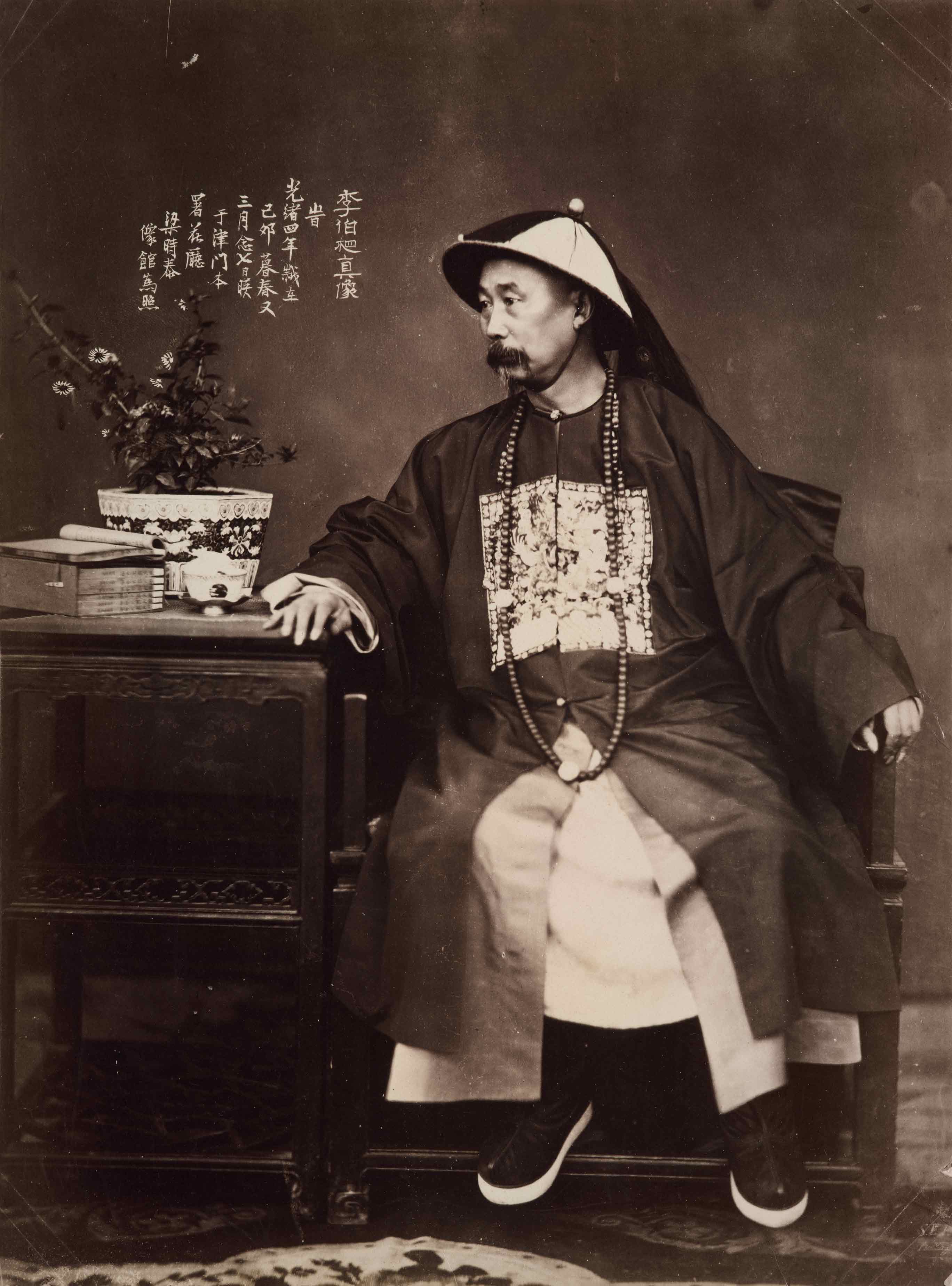
Li Zhanshu
 China
ChinaAlso known as: 栗战书
Birthday
August 30, 1950
Birth Sign
Virgo
Birthplace
Pingshan County, Hebei, China
Age
76 years old
About
Li Zhanshu is a retired Chinese Communist Party politician who spent five years as the third-ranking member of the Politburo Standing Committee and, from 2018 to 2023, chaired the Standing Committee of the National People's Congress, the body that writes and passes China's national laws. In that role he was the country's top legislator and, by protocol, the number-three figure in the Chinese state.
Analysts across the field consistently place him among Xi Jinping's closest political allies, a relationship that dates back to the 1980s when both men served as young county party secretaries in Hebei. That bond carried Li through a four-decade career spanning provincial governorships, a stint running the party's General Office, and finally the Standing Committee itself. He left the Standing Committee in 2022 and retired from the NPC chairmanship in 2023, and he has kept a low public profile since.
Early Life & Background
Li Zhanshu was born in Pingshan County, a mountainous stretch of western Hebei Province, into a Han Chinese family. Sources disagree on the exact year: the English Wikipedia and Wikiquote list August 30, 1951, while CGTN's official biography for the 19th Party Congress and the Simple English Wikipedia give August 1950. Either way, he came of age in the early years of the People's Republic, and he started his first job in December 1972.
His political apprenticeship played out entirely in rural and prefectural Hebei. He joined the Communist Party in the early 1970s and worked his way up through county-level posts, eventually becoming Party Secretary of Wuji County. In 1985 he was appointed Commissioner of Shijiazhuang, then in 1990 took charge of Chengde Prefecture. From 1993 to 1997 he served as secretary-general of the Hebei Provincial Party Committee, the administrative hub that runs the day-to-day business of a province.
The detail that China scholars keep returning to is that Li and Xi Jinping overlapped as rookie county party secretaries in Hebei during the 1980s. They were both young men in unglamorous posts, and the shared experience is widely cited as the root of the trust that later put Li in Xi's inner circle. That period in Hebei, not any single dramatic episode, is what set the whole arc in motion.
Career Growth
Li's provincial career broadened through the 2000s. He served as Party Secretary of Xi'an from 2002 to 2003, then as Governor of Heilongjiang from 2008 to 2010, and finally as Party Secretary of Guizhou from 2010 to 2012. In 2012, after the 18th Party Congress, he was named director of the General Office of the Chinese Communist Party and joined the Politburo. The General Office job made him, in effect, Xi Jinping's chief of staff, controlling the paperwork and scheduling that flow to the top of the party.
His ascent peaked in 2017 when he entered the Politburo Standing Committee as its third-ranked member. A year later, in 2018, he took the chairmanship of the NPC Standing Committee, a post he held until 2023. He stepped off the Standing Committee in 2022.
As NPC chairman, Li also carried a heavy diplomatic load. In September 2022 he made his first foreign trip since the start of the COVID-19 pandemic, visiting Russia for talks with President Vladimir Putin. The same swing took him to Nepal, where he met KP Sharma Oli and Pushpa Kamal Dahal, and to South Korea for supply-chain discussions. In February 2023, Iran and China signed 20 cooperation documents during a stretch of intensified bilateral engagement.
Career Timeline
Public Image & Style
Li Zhanshu's public image is that of the quiet institutional operator rather than the charismatic frontman. In state media he appears in the uniform of high office: dark suits, the standard short haircut, seated at long tables or standing at podiums reading work reports. His speaking style is formal and procedural, which fits a man whose most visible output was the NPC's annual legislative report, a document analyzed closely by outlets like the China Media Project for what it reveals about policy priorities.
Outside China, media coverage frames him through a single lens: proximity to Xi Jinping. Headlines routinely call him the number-three leader or Xi's chief of staff, and his diplomatic trips are read as messages from the top rather than as personal initiatives. That framing is accurate but narrow. It means his public identity is less about who he is than about whose confidence he holds, and it has kept his image stable and low-drama through retirement.
Fame & Fandom (iFAMOUS Rankings)
Fame for a Chinese legislator works differently than it does for a pop star, and Li Zhanshu is a good case study. His audience is not a fandom in any conventional sense. There is no fan club, no fandom name, and no organized campaign culture around him. Instead, his following is made up of policy analysts, China watchers, and academics who track his institutional moves the way sports fans track a general manager: closely, and with an eye on what the next decision signals.
That attention is real and measurable. Wikipedia page-view data shows the bulk of his readership comes from Chinese-language readers, with English, Vietnamese, Japanese, and Russian audiences filling out the rest, which tracks with how widely his career is covered across Asia and beyond. Pantheon's Historical Popularity Index has placed him as high as 26th globally among historical figures, a striking number for someone whose job was legislative procedure.
As of the September 2026 iFANN Global Fame Rankings, Li Zhanshu has been evaluated by the engine but does not currently hold a placement in the published rankings, whether the Global Top 1,000 or any Top-100 scope list. That is not a verdict on his historical importance; it reflects the fact that his fame is concentrated in political and academic circles rather than in mass-audience attention. For the readers who do follow him, the interest is durable and specific, built on four decades of provincial and central posts rather than a single viral moment.
Interesting Facts and Legends
Because Chinese leaders' personal lives are almost never disclosed, the most interesting material about Li tends to be institutional. One detail that circulates among China watchers: his political partnership with Xi Jinping traces back to the 1980s, when the two were rookie party secretaries in neighboring Hebei counties, a coincidence that scholars cite when explaining why Xi later pulled Li into his inner circle.
Li's September 2022 Russia trip gets retold constantly in policy circles, partly because it was his first foreign journey after the pandemic and partly because Russian readouts described him voicing support for Moscow's position on Ukraine. International outlets read that as a signal of Xi's own alignment, and the episode became a case study in how a legislative chairman can deliver a diplomatic message.
Alternative-history wikis have spun a fictional 2013 assassination attempt involving Li, which has no basis in any credible record and sits awkwardly beside the fact that he went on to serve another decade at the top. He also keeps an unusual kind of fame for a politician: Pantheon's Historical Popularity Index once ranked him 26th globally among historical figures.
Family & Personal Life
Almost nothing about Li Zhanshu's household is on the public record. Chinese senior leaders' official biographies typically omit spouses, children, and parents, and Li's is no exception. No credible outlet in the available sources names a wife, a partner, or any children, and no family stories have been shared through state media or interviews.
What can be said is geographic: he was born in Pingshan County in Hebei and built his early career in the same province, so his roots and his professional base overlapped for his first two decades in politics. Beyond that, his private life stays closed. Any claim about a spouse or children would be speculation, and there is no verified information to report.
Notable Connections
Li Zhanshu's career is inseparable from Xi Jinping, his longtime patron and ally, and from the network of officials who rose alongside them. On the international stage he is associated with Vladimir Putin, whom he met in Moscow in September 2022, and with Kim Jong Un, with whom he appeared at a Pyongyang military parade. His diplomatic rounds also connected him to Nepali leaders KP Sharma Oli and Pushpa Kamal Dahal, and to South Korean officials including Kim Jin-pyo.
Relationships & Dating History
No credible public source documents any romantic relationship, marriage, or divorce for Li Zhanshu. Chinese senior leaders' family lives are typically kept out of official biographies, and nothing in the available reporting names a spouse or partner at any point in his life.
That silence is not unusual for someone at his level of the system. Officials of his generation and rank rarely have their personal lives covered by media, and when they do, it is almost always in the context of a political scandal rather than routine reporting. Li has never been the subject of such coverage.
As of 2026, his relationship status is best described as unknown. He is a retired figure whose personal life remains private, and any claim about a spouse or partner would be speculation rather than fact.
Salary, Net Worth In 2026
Li Zhanshu's personal finances are not part of the public record. Chinese senior officials do not publish asset disclosures, and no credible outlet or financial database carries an estimate for him. The celebrity net-worth sites that cover athletes and entertainers simply do not list him, because there is no verifiable earnings data to work from.
What is known is structural rather than numeric. His income during his career came from state salary and the standard provisions attached to high office, including security, housing, and travel as part of his official duties. After retiring from the NPC chairmanship in 2023, he would have moved onto the pension and support arrangements that China provides to former leaders of his rank. Those arrangements are not itemized publicly, and no figure has been reported.
Because there is no credible basis for an estimate, this page does not publish a net worth for him. Inventing a number would mislead readers, and the honest answer is that his financial position is undisclosed. If reliable reporting ever emerges, it would be a matter of public record, but as of 2026 nothing of the kind exists.
Awards & Accolades
View 1 records, honours and achievementsKnown For
Chairman of the Standing Committee of the National People's Congress
2018-2023 · Chairman
Politburo Standing Committee (third-ranked member)
2017-2022 · Member
Director of the General Office of the Chinese Communist Party
2012-2017 · Director
Party Secretary of Guizhou
2010-2012 · Party Secretary
Governor of Heilongjiang
2008-2010 · Governor
Keywords
Sources
Quick Facts
- Profession
- Politician
- Born
- August 30, 1950 (some sources give 1951)
- Birthplace
- Pingshan County, Hebei, China
- Gender
- Male
- Birth Sign
- Virgo
- Highest Office
- Chairman, NPC Standing Committee (2018-2023)
- Party Standing
- Third-ranked member of the Politburo Standing Committee (2017-2022)
- Retired
- 2023
Frequently Asked Questions
Is Li Zhanshu still in power?
How old is Li Zhanshu?
What was Li Zhanshu's role in Xi Jinping's government?
Did Li Zhanshu visit Russia?
Is Li Zhanshu married or does he have children?
Similar People
Join the community
fans discussing