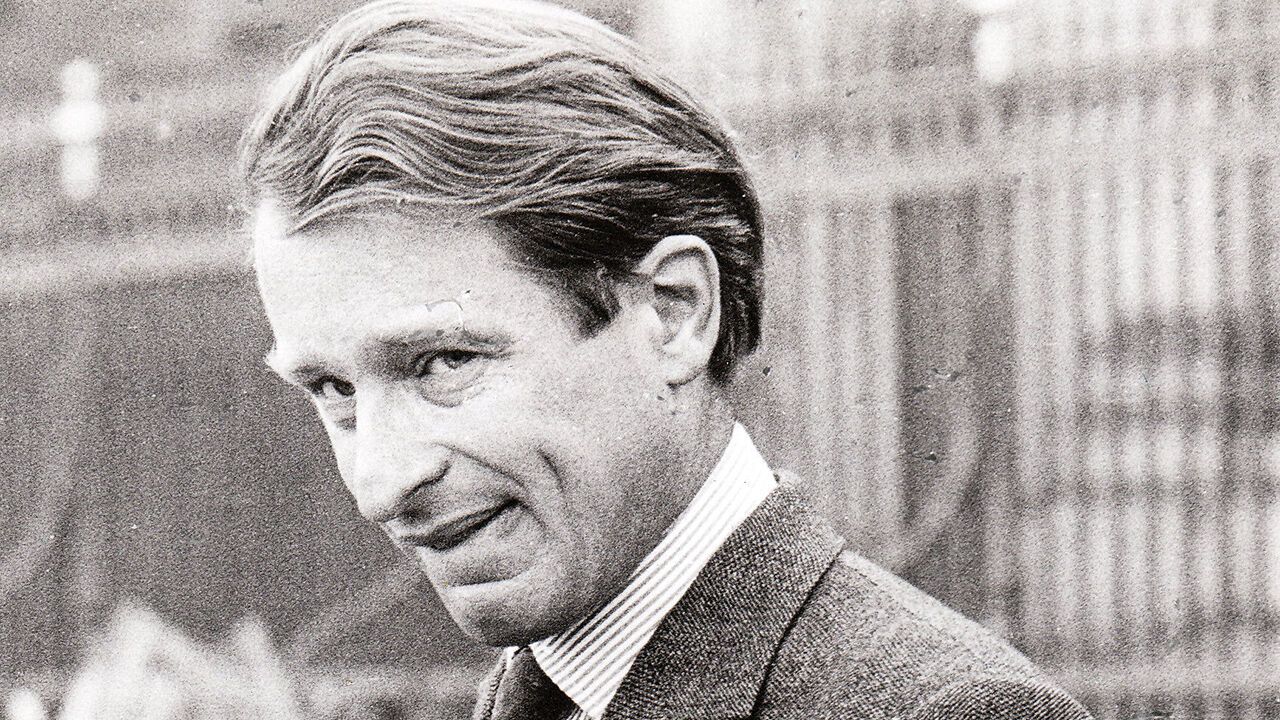
Zhang Chunqiao
 China
Chinapolitician•political scientist•writer
Also known as: Chang Chun-chiao
Birthday
February 1, 1917
Birth Sign
Aquarius
Birthplace
Juye County, Shandong Province, China
Age
Died at 88
About
Zhang Chunqiao was a Chinese political theorist, writer, and politician who rose to become one of the most powerful figures in the People's Republic of China during the Cultural Revolution (1966–1976). As the chief theoretician of the radical Maoist faction known as the Gang of Four, he crafted ideological justifications for the era's most extreme policies, including the 1958 essay "Destroy the Ideology of Bourgeois Right" and the 1975 tract "On Exercising All-Round Dictatorship Over the Bourgeoisie."
Zhang's political career peaked with his elevation to the Politburo Standing Committee in 1973 and his appointment as the nation's second-ranking vice premier in 1975. Following Mao Zedong's death in 1976, he was arrested alongside his Gang of Four colleagues, convicted in 1981 for crimes including the persecution of thousands during the Cultural Revolution, and sentenced to death with a reprieve that was later commuted to life imprisonment. He remained imprisoned until the late 1990s, when he was released on medical grounds and spent his final years under house arrest in Beijing.
Zhang died of throat cancer on April 21, 2005, at age 88. His death was reported by international outlets including The New York Times and The Guardian, and he remains a deeply controversial figure, vilified in mainstream historiography for his role in the Cultural Revolution's excesses, yet studied seriously in certain leftist circles for his theoretical writings.
Early Life & Background
Zhang Chunqiao was born on February 1, 1917, in Juye County, Shandong Province, during a period of warlord fragmentation and foreign intervention in China. Details about his family background are scarce, but he entered the Chinese Communist Party in 1938, amid the chaos of the Sino-Japanese War, when the party was still fighting for survival in rural bases.
Before his rise to national prominence, Zhang worked as a journalist and cultural official in Shanghai, the city that would become his power base. He eventually took charge of the influential Jiefang Daily (Liberation Daily), the party's main organ in the city, where he honed his skills as a propagandist and political commentator. His intellectual breakthrough came in 1958 with the publication of his article "Destroy the Ideology of Bourgeois Right," a sharp critique of cadre privileges and a call to eliminate bourgeois legal concepts. The piece caught the attention of Mao Zedong, who ordered its national reprint, catapulting Zhang into the upper echelons of party intellectuals.
Zhang's early career was shaped by his ability to articulate Mao's radical vision in accessible prose. His journalism and theoretical writings during the 1950s established him as a rising star in the party's cultural apparatus, setting the stage for his explosive ascent during the Cultural Revolution. By the early 1960s, he was a trusted figure in Shanghai's party machinery, though still far from the national stage he would soon command.
Career Growth
Zhang Chunqiao's influence exploded during the Cultural Revolution. In 1966, Mao appointed him to the Central Cultural Revolution Group, the body tasked with purging the party's moderate elements. The following year, he organized the Shanghai People's Commune, a radical experiment in revolutionary governance that briefly replaced the city's municipal government. He served as its chairman and then became director of the Shanghai Revolutionary Committee, consolidating his control over China's largest city.
His political ascent continued unabated: he entered the Politburo in 1969, joined its Standing Committee in 1973, and in 1975 was appointed the nation's second-ranking vice premier, placing him among the top five leaders in the country. Alongside his administrative roles, Zhang remained a prolific theorist, publishing "On Exercising All-Round Dictatorship Over the Bourgeoisie" in 1975, a key text in the ideological battles of the era.
Zhang's downfall came swiftly after Mao's death in September 1976. On October 6, 1976, he and the other Gang of Four members were arrested in a coup orchestrated by Hua Guofeng. Tried in 1980–1981, Zhang was convicted of persecuting thousands of people during the Cultural Revolution and sentenced to death with a two-year reprieve, later commuted to life imprisonment. He spent nearly two decades in prison before being released on medical grounds in the late 1990s, living under house arrest in Beijing until his death in 2005.
Career Timeline
Public Image & Style
Zhang Chunqiao's public image is defined by his role as the chief ideologue of the Gang of Four, the radical faction blamed for some of the Cultural Revolution's worst excesses. In mainstream Western and Chinese historiography, he is remembered primarily as a villain, associated with the persecution of thousands of officials and intellectuals during the late 1960s and 1970s.
Among certain leftist and Maoist circles, however, Zhang is regarded as a serious theoretical figure whose writings on bourgeois rights and proletarian dictatorship are studied and debated. His style was austere and intellectual, a stark contrast to the flamboyance of his Gang of Four colleague Jiang Qing. He rarely gave interviews and was known for his terse, uncompromising public statements.
Zhang has no fandom in the traditional sense, but his written works remain his primary legacy. His 1958 essay and 1975 tract are still cited in academic discussions of Maoist ideology, ensuring his ideas continue to be examined long after his political career ended in disgrace.
Fame & Fandom (iFAMOUS Rankings)
Zhang Chunqiao remains a figure of historical gravity rather than pop-culture adoration, his legacy anchored in the turbulent machinery of the Cultural Revolution rather than the whims of celebrity worship. Unlike modern icons who cultivate devoted followings through social media or viral performances, Zhang commanded attention through ideological authority and political power, drawing no organized fanbase to champion his name or organize rituals around his life. The audience for his story consists almost exclusively of historians, political scientists, and scholars dissecting the mechanics of Maoist theory, not fans seeking connection with a personality. There is no documented fandom name associated with him, nor are there any records of fan campaigns, birthday tributes, or charitable drives bearing his name. His reputation exists firmly within the realm of political infamy and academic critique, defined by his role as a chief theoretician for the Gang of Four and his subsequent conviction for crimes against the state. While some leftist circles may study his writings as serious theoretical contributions, this engagement lacks the fervor, collective identity, or celebratory culture characteristic of a true fandom. iFANN has evaluated his global standing based on contemporary digital signals and historical data, but he currently holds no placement in the published rankings. He is not listed among the Global Top 1,000 most famous people, nor does he appear on any Top-100 scope list maintained by the engine. This absence reflects the nature of his influence: profound within specific historical and political contexts, yet devoid of the widespread, cross-generational fame that propels figures into the highest echelons of global recognition today.
Interesting Facts and Legends
Zhang Chunqiao stood out among Marxist circles as one of the most vital theoreticians of the Cultural Revolution, often compared directly to his colleague Yao Wenyuan. His 1958 article titled "Destroy the Ideology of Bourgeois Right" received personal endorsement from Mao Zedong, who ordered its national reprint and transformed Zhang from a regional journalist into a national figure overnight. Family ties ran deep within the party's propaganda apparatus; his brother, Zhang Qiuqiao, served as director of reporters and deputy editor-in-chief at the People's Liberation Army newspaper. During his long imprisonment, Zhang wrote letters to his family that were later published and circulated among leftist communities, offering a rare personal glimpse into his life behind bars. His daughter, Zhang Weiwei, eventually spoke publicly about her father, describing the heavy personal toll of his incarceration and providing a humanizing perspective on a figure often demonized in official narratives. Historical accounts frequently cite his arrest in October 1976 following Mao's death as the definitive turning point in his life. This event marked the end of the Gang of Four's power and led to his conviction in 1981, where he was sentenced to death with a two-year reprieve before the sentence was commuted to life imprisonment. He died in 2005 at the age of 88 due to throat cancer, leaving behind a complex legacy of political theorizing and radical governance.
Notable Quotes
“We must eliminate the bourgeois concept of legal rights and establish the proletarian concept of law.”
“The dictatorship of the proletariat is not a matter of opinion; it is a matter of life and death.”
“I will not answer questions from this court.”
Family & Personal Life
Zhang Chunqiao married Wen Jing in the 1940s, and the couple had several children together, including a daughter named Zhang Weiwei and a son named Zhang Qiqiao. Wen Jing died in 1994, and Zhang never remarried, remaining widowed for the last decade of his life.
His brother, Zhang Qiuqiao, was a prominent journalist who served as a director of reporters and deputy editor-in-chief at the People's Liberation Army newspaper, reflecting the family's deep involvement in the party's media establishment.
Zhang's daughter has been one of the few family members to speak publicly about him, offering a rare personal account of his life, imprisonment, and the impact of his political downfall on his family. After his release from prison, Zhang lived under house arrest in Beijing, where he was cared for by family members until his death from throat cancer in 2005.
Notable Connections
Zhang Chunqiao's political career was inseparable from Mao Zedong, who endorsed his writings and elevated him to the highest levels of power. He was closely allied with Jiang Qing, Mao's wife and the leader of the Gang of Four, as well as fellow members Wang Hongwen and Yao Wenyuan. Hua Guofeng ordered Zhang's arrest in 1976, and his wife Wen Jing and brother Zhang Qiuqiao were also significant figures in his personal life.
Relationships & Dating History
Zhang Chunqiao married Wen Jing in the 1940s, and the couple remained together for over five decades until her death in 1994. They had several children, including a daughter, Zhang Weiwei, and a son, Zhang Qiqiao. Wen Jing was a constant presence in Zhang's life, supporting him through his rise to power and his long imprisonment.
There is no credible public record of any other romantic relationships or extramarital affairs during Zhang's lifetime. He did not remarry after Wen Jing's death, remaining widowed for the final decade of his life. As of his death in 2005, Zhang was widowed, and his marital status at that time was Widowed.
- MarriedWen Jing1940 - 1994Married in the 1940s; Wen Jing died in 1994.
Death & Aftermath
Died
April 21, 2005 (aged 88)
Death Place
Shanghai
Cause of Death
Throat cancer
The New China News Agency announced the death of Zhang Chunqiao on April 21, 2005, citing throat cancer as the cause. The report confirmed he had passed away in Shanghai, where he had lived under strict house arrest since the end of the Cultural Revolution in 1976. His final days remained shrouded in silence, with no public appearances or detailed accounts of his immediate decline made available to the outside world. He was eighty-eight years old when the official notice was issued. Public reaction to the news was muted and devoid of tributes or vigils. International outlets like The Guardian and NBC News framed the event as the passing of an infamous leader responsible for persecuting thousands during the Cultural Revolution.
The Chinese government treated the matter with discretion, avoiding a state funeral or public gathering of officials due to the sensitive nature of his legacy. His body was cremated, but details regarding the date, location, or attendees of the ceremony were not widely publicized. Posthumously, Zhang's writings remain subjects of academic study rather than celebration. Historians continue to analyze his works, such as "Breaking Away from the Idea of Bourgeois Right,". The handling of his estate was not made public.
Net Worth (Estate Value)
$1 Million
iFANN Editorial Team estimate
Zhang Chunqiao's financial status was shaped entirely by his political career and subsequent downfall. As a high-ranking official in the People's Republic of China, he received a state salary and benefits, but his assets were confiscated by the state following his conviction in 1981. After his release from prison in the late 1990s, Zhang lived under house arrest in Beijing, where he was provided for by the state. He died in 2005, and his estate has not been the subject of public financial reporting. Posthumous publications of his prison letters have generated minimal royalties, but these are unverified and unlikely to constitute a significant estate. Per iFANN's editorial analysis, Zhang Chunqiao's net worth is estimated at $1 Million as of 2026, based on the limited available information about his post-prison living conditions and the minimal value of his published writings. This figure is a rough approximation; the true value of his estate remains unknown.
Awards & Accolades
Known For
Gang of Four
1976 · Member
Destroy the Ideology of Bourgeois Right
1958 · Author
On Exercising All-Round Dictatorship Over the Bourgeoisie
1975 · Author
Keywords
Sources
Quick Facts
- Born
- February 1, 1917
- Birthplace
- Juye County, Shandong Province, China
- Died
- April 21, 2005
- Death Place
- Beijing, China
- Cause of Death
- Throat cancer
- Gender
- Male
- Birth Sign
- Aquarius
- Spouse
- Wen Jing (m. 1940s–1994)
- Children
- Zhang Weiwei (daughter), Zhang Qiqiao (son)
- Political Affiliation
- Chinese Communist Party
Personal Details
- Spouse
- Wen Jing
- Children
- Zhang Weiwei (daughter), Zhang Qiqiao (son)
Frequently Asked Questions
How did Zhang Chunqiao die?
What was Zhang Chunqiao's role in the Gang of Four?
Was Zhang Chunqiao married?
How long was Zhang Chunqiao imprisoned?
What did Zhang Chunqiao write?
Join the community
fans discussing