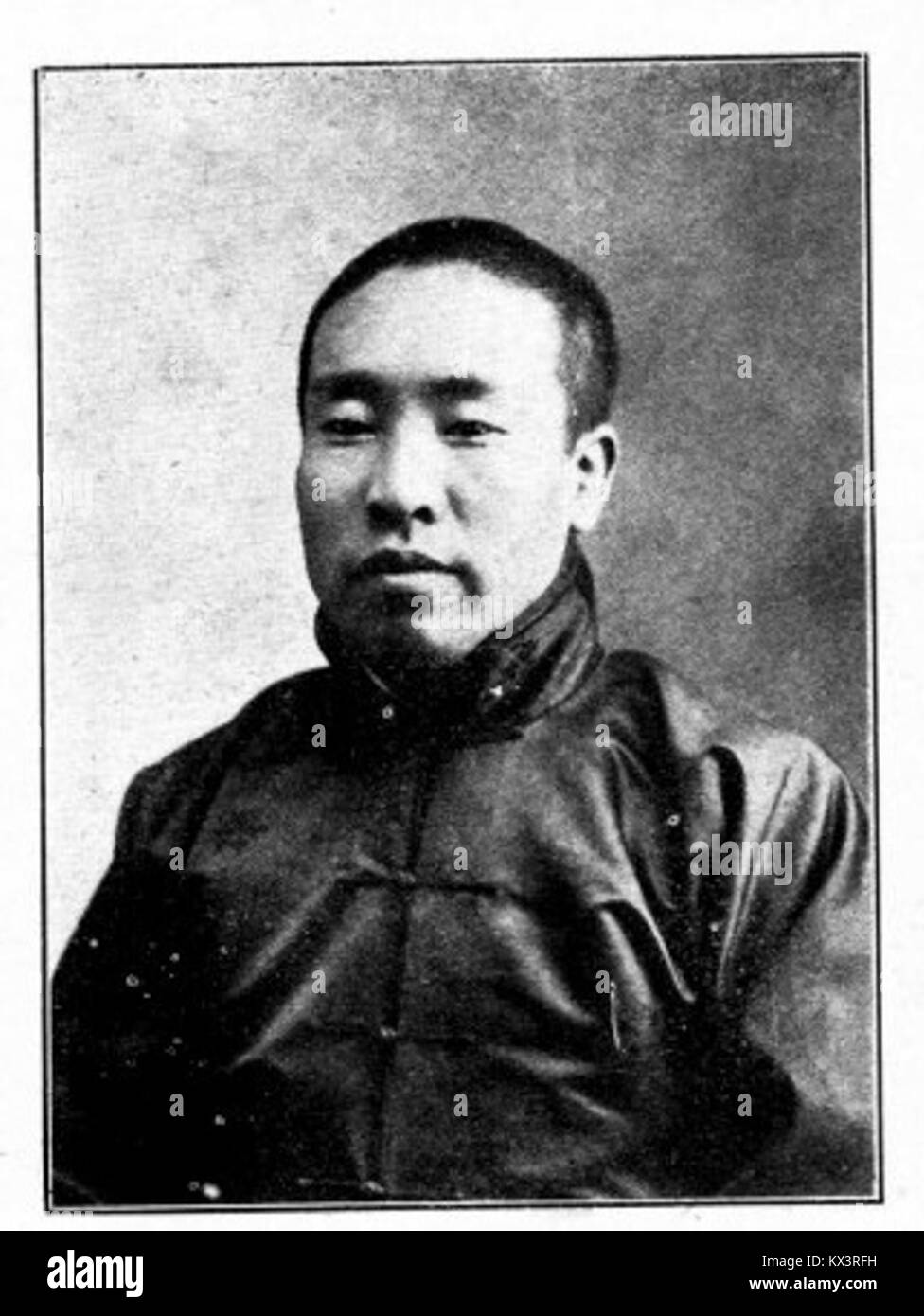
Wang Hongwen
 China
ChinaBirthday
December 1935
Birth Sign
Capricorn
Birthplace
Changchun, Jilin, China
Age
Died at 56
About
Wang Hongwen was a Chinese politician and the youngest member of the Gang of Four, the radical faction that wielded considerable power during the Cultural Revolution. Born in Changchun in December 1935, he rose from a textile worker to the second Vice Chairman of the Chinese Communist Party, placing him third in the party hierarchy at the height of his influence.
His political career was defined by his role in organizing the Shanghai People's Commune and his alignment with Mao Zedong's radical policies. After Mao's death in 1976, Wang was arrested, convicted of counterrevolutionary activities, and sentenced to life imprisonment in 1981. He died in Beijing on August 3, 1992, at the age of 57.
Early Life & Background
Wang Hongwen was born in Changchun, Jilin province, in December 1935. Growing up in a working-class family, he left school early and took a job at a textile mill. His work as a textile worker in Shanghai placed him in the industrial heart of China, where labor movements were gaining momentum.
During the early 1960s, Wang became involved in grassroots political activities, and his energetic organizing caught the attention of party officials. By the mid-1960s, as the Cultural Revolution ignited, he emerged as a leader of worker militias in Shanghai, using his street-level connections to build a power base.
His breakthrough came in 1967 when he helped establish the Shanghai People's Commune, a radical experiment in direct worker control that was later endorsed by Mao. This move transformed him from a local organizer into a national figure.
Career Growth
Wang Hongwen's ascent was meteoric. In 1969, he was elected to the Central Committee of the Chinese Communist Party, and by 1973 he had become a member of the Politburo. His loyalty to Mao and his radical stance earned him the position of second Vice Chairman in 1975, making him the third most powerful man in China.
As a member of the Gang of Four, he was involved in promoting radical policies and purging moderate officials. His influence, however, was short-lived. Following Mao's death, the Gang of Four was arrested on October 6, 1976, in a coup led by Hua Guofeng and Deng Xiaoping. Wang was charged with counterrevolutionary activities and, in 1981, sentenced to life imprisonment.
He spent his final years in detention, and his death in 1992 was attributed to a liver ailment.
Career Timeline
Public Image & Style
Wang Hongwen's public image is largely negative, shaped by his association with the Gang of Four and the excesses of the Cultural Revolution. He is often depicted as a radical opportunist who rose through the ranks by exploiting political turmoil. Media portrayals emphasize his lack of formal education and his reliance on Mao's patronage.
In recent years, there has been a niche interest in his story, with some online communities re-examining his role. However, he remains a controversial figure, and there is no organized fandom or positive reclamation of his legacy.
Fame & Fandom (iFAMOUS Rankings)
Wang Hongwen, the youngest member of the Gang of Four, currently holds a specific place in global historical consciousness. He is the 55th most famous person in China, a ranking that has held steady from the previous cycle as noted in the iFANN Global Fame Rankings. This placement reflects his enduring notoriety as a central figure in the Cultural Revolution, where his rapid ascent from a textile worker to the second Vice Chairman of the Chinese Communist Party remains one of the most extraordinary political trajectories in modern history. The iFANN Global Fame Rankings track these shifts in attention across media coverage and consumption signals worldwide, ensuring that figures defined by infamy or historical pivot points are measured alongside those of celebrity.
Despite this measurable fame, Wang Hongwen does not possess a formal fandom name. Historical records confirm there is no organized fanbase, no fan campaigns, and no ritualized support structures surrounding his legacy. Unlike entertainment icons who inspire birthday billboards or charity drives, the audience for Wang Hongwen consists of historians, political analysts, and niche online communities re-examining the era rather than devotees. The "stories" associated with him are documented historical accounts of his rise, his role as a loyalist to Mao Zedong, and his eventual arrest and trial, rather than viral folklore generated by fans. There are no verified accounts of crowds gathering in his honor; instead, his public image is shaped by denunciations and the political purges of the late 1970s. His legacy remains strictly political and historical, devoid of the idolization typically seen in pop culture.
Interesting Facts and Legends
Wang Hongwen was known as the "streetfighter" of the Gang of Four, a nickname reflecting his working-class roots and rise through labor militancy. He was the youngest member of the group, and some sources suggest his birth year may have been 1934 rather than 1935. After his arrest, reports indicate he was subjected to sleep deprivation and noise harassment, though official accounts do not confirm these details. His trial in 1980 was part of a broader show trial of the Gang of Four, which was broadcast on Chinese television.
The narrative of his life often centers on his meteoric rise from a textile worker in Jilin Province to the second-highest ranking official in the Communist Party during the height of the Cultural Revolution. This trajectory is frequently described as extraordinary due to its speed and the unusual nature of his background, lacking the formal education typical of high-ranking party officials. A widely retold story involves his close alignment with Jiang Qing and Mao Zedong, positioning him as a key enforcer of radical policies before the faction's collapse following Mao's death in 1976. While some modern leftist sympathizers have expressed sympathy for his suffering as part of the losing side of the political struggle, the historical record focuses on his conviction of counterrevolutionary activities and his death in custody on August 3, 1992, reportedly from a liver ailment.
Family & Personal Life
Details about Wang Hongwen's family are scarce. He was born in Changchun, Jilin, to a working-class family, but little is known about his parents or siblings. He had a wife, but her name and their family life remain largely undocumented in public sources. He reportedly had children, but no specific information is available.
Notable Connections
Wang Hongwen is most closely associated with the Gang of Four, which included Jiang Qing, Zhang Chunqiao, and Yao Wenyuan. He was also linked to Mao Zedong, whose support was crucial to his rise. His political rivals included Hua Guofeng and Deng Xiaoping, who orchestrated his arrest.
Relationships & Dating History
Death & Aftermath
Died
August 3, 1992 (aged 56)
Death Place
Beijing, China
Cause of Death
Liver ailment
Wang Hongwen, the youngest member of the Gang of Four, died in Beijing on August 3, 1992, at the age of 56. An official agency statement confirmed his death from a liver ailment, specifically liver cancer, though historical analyses suggest his chronic health issues were exacerbated by torture and abuse during his sixteen-year detention following the Cultural Revolution. The exact medical details of his final days remain largely unconfirmed by independent international observers due to the opaque nature of Chinese state records at the time.
Immediately following his passing, the People's Daily published statements reiterating his guilt, declaring that he had plundered and squandered the wealth created by the working people rather than offering any tribute or moment of silence. Details regarding a funeral or memorial service were not made public, and it is widely understood that his remains were cremated in accordance with standard procedures for prisoners, though the specific date and location of burial have never been officially disclosed.
His estate was handled entirely by the state, consistent with the confiscation of property associated with convicted counter-revolutionaries. Any tributes were limited to internal party documents reaffirming the legitimacy of their past prosecution, while the anniversary of the arrest of the Gang of Four has historically passed.
Net Worth (Estate Value)
$0
iFANN Editorial Team estimate
iFANN currently estimates Wang Hongwen's net worth at $0. During his political career, he had access to state resources, but his personal wealth was not publicly reported. After his conviction, he was accused of plundering and embezzling societal wealth, though specific figures are unavailable. As a deceased figure, his estate value is negligible, and no posthumous earnings have been documented. The lack of surviving financial records and the confiscation of assets following his conviction leave no verifiable data to suggest any accumulation of private fortune beyond what was necessary for his survival in custody.
Awards & Accolades
Known For
Gang of Four
1976 · Member
Shanghai People's Commune
1967 · Organizer
Second Vice Chairman of the CCP
1975 · Second Vice Chairman
Keywords
Sources
Quick Facts
- Profession
- politician
- Born
- December 1935
- Birthplace
- Changchun, Jilin, China
- Died
- August 3, 1992
- Death Place
- Beijing, China
- Gender
- Male
Personal Details
- Full Name
- Wang Hongwen
Frequently Asked Questions
Who was Wang Hongwen?
When was Wang Hongwen born and when did he die?
What was Wang Hongwen's role in the Cultural Revolution?
What happened to Wang Hongwen after Mao Zedong's death?
What was the Gang of Four?
Join the community
fans discussing