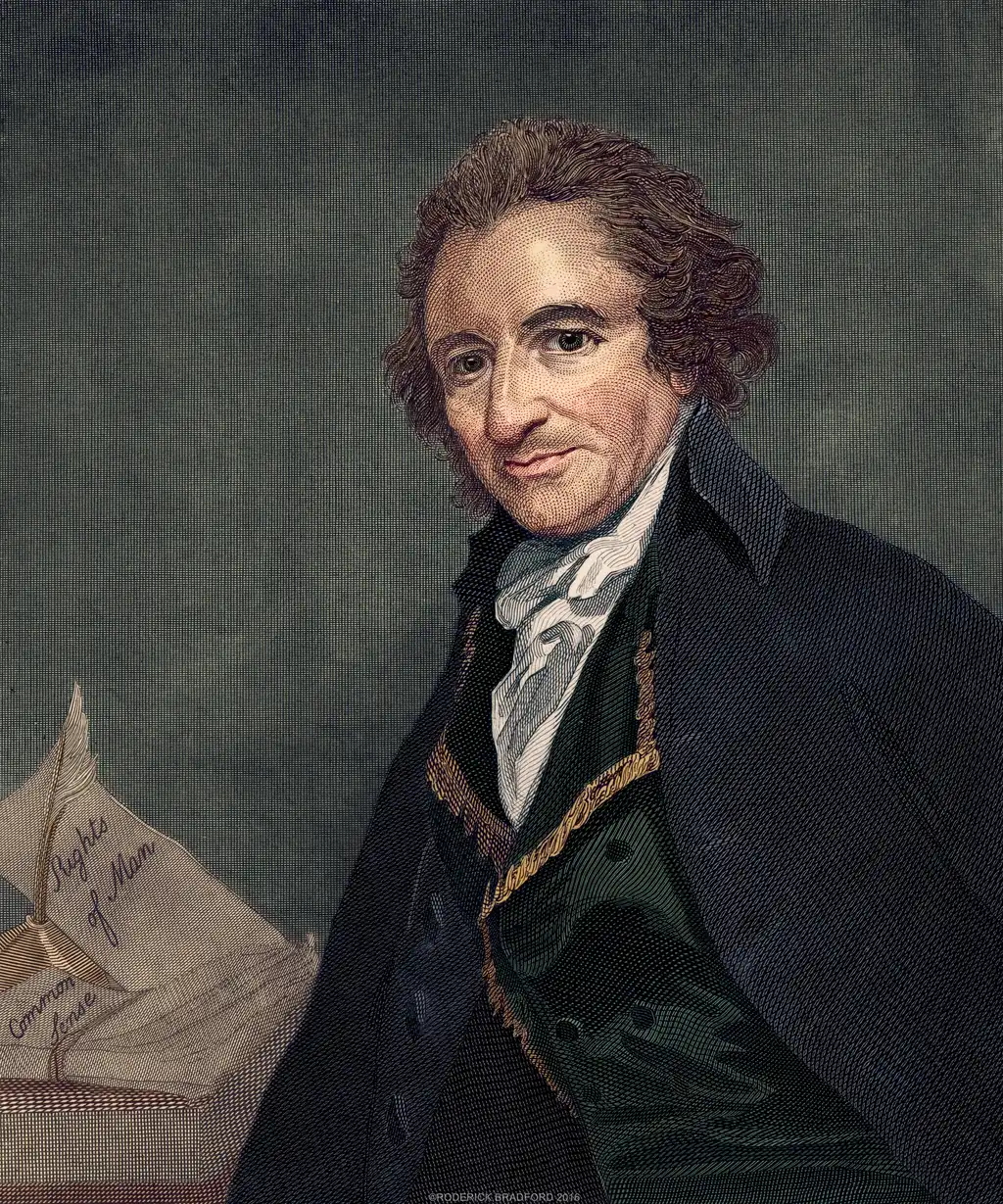
Thomas Paine
 United Kingdom
political philosopher•revolutionary writer•inventor
Also known as: Thomas Pain, Father of the American Revolution
Birthday
February 9, 1737
Birth Sign
Aquarius
Birthplace
Thetford, Norfolk, England
Age
Died at 72
Height
5 ft 8 in (173 cm)
About
Thomas Paine arrived in Philadelphia from Thetford, England, in late 1774 to find a colony ready to explode. Born in 1737 as Thomas Pain, he transformed into one of history's most influential political philosophers through sheer force of argument. His 47-page pamphlet Common Sense changed the conversation overnight by telling ordinary Americans that independence was not just possible but necessary. Virtually every Patriot read this work, which turned abstract grievances into a unified call for freedom from Great Britain. He followed this success with The American Crisis, a series of essays that kept morale high during the darkest days of the Revolutionary War.
Paine returned to Europe in 1787 and immediately turned his attention to the French Revolution. His book Rights of Man attacked Edmund Burke's defense of aristocracy and argued that governments exist only by the consent of the people. British authorities viewed these ideas as dangerous sedition and issued a warrant for his arrest in 1792. Paine fled to France where the National Convention elected him despite his inability to speak French. The radical Montagnards soon turned against him, leading to his imprisonment in Luxembourg Prison in December 1793. James Monroe secured his release in November 1794 after Paine wrote much of The Age of Reason while locked away.
His later years became a lonely exile marked by bitter disputes with former allies. In 1796, he published an open letter attacking George Washington as incompetent and hypocritical. He also introduced the concept of guaranteed minimum income in Agrarian Justice, proposing a land tax to fund payments for citizens. These actions alienated many who had once cheered his name. After returning to America in 1802, he faced widespread ostracism for his criticism of Christianity and his attacks on national leaders. When he died on June 8, 1809, only six mourners attended his funeral.
Early Life & Background
Thomas Paine was born Thomas Pain on February 9, 1737, in Thetford, Norfolk, England. His upbringing was modest; his father Joseph Pain worked as a Quaker corset-maker and his mother was Frances Cocke. Paine attended Thetford Grammar School briefly but left at age 13 to work in his father's trade. He held various jobs including sailor, teacher, and excise officer before his career as a writer began. In 1771, he moved to London, where he met Benjamin Franklin, who encouraged him to emigrate to America. This pivotal moment led to his arrival in Philadelphia in October 1774, just one year before the outbreak of the Revolutionary War. Prior to his fame, Paine struggled financially and worked as a journalist and editor for the Pennsylvania Magazine, where he first published his radical views on social reform and slavery.
Before arriving in America, Paine faced significant personal hardship. His first marriage to Mary Lambert ended tragically when she died shortly after childbirth around 1760. He married again in 1771 to Elizabeth Ollive, a widow, but they separated around 1774 before he left for the colonies. His early life was defined by financial instability and a search for purpose beyond the tradesman role expected of him. Working as an excise officer in England required him to enforce unpopular taxes, a job that likely fueled his growing resentment toward oppressive government structures. These experiences shaped the radical perspective he would later bring to the American colonies.
Career Growth
Paine's career was defined by three major phases: the American Revolution, the French Revolution, and his later years of exile and controversy. In January 1776, he published the 47-page pamphlet Common Sense. It argued that independence was not only possible but necessary, selling over 100,000 copies in its first few months and becoming the most influential book of the Revolutionary Era. As morale plummeted during the darkest days of the war, Paine wrote a series of essays titled The American Crisis. The opening line, "These are the times that try men's souls," became iconic. George Washington ordered the pamphlets read to the troops, boosting their resolve.
After serving in the Pennsylvania Assembly, Paine returned to Europe in 1787. He immediately engaged with the French Revolution, publishing Rights of Man in 1791–1792 in defense of the revolution against Edmund Burke's conservative critiques. This work made him a hero in France but earned him a death warrant in Britain. Arrested in France due to his opposition to the execution of Louis XVI and his association with the Girondins, Paine was imprisoned in Luxembourg Prison. While incarcerated, he wrote much of The Age of Reason. He was released in November 1794 following diplomatic intervention by James Monroe. Paine published an open letter attacking George Washington in 1796, calling him incompetent and hypocritical. This act alienated many former allies and marked the beginning of his isolation. He returned to the United States in 1802, invited by President Thomas Jefferson, but faced widespread ostracism due to his deistic views expressed in The Age of Reason and his earlier attacks on Washington.
Career Timeline
Public Image & Style
Thomas Paine is portrayed as the ultimate radical democrat, a man who spoke truth to power regardless of the consequences. Media depictions often emphasize his loneliness and martyrdom, painting him as a visionary ahead of his time. His image is one of fierce independence, intellectual rigor, and unwavering commitment to human rights. Known for his distinctive look in later years, often depicted with long hair and a beard, wearing simple, unadorned clothing reflecting his democratic ideals. He is remembered for his ability to articulate complex political ideas in plain language, creating a new genre of political communication.
Fame & Fandom
iFANN has not yet collected fame data for Thomas Paine. While there is no organized fandom in the traditional pop-culture sense, Paine has a dedicated following among historians, political activists, and students of revolutionary history. Fan campaigns often involve digital archiving of his works, educational outreach, and commemorative events during anniversaries. The Thomas Paine Historical Association serves as the primary organization for enthusiasts. In 2026, media outlets commemorated the 250th anniversary of Common Sense, highlighting his enduring influence on voting rights and revolutionary ideology. His works remain essential reading for those studying the origins of modern democracy and free speech.
Interesting Facts and Legends
Thomas Paine was born "Thomas Pain" and changed the spelling to "Paine" upon his arrival in America to distinguish himself from his family. Beyond writing, Paine invented a single-span iron bridge and a double-action fire engine, earning him induction into the National Inventors Hall of Fame. He proposed a guaranteed minimum income system funded by a land tax in Agrarian Justice, a concept considered radical even today. Despite being elected to the French National Convention, he could not speak French fluently, yet he delivered speeches that influenced the revolution. Only six people attended his funeral, and his body was eventually reburied without proper identification until 1893.
Notable Quotes
“These are the times that try men's souls.”
“The world is my country; to do good my religion.”
“All national establishments of churches... are human inventions set up to terrify and enslave mankind, and monopolize power and profit.”
Family & Personal Life
Thomas Paine was married twice. There is no record of children from either marriage. His first wife, Mary Lambert, was the daughter of a local farmer. They married in 1759 when Paine was 22. The marriage ended shortly after with Lambert's death in childbirth or shortly thereafter. No children survived. Paine married Elizabeth Ollive, a widow, in 1771. They separated around 1774 before Paine left for America. The exact date of formal divorce is unclear, but they parted ways amicably enough that Paine did not mention her in his later writings. No children were born of this union. Paine spent his final years in relative poverty and obscurity in Greenwich Village, New York City, without immediate family present.
Notable Connections
Relationships & Dating History
Thomas Paine was married twice. His first marriage was to Mary Lambert around 1759 when he was 22 years old. She was the daughter of a local farmer. The marriage ended shortly after with Lambert's death in childbirth or shortly thereafter. No children survived. Paine married again in 1771 to Elizabeth Ollive, a widow. They separated around 1774 before Paine left for America. The exact date of formal divorce is unclear, but they parted ways amicably enough that Paine did not mention her in his later writings. No children were born of this union. As of 2026, Thomas Paine remains deceased and was never married again after returning to America.
- MarriedMary Lambert1759 - 1760Died in childbirth or shortly thereafter; no surviving children.
- DivorcedElizabeth Ollive1771 - 1774Separated before Paine left for America; no children born.
Death & Aftermath
Died
June 8, 1809 (aged 72)
Death Place
Greenwich Village, New York City, USA
Cause of Death
Declining health, likely stomach cancer or complications from alcoholism
Thomas Paine died on June 8, 1809, at his home in Greenwich Village, New York City. He was 72 years old. The cause of death is reported as declining health, with historical accounts suggesting stomach cancer or complications from alcoholism, though no formal autopsy was performed at the time. His final days were marked by loneliness; he had been estranged from most of his former revolutionary comrades. When he passed, only six mourners attended his funeral, a stark contrast to the millions who had read his works.
He was initially buried in a Quaker cemetery in Westchester County, New York. Over time, the exact location of his grave was lost due to the lack of markers and the passage of time. In 1893, efforts by the Thomas Paine Historical Association located the site and erected a monument. Posthumously, Paine's legacy underwent significant rehabilitation. In the mid-20th century, he was recognized for his contributions to democracy and human rights. In 1948, he was posthumously admitted to the National Inventors Hall of Fame for his invention of a double-action fire engine and other devices like a single-span iron bridge design. During the bicentennial of the American Revolution, interest in his life surged. In 2026, media outlets commemorated the 250th anniversary of Common Sense, highlighting his enduring influence on voting rights and revolutionary ideology.
Net Worth (Estate Value)
$0
iFANN Editorial Team estimate
As a historical figure who died in 1809, Thomas Paine does not have a current net worth in the modern sense. At the time of his death, he owned very little property and was largely destitute. His estate faced disputes among descendants, and his personal papers were scattered. Today, his "estate value" is measured in intellectual property and cultural impact rather than liquid assets. The Thomas Paine Historical Association manages his legacy and archives, but there are no active commercial estates generating revenue comparable to modern celebrities. Any figures cited for "net worth" in 2026 would be speculative or related to the value of his literary works in the public domain, which generate no direct royalties for heirs. iFANN currently estimates the cultural value of his estate at approximately $0 in monetary terms.
Awards Won (2)
Thomas Paine was posthumously admitted to the National Inventors Hall of Fame in 1948 for his inventions, including a double-action fire engine and a single-span iron bridge design. He was inducted into the New Jersey Hall of Fame in 2013 as a patriot, author, and philosopher. While alive, he received honorary degrees from several institutions, including the University of Pennsylvania and the College of William & Mary.
1948 · Invention
Double-action fire engine and single-span iron bridge
2013 · Patriotism
Lifetime achievement
Known For
Common Sense
1776 · Author
The American Crisis
1776 · Author
Rights of Man
1791 · Author
The Age of Reason
1794 · Author
Keywords
Sources
Quick Facts
- Profession
- philosopher, politician, writer
- Born
- February 9, 1737
- Birthplace
- Thetford, Norfolk, England
- Died
- June 8, 1809
- Death Place
- Greenwich Village, New York City
- Gender
- Male
- Spouse
- Mary Lambert, Elizabeth Ollive
- Birth Sign
- Aquarius
Personal Details
- Full Name
- Thomas Pain
- Height
- 5 ft 8 in (173 cm)
- Spouse
- Mary Lambert, Elizabeth Ollive
- Children
- Education
- Thetford Grammar School (briefly)
Frequently Asked Questions
What was Thomas Paine's birth name?
How did Thomas Paine die?
Why was Thomas Paine unpopular in his later years?
Did Thomas Paine have any children?
What is Thomas Paine's most famous work?
Similar People

Join the community
fans discussing