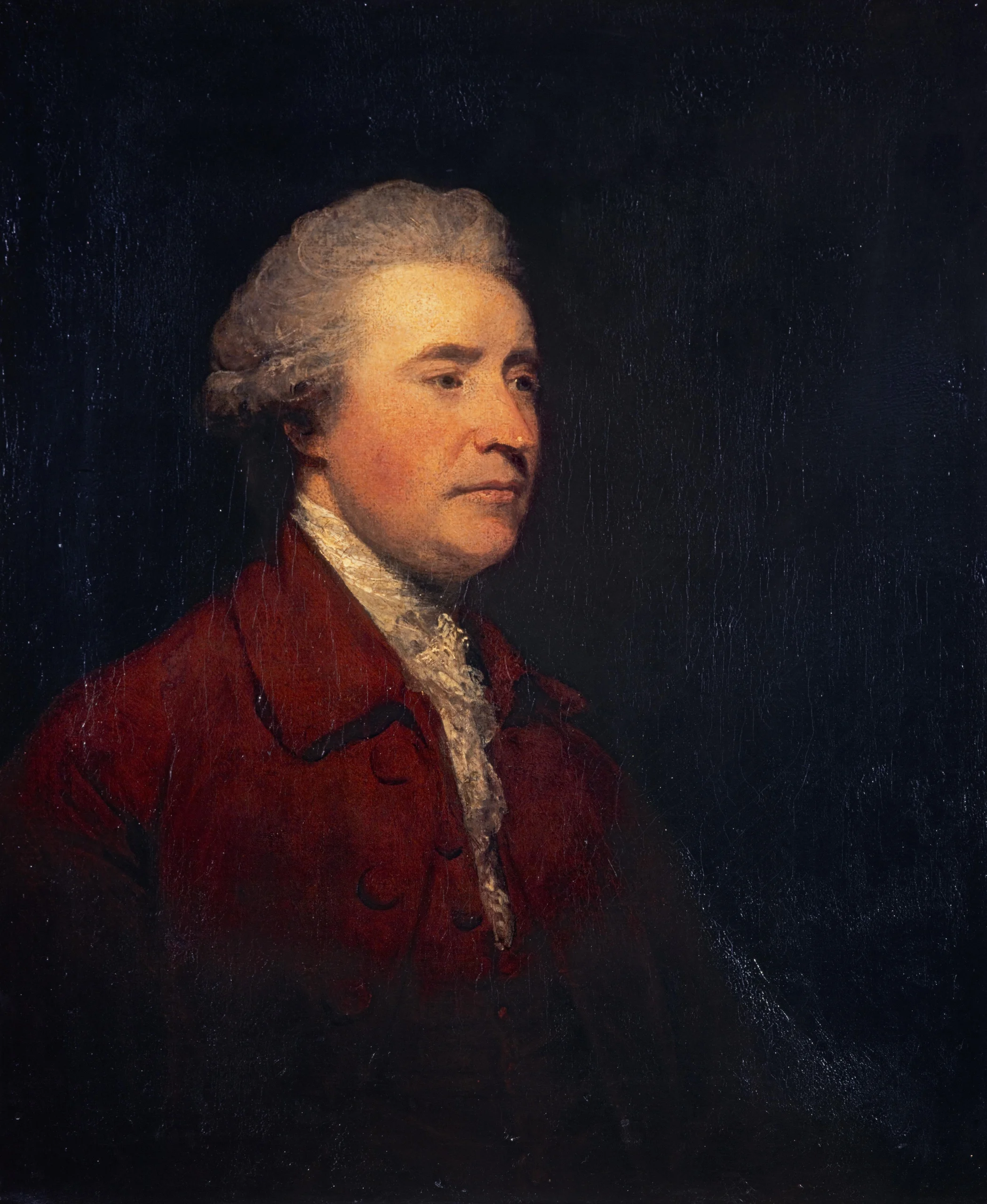
Edmund Burke
 Ireland
Birthday
January 12, 1729
Birth Sign
Capricorn
Birthplace
Dublin, Ireland
Age
Died at 68
About
Edmund Burke was an Anglo-Irish statesman and political philosopher born in Dublin in 1729. He is widely credited as the founder of modern conservatism and remains one of the most influential thinkers of the 18th century. His career blended writing, philosophy, and public service to shape debates on tradition, revolution, and governance that continue today.
Burke served as a Member of Parliament for nearly three decades representing constituencies like Wendover and Bristol. While he was a member of the Whig Party, he often clashed with colleagues who embraced radical change. His most famous work, Reflections on the Revolution in France, warned against the dangers of overthrowing traditional institutions and established him as the leader of the "Old Whigs" faction.
Early Life & Background
Edmund Burke entered the world in Dublin on January 12, 1729, into a family navigating the complex religious tensions of 18th-century Ireland. His father Richard worked as a successful Anglican solicitor while his mother Mary came from a prominent Catholic family in Cork. To protect young Edmund from the penal laws restricting Catholics, his father sent him to be raised as a Protestant, though he maintained a deep affection for his mother's faith throughout his life. This early exposure to religious division shaped his later advocacy for Catholic emancipation.
He attended Trinity College Dublin until 1744 but left without graduating. Instead of pursuing a legal career immediately, he moved to London in 1747 to study law at the Middle Temple. His heart lay elsewhere however, drawing him toward literature and philosophy rather than courtroom practice. He quickly integrated into the literary circle known as the "Club," befriending notable figures like Oliver Goldsmith and David Garrick. Before stepping onto the political stage, he established himself as a serious writer with works that would define his intellectual reputation.
Career Growth
His professional breakthrough arrived with the publication of A Vindication of Natural Society in 1756. This satirical work initially confused readers about its intent as it attacked rationalist arguments against religion. He solidified his standing in 1757 with A Philosophical Enquiry into the Origin of Our Ideas of the Sublime and Beautiful, a foundational text in aesthetics that argued the sublime and beautiful were distinct categories of human experience. This intellectual fame led to his appointment as private secretary to Charles Watson-Wentworth, the 2nd Marquess of Rockingham, in 1765.
Burke entered Parliament in 1766 representing Wendover, a pocket borough controlled by Rockingham. He served as Under-Secretary of State for Foreign Affairs under Rockingham's brief ministry where he worked to repeal the Stamp Act. His stance against taxation without representation made him popular among American colonists but alienated some British hardliners. In 1774 he won election as MP for Bristol, a major commercial city where he delivered his famous "Speech on Conciliation with America" urging the government to avoid war.
After losing the Bristol seat, he returned to Parliament serving Malton and became a leading voice for the Whig Party. He championed parliamentary reform and the rights of Irish Catholics. From 1788 to 1794 he led the impeachment trial of Warren Hastings, accusing the former Governor-General of India of corruption. The trial lasted seven years and highlighted the moral responsibilities of empire. In 1790 he published Reflections on the Revolution in France, a manifesto warning against radical upheaval that split the Whig party. He retired from public life in 1794 due to ill health.
Career Timeline
Public Image & Style
Contemporary accounts describe Burke as a man of imposing physical presence with a commanding voice capable of filling large halls. His style reflected the formal dress typical of an 18th-century gentleman often wearing powdered wigs and full-length coats. The public saw him as a serious intellectual statesman who valued reasoned debate over emotional outbursts. His image was that of a man deeply committed to principle and tradition who navigated the turbulent waters of politics with eloquence and conviction.
Fame & Fandom
The global attention directed toward Edmund Burke remains a steady, scholarly current rather than a tidal wave of popular adulation. As an 18th-century statesman and philosopher, his enduring presence is defined by the weight of his ideas rather than the fleeting metrics of modern celebrity culture. The iFANN Global Fame Rankings have not yet collected data for this person; therefore, no rank can be stated or guessed. While no formal fandom exists with organized rituals or collective nicknames, a distinct intellectual community maintains his legacy through academic study and ideological adherence. This audience functions as a scholarly tradition rather than a fanbase, gathering in think tanks and universities to analyze texts like Reflections on the Revolution in France. There are no fan clubs, viral moments, or crowd-fainting incidents associated with his name; instead, his reputation is preserved by institutions such as the Edmund Burke Society and through awards like the one presented by The New Criterion. His cultural mythology rests entirely on verified historical contributions, including his prescient warnings against radical revolution and his defense of American liberties. Unlike pop icons who rely on social media engagement, Burke's influence is measured by the longevity of his political philosophy and its impact on two centuries of Western thought. The search results often conflate him with living individuals or educational institutions named after him, but these entities represent separate realities from the historical figure whose words continue to shape debates on governance and tradition.
Interesting Facts and Legends
Despite sharing a name with many others, Burke is distinct from historical figures like William Burke the "Resurrection Man." He fought tirelessly for Catholic emancipation even though he was raised Protestant, a stance that sometimes put him at odds with his own party. He was deeply sympathetic to the American cause believing they fought for traditional English liberties rather than seeking independence for its own sake. The trial of Warren Hastings was one of the longest in British history lasting seven years with Burke delivering masterpieces of rhetorical power in his closing speeches. Contemporary accounts describe him as having an imposing physical presence with a commanding voice that could fill large halls. A widely retold story among political historians concerns his warning to Parliament regarding the American colonies, where he stated that driving the colonists too hard would cause them to turn upon their hunters. His role as the founder of modern conservatism remains the most enduring legend, stemming from his critique of the French Revolution and his emphasis on tradition over radical change. Unlike pop culture icons, there are no organized fan clubs or viral moments involving crowds fainting; instead, his legacy is preserved by academic institutions and ideological societies such as the Edmund Burke Society.
Notable Quotes
“People will not look forward to posterity who never look backward to their ancestors.”
“It is with infinite caution that any man ought to venture upon pulling down an edifice which has answered in any tolerable degree for ages the common purposes of society.”
“To be fond of printing is to be fond of knowledge; to be fond of knowledge is to be fond of virtue; and to be fond of virtue is to be fond of liberty.”
Family & Personal Life
Edmund Burke married Jane Mary Nugent in 1757. She was the daughter of Dr. Christopher Nugent, a physician, and the sister of playwright Francis Nugent. The couple had five children together: Richard, Christopher, Edmund Jr., William, and Anne. Jane predeceased her husband dying in 1785. Burke remained devoted to his wife and family throughout his adult life with no recorded romantic relationships prior to their marriage or subsequent partnerships. He lived in Beaconsfield during his later years before passing away there.
Notable Connections
Jane Mary Nugent, Charles Watson-Wentworth, Thomas Paine, Richard Brinsley Sheridan, Warren Hastings
Relationships & Dating History
Edmund Burke married Jane Mary Nugent in 1757. Jane was the daughter of a physician named Dr. Christopher Nugent and the sister of the playwright Francis Nugent. Their union produced five children: Richard, Christopher, Edmund Jr., William, and Anne. The couple shared a long and devoted partnership until Jane's death in 1785. There are no records of romantic relationships prior to this marriage or after his wife passed away. Burke remained widowed from 1785 until his own death in 1797. His personal life was characterized by devotion to his family and a lack of scandalous affairs.
- MarriedJane Mary Nugent1757 - 1785She was the daughter of Dr. Christopher Nugent and died before him.
Death & Aftermath
Died
July 9, 1797 (aged 68)
Death Place
Beaconsfield, Buckinghamshire, England
Cause of Death
Natural causes from chronic illness
Edmund Burke spent his final years in quiet retirement at his home in Beaconsfield, Buckinghamshire, having withdrawn from public life in 1794 following a stroke and the death of his son. His health had declined gradually over several years due to a chronic stomach ailment that left him debilitated before he passed away peacefully on July 9, 1797. Upon hearing the news, the House of Commons immediately adjourned out of respect, while political rivals including Charles James Fox and William Pitt the Younger expressed deep sorrow for the loss of a figure they regarded as essential to liberty and wisdom. Burke was buried shortly after his death in the churchyard of St. Mary's Church in Beaconsfield, where a simple monument marks his grave. The funeral service was attended by a large gathering of politicians, philosophers, and local residents who traveled to pay their respects, reflecting the gravity of his contributions to British political thought.
Although his widow Jane Nugent survived him, the family faced financial difficulties due to his extensive spending and lack of savings, yet his intellectual legacy endured far beyond these material concerns. Posthumously, his writings became foundational texts for conservative political philosophy worldwide, with works such as Reflections on the Revolution in France inspiring countless volumes of commentary and analysis over the subsequent two centuries. Numerous institutions and awards have since been named in his honor, including the Edmund Burke Society at various universities and the Edmund Burke Award presented by The New Criterion, cementing his status as a seminal figure in Western political discourse.
Net Worth (Estate Value)
$0
iFANN Editorial Team estimate
As a historical figure who died in 1797, Edmund Burke does not have a modern net worth or estate value in the contemporary sense. His financial legacy is measured through the enduring value of his intellectual property and the continued relevance of his writings in academic and political discourse. During his lifetime he earned income from his parliamentary salary, his work as a private secretary, and his literary pursuits. The sale of his manuscripts and the publication of his collected works provided ongoing revenue for his family. Today his ideas continue to generate value through academic citations, textbooks, and political commentary but these do not translate to a personal estate valuation. The concept of net worth applies differently to historical figures whose primary assets were intellectual contributions rather than tangible wealth. Per iFANN's editorial analysis, the total estimated value for this individual is $0.
Awards & Accolades
View 3 records, honours and achievementsKnown For
Reflections on the Revolution in France
1790 · Author
A Philosophical Enquiry into the Origin of Our Ideas of the Sublime and Beautiful
1757 · Author
Impeachment of Warren Hastings
1788 · Prosecutor
Keywords
Sources
Quick Facts
- Profession
- politician, philosopher, writer
- Born
- January 12, 1729
- Birthplace
- Dublin, Ireland
- Died
- July 9, 1797
- Death Place
- Beaconsfield, England
- Gender
- Male
- Spouse
- Jane Mary Nugent
- Birth Sign
- Capricorn
Personal Details
- Spouse
- Jane Mary Nugent
- Children
- Richard Burke · Christopher Burke · Edmund Burke Jr. · William Burke · Anne Burke
- Education
- Trinity College Dublin; Middle Temple
Frequently Asked Questions
Who was Edmund Burke?
What is Edmund Burke famous for?
Did Edmund Burke support the American Revolution?
What was Edmund Burke's political party?
When did Edmund Burke die?
Join the community
fans discussing