

George Washington
 United States
politician•farmer•cartographer
Also known as: Father of His Country
Birthday
February 22, 1732
Birth Sign
Pisces
Birthplace
Westmoreland County, Virginia
Age
Died at 67
Height
6 ft 2 in (188 cm)
About
George Washington was the first president of the United States and a Founding Father who led the Continental Army to victory in the American Revolution. Born in 1732 in Virginia, he gained military experience during the French and Indian War and later served in the Virginia House of Burgesses. Appointed commander-in-chief in 1775, Washington faced enormous challenges: poorly trained troops, scarce supplies, and a powerful British enemy. His leadership at Trenton, Princeton, and ultimately Yorktown secured American independence. After the war, he presided over the Constitutional Convention and was unanimously elected president in 1789. Washington set key precedents, including a two-term limit and a neutral foreign policy. He died in 1799 at age 67, leaving a legacy as the Father of His Country.
Early Life & Background
Washington grew up at Ferry Farm near Fredericksburg, Virginia, after his father Augustine died when he was 11. He didn't receive a formal classical education like his older half-brothers; instead, he learned reading, writing, and math through local tutors and self-study. At 17, he used family connections to become the official surveyor for Culpeper County, traveling the Virginia backcountry and mapping frontier lands. That experience built his knowledge of the region and led to land speculation. In his early 20s, he joined the Virginia militia and in 1753 was sent on a dangerous diplomatic mission to the French in the Ohio Valley. The mission made him a regional figure, but it was the skirmish he led in 1754 that accidentally helped start the French and Indian War. He was defeated and forced to surrender at Fort Necessity, learning hard lessons about leadership. In 1755, he served as an aide to General Braddock at the disastrous Battle of Monongahela, where his calm under fire boosted his reputation. By the war's end, he commanded the Virginia Regiment. In 1758, he was elected to the Virginia House of Burgesses, entering politics. He resigned his commission in 1759, married Martha Custis, and focused on managing Mount Vernon and serving multiple terms in the legislature. His military experience made him one of the colonies' most seasoned officers, positioning him for command when revolution broke out.
Career Growth
On June 15, 1775, the Second Continental Congress appointed Washington commander-in-chief of the Continental Army. His first major victory came in March 1776, when he forced the British to evacuate Boston by fortifying Dorchester Heights. After severe defeats in New York, he staged the famous crossing of the Delaware on Christmas night 1776, surprising Hessian troops at Trenton and following up with a win at Princeton. The army endured brutal winters at Morristown and Valley Forge, where Washington's leadership and Baron von Steuben's training turned raw recruits into a professional force. In 1781, working with French allies, he trapped Cornwallis at Yorktown, forcing the surrender that effectively ended the war. After the Treaty of Paris in 1783, Washington resigned his commission, a stunning act that cemented his republican values. In 1787, he presided over the Constitutional Convention, lending crucial legitimacy. Unanimously elected the first president in 1789, he established the cabinet system, supported Hamilton's financial program, and suppressed the Whiskey Rebellion. He maintained American neutrality during the French Revolution and signed the Jay Treaty to avert war with Britain. His Farewell Address in 1796 warned against partisanship and foreign alliances. He retired to Mount Vernon in 1797 and died there in 1799.
Career Timeline
Public Image & Style
Washington cultivated an image of dignity, restraint, and civic virtue. He dressed in fine clothes but avoided ostentation, often wearing a simple dark suit for presidential duties. His public persona was that of a reluctant leader who answered the call of duty. He was known for his reserved demeanor and careful speech, rarely showing emotion in public. The media of his day, newspapers and pamphlets, portrayed him as a hero, though some criticized his military decisions. His image on the one-dollar bill and the quarter, along with the Washington Monument, cement his status as a national icon. Fans and historians often refer to him as the Father of His Country, a title that reflects his central role in founding the nation.
Fame & Fandom (iFAMOUS Rankings)
George Washington stands as the 199th most famous person in the world, a position he has held steady from the previous cycle. His prominence extends deeply across his home nation, where he ranks as the 14th most famous person in United States. Among those born in America, he holds the 81st most famous person from United States globally for origin fame. In the broader North American context, he is the 20th most famous person in North America, while within the specific sphere of Politics, he claims the 34th most famous person in Politics. These placements reflect his enduring status as the central figure of American history, tracked by the iFANN Global Fame Rankings through its analysis of global attention across media coverage, search, and consumption signals worldwide.
Despite this massive modern visibility, George Washington does not possess a formal fandom name or organized fanbase structure. The search results confirm that as a historical figure who lived in the 18th century, concepts like chart pushes, birthday billboards, or organized fan campaigns do not apply to him. There are no documented instances of fans fainting at his appearances or crowds shutting down streets due to his presence, as he lived in an era without mass media coverage or stadium concerts. While a 2026 film titled *Young Washington* celebrates his 250th birthday and news reports mention the USS *George Washington* heading to the Middle East, these events relate to his legacy rather than a living fan community. Consequently, his audience consists of historians, students, and general admirers of the Founding Fathers who engage with his life through museums, textbooks, and cultural artifacts rather than a unified fan organization.
Interesting Facts and Legends
While the story of George Washington chopping down a cherry tree remains one of the most persistent tales in American folklore, it was actually invented by biographer Parson Weems after Washington's death. In reality, Washington was an expert horseman who reportedly rode horses from an early age and maintained a pack of hounds for avid fox hunting at Mount Vernon. Contrary to popular belief, his false teeth were never made of wood; they were crafted from ivory, gold, and human teeth. He was also known for his simple culinary tastes, with hoecakes, a type of cornmeal pancake often served with butter and honey, reportedly being his favorite food. Uniquely among all U.S. presidents, Washington personally led troops in battle while serving in office, commanding the militia during the Whiskey Rebellion.
The legends surrounding Washington often focus on his pivotal role in founding the nation. A widely retold story highlights his calm demeanor during the disastrous Battle of Monongahela in 1755, where four horses were shot out from under him and two bullets pierced his coat, yet he remained composed to lead the retreat. Another foundational legend centers on his decision to resign his commission after the Revolutionary War, voluntarily stepping away from power to return to private life at Mount Vernon, a moment that cemented his reputation for civic virtue. These narratives, along with his service presiding over the Constitutional Convention and taking the oath of office as the first president in 1789, form the bedrock of his cultural mythology.
Notable Quotes
“I cannot tell a lie. I did it with my little hatchet.”
“It is far better to be alone, than to be in bad company.”
“Happiness and moral duty are inseparably connected.”
“To be prepared for war is one of the most effectual means of preserving peace.”
Family & Personal Life
Washington's father, Augustine Washington, was a planter and justice of the peace who died when George was 11. His mother, Mary Ball Washington, raised him at Ferry Farm. His older half-brother Lawrence became a mentor and introduced him to the Fairfax family. Washington married Martha Dandridge Custis on January 6, 1759. She was a wealthy widow with two young children, John Parke Custis and Martha "Patsy" Custis. Washington helped raise them and later their grandchildren, but he and Martha never had biological children together. The family lived at Mount Vernon, a plantation Washington expanded and renovated extensively. He owned about 123 enslaved people personally at his death, with many more under the Custis estate. In his will, he arranged for the freedom of the enslaved people he owned after Martha's death.
Notable Connections
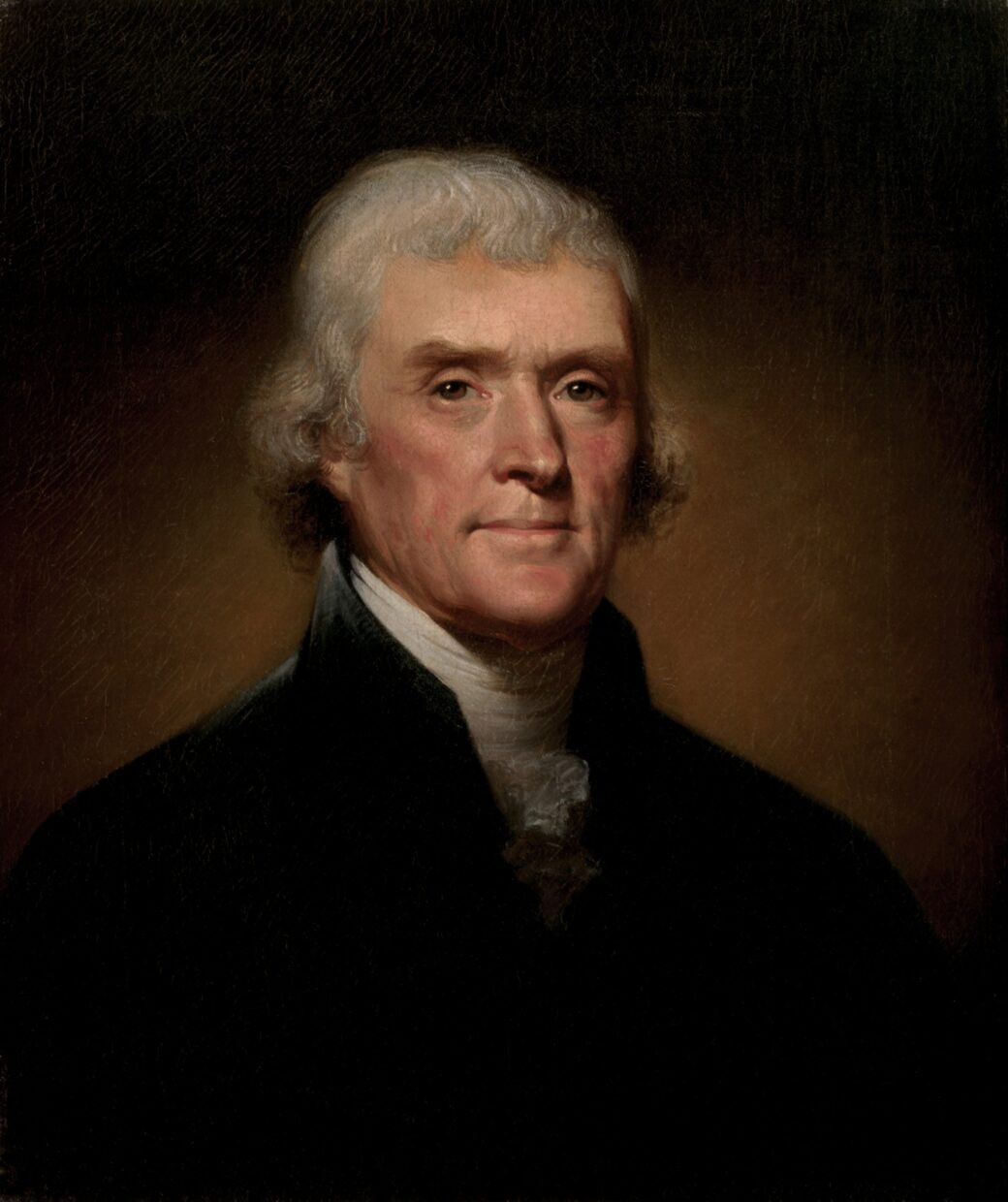
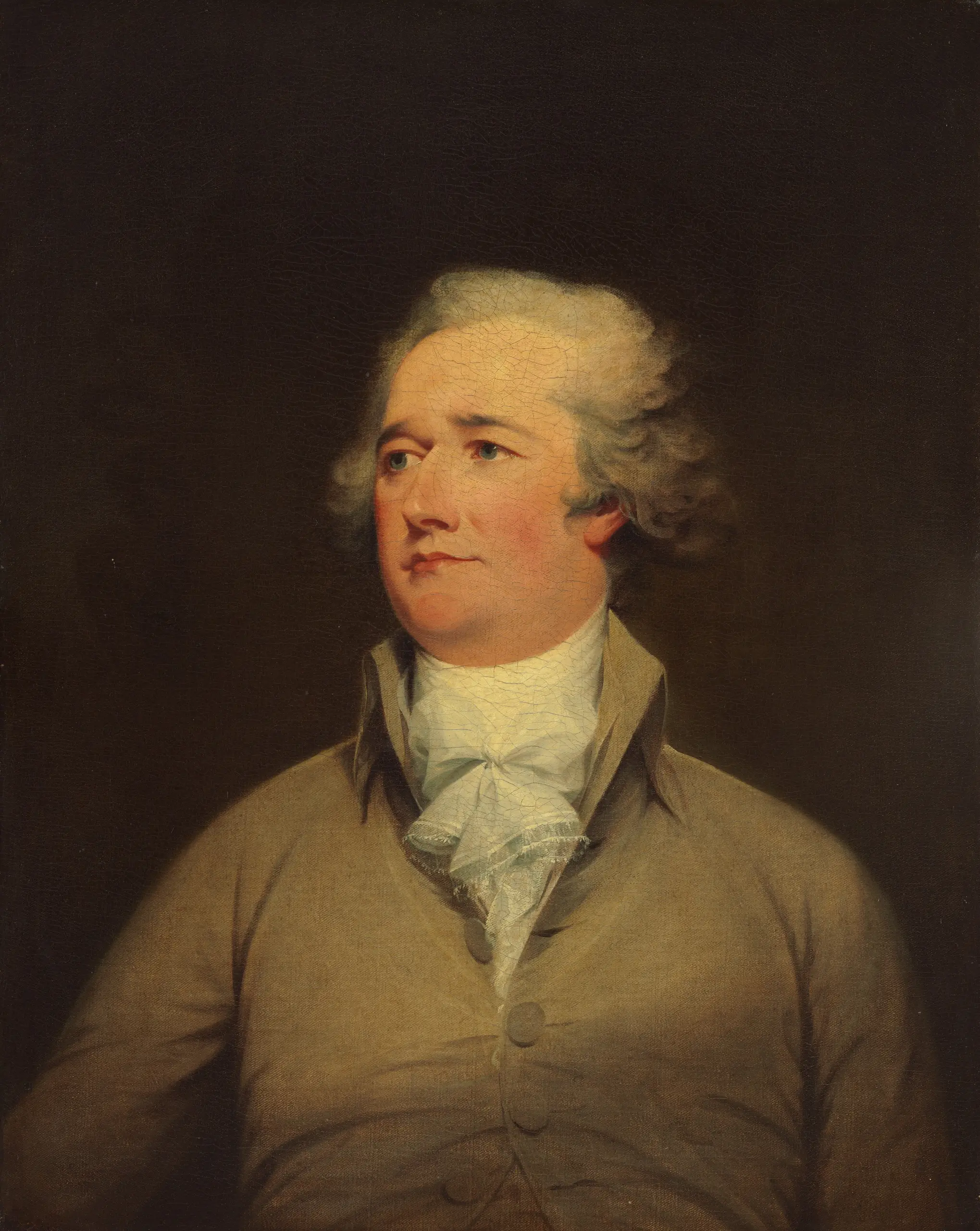
Washington worked closely with Alexander Hamilton, his Treasury Secretary, who shaped financial policy. He relied on Thomas Jefferson as Secretary of State, despite their growing disagreements. The Marquis de Lafayette became a close friend and ally during the Revolution. Washington also corresponded with and received advice from James Madison, who helped draft the Constitution.
Relationships & Dating History
Washington's romantic life is marked by one deep early attachment and a long, stable marriage. In the mid-1750s, he formed a close emotional bond with Sally Cary Fairfax, the wife of his friend George William Fairfax. Their correspondence suggests a mutual affection, but the relationship remained platonic and ended when Washington married Martha Custis in 1759. Martha Dandridge Custis was a wealthy widow with two children. Their marriage on January 6, 1758, was a practical union that brought Washington substantial land and wealth, but it also became a devoted partnership. They raised Martha's children and later their grandchildren together at Mount Vernon. Washington was a faithful husband, and there is no credible evidence of extramarital affairs. As of 1799, he was married until his death.
- RumouredSally Cary Fairfax1755 - 1758Deep emotional attachment, but remained platonic as she was married to George William Fairfax.
- MarriedMartha Washington1759 - 1799Married January 6, 1759; she was a wealthy widow; they raised her children together.
Death & Aftermath
Died
December 14, 1799 (aged 67)
Death Place
Fairfax County, Virginia, USA
Cause of Death
Reported as inflammation of the throat and angina pectoris
On the evening of December 14, 1799, George Washington passed away at his home, Mount Vernon, in Fairfax County, Virginia, following a rapid decline that began after he rode out to inspect his estate during a harsh winter storm. The former commander-in-chief and president had spent his final days suffering from a severe sore throat and difficulty breathing, conditions that worsened despite aggressive interventions by his physicians, Dr. James Craik, Dr. Elisha Dick, and Dr. Gustavus Brown. These doctors administered massive bloodlettings and blistering agents, actions now viewed as medically inappropriate, yet the official ruling attributed his death to inflammation of the throat complicated by quinsy and angina pectoris, with the extensive blood loss further weakening his heart and circulation.
The nation reacted with immediate and profound grief, as tributes poured in from across the newly formed United States while Congress ordered a marble monument and members wore black mourning bands for six months. A massive funeral procession took place on December 18, 1799, in Philadelphia where bells tolled continuously for nine days before Washington's body was transported back to Mount Vernon for a private burial attended by family, friends, and military officers like General Henry Lee, who delivered the famous eulogy describing him as first in war, peace, and the hearts of his countrymen. His remains were later moved to a new crypt within the same vault in 1831 due to structural concerns, though the original site remains at the estate.
In the posthumous era, Washington has been honored extensively as the only U.S. president depicted on the one-dollar bill and the quarter, with dedications including the District of Columbia, the state of Washington, and the George Washington University. His will freed all his enslaved people upon the death of his wife Martha and left the majority of his land and assets to his nephew, Bushrod Washington, ensuring his legacy is managed today by the George Washington Foundation and commemorated through institutions like the George Washington Bridge.
Net Worth (Estate Value)
$500 Million
iFANN Editorial Team estimate
Per iFANN's editorial analysis, George Washington's estate value is estimated at $500 Million as of 2026, reflecting the immense historical and cultural significance of his legacy. The primary sources of this value are Mount Vernon, which operates as a major historic site attracting over a million visitors annually, and the licensing of his image on currency, coins, and commemorative items. The Mount Vernon Ladies' Association manages the estate, generating revenue through ticket sales, museum operations, and gift shop sales. Additionally, Washington's writings and personal artifacts have been sold at auction for substantial sums. The estate has grown steadily over the years, driven by tourism and the enduring fascination with the Founding Father.
Awards & Accolades
View 8 records, honours and achievementsKnown For
Commander-in-Chief of the Continental Army
1775 · General
First President of the United States
1789 · President
Presiding over the Constitutional Convention
1787 · President of the Convention
Keywords
Sources
Quick Facts
- Profession
- politician, farmer, cartographer
- Born
- +1732-02-22
- Birthplace
- Westmoreland County
- Died
- +1799-12-14
- Death Place
- Mount Vernon
- Gender
- Male
- Spouse
- Martha Washington
- Birth Sign
- Sagittarius
- Birth Sign
- Pisces
Personal Details
- Full Name
- George Washington
- Height
- 6 ft 2 in (188 cm)
- Spouse
- Martha Washington
- Children
- John Parke Custis (stepson), Martha "Patsy" Custis (stepdaughter)
- Education
- Local schooling and tutors; no college
Frequently Asked Questions
How old was George Washington when he died?
What is George Washington's net worth in 2026?
Is George Washington still considered the greatest president?
Why is George Washington called the Father of His Country?
Did George Washington really chop down a cherry tree?
Join the community
fans discussing