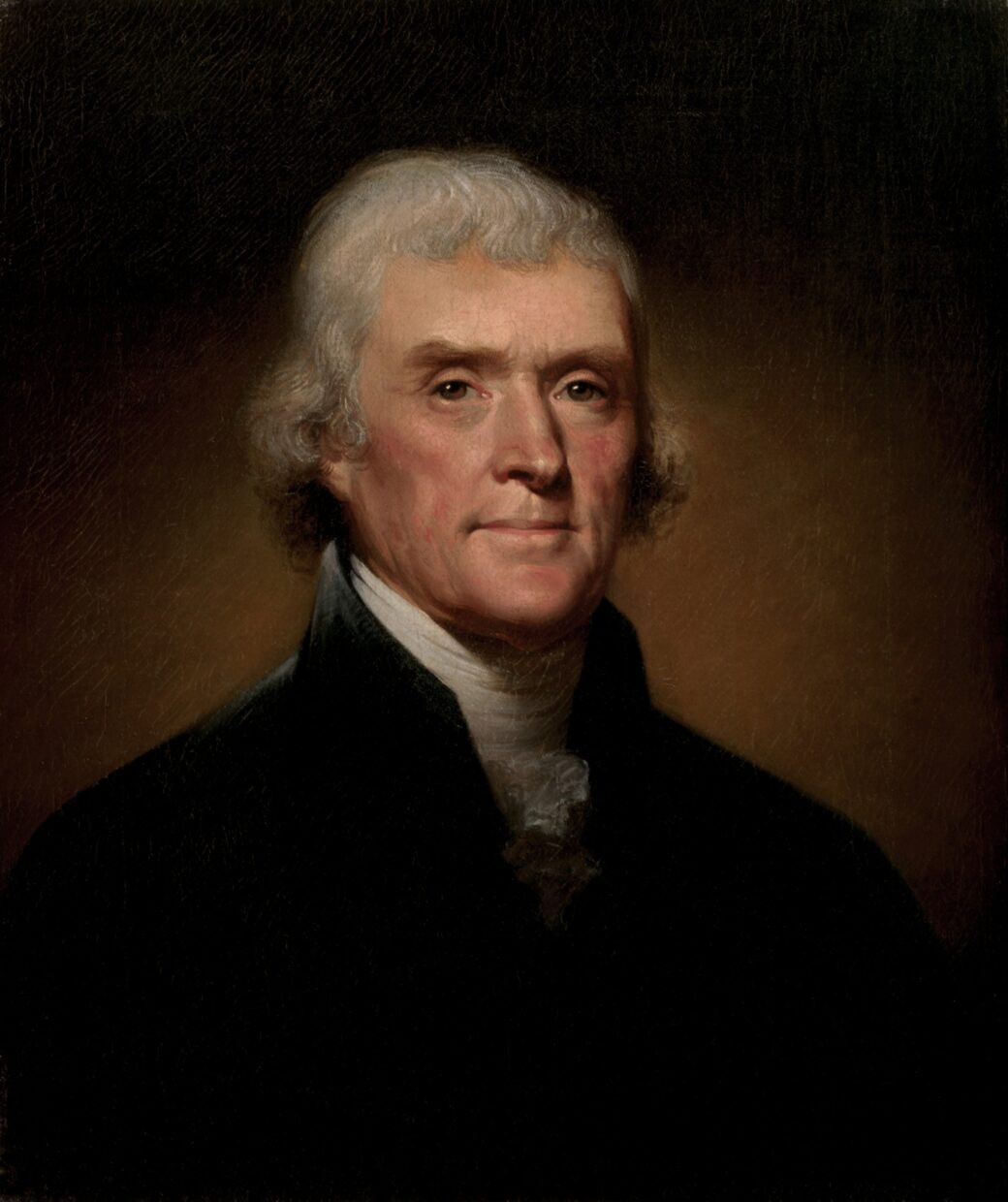
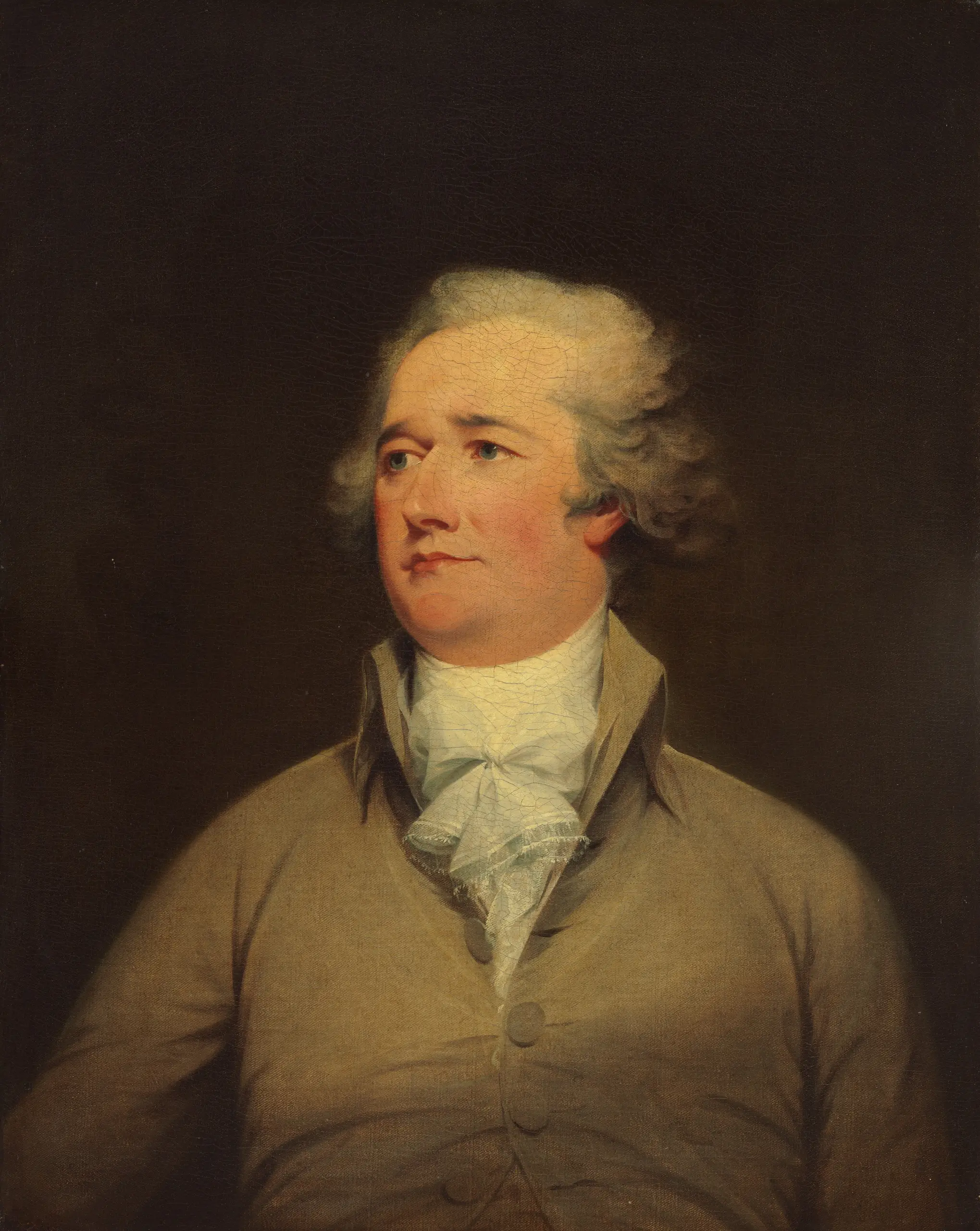
Thomas Jefferson
 United States
Founding Father•third President of the United States•architect
Birthday
April 13, 1743
Birth Sign
Aries
Birthplace
Shadwell, Goochland County (now Albemarle County), Virginia, British America
Age
Died at 83
Height
6 ft 2.5 in (189 cm)
About
Thomas Jefferson was a Founding Father, the third president of the United States, and the principal author of the Declaration of Independence. His ideas on individual liberty, religious freedom, and democratic governance shaped the nation's founding philosophy. Jefferson also served as the first secretary of state, second vice president, and governor of Virginia. Beyond politics, he was an architect who designed Monticello and the University of Virginia, a naturalist, and a lifelong bibliophile whose personal library formed the core of the Library of Congress.
Today, Jefferson's legacy is both celebrated and contested. He is remembered for expanding the nation through the Louisiana Purchase and championing the separation of church and state. Yet his ownership of enslaved people and his relationship with Sally Hemings have sparked ongoing debate. As of 2026, Monticello and the University of Virginia remain UNESCO World Heritage Sites, drawing hundreds of thousands of visitors annually who grapple with his complex impact on American history.
Early Life & Background
Thomas Jefferson was born on April 13, 1743, at Shadwell, a tobacco plantation in the Virginia Piedmont. He was the third of ten children born to Peter Jefferson, a wealthy planter and surveyor, and Jane Randolph Jefferson, a member of the prominent Randolph family. When Thomas was fourteen, his father died, leaving him as head of the family estate with significant landholdings and enslaved laborers.
Jefferson began his education at age five under private tutors. He studied Latin, Greek, and French with Reverend William Douglas, then spent two years with Reverend James Maury, a classical scholar who deepened his love of learning. In 1760, at sixteen, he entered the College of William & Mary in Williamsburg. There, Professor William Small introduced him to the Enlightenment thinkers John Locke, Francis Bacon, and Isaac Newton, ideas that would later shape the Declaration of Independence. Jefferson graduated with highest honors in 1762 and went on to study law under George Wythe, Virginia's leading legal scholar. He was admitted to the Virginia bar in 1767.
Jefferson began building his personal library, eventually amassing over 6,000 volumes. He also developed skills in architecture, natural philosophy, and scientific farming. His political career began in 1769 when he was elected to the Virginia House of Burgesses at age twenty-six. In 1774, he wrote "A Summary View of the Rights of British America," a pamphlet arguing that Parliament had no authority over the colonies. This work established him as a leading revolutionary voice and led to his election to the Second Continental Congress in 1775.
Career Growth
Jefferson's breakthrough came in June 1776 when the Continental Congress selected him as principal author of the Declaration of Independence. The document, adopted on July 4, 1776, articulated the colonies' case for independence and enshrined Enlightenment principles of natural rights. Its preamble, "We hold these truths to be self-evident", became one of the most famous passages in political history.
After the Revolution, Jefferson served as governor of Virginia (1779–1781), where he narrowly escaped capture by British forces. He authored the Virginia Statute for Religious Freedom (1777, passed 1786), which established the separation of church and state. From 1784 to 1789, he served as minister to France, succeeding Benjamin Franklin. As the first U.S. secretary of state (1790–1793), he clashed with Alexander Hamilton over the scope of federal power, leading to the formation of the Democratic-Republican Party.
Jefferson became vice president in 1797 under John Adams, then defeated Adams in the contentious 1800 election. His presidency (1801–1809) is best known for the Louisiana Purchase in 1803, which doubled the size of the United States for $15 million. He commissioned the Lewis and Clark Expedition (1804–1806) to explore the new territory. His second term faced challenges, including the trial of Aaron Burr and the unpopular Embargo Act of 1807. After leaving office, Jefferson founded the University of Virginia in 1819, designing its architecture and curriculum. He sold his personal library of 6,487 books to Congress in 1815, forming the core of the Library of Congress.
Career Timeline
Public Image & Style
Jefferson cultivated an image as a plain, democratic man despite his aristocratic background. He dressed casually at the White House, often receiving guests in slippers and informal attire, which shocked European diplomats. His public persona emphasized simplicity, learning, and a deep commitment to republican ideals.
In media and popular culture, Jefferson is often portrayed as the quintessential Renaissance man, an architect, inventor, and philosopher-president. Films like the 1995 musical 1776 and the 2006 miniseries John Adams depict him as both visionary and conflicted. His iconic status is reflected on Mount Rushmore, the nickel, and the $2 bill.
Modern perceptions are more critical. Scholars and the public increasingly grapple with his hypocrisy as a slaveholder who wrote that "all men are created equal." Protests in 2020 led to the removal of some Jefferson statues and calls for contextualization at Monticello. The Thomas Jefferson Foundation now presents a fuller picture, including the lives of the enslaved community.
Fame & Fandom (iFAMOUS Rankings)
Thomas Jefferson's enduring presence in the cultural consciousness is not driven by a modern fanbase seeking personal connection, but by a vast, interdisciplinary community of historians, students, and citizens who engage with his complex legacy as a foundational pillar of American democracy. Unlike contemporary celebrities whose followers track daily updates or chart positions, this audience participates through academic discourse, preservation efforts at sites like Monticello, and ongoing debates regarding his contradictions as a slaveholder and author of liberty. The sheer scale of global attention paid to his life and works, spanning centuries of media coverage, search activity, and consumption signals worldwide, keeps him relevant long after his passing. According to the latest data from the iFANN Global Fame Rankings, Thomas Jefferson is currently the 373rd most famous person in the world, holding steady from the previous cycle. Within his home country, he remains the 58th most famous person in United States, while ranking as the 53rd most famous person in North America. His specific influence in governance places him as the 59th most famous person in Politics. These placements reflect a stable, institutionalized fame that transcends the volatility of pop culture trends.
Interesting Facts and Legends
Jefferson possessed an extraordinary linguistic gift, reading and writing fluently in six languages: English, Latin, Greek, French, Italian, and Spanish. A master of secrecy, he devised a cipher wheel for secure communication and kept a pet mockingbird named Dick at the White House, which followed him around rooms; Jefferson famously believed these birds sang better than nightingales. His inventive mind produced a revolving bookstand allowing simultaneous reading of five books and a polygraph machine that copied his handwriting as he wrote. He introduced pasta to the United States after returning from France with a pasta-making machine and popularized macaroni and cheese at a state dinner. In the realm of strategy, he never lost a game of chess to a human opponent, though he did lose to "The Turk" in 1804, a device later revealed to be a hoax operated by a hidden human. Beyond these quirks, Jefferson's life is defined by legendary moments such as drafting the Declaration of Independence in 1776, an act that cemented his place in history. The Election of 1800 stands as another iconic event, marking the first peaceful transfer of power between opposing parties. His acquisition of the Louisiana Territory in 1803 doubled the nation's size despite his constitutional reservations. Finally, the paradox of his ownership of enslaved people alongside his words on equality remains a central, debated part of his modern mythology.
A particularly poignant legend surrounds his death, which occurred exactly fifty years after the signing of the Declaration of Independence on July 4, 1826. This alignment of fate, shared by John Adams who also died on that day, has become a foundational myth in American storytelling, symbolizing the completion of the Founders' work. Modern scholarship has further added to this lore by confirming long-standing questions about his personal life; DNA analysis conducted in recent decades largely verified his relationship with Sally Hemings, transforming a centuries-old controversy into a documented historical fact that complicates his image as a champion of liberty.
Notable Quotes
“I cannot live without books.”
“The tree of liberty must be refreshed from time to time with the blood of patriots and tyrants.”
“I hold it that a little rebellion, now and then, is a good thing, and as necessary in the political world as storms in the physical.”
“The care of human life and happiness, and not their destruction, is the first and only object of good government.”
“When the people fear the government, there is tyranny; when the government fears the people, there is liberty.”
Family & Personal Life
Jefferson married Martha Wayles Skelton, a widow, on January 1, 1772. She brought substantial wealth and enslaved people to the marriage. They had six children, but only two survived to adulthood: Martha "Patsy" Jefferson Randolph (1772–1836) and Mary "Polly" Jefferson Eppes (1778–1804). Martha Jefferson died on September 6, 1782, four months after giving birth. Jefferson never remarried.
His father, Peter Jefferson, was a planter and surveyor who co-founded the Albemarle County seat. His mother, Jane Randolph Jefferson, came from one of Virginia's most prominent families. Jefferson's siblings included his older sister Jane and younger brother Randolph.
At Monticello, Jefferson lived with his daughter Patsy and her family after his presidency. He also maintained a decades-long relationship with Sally Hemings, an enslaved woman who was the half-sister of his deceased wife. They had six children, four of whom survived to adulthood. Jefferson never publicly acknowledged the relationship, but DNA evidence in 1998 confirmed that he fathered at least one of her children.
Notable Connections
Jefferson collaborated closely with James Madison to found the Democratic-Republican Party. He corresponded extensively with John Adams in their later years. His political rival was Alexander Hamilton. He mentored Meriwether Lewis, who led the expedition named after Lewis and Clark.
Relationships & Dating History
Jefferson's first known romantic interest was Rebecca Burwell, whom he courted in 1763–1764 while at the College of William & Mary. He referred to her as "Belinda" in his letters, but she rejected his marriage proposal and married another man.
On January 1, 1772, Jefferson married Martha Wayles Skelton, a young widow. Their marriage was a love match; they shared a passion for music and literature. Martha gave birth to six children, but only two survived to adulthood. She died on September 6, 1782, devastating Jefferson. He never remarried.
While serving as minister to France in 1786, Jefferson developed a close, emotionally intense friendship with Maria Cosway, a British-Italian painter married to artist Richard Cosway. Their relationship remained platonic, but Jefferson's famous "Dialogue Between My Head and My Heart" letter reveals his deep feelings. They corresponded for years.
Most controversially, Jefferson had a decades-long relationship with Sally Hemings, an enslaved woman at Monticello who was the half-sister of his late wife. The relationship likely began while Hemings was in Paris with Jefferson in 1787 and continued until his death. Jefferson fathered six children with Hemings, four of whom survived to adulthood. He never publicly acknowledged the relationship, but DNA evidence in 1998 confirmed his paternity of at least one child. As of 2026, Jefferson remains a figure of intense historical debate regarding this relationship.
- DatedRebecca Burwell1763 - 1764Jefferson's first known romantic interest; he called her 'Belinda' in letters. She rejected his marriage proposal.
- MarriedMartha Wayles Skelton1772 - 1782Married January 1, 1772. Had six children together; only two survived to adulthood. She died in 1782.
- DatedMaria Cosway1786 - 1790Close friendship with romantic undertones while Jefferson was in Paris. She was married. Wrote 'Dialogue Between My Head and My Heart.'
- DatedSally Hemings1787 - 1826Enslaved woman; relationship likely began in Paris. Had six children. DNA evidence in 1998 confirmed paternity.
Death & Aftermath
Died
July 4, 1826 (aged 83)
Death Place
Albemarle County, Virginia, USA
Cause of Death
Organ failure and advanced age
In the weeks before his final hours at Monticello, Thomas Jefferson endured severe fatigue, leg swelling, and abdominal pain that left him in a semi-conscious state until the afternoon of July 4, 1826. The third President of the United States passed away peacefully at approximately 12:50 PM while briefly regaining clarity to speak with visitors, reportedly asking "Is it the Fourth?" as church bells rang for the holiday. His attending physicians and family members attributed the end to natural causes related to organ failure and advanced age, with modern historians often pointing to uremia from kidney failure or complications from a long-standing urinary tract infection.
The news of his death sparked immediate national mourning, intensified by the realization that John Adams had died just hours earlier on the same date, exactly fifty years after the adoption of the Declaration of Independence. Tributes poured in from peers like James Madison and James Monroe, while Congress observed a moment of silence and draped its chambers in black. Newspapers such as the Richmond Enquirer published extensive obituaries praising his legacy as a champion of liberty, though the public response remained grounded in physical memorials and eulogies delivered in town halls rather than digital vigils. Jefferson's funeral was a private affair held shortly after his death, attended by family members including his daughter Martha Jefferson Randolph and grandson Thomas Jefferson Randolph.
He was buried in the family cemetery at Monticello according to his request for a simple ceremony without elaborate pomp. Following the interment, his estate faced significant financial difficulties due to debts accumulated during his lifetime, necessitating the auction of many of his books and possessions to settle creditors' claims despite the enduring honors bestowed upon him through schools, universities, and monuments like the Jefferson Memorial.
Net Worth (Estate Value)
$0 (negative at death)
iFANN Editorial Team estimate
Thomas Jefferson died deeply in debt in 1826, leaving behind an estate valued at roughly $107,000 in assets including Monticello, Poplar Forest, and about 130 enslaved people, yet he owed over $100,000. Adjusted for inflation, his debts exceeded his assets, leaving his family insolvent. His daughter Martha was forced to sell most of the property and enslaved people after his death. Today, the Thomas Jefferson Foundation manages Monticello as a museum and educational center. As of 2026, Monticello attracts approximately 500,000 visitors annually, generating $15–20 million in revenue from tickets, gift shop sales, and educational programs. The foundation's endowment is estimated at $100–150 million. Licensing fees for Jefferson's image and quotes, along with royalties from books and documentaries, contribute an additional $1–2 million per year. While Jefferson himself died with negative net worth, the ongoing operation of his estate has created a lasting financial legacy that supports historical education and preservation. Per iFANN's editorial analysis, the total net worth attributed to Thomas Jefferson at the time of his death is $0.
Awards Won (2)
Jefferson received several academic honors during his lifetime, including election as a Fellow of the American Academy of Arts and Sciences (1787) and the Royal Society (1787). He served as president of the American Philosophical Society from 1797 to 1815. Posthumously, his face was carved on Mount Rushmore and the Jefferson Memorial was dedicated in Washington, D.C.
1787 · Academic
1787 · Academic
Known For
Declaration of Independence
1776 · Principal Author
Louisiana Purchase
1803 · President of the United States
University of Virginia
1819 · Founder
Monticello
1772 · Architect and Owner
Keywords
Quick Facts
- Profession
- Founding Father, president, architect, inventor
- Born
- +1743-04-13
- Birthplace
- Shadwell, Virginia, British America
- Died
- +1826-07-04
- Death Place
- Monticello, Virginia
- Gender
- Male
- Spouse
- Martha Wayles Skelton
- Birth Sign
- Aries
- Height
- 6 ft 2.5 in (189 cm)
- Education
- College of William & Mary
Personal Details
- Full Name
- Thomas Jefferson
- Height
- 6 ft 2.5 in (189 cm)
- Spouse
- Martha Wayles Skelton
- Children
- Martha Jefferson Randolph, Mary Jefferson Eppes, Jane Randolph Jefferson (died infant), unnamed son (died infant), Lucy Elizabeth Jefferson (died infant), Lucy Elizabeth Jefferson (died infant); with Sally Hemings: Harriet Hemings (died infant), Beverly Hemings, unnamed daughter (died infant), Harriet Hemings, Madison Hemings, Eston Hemings
- Education
- College of William & Mary (1760-1762); studied law under George Wythe
Frequently Asked Questions
Who was Thomas Jefferson?
How old was Thomas Jefferson when he died?
What was Thomas Jefferson's net worth at death?
Did Thomas Jefferson have a relationship with Sally Hemings?
What is Thomas Jefferson best known for?
Similar People

Join the community
fans discussing