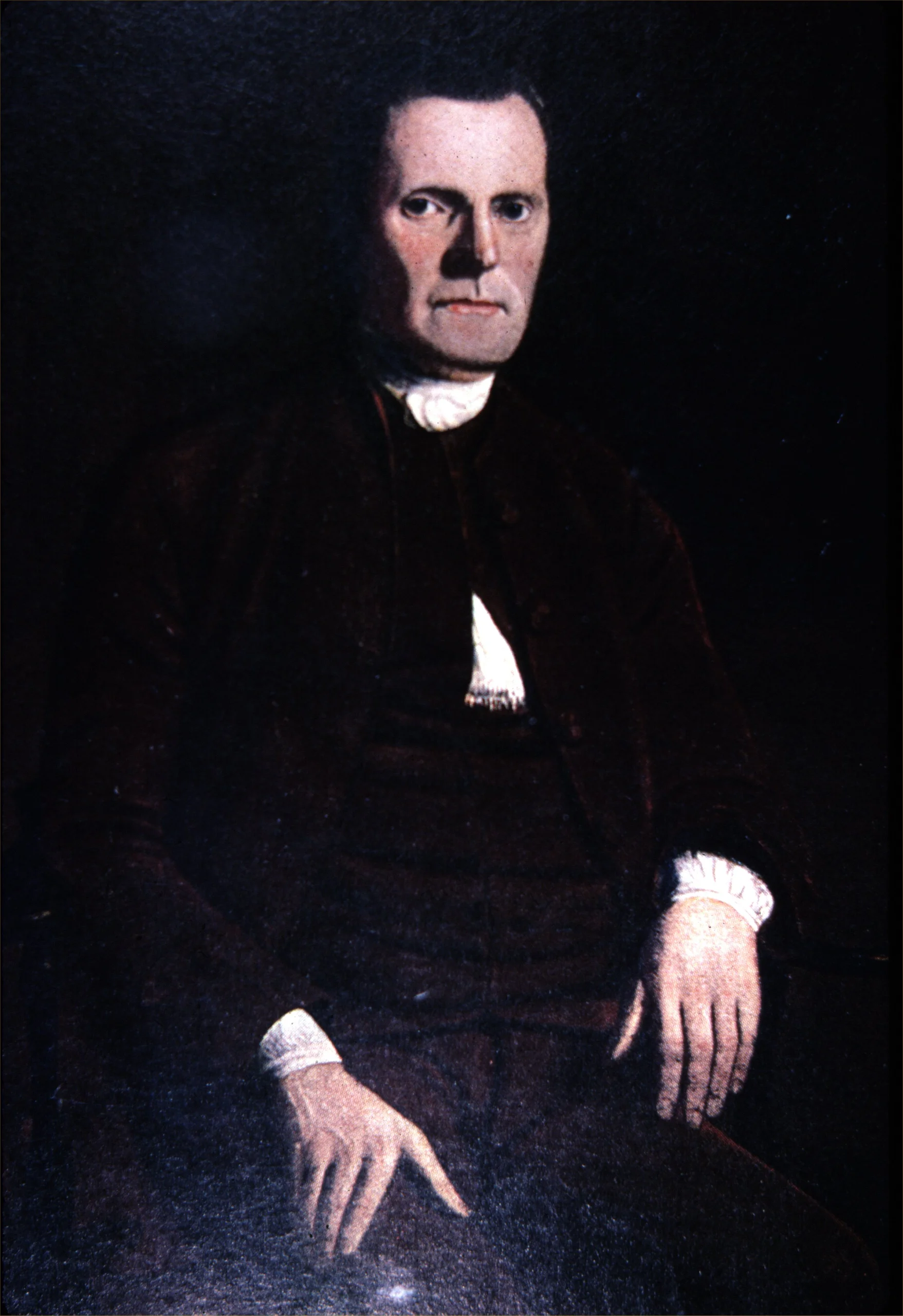
Roger Sherman
Also known as: The Forgotten Founder
Birthday
April 19, 1721
Birth Sign
Aries
Birthplace
Newton, Massachusetts
Age
Died at 72
About
Roger Sherman stands as a singular figure in American history, distinguished as the only individual to sign all four great state papers that shaped the nation: the Continental Association, the Declaration of Independence, the Articles of Confederation, and the U.S. Constitution. A self-taught man from humble beginnings who rose from poverty to become a central architect of the federal government, he is best known for his pragmatic approach to governance and his pivotal role in resolving the deadlock between large and small states at the Constitutional Convention. His legacy is defined by quiet competence and a unique ability to bridge divides through the Connecticut Compromise, which established the bicameral legislature that remains the foundation of the U.S. Congress today.
Serving as a judge in Connecticut for over two decades before entering national politics, Sherman held a steady course through the Revolution and the formation of the new republic. He served in the U.S. House of Representatives and later became the first Senator from Connecticut, holding the seat until his death in 1793. His enduring reputation rests not on flamboyance but on the structural integrity of the government he helped build, making him a model of the self-made man whose intellectual rigor and legal acumen shaped the nation's destiny.
Early Life & Background
Roger Sherman was born on April 19, 1721, into a modest farming family in Newton, Massachusetts (now part of Newton Upper Falls), where he received very little formal education. By age six, he had attended school for only about six months total. Despite this lack of schooling, he displayed a voracious appetite for learning that would define his life. At age ten, he was apprenticed to a shoemaker in nearby Roxbury, a trade he practiced diligently until he left home at seventeen. During these formative years, he made his own shoes and sold them to support his family, developing a frugal lifestyle that often led him to walk long distances rather than pay for carriage rides.
He moved to New Milford, Connecticut, in 1743 to work as a teacher and study law independently. While working as a surveyor and continuing his trade as a shoemaker to support himself, he mastered mathematics, astronomy, and legal theory through intense self-study. In 1749, he married Elizabeth Hartwell, settling down in New Haven where he began practicing law after being admitted to the bar in 1754. His early career was marked by steady progress in local civic roles, including service as a justice of the peace and election to the Connecticut General Assembly in 1761, followed by his appointment to the Superior Court of Connecticut in 1766, a role he held concurrently with his growing federal duties.
Career Growth
Sherman's national prominence began in 1774 when he was elected as a delegate to the First Continental Congress. He played a pivotal role in drafting and signing the Continental Association and the Petition to the King. During the Second Continental Congress, he served on the Committee of Five that drafted the Declaration of Independence and signed the document on August 2, 1776. He continued his legislative work by helping draft the Articles of Confederation in 1777, which he also signed upon its adoption. These early actions established him as a key player in the revolutionary movement.
The defining moment of his career arrived at the 1787 Constitutional Convention in Philadelphia. When delegates were deadlocked over representation, Sherman proposed the Connecticut Compromise. This solution created a bicameral legislature with proportional representation in the House of Representatives and equal representation in the Senate, effectively saving the convention from collapse. He signed the final U.S. Constitution later that year. Following ratification, he served in the first U.S. House of Representatives from 1789 to 1791. In 1791, he became the first Senator from Connecticut, making him the earliest-born U.S. senator in history. He held this federal office until his death in 1793, leaving behind a legacy of pragmatic governance and quiet competence.
Career Timeline
Public Image & Style
Roger Sherman is portrayed in history as the quintessential pragmatic founder. Unlike the more flamboyant figures of the era, he is remembered for his steady, reliable contributions and his ability to bridge divides through compromise. Media and historical accounts depict him as a man of few words but immense influence, rising from poverty to shape the nation's legal framework. His image is one of integrity and hard work, often contrasted with the aristocratic backgrounds of other founding fathers. He is frequently cited as the model of the self-made man who achieved greatness through diligence and intellect rather than birthright. For much of the 19th and 20th centuries, he was overshadowed by more flamboyant founders like Washington and Franklin, earning him the moniker of the "Forgotten Founder" until recent scholarship revived interest in his critical contributions.
Fame & Fandom
iFANN has not yet collected fame data for this person. As a historical figure from the 18th century, he does not hold a ranking in modern global fame metrics. His presence in contemporary culture is defined by his historical significance rather than celebrity status. While there is no formal fanbase in the pop-culture sense, Sherman maintains a dedicated following among historians, educators, and genealogists. Groups like the Daughters of the American Revolution and the Sons of the American Revolution actively honor his legacy. Local communities in New Haven and Connecticut participate in annual commemorations, such as the 2026 celebrations marking his 305th birthday. These events keep his story alive for new generations studying the American founding era.
In 2026, the Beinecke Library at Yale University hosted a one-day viewing event titled "Roger Sherman and American 250," showcasing original documents related to his life and work. Additionally, Connecticut News12 featured a segment highlighting Sherman as a key figure in America's revolutionary story, emphasizing his role in the Connecticut Compromise. CT Insider published an article re-evaluating Sherman's contributions as a "forgotten founder" who helped create the United States, confirming his enduring relevance in modern historical discourse.
Interesting Facts and Legends
Born in Newton, Massachusetts, Roger Sherman was a shoemaker by trade before he ever entered politics. He made his own shoes and sold them to support his family during his early years. Despite attending school for only six months, he became one of the most learned men of his generation, mastering complex subjects like astronomy and mathematics through intense self-study. He was known for his frugality and often walked long distances to save money rather than pay for carriage rides. He was deeply interested in astronomy and often used these skills in his work as a surveyor.
His signature on historical documents is a singular distinction; no other Founding Father signed all four great state papers. He was also the oldest person to serve as a U.S. Senator at the time of his appointment, though he died relatively young by modern standards. For much of the 19th and 20th centuries, he was overshadowed by more flamboyant founders like Washington and Franklin, earning him the moniker of the "Forgotten Founder" until recent scholarship revived interest in his critical contributions. He was inducted into the National Archives' Hall of Fame for the Declaration of Independence and the Constitution, cementing his place in history.
Notable Quotes
“The Constitution is not a perfect instrument, but it is the best we can do.”
“We must be willing to compromise if we wish to preserve the Union.”
“I am a firm believer in the necessity of a strong central government, but I am equally convinced of the importance of protecting the rights of the states.”
Family & Personal Life
Roger Sherman was married twice, creating a household that reflected his status as a prominent citizen in New Haven. His first marriage to Elizabeth Hartwell in 1749 produced seven children: Roger Jr., Elizabeth, Mary, Hannah, Sarah, John, and William. The couple lived in New Haven, where they maintained a household that reflected their status as prominent citizens. Elizabeth died in 1769, leaving Sherman to raise their children alone while continuing his demanding public service. He reportedly struggled with grief but found solace in his work. In 1771, he married Rebecca Minot Prescott, a widow, who bore him three more children: Elizabeth, Rebecca, and Margaret. Rebecca survived him, managing the family estate after his death. The couple lived in New Haven, where they maintained a household that reflected their status as prominent citizens.
Notable Connections
Benjamin Franklin, John Adams, Thomas Jefferson, George Washington, Elizabeth Hartwell, Rebecca Minot Prescott.
Relationships & Dating History
Roger Sherman was married twice during his lifetime. His first marriage to Elizabeth Hartwell began in 1749 and lasted until her death in 1769. They met in New Milford during his early legal career and had seven children together. Following Elizabeth's death, Sherman reportedly struggled with grief but continued his public service. He remarried in 1771 to Rebecca Minot Prescott, a widow. Their marriage lasted until his death in 1793, and they had three children together. Rebecca survived him and managed the family estate. There are no records of romantic relationships outside of these marriages, as private dating details were not documented in the 18th century. He was a man of few words but immense influence, rising from poverty to shape the nation's legal framework.
- MarriedElizabeth Hartwell1749 - 1769First wife; mother of seven children; died 1769.
- MarriedRebecca Minot Prescott1771 - 1793Second wife; widow of Samuel Prescott; mother of three children; survived him.
Death & Aftermath
Died
July 23, 1793 (aged 72)
Death Place
New Haven, Connecticut
Cause of Death
Natural causes
Roger Sherman died on July 23, 1793, in New Haven, Connecticut. He was seventy-two years old when frailty and natural causes claimed him at his home after a period of declining health that did not stop him from serving as a legislator or judge until the spring of that year. The political community reacted with immediate and profound grief, marking the loss of the sole individual who had signed all four foundational documents of the United States. John Adams and Thomas Jefferson offered eulogies recognizing his unique contribution, while the Connecticut General Assembly and local civic leaders organized official tributes. Contemporary newspapers like the Connecticut Courant published extensive obituaries detailing his career.
A public funeral took place three days later on July 26, 1793, at the First Church in New Haven. Prominent figures including Governor Jonathan Trumbull Jr., members of the legislature, and city judges attended the solemn service before he was buried in the New Haven Green Cemetery, then reserved for the town's elite. Posthumously, his legacy endured through the naming of Sherman County in Oregon and various streets across the nation. His property passed quietly to his wife Elizabeth and their children under Connecticut law without public probate disputes. In 2026, commemorative activities continued to honor his memory, including a celebration in New Haven marking what would have been his 305th birthday.
Net Worth (Estate Value)
$0
iFANN Editorial Team estimate
As an 18th-century figure, Roger Sherman did not have a net worth in the modern monetary sense. Wealth for men of his station was measured in land ownership, legal fees, and inheritance rather than liquid assets. He accumulated a moderate to comfortable level of wealth typical for a successful Connecticut lawyer and judge of the period. His estate passed quietly to his wife and children under Connecticut law without public probate disputes, indicating financial stability. Specific dollar figures cannot be estimated for 2026 as currency values and economic structures differ entirely from the colonial era. The value of his legacy lies in his political contributions rather than financial accumulation. He was described as having a sturdy, practical build typical of a manual laborer turned professional, reflecting his background in shoemaking and surveying.
Awards & Accolades
View 6 records, honours and achievementsKnown For
Declaration of Independence
1776 · Signer
U.S. Constitution
1787 · Signer and Author of Connecticut Compromise
Articles of Confederation
1777 · Signer
Continental Association
1774 · Signer
Keywords
Sources
Quick Facts
- Profession
- politician, lawyer, judge
- Born
- April 19, 1721
- Birthplace
- Newton, Massachusetts
- Died
- July 23, 1793
- Death Place
- New Haven, Connecticut
- Gender
- Male
- Spouse
- Elizabeth Hartwell, Rebecca Minot Prescott
- Birth Sign
- Aries
Personal Details
- Full Name
- Roger Sherman
- Spouse
- Elizabeth Hartwell, Rebecca Minot Prescott
- Children
- Roger Jr., Elizabeth, Mary, Hannah, Sarah, John, William (with Elizabeth Hartwell); Elizabeth, Rebecca, Margaret (with Rebecca Minot Prescott)
- Education
- Self-taught; apprenticed to a shoemaker
Frequently Asked Questions
Who was Roger Sherman?
What was Roger Sherman's biggest achievement?
How many times was Roger Sherman married?
Did Roger Sherman go to college?
When did Roger Sherman die?
Similar People

Join the community
fans discussing