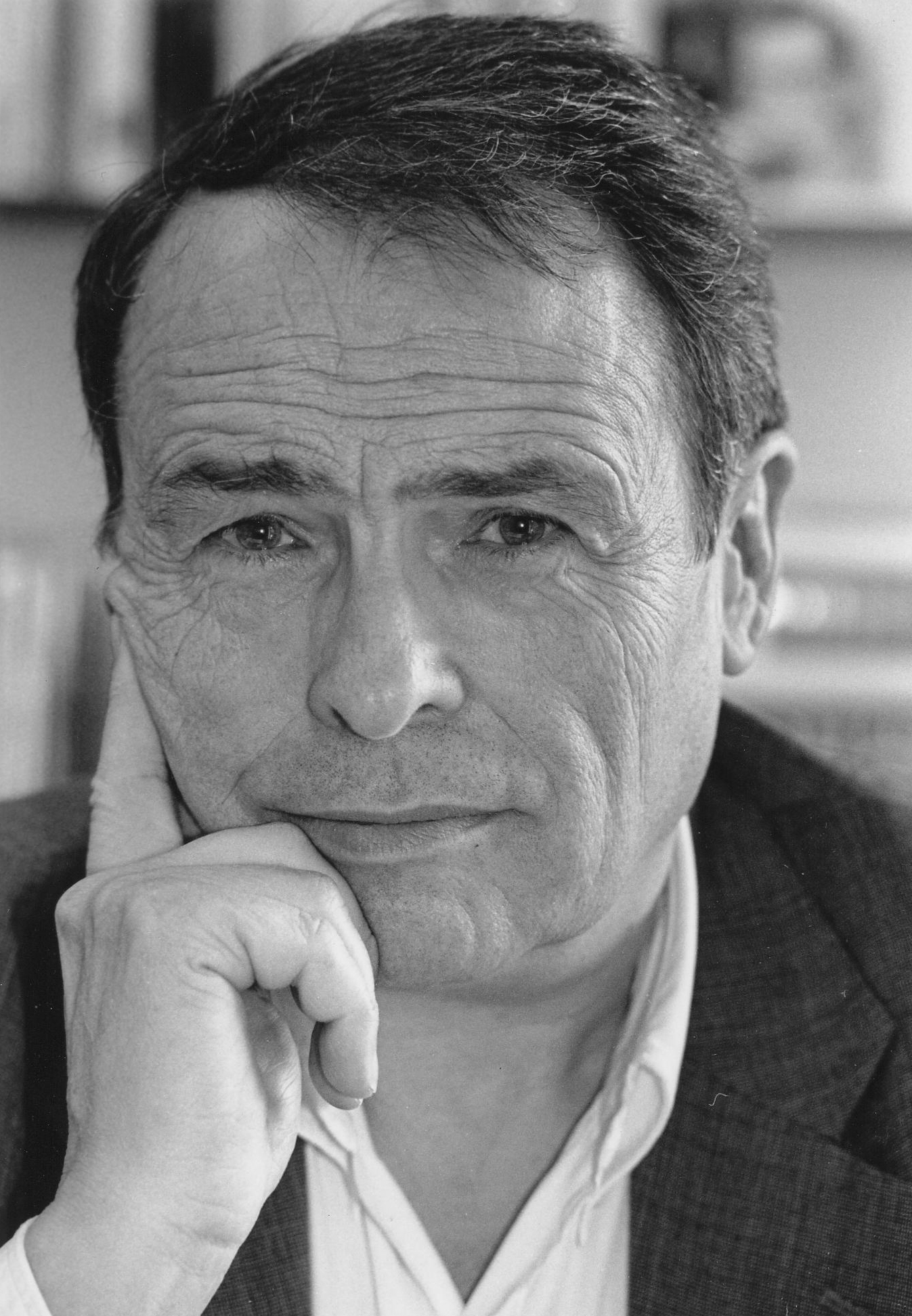
Pierre Bourdieu
 France
philosopher•sociologist•anthropologist
Birthday
+1930-08-01
Birth Sign
Leo
Birthplace
Denguin
Age
Died at 71
About
Pierre Bourdieu, born August 1, 1930, in the small town of Denguin in southwestern France, became one of the most influential sociologists of the twentieth century. A philosopher by training, he turned to anthropology and sociology, eventually holding positions at the School for Advanced Studies in the Social Sciences in Paris and the Collège de France. His work spanned the sociology of education, aesthetics, and the theory of knowledge, and he was a prolific writer, producing hundreds of articles and dozens of books that reached far beyond academic circles. Bourdieu died on January 23, 2002, at age 71, but his ideas continue to shape fields from anthropology to cultural studies. Bourdieu's central concern was power: how it operates, how it is passed down, and how it keeps social order intact. He rejected the abstract idealism of much Western philosophy, focusing instead on the physical, practiced nature of social life. Building on and critiquing Marx, Durkheim, Weber, and others, he introduced concepts that have become essential tools for understanding society: habitus, field, cultural capital, social capital, and symbolic violence. His 1979 book Distinction: A Social Critique of the Judgment of Taste is perhaps his best-known work, arguing that taste is not a matter of individual preference but a way of positioning oneself in the social hierarchy. The book, which mixed theory with surveys, photos, and interviews, was later named the sixth most important sociological work of the twentieth century by the International Sociological Association. Bourdieu also took aim at the myth of meritocracy. He showed how the ruling and intellectual classes preserve their advantages across generations through the education system, which appears to offer equal opportunity but actually rewards the cultural knowledge and habits of the privileged. His writing, dense and often challenging, was nonetheless widely read and debated, and he became a public intellectual in France, speaking out on issues like education reform and media power. Beyond Distinction, his other major works include Outline of a Theory of Practice, Reproduction in Education, Society and Culture, and Pascalian Meditations, the last a nod to the philosopher Blaise Pascal, whose influence ran through his thought. Bourdieu's legacy is a vocabulary for talking about how power hides in plain sight, in our tastes, our habits, and our institutions.
Fame & Fandom
Pierre Bourdieu commanded a global audience of unprecedented scale, though his influence remains rooted in the rigorous study of social structures rather than the commercial metrics of pop culture. The iFANN Global Fame Engine has evaluated this figure as currently holding no placement within the published rankings, including the Global Top 1,000 or any scope list restricted to the top one hundred. Consequently, he is not assigned a specific numerical rank or score in the current system. While the world once engaged with him through the lens of academic inquiry and public intellectualism, no formal fanbase exists; the fanbase has no official name. His followers are identified strictly as sociologists, researchers, and students who engage with his theories on habitus and cultural capital, yet these groups do not constitute a fandom in the traditional sense. Unlike entertainers who generate viral moments or street-level hysteria, Bourdieu's legacy is measured by the citation of works such as Distinction and the application of his concepts to analyze class dynamics. There are no records of fan-funded projects, charity drives, or chart pushes dedicated to his memory. Recent scholarly reflections from 2026 regarding his predictions on digital culture represent applications of his ideas by contemporary analysts rather than evidence of a living cult following. The absence of a named fandom reflects the nature of his contributions; his impact is disseminated through textbooks and critical theory rather than fan conventions or organized worship.
Interesting Facts and Legends
Born in Denguin in 1930, Pierre Bourdieu was a philosopher by training who eventually held prestigious positions at the School for Advanced Studies in the Social Sciences and the Collège de France. He died on January 23, 2002, at the age of 71 in Paris. A defining moment in his life was his transition into the role of a public intellectual, where he stepped into the public sphere to critique social injustice in a manner comparable to Jean-Paul Sartre. His theoretical contributions, including the concepts of habitus, field, and symbolic violence, have become foundational lore within sociology. These ideas serve as the primary "legend" surrounding him, explaining how education reproduces social inequality and analyzing power structures. There are no stories of crowds shutting down streets or fans fainting, as he never performed in venues that would generate such reactions. Instead, the mythology surrounding him consists entirely of his intellectual rigor and his exposure of social inequalities. His work remains highly influential in academia, with his books continuing to shape fields from anthropology to cultural studies decades after his death.
Death & Aftermath
Died
+2002-01-23 (aged 71)
Death Place
Paris, France
Cause of Death
Cancer
Tributes poured in from peers, institutions, and officials across France, recognizing the profound impact of a man who had become a celebrated public intellectual. The mourning within academic circles was widespread, reflecting a consensus that his ideas would continue to shape fields ranging from anthropology to cultural studies for decades to come. Pierre Bourdieu passed away on January 23, 2002, in Paris after a long battle with cancer, an illness diagnosed several years prior that significantly declined his health by late 2001. His final days were marked by confinement due to the disease, preventing him from engaging in the heavy public intellectual work he was known for, though no specific details regarding the exact hospital or residence where he died are available in the record.
Details regarding the funeral or memorial service, including whether the ceremony was public or private, remain absent from the biographical data. In the years following his passing, his legacy has continued to grow as new editions of his books, academic analyses, and films referencing his theories have been produced. Recent articles continue to apply his concepts to contemporary issues such as water scarcity and class dynamics, while various foundations may exist in his name to preserve his intellectual property.
Awards & Accolades
Keywords
Quick Facts
- Profession
- philosopher, sociologist, anthropologist
- Born
- +1930-08-01
- Birthplace
- Denguin
- Died
- +2002-01-23
- Death Place
- 12th arrondissement of Paris
- Gender
- Male
- Spouse
- Marie-Claire Bourdieu
- Birth Sign
- Leo
Personal Details
- Spouse
- Marie-Claire Bourdieu
Join the community
fans discussing