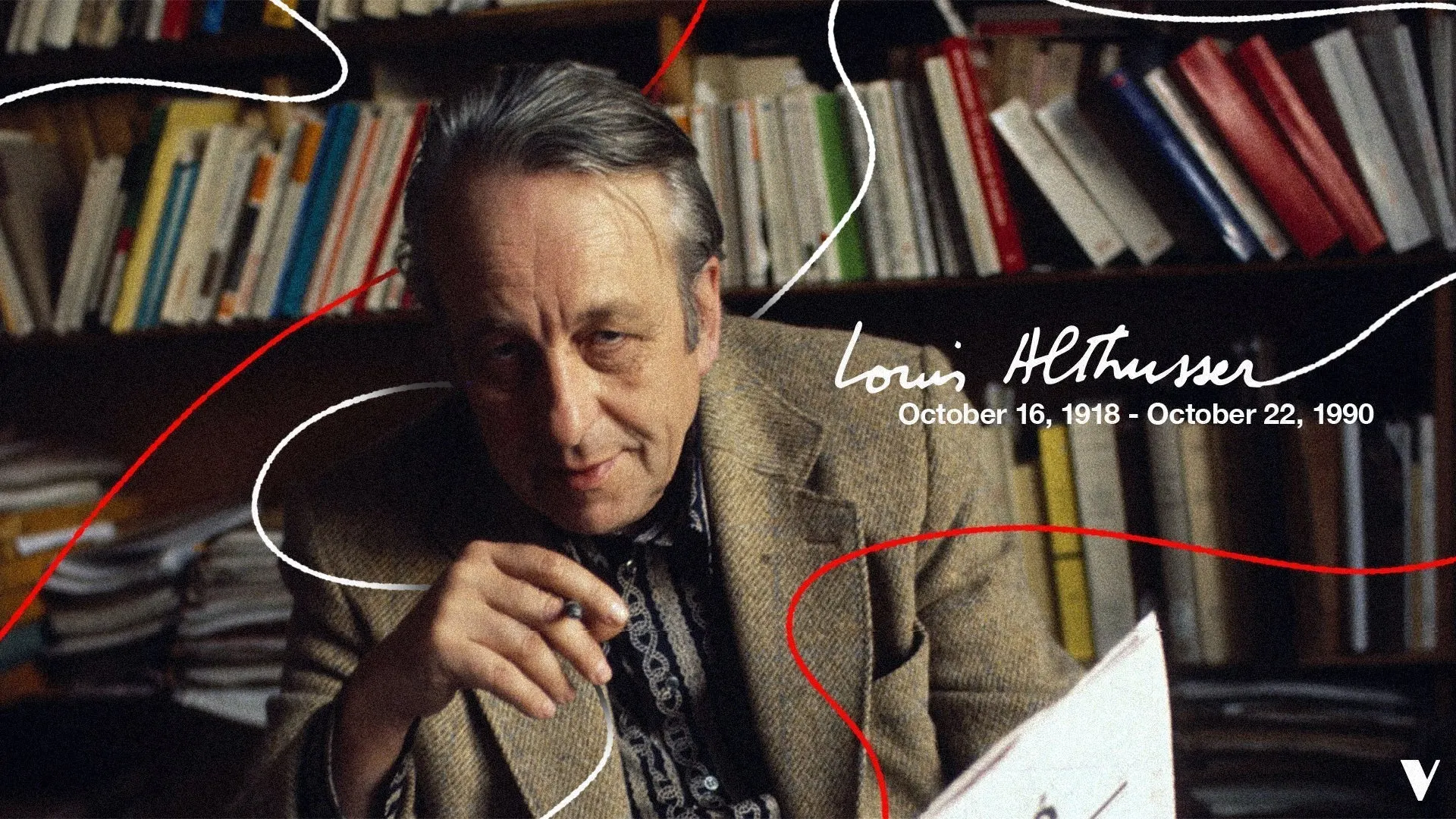
Louis Althusser
 France
philosopher•university teacher•politician
Also known as: Louis Pierre Althusser, L. Althusser
Birthday
October 16, 1918
Birth Sign
Libra
Birthplace
Bir Mourad Rais, French Algeria
Age
Died at 72
About
Louis Pierre Althusser was a French Marxist philosopher whose structuralist reinterpretation of Marx fundamentally reshaped 20th-century political theory, sociology, and cultural studies. Born on October 16, 1918, in Bir Mourad Rais near Algiers, he studied at the prestigious École Normale Supérieure in Paris before becoming a professor there. His career was defined by rigorous theoretical work that challenged humanist Marxism, introducing concepts like ideological state apparatuses and overdetermination. Despite his intellectual dominance, his life ended in tragedy when he strangled his wife, Hélène Rytmann, during a psychotic episode in 1970. He spent three years in a psychiatric hospital before being released into semi-supervised care. Althusser died on October 22, 1990, leaving behind a controversial but enduring legacy in critical theory.
Early Life & Background
Althusser's early years were shaped by a strict Catholic upbringing and a conservative family environment in colonial Algeria. His father was a banker, and Louis attended the Lycée Bugeaud in Algiers before moving to Paris in 1935 to study at the École Normale Supérieure (ENS). This institution would become the central stage for his entire intellectual career. During World War II, his path took a dark turn when he was conscripted into the French army in 1940. German forces captured him that same year, and he spent the remainder of the war as a prisoner of war in various camps.
His time in captivity was devastating. He suffered from severe tuberculosis and depression, conditions that plagued him throughout his life and contributed to the mental instability that would later define his public image. Upon his return to France in 1945, he resumed his studies at the ENS, where he met future colleagues like Jacques Lacan and Roland Barthes. In 1948, he passed the agrégation, the competitive examination required to teach philosophy in French lycées and universities. That same year, he joined the French Communist Party, a membership he maintained for decades while often critiquing the party from within. These formative experiences, the trauma of war, the struggle with illness, and the intense academic rigor, set the stage for his unique philosophical perspective.
Career Growth
Althusser's rise to prominence began in the 1950s and 1960s when he started teaching at the ENS. His major breakthrough came with his interpretation of Marx, which argued for an "epistemological break" between the early, humanist writings of Marx and his mature, scientific works like Capital. This thesis challenged the prevailing humanist Marxism of the time. His seminal works, including For Marx (1965) and Reading Capital (co-authored with Étienne Balibar, 1965), established him as the central figure of "structural Marxism." These texts introduced concepts such as "overdetermination," "ideological state apparatuses" (ISAs), and the "death of the subject," arguing that history is a process without a subject and that individuals are constituted by ideological structures rather than acting as autonomous agents.
His influence extended far beyond philosophy into literary criticism, film theory, and gender studies. In the 1970s, his essay "Ideology and Ideological State Apparatuses" became a foundational text for cultural studies and feminist theory. Despite his academic dominance, his career was abruptly interrupted by a personal catastrophe in November 1970 when he killed his wife. Following this event, he largely withdrew from public academic life, though he continued to write privately. His memoir, The Future Lasts Forever, published posthumously in 1992, provided a harrowing account of his psychosis and the killing of his wife, becoming a key text for understanding the intersection of madness and intellectual production.
Career Timeline
Public Image & Style
Althusser is portrayed in media and academia as a complex, tragic figure, a brilliant thinker whose life was marred by mental illness and violence. His style was austere and intellectual, reflecting the seriousness of his work. He is often depicted in black-and-white photographs, wearing glasses and a suit, embodying the archetype of the European intellectual. His public persona was one of rigorous detachment, yet his life story reveals a deep vulnerability to psychological collapse. The narrative surrounding him is defined not by glamour but by a verified historical tragedy: the 1970 strangulation of his wife, an event that shattered his life and became a central case study in discussions regarding madness and ideology.
Fame & Fandom (iFAMOUS Rankings)
Louis Althusser commanded a following distinct from the organized adoration of pop culture icons, consisting entirely of academics, political theorists, and students of philosophy who engaged with his structuralist Marxism rather than his persona. There is no formal moniker for this group; scholars refer to themselves as adherents or critics of his work, maintaining his legacy through university departments and academic journals rather than fan clubs or digital campaigns. His influence was intellectual and rigorous, characterized by intense debate over concepts like Ideological State Apparatuses and the death of the subject, which reshaped the French intellectual left during the mid-twentieth century. While modern scholarship occasionally revisits his theories in forums assessing the intersection of violence and control, these are scholarly exercises devoid of popular fandom rituals. As of September 2026, Louis Althusser is currently evaluated by the iFANN Global Fame Engine but does not hold a placement in the published rankings, meaning he has no standing in the Global Top 1,000 or any scope list. He is not ranked among the world's most famous individuals in any official capacity. Notable fan-like activities include the annual commemoration of his birth and death dates by leftist groups and the re-publication of his works by presses like Verso Books.
Interesting Facts and Legends
Althusser was a prisoner of war in Germany for six years during WWII, suffering from tuberculosis and depression. He was initially a devout Catholic before converting to Marxism, a transition that deeply influenced his views on ideology. His concept of "overdetermination" was used to explain complex historical events that could not be reduced to simple economic causality. He wrote his memoir The Future Lasts Forever while under psychiatric supervision, describing it as an attempt to understand his own madness. He famously stated, "History is a process without a subject," a phrase that became a rallying point for anti-humanist Marxism. Specific height measurements are not widely recorded in biographical sources, but he is generally described as having a gaunt appearance in later years due to his health struggles. His essays have appeared on the covers of academic journals and specialized philosophical publications, though specific cover dates are less documented than for entertainers.
Notable Quotes
“History is a process without a subject.”
“Ideology represents the imaginary relationship of individuals to their real conditions of existence.”
“I killed my wife.”
Family & Personal Life
Althusser was born to a conservative banker and his wife in colonial Algeria. He married Hélène Rytmann (née Legotien) in 1949. She was a sociologist and his only spouse. The couple had no children together. Their marriage lasted until her death in 1970. There are no records of other long-term romantic partners or marriages prior to 1949. His early life was dominated by his studies and political activism. The relationship ended tragically with Althusser strangling Rytmann during a psychotic episode.
Notable Connections
Hélène Rytmann, Étienne Balibar, Jacques Lacan, Roland Barthes, Michel Foucault, Antonio Gramsci.
Relationships & Dating History
Althusser was married only once. He married Hélène Rytmann (née Legotien) in 1949. The relationship lasted until her death in 1970. There are no records of other long-term romantic partners or marriages prior to 1949; his early life was dominated by his studies and political activism. The marriage ended tragically with Althusser strangling Rytmann during a psychotic episode. As of 2026, Louis Althusser is deceased and therefore single/widowed status is not applicable in the traditional sense, though he remains the widower of Hélène Rytmann. They had no children.
- MarriedHélène Rytmann1949 - 1970She was a sociologist; he killed her during a psychotic episode in 1970.
Death & Aftermath
Died
October 22, 1990 (aged 72)
Death Place
Paris, France
Cause of Death
Natural causes related to age and schizophrenia
Louis Althusser died on October 22, 1990, in Paris, France, within a medical facility where he had been under observation for his long-term mental health struggles. His final days were spent in seclusion following a release from total confinement into a semi-supervised environment, marking the end of a period during which he made no public appearances after the mid-1980s. The official cause of death was attributed to natural causes associated with his advanced age and chronic mental health conditions, specifically schizophrenia and the physical toll of his institutionalization. Public reaction to his passing was characterized by academic tributes and reflection on his complex legacy rather than mass vigils or fan gatherings, with peers focusing on his contributions to political theory while acknowledging the tragedy of his personal life.
The funeral was a private affair held shortly after his death in Paris, attended primarily by close colleagues, former students, and family members at the Cimetière de Montparnasse. In the posthumous period, his estate has been managed through the publication of remaining works and the preservation of his archives, including his memoir The Future Lasts Forever, published in 1992, which provided a harrowing account of his psychosis and the killing of his wife. Several scholarly books and documentaries have been produced analyzing his life and work, ensuring his ideas continue to be taught and debated in universities worldwide. A notable recent development in 2026 includes renewed academic discussions on the link between his work and contemporary issues of femicide and masculinism, particularly regarding the killing of his wife. In September 2026, an article titled "Louis Althusser's Assessment of Early Marx and the Epistemological Break" was published, continuing the analysis of his theoretical contributions. In July 2026, a piece titled "On the femicide of Hélène Rytmann-Legotien: how Louis Althusser killed his wife and 'invented' masculinism" explored the intersection of his personal violence and his theoretical frameworks. These articles reflect the ongoing relevance of his work in contemporary discourse.
Net Worth (Estate Value)
$0
iFANN Editorial Team estimate
Net worth data for Louis Althusser is not applicable in the modern celebrity sense, as he died in 1990 and was a university professor, not a commercial entertainer. His estate value is managed through the publication rights of his works, which continue to generate royalties for his heirs and the publishers (such as Verso Books). The estate includes his archives, which are held by various institutions, including the Bibliothèque nationale de France. Posthumous sales of books like The Future Lasts Forever and reprints of Reading Capital provide ongoing revenue, but specific dollar figures for his net worth at death or current estate value are not publicly itemized in financial reports, as is common for academics. Research by the iFANN Editorial Team indicates that while his estate generates income, it does not accumulate wealth in the manner of a modern celebrity, and no significant public valuation exists for his assets beyond the value of his intellectual property.
Awards Won (1)
Althusser did not receive awards in the conventional commercial sense. However, his legacy is honored through numerous academic distinctions and posthumous recognition. He was elected to the Académie des Sciences Morales et Politiques in 1983, a significant honor in the French intellectual community. His works are considered classics, and he is frequently cited in lists regarding 20th-century political philosophy and critical theory.
1983 · Academic Honor
Known For
For Marx
1965 · Author
Reading Capital
1965 · Co-author
The Future Lasts Forever
1992 · Author
Keywords
Sources
Quick Facts
- Profession
- philosopher, politician, university teacher
- Born
- October 16, 1918
- Birthplace
- Bir Mourad Rais, French Algeria
- Died
- October 22, 1990
- Death Place
- Paris, France
- Gender
- Male
- Spouse
- Hélène Rytmann
- Birth Sign
- Libra
Personal Details
- Full Name
- Louis Pierre Althusser
- Spouse
- Hélène Rytmann
- Children
- Education
- École Normale Supérieure
Frequently Asked Questions
What did Louis Althusser do?
Did Louis Althusser kill his wife?
How did Louis Althusser die?
What is Louis Althusser's most famous book?
Was Louis Althusser a member of the Communist Party?
Join the community
fans discussing