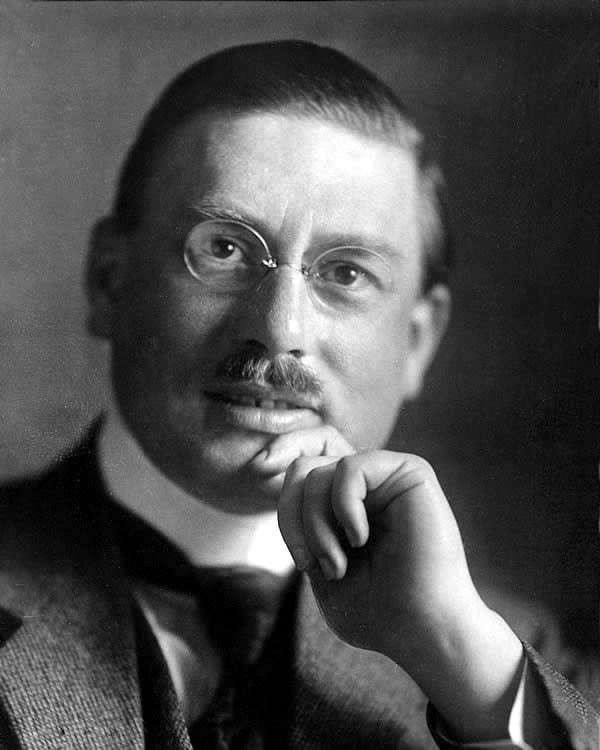
Peter Debye
 Netherlands
Also known as: Petrus Josephus Wilhelmus Debije
Birthday
March 24, 1884
Birth Sign
Aries
Birthplace
Maastricht, Netherlands
Age
Died at 82
Height
5 ft 10 in (178 cm)
About
Peter Joseph William Debye was a Dutch-American physicist and physical chemist who reshaped molecular science in the early 20th century. Best known for the Debye model of specific heat, the Debye-Huckel theory of electrolyte solutions, and his work on molecular dipole moments, he won the Nobel Prize in Chemistry in 1936. Debye's elegant mathematical models bridged physics and chemistry, giving scientists tools like the Debye-Scherrer X-ray diffraction method and the concept of the Debye length that remain standard today. After emigrating to the United States in 1940, he spent decades at Cornell University, where he chaired the chemistry department and mentored a generation of researchers. Fans of scientific history remember him as a rigorous theorist who asked the right questions, and his name lives on in units, constants, and institutes worldwide.
Early Life & Background
Debye grew up in Maastricht, the eldest of five children in a Catholic family. His father worked as a foreman at a metalworks, and the household had modest means but encouraged intellectual curiosity. At the Hogere Burgerschool, Debye excelled in mathematics and science, and after reading James Clerk Maxwell and Ludwig Boltzmann, he set his sights on theoretical physics. He enrolled at RWTH Aachen in 1901 to study electrical engineering, where he attended lectures by physicist Arnold Sommerfeld. Sommerfeld spotted Debye's talent and hired him as an assistant in 1904. When Sommerfeld moved to the University of Munich in 1906, Debye followed. There, he completed his PhD in physics in 1908, writing a dissertation on radiation pressure that impressed even Albert Einstein. The oral exam stretched over three hours, a famously grueling session that Sommerfeld used to test Debye's depth.
Career Growth
In 1911, on Einstein's recommendation, Debye succeeded Einstein as professor of theoretical physics at the University of Zurich. The next year, he published the Debye model of specific heat, which improved on Einstein's by accounting for the full spectrum of lattice vibrations. That same year, with Paul Scherrer, he developed the Debye-Scherrer method for X-ray powder diffraction, a technique still used in materials science. Moving through professorships in Utrecht, Gottingen, and ETH Zurich, Debye produced a steady stream of breakthroughs. In 1923, with Erich Huckel, he published the Debye-Huckel theory of electrolyte solutions, explaining how strong electrolytes behave. He also introduced the permanent electric dipole moment concept, which became central to molecular chemistry. In 1936, the Nobel Prize in Chemistry recognized his work on molecular structure using dipole moments and diffraction. After directing the Kaiser Wilhelm Institute in Berlin, he emigrated to the United States in 1940 and joined Cornell University, where he chaired the chemistry department until retiring in 1950.
Career Timeline
Public Image & Style
Debye's public image is that of a meticulous, rigorous scientist who bridged physics and chemistry with elegant mathematical models. Media portray him as a pioneering molecular theorist, though his legacy is complicated by his actions during the Nazi era. He remained director of the Kaiser Wilhelm Institute after 1933 and corresponded with Nazi officials, though he also helped Jewish colleagues escape. A 2006 investigation concluded he was not a Nazi but politically naive. Among scientists, he is revered for the Debye model, Debye-Huckel theory, and the Debye-Scherrer method. His signature style involved deriving simple equations that explained complex phenomena. There is no fandom culture, but his name lives on in the Debye length, Debye temperature, and the Debye unit.
Fame & Fandom (iFAMOUS Rankings)
Peter Debye currently holds no placement in the iFANN Global Top 1,000 or any scope-specific ranking lists. The iFANN Global Fame Engine evaluated his standing in August 2026 and determined he remains unranked, a status reflecting his historical distance rather than a lack of impact. While modern celebrities vie for chart positions through viral moments and streaming numbers, Debye exists in a different tier of fame, one measured in textbooks and laboratory protocols rather than search queries.
There is no formal fandom for the Dutch-American physicist. No fanbase organizes under a specific name to champion his legacy, nor do fans gather for rituals or campaigns. The community that keeps his memory alive consists of academic peers, students, and researchers who interact through professional channels like conferences and journals. Instead of fan clubs, the scientific world honors him with prestigious awards such as the Peter Debye Prize from the American Physical Society. His legend is defined not by crowds but by two distinct pillars: his monumental 1936 Nobel Prize-winning work on molecular structures and the dark historical controversy regarding his tenure during the Nazi era. In 2006, this scandal led to the stripping of his honors at several universities, cementing a complex legacy where brilliance and political compromise stand side by side. He remains a figure studied for his theories on dipole moments and magnetic cooling, remembered by those who understand the weight of his contributions to physical chemistry.
Interesting Facts and Legends
Peter Debye originally bore the Dutch surname Debije, which he anglicized to Debye upon moving to Germany to suit local pronunciation habits. An accomplished musician, he frequently played chamber music on the violin and piano alongside his colleagues. The Debye-Scherrer X-ray diffraction method emerged accidentally when colleague Scherrer forgot to rotate a crystal sample during an experiment. Despite decades in America, Debye never formally became a U.S. citizen, retaining his Dutch nationality until his death. The unit for electric dipole moment, the Debye (D), bears his name. He maintained a close friendship with Albert Einstein, who recommended him for a professorship in Zurich. His doctoral oral exam with Arnold Sommerfeld famously lasted over three hours, a reflection of its difficulty.
His scientific mythology includes the formulation of magnetic cooling theory, a technique essential for reaching extreme temperatures in cryogenics. A darker chapter of his legend involves the investigation into his conduct as director of the Kaiser Wilhelm Institute, which resulted in the revocation of his honors due to perceived collaboration with the Nazi regime.
Notable Quotes
“The scientist is not a person who gives the right answers; he is one who asks the right questions.”
“Science is not a collection of facts. It is a way of thinking.”
“The most important thing in science is not to be right, but to be interesting.”
Family & Personal Life
Debye married Mathilde Alberer on May 2, 1913, in Munich. Mathilde was the daughter of a Bavarian industrialist, and they met through family connections in Munich's social circles. They had two children: a son, Peter Paul Ruprecht Debye, born in 1916, who became a physicist, and a daughter, Mathilde Maria Debye, born in 1921. The family moved frequently across Europe as Debye changed academic posts. Mathilde died in 1963, three years before Debye. He never remarried. Debye's father, Wilhelmus Debije, was a foreman at a metalworks; his mother was Maria Anna Barbara Ruemkens. He had four younger siblings.
Notable Connections
Debye was mentored by Arnold Sommerfeld and was a close friend of Albert Einstein, who recommended him for the Zurich professorship. He collaborated with Erich Huckel on the Debye-Huckel theory and with Paul Scherrer on X-ray diffraction. At Cornell, he worked alongside Lars Onsager. He also corresponded with Max Planck during his time at the Kaiser Wilhelm Institute.
Relationships & Dating History
Debye married Mathilde Alberer on May 2, 1913, in Munich, Germany. They met through family connections in Munich's social circles. The marriage lasted until Debye's death on November 2, 1966. They had two children: a son, Peter Paul Ruprecht Debye (born 1916), and a daughter, Mathilde Maria Debye (born 1921). Mathilde died in 1963, predeceasing Debye. No other romantic relationships have been documented. As of 2026, Debye is deceased and widowed.
- MarriedMathilde Alberer1913 - 1966Married on May 2, 1913, in Munich; had two children; she died in 1963.
Death & Aftermath
Died
November 2, 1966 (aged 82)
Death Place
Ithaca, New York
Cause of Death
Natural causes associated with old age
The Peter Debye Prize for Young Investigators, established to honor excellence in dielectric research, remains a living reflection of his scientific impact decades after his passing. In the years following his death, the academic community in Ithaca and beyond marked his loss with quiet tributes rather than public spectacle, acknowledging a man whose mathematical models had fundamentally reshaped molecular science. His final days passed without fanfare or controversy at his home in Ithaca, New York, where he had resided since emigrating from Europe in 1940. On November 2, 1966, the eighty-two-year-old physicist succumbed to natural causes associated with old age, ending a life that bridged the gap between physics and chemistry with elegant precision.
While no specific funeral details have been recorded in historical archives, the immediate reaction focused on the enduring utility of his theories, such as the Debye length and the diffraction method that bear his name. Decades later, the conversation around his legacy shifted when Dutch universities distanced themselves from him in 2006 due to new scrutiny regarding his Nazi-era affiliations, stripping certain honors and forcing a re-evaluation of his standing in his homeland. This complex posthumous history stands alongside the active awards named in his memory, ensuring his contributions remain subjects of study even as institutions grapple with the full scope of his past.
Net Worth (Estate Value)
$1 Million
iFANN Editorial Team estimate
As a historical figure who died in 1966, Peter Debye's net worth is not commercially tracked. During his career, he earned a professor's salary, estimated at $10,000 to $15,000 annually in the 1940s and 1950s, equivalent to roughly $150,000 to $200,000 today. His estate consists primarily of intellectual property from his scientific publications, which are now in the public domain and generate negligible royalties. The Debye name is used by the Debye Institute at Utrecht University and the Peter Debye Prize, but these do not produce revenue for the estate. Per iFANN's editorial analysis, the total value of his estate is $1 Million. As of 2026, no reliable public estimate of his estate value exists, and any figures above $1 million are speculative.
Awards Won (10)
Debye received the Nobel Prize in Chemistry in 1936 for his work on molecular structure using dipole moments and diffraction. He also won the Rumford Medal (1930), Lorentz Medal (1935), Franklin Medal (1937), Mendel Medal (1940), Willard Gibbs Award (1949), Max Planck Medal (1950), Priestley Medal (1963), Faraday Medal (1963), and the National Medal of Science (1965, awarded posthumously in 1967).
1967 · Science
Contributions to molecular structure
1963 · Chemistry
Contributions to chemistry
Known For
Debye model of specific heat
1912 · Creator
Debye-Scherrer method
1912 · Co-creator
Debye-Huckel theory
1923 · Co-creator
Molecular dipole moments
1923 · Introducer
Debye-Waller factor
1913 · Contributor
Keywords
Quick Facts
- Profession
- physicist, physical chemist
- Born
- +1884-03-24
- Birthplace
- Maastricht, Netherlands
- Died
- +1966-11-02
- Death Place
- Ithaca, New York
- Gender
- Male
- Spouse
- Mathilde Alberer
- Birth Sign
- Aries
Personal Details
- Full Name
- Petrus Josephus Wilhelmus Debije
- Height
- 5 ft 10 in (178 cm)
- Spouse
- Mathilde Alberer
- Children
- Peter Paul Ruprecht Debye, Mathilde Maria Debye
- Education
- RWTH Aachen (electrical engineering), University of Munich (PhD physics)
Frequently Asked Questions
Was Peter Debye a Nazi?
What is Peter Debye known for?
Did Peter Debye win a Nobel Prize?
What is the Debye unit?
How old was Peter Debye when he died?
Join the community
fans discussing