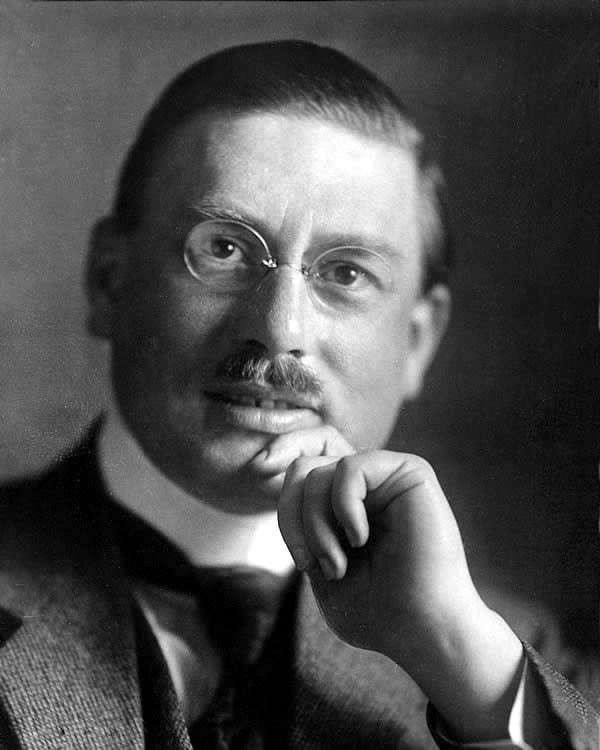
Peter Debye
Awards & Honours
10
Awards Won
8
Honours
2
Rankings
1
Covers
3
Records
Peter Debye's record of honors reflects his standing as one of the most influential physical chemists of the 20th century. He won the Nobel Prize in Chemistry in 1936, one of only a handful of scientists to receive that honor for work bridging physics and chemistry. His ten major awards span three countries and include the United States' highest scientific honor, the National Medal of Science. The Max Planck Medal and Lorentz Medal recognize his contributions to theoretical physics, while the Priestley Medal and Willard Gibbs Award celebrate his impact on chemistry. The Debye name appears on a lunar crater, a unit of measurement, and multiple scientific institutes, a rare level of institutional recognition for a single scientist.
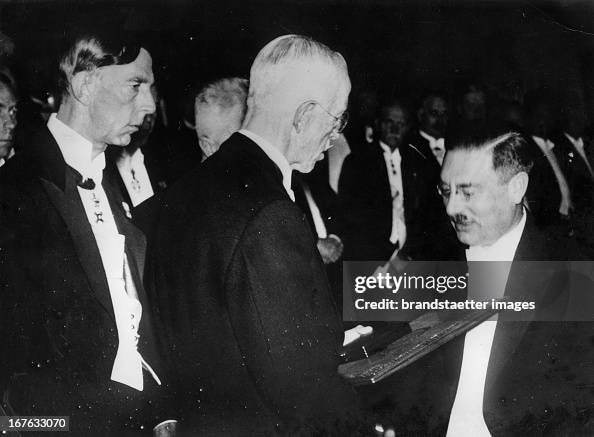
Awards
Honours & Distinctions
Member of the Royal Society
Elected as a foreign member
Member of the Royal Netherlands Academy of Arts and Sciences
Elected as a member
Member of the American Academy of Arts and Sciences
Elected as a fellow
Member of the National Academy of Sciences
Elected as a foreign associate
Member of the Pontifical Academy of Sciences
Appointed by the Vatican
Debye crater
Lunar crater named in his honor
Debye Institute
Research institute named after him
Peter Debye Prize
Award named after him for scientific achievement
Rankings & Lists
100 Most Influential Scientists of All Time
100 Most Important Chemists
Magazine Covers
Time
1937-02-01
Peter Debye: Molecular Explorer
Records & Feats
First to derive Planck's law using a new method
In 1910, Debye derived Planck's law of blackbody radiation using a method that impressed Einstein.
Developed the Debye-Scherrer method accidentally
The X-ray powder diffraction method was discovered when Scherrer forgot to rotate the crystal sample.
Introduced the concept of permanent electric dipole moment
Debye proposed that molecules have permanent dipole moments, a foundational concept in chemistry.