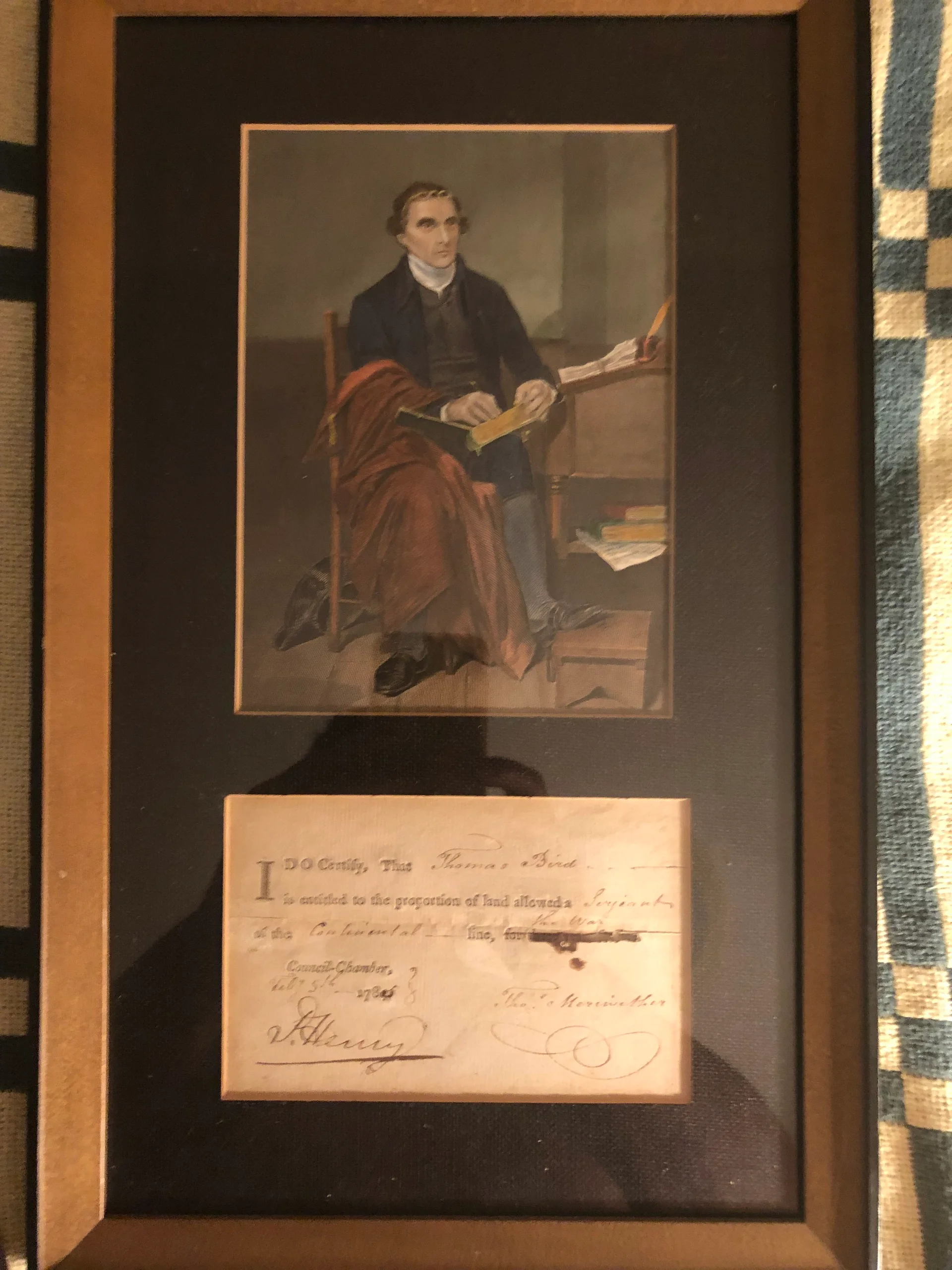
Patrick Henry
Birthday
May 29, 1736
Birth Sign
Sagittarius
Birthplace
Hanover County, Virginia
Age
Died at 63
About
Patrick Henry was a pivotal American Founding Father, lawyer, planter, and orator whose fiery rhetoric galvanized the American colonies toward independence. Born in Hanover County, Virginia, he became a central figure in the push for freedom from British rule, serving as the first post-colonial governor of the state. His career took off in the 1760s when he used his legal skills to challenge colonial policies, eventually earning a reputation as one of the most powerful speakers of his time. He served as the first popularly elected governor of Virginia and played a key role in drafting the state's declaration of rights.
Henry is best remembered for his speech at the Second Virginia Convention in 1775, where he concluded with the famous line "Give me liberty or give me death!" This moment is widely credited with swaying the convention to vote for raising a militia against British rule. Despite his early support for a strong union, he later opposed the ratification of the U.S. Constitution because it lacked a Bill of Rights and feared the concentration of federal power. He declined appointments to the Constitutional Convention and refused other federal offices, preferring to return to his law practice and estate until his death in 1799.
Early Life & Background
Born on May 29, 1736, in Hanover County, Virginia, Patrick Henry entered a world dominated by tobacco plantations and strict social hierarchies. He was the eldest of eleven children born to John Henry and Mary Shelton. His early education was limited; he attended local schools for only about two years before his father died when Patrick was sixteen. This event forced him to take over the family plantation, a responsibility that came with little preparation for business management.
His initial attempts to run the plantation and open a store in Hanover County were unsuccessful. To support himself, he apprenticed under his father-in-law, William Shelton, and later studied law intensely on his own. Unlike many of his contemporaries who attended prestigious universities or Inns of Court, Henry learned the law entirely through self-study and reading. He passed the bar in 1758 without ever setting foot in a college classroom. Before achieving fame, he established his reputation through legal acumen rather than political office, winning cases that showcased his sharp intellect and ability to connect with juries.
Career Growth
Henry's breakthrough moment arrived in 1763 during the "Parson's Cause," a lawsuit against Anglican clergy regarding salary payments. He successfully argued that the King had vetoed a colonial act capping salaries, thereby voiding the contracts. This victory made him a household name in Virginia and launched his political career. He was elected to the Virginia House of Burgesses in 1765, where he immediately attacked the Stamp Act of 1765, delivering speeches that incited widespread resistance and helped spark the American Revolution.
As tensions with Britain escalated, Henry served as a delegate to the First Continental Congress in 1774. During the Revolutionary War, he served as Governor of Virginia from 1776 to 1779 and again from 1784 to 1786, becoming the first popularly elected governor of the state. He also played a key role in drafting the Virginia Declaration of Rights in 1776, which influenced the U.S. Bill of Rights. In his later years, he remained a vocal critic of the Federalist Party and opposed the ratification of the U.S. Constitution because it lacked a Bill of Rights and feared the concentration of federal power. He declined appointments to the Constitutional Convention and refused other federal offices, preferring to return to his law practice and estate, Red Hill, in Hanover County.
Career Timeline
Public Image & Style
Patrick Henry is remembered as a man of intense conviction and powerful oratory. His public persona was defined by his fiery rhetoric and unwavering commitment to individual rights. He was often described as having a commanding physical presence, being tall, imposing, and physically robust, which complemented his explosive speaking style. Media and historical accounts portray him as a radical thinker who was not afraid to challenge authority, even when it meant risking his own safety or standing. His image remains iconic in American civic life, appearing on currency, stamps, and in educational materials. He is celebrated for his eloquence and his role as a revolutionary leader who inspired the colonies to fight for independence.
Fame & Fandom (iFAMOUS Rankings)
iFANN has not yet collected fame data for this person. As a historical figure who died in 1799, Patrick Henry does not have a modern fandom in the pop culture sense. His admirers are primarily historians, students, and patriots who revere him as a symbol of liberty. Fan campaigns do not exist, but his image is ubiquitous in American civic life, appearing on currency, stamps, and in educational materials. There is no formal name for his fanbase, as his influence is institutionalized through education and historical commemoration rather than organized fan groups. Posthumous honors include his induction into the National Hall of Fame for Great Americans in 1920. Countless counties, cities, schools, and bridges across the United States have been named in his memory. His speeches and writings remain staples in American literature and history curricula, ensuring his words continue to inspire new generations.
Interesting Facts and Legends
Patrick Henry was a slaveholder throughout his adult life, owning dozens of enslaved people. However, he expressed ambivalence about slavery, stating in his later years that he hoped the institution would eventually end, though he offered no concrete plan for emancipation. In 1775, he led a group of militiamen to Williamsburg to seize gunpowder stored by the royal governor, an act of open defiance that nearly sparked a war before the revolution officially began. His self-taught legal background was rare for someone of his stature, as most lawyers of the era studied at Inns of Court or universities. Notable quotes include "The distinctions between Whigs and Tories... are now no more" and "It is natural to man to indulge in the illusions of hope." While specific measurements like height are not consistently recorded, contemporary descriptions characterize him as tall, imposing, and physically robust.
Notable Quotes
“Give me liberty, or give me death!”
“The distinctions between Whigs and Tories... are now no more.”
“It is natural to man to indulge in the illusions of hope.”
Family & Personal Life
Patrick Henry was married twice. His first marriage was to Sarah Shelton on November 20, 1754. Sarah was the daughter of his former employer, William Shelton. The couple had five children together: John, Elizabeth, Dorothea, Lucy, and Richard. Sarah died in 1775, just months after Henry's famous "Give me liberty or give me death" speech. Following Sarah's death, Henry married Dorothea Dandridge (sometimes spelled Dandridge) in 1777. They had six children together: Patrick Jr., Letitia, Benjamin, William, Frances, and Anne. Dorothea survived him. The family lived primarily at their estate, Red Hill, in Hanover County, where they raised their large household.
Notable Connections
Relationships & Dating History
Patrick Henry was married twice. His first marriage was to Sarah Shelton on November 20, 1754. Sarah was the daughter of his former employer, William Shelton. The couple had five children together: John, Elizabeth, Dorothea, Lucy, and Richard. Sarah died in 1775, just months after Henry's famous "Give me liberty or give me death" speech. Following Sarah's death, Henry married Dorothea Dandridge (sometimes spelled Dandridge) in 1777. They had six children together: Patrick Jr., Letitia, Benjamin, William, Frances, and Anne. Dorothea survived him. He was widowed once and never divorced. There were no public romances, engagements, or breakups recorded beyond his two marriages.
- MarriedSarah Shelton1754 - 1775Mother of his first five children; died shortly after his famous speech.
- MarriedDorothea Dandridge1777 - 1799Mother of his last six children; survived him.
Death & Aftermath
Died
June 6, 1799 (aged 63)
Death Place
Red Hill, Hanover County, Virginia
Cause of Death
Pneumonia or tuberculosis
Patrick Henry died on June 6, 1799, at his estate known as Red Hill in Hanover County, Virginia. He was sixty-three years old when he passed away. While no modern autopsy report exists to confirm the exact medical cause, historical accounts from the time suggest he suffered from a severe respiratory illness, likely pneumonia or tuberculosis, which was exacerbated by his age and the grueling demands of his public service. His death occurred shortly after the death of George Washington in December 1799, creating a period of profound national mourning throughout the young republic.
The public reaction was immediate and widespread. Tributes poured in from across the colonies, with many leaders and citizens expressing deep sorrow over the loss of such a pivotal voice for liberty. His funeral was a major event attended by prominent figures of the era, including fellow Founding Fathers and political allies. He was laid to rest on the grounds of his own estate, Red Hill, where he had lived for much of his life.
In the decades following his death, Henry's legacy grew rather than faded. His estate, Red Hill, was preserved and eventually opened to the public as a historic site and museum managed by the Patrick Henry Memorial Foundation. This institution continues to serve as a testament to his life and work. Posthumous honors include his induction into the National Hall of Fame for Great Americans in 1920. Countless counties, cities, schools, and bridges across the United States have been named in his memory. His speeches and writings remain staples in American literature and history curricula, ensuring his words continue to inspire new generations. The estate itself holds significant historical value, though its financial trajectory is tied to tourism and preservation efforts rather than commercial ventures. Contemporary accounts suggest his relationship with George Washington involved mutual respect but political disagreement over the Constitution, while Thomas Jefferson remained a friend and collaborator despite diverging views on federal power.
Net Worth (Estate Value)
$0
iFANN Editorial Team estimate
Patrick Henry died in 1799, so he does not have a net worth in 2026. His estate, Red Hill, is a historic site managed by the Patrick Henry Memorial Foundation. The value of his original estate and assets is not tracked in modern financial terms, though the property itself holds significant historical and tourism value today. Any references to "net worth" for Patrick Henry in 2026 would be erroneous or refer to the valuation of the historic site or fictionalized media portrayals. The foundation manages the site as a museum, preserving his legacy for future generations. Recent search results from September 2026 refer to unrelated entities sharing the name, such as high school sports teams or restaurants, but these do not reflect the historical figure's finances.
Awards & Accolades
View 5 records, honours and achievementsKnown For
Give Me Liberty or Give Me Death
1775 · Speaker
Virginia Declaration of Rights
1776 · Author
Governor of Virginia
1776 · Governor
Keywords
Sources
Quick Facts
- Profession
- politician, lawyer, writer
- Born
- May 29, 1736
- Birthplace
- Hanover County, Virginia
- Died
- June 6, 1799
- Death Place
- Red Hill, Hanover County, Virginia
- Gender
- Male
- Spouse
- Sarah Shelton Henry, Dorothea Dandridge Henry
- Birth Sign
- Sagittarius
Personal Details
- Full Name
- Patrick Henry
- Spouse
- Sarah Shelton, Dorothea Dandridge
- Children
- John, Elizabeth, Dorothea, Lucy, Richard, Patrick Jr., Letitia, Benjamin, William, Frances, Anne
- Education
- Limited formal schooling; self-taught law
Frequently Asked Questions
What is Patrick Henry famous for?
How many times was Patrick Henry married?
Did Patrick Henry attend college?
Was Patrick Henry a slaveholder?
Where is Patrick Henry buried?
Similar People

Join the community
fans discussing