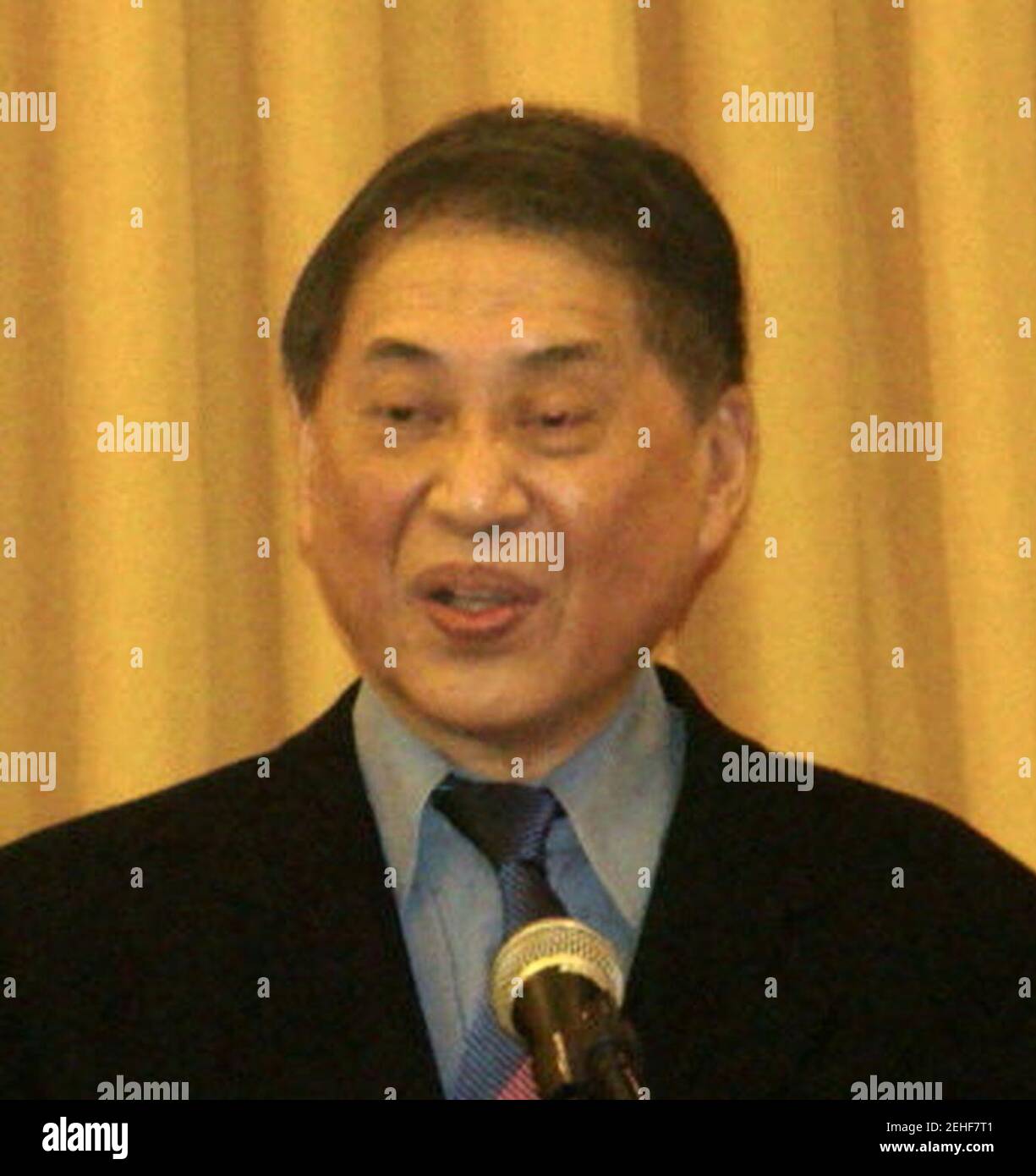
Pai Hsien-yung
 Taiwan
Also known as: Kenneth Pai, Bai Xianyong, Hsien-yung Pai
Birthday
July 11, 1937
Birth Sign
Cancer
Birthplace
Guilin, Guangxi, China
Age
89 years old
Height
5 ft 7 in (170 cm)
About
Pai Hsien-yung is a Taiwanese-American author and scholar, widely regarded as one of the greatest living writers in the Chinese language. Born in Guilin in 1937, he is best known for his short story collection Taipei People and the groundbreaking novel Crystal Boys, which brought LGBTQ+ themes into mainstream Chinese literature. His work, characterized by lyrical melancholy and modernist techniques, explores themes of exile, memory, and loss.
Currently an emeritus professor at the University of California, Santa Barbara, Pai has spent over six decades in academia and writing. He is also celebrated for his monumental production of the Kunqu opera The Peony Pavilion, which revitalized interest in this traditional art form among young audiences. His influence extends across generations, and he remains a revered figure in Chinese literary and cultural circles.
Early Life & Background
Pai Hsien-yung was born into one of China's most prominent military families. His father, General Pai Ch'ung-hsi, was a powerful Kuomintang commander and Minister of National Defense. Growing up as the youngest of ten children, Pai experienced both privilege and upheaval, moving frequently due to his father's career. At age seven or eight, he was diagnosed with tuberculosis, a life-threatening illness at the time. His family's wealth allowed him access to proper nutrition and care, but the prolonged isolation during his convalescence shaped his introspective nature and deep empathy for the marginalized.
After the Communist victory in 1949, the family fled to Taiwan, settling there in 1952. Pai attended Taipei Municipal Jianguo High School, then enrolled at National Cheng Kung University as a hydraulic engineering student. However, his passion for literature led him to transfer to National Taiwan University, where he studied English literature. In 1960, while still an undergraduate, he co-founded the literary journal Modern Literature, which became a flagship of Taiwanese literary modernism. His early stories, published in the journal, already displayed his preoccupation with displacement and identity. In 1963, he went to the University of Iowa's Writers' Workshop, earning his MFA in 1965. This experience immersed him in Western modernism and sharpened his focus on the Chinese diaspora experience.
Career Growth
Pai's career as a writer and scholar took off after he joined the faculty at the University of California, Santa Barbara in 1965. His breakthrough came in 1971 with the publication of Taipei People, a collection of fourteen interconnected short stories depicting mainland Chinese émigrés in Taiwan. Critics immediately hailed it as a masterpiece, comparing it to James Joyce's Dubliners. In 1977, he published Crystal Boys, the first major Chinese-language novel to openly explore male homosexuality. The novel's frank portrayal of gay life in Taipei's New Park was groundbreaking and brought LGBTQ+ themes into the literary mainstream. It was later adapted into a film (1986) and a television series (2003).
Throughout the 1980s, Pai continued to produce significant works, including the novel Wandering in the Garden, Waking from a Dream (1983), which blends modernist techniques with allusions to Kunqu opera. After retiring from UCSB in 1994, he dedicated himself to a monumental project: producing a youth edition of the Kunqu opera The Peony Pavilion. Premiering in 2004, the production toured internationally for over a decade and is credited with revitalizing interest in Kunqu among young audiences. In his later years, he published the biographical work Father and the Republic (2012) and A Companion to The Story of the Stone (2016), a guide to the classic novel Dream of the Red Chamber. He remains active, delivering lectures and participating in major interviews into his late eighties.
Career Timeline
Public Image & Style
Pai Hsien-yung is consistently portrayed as a "melancholy pioneer" of modern Chinese literature. His literary aesthetic is marked by lyrical melancholy, refined classical prose, and a deep preoccupation with memory, exile, and the passage of time. He is celebrated for breaking taboos, particularly around homosexuality, while maintaining classical elegance. In Taiwan and among Chinese diaspora communities, he is treated as a national literary treasure. His Peony Pavilion production created a passionate fan base among young Kunqu enthusiasts, and his lectures draw packed audiences of students and scholars. Though he has no personal social media accounts, his works are widely discussed on platforms like Weibo and Douban.
Fame & Fandom
Pai Hsien-yung commands a reverence that defies the chaotic energy of modern celebrity culture. His audience is not a legion of screaming fans but a quiet, global community of scholars, students, and literary devotees who dissect his prose with the intensity of religious study. Unlike pop icons who rely on viral moments or organized fan wars, Pai's influence flows through university syllabi and critical essays rather than social media hashtags. There is no official name for his followers; they are simply readers who have been moved by his depiction of exile and loss. This lack of a branded fandom underscores the seriousness of his work, which demands intellectual engagement over performative adoration. Despite his towering status in Chinese literature, iFANN's Global Fame Engine has evaluated this person, but they do not currently hold a placement in the published rankings (Global Top 1,000 or a Top-100 scope list).
Interesting Facts and Legends
Pai Hsien-yung originally trained as a hydraulic engineer before abandoning the field for English literature, a pivot that reshaped the course of modern Chinese fiction. A lifelong devotee of Dream of the Red Chamber, he has written extensively on the classic novel throughout his career. In a bold move to revitalize traditional opera, his youth edition of The Peony Pavilion cast performers in their twenties specifically to attract younger audiences. While he has lived in Santa Barbara for over sixty years, maintaining deep ties to Taiwan and mainland China, his novel Crystal Boys was banned in some Chinese-speaking jurisdictions for years due to its treatment of homosexuality. He was one of the first Chinese-language writers to employ stream of consciousness and other Western modernist techniques. Beyond these facts, legends surround his role as the "father" of modern Chinese short stories. The story of how he chronicled the tragedy of the Kuomintang soldiers exiled to Taiwan after the Civil War cemented his reputation as a master of the genre. Another enduring tale involves his founding of Modern Literature magazine, an act frequently cited as a turning point for contemporary Chinese writers in the diaspora.
Notable Quotes
“Many people died of lung disease, it was almost a fatal diagnosis. I was very lucky, because our family could afford to drink milk and eat...”
“I think the greatest thing in life is to be able to love and be loved.”
“Writing is a way of preserving memory, of fighting against the erosion of time.”
Family & Personal Life
Pai Hsien-yung was the youngest of ten children born to General Pai Ch'ung-hsi and Ma Kuiying. His father, a legendary military commander, served as Minister of National Defense in the Republican government. The family's elite status meant a life of privilege, but the political turmoil of the era led to constant relocations and eventual exile. Pai's mother, Ma Kuiying, was a significant influence, and her acceptance of his sexuality was important to him. He has never married and has no children. His long-term partner was Dr. Wang Guoxiang, a physician he met in the 1960s; they lived together for decades until Wang's death in the early 2000s. Since then, Pai has remained single, focusing on his literary and cultural work.
Notable Connections
Pai Hsien-yung is closely associated with the literary journal Modern Literature, which he co-founded in 1960. He is also linked to the University of Iowa's Writers' Workshop, where he earned his MFA, and the University of California, Santa Barbara, where he taught for nearly three decades. His collaborations include working with scholar Susan Chan Egan on A Companion to The Story of the Stone.
Relationships & Dating History
Pai Hsien-yung has never been married and had no children. He met Dr. Wang Guoxiang, a physician, in the 1960s, and they became life partners. The couple lived together for decades, splitting their time between Santa Barbara and Taipei. Wang passed away in the early 2000s after a long illness. Since then, Pai has not been publicly linked with another partner. As of 2026, he is widowed in effect, having lost his long-term partner, and remains single, focusing on his literary and cultural work.
- DatedWang Guoxiang1960 - 2000Long-term partner, a physician; lived together for decades until Wang's death in the early 2000s.
Salary, Net Worth In 2026
$3 Million
iFANN Editorial Team estimate
iFANN currently estimates Pai Hsien-yung's net worth at $3 Million as of 2026. This figure reflects his long academic career, substantial book royalties, and income from cultural productions. As a full professor at UCSB from 1965 to 1994, his peak salary would have been in the $60,000–$90,000 range annually, supplemented by emeritus benefits. His works, including Taipei People and Crystal Boys, have been continuously in print for over fifty years, generating steady royalty income. The international tour of The Peony Pavilion youth edition brought significant box office revenue. Additionally, his lecture tours and speaking engagements command substantial fees. No public financial disclosures exist, but this estimate is based on typical academic salaries, book sales, and production earnings.
Awards Won (3)
Pai Hsien-yung has received numerous awards recognizing his literary achievements and cultural contributions. These include Taiwan's National Cultural Award for lifetime achievement, the Taiwan National Literature Award, and the Chinese Literature Media Award. He has also been honored for his Kunqu opera revitalization efforts. Several universities have conferred honorary doctorates upon him, including National Taiwan University and Hong Kong University.
2008 · Lifetime Achievement
Literature
2005 · Literature
Crystal Boys
Known For
Taipei People
1971 · Author
Crystal Boys
1977 · Author
The Peony Pavilion (youth edition)
2004 · Producer
Keywords
Sources
Quick Facts
- Profession
- Writer, Professor
- Born
- July 11, 1937
- Birthplace
- Guilin, Guangxi, China
- Gender
- Male
- Birth Sign
- Cancer
- Education
- National Taiwan University; University of Iowa
Personal Details
- Full Name
- Kenneth Hsien-yung Pai
- Height
- 5 ft 7 in (170 cm)
- Education
- National Taiwan University, BA in English Literature (1961); University of Iowa, MFA in Creative Writing (1965)
Frequently Asked Questions
How old is Pai Hsien-yung?
What is Pai Hsien-yung's net worth in 2026?
Is Pai Hsien-yung still active in 2026?
Why is Pai Hsien-yung famous?
What is Pai Hsien-yung best known for?
Similar People
Join the community
fans discussing