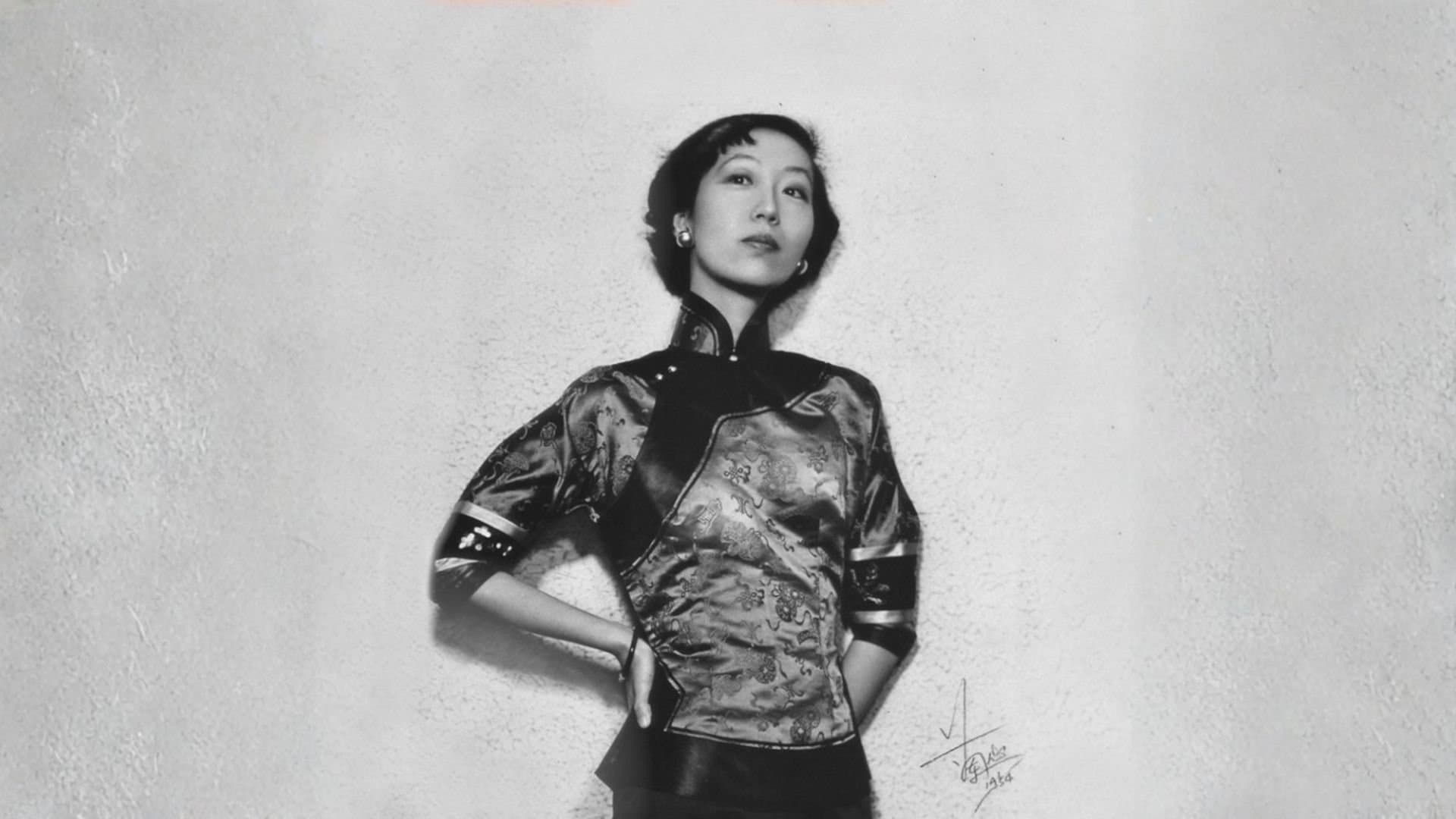
Eileen Chang
 China
ChinaWriter•novelist•essayist•screenwriter
Also known as: Zhang Ailing, Chang Ai-ling
Birthday
September 30, 1920
Birth Sign
Sagittarius
Birthplace
Shanghai International Settlement
Age
Died at 74
About
Eileen Chang was a Chinese-born American writer whose fiction and essays captured the nuances of urban life in mid-century China. Born Zhang Ailing on September 30, 1920, in the Shanghai International Settlement, she is celebrated for her psychological depth, unsentimental observations of love and desire, and stylistic elegance. Her stories, often set against a backdrop of war and social change, explore themes of betrayal, survival, and the complexities of human relationships.
Chang first gained prominence during the Japanese occupation of Shanghai in the 1940s, publishing a remarkable volume of work that resonated with readers living under occupation. After emigrating to the United States in 1955, she continued to write and translate, though her later years were marked by relative isolation. Since her death in 1995, her reputation has only grown, and she is now regarded as one of the most important Chinese-language writers of the twentieth century, with a passionate following both in the Chinese-speaking world and among English-language readers.
Early Life & Background
Eileen Chang was born into an aristocratic family with a distinguished lineage; one of her great-grandfathers was Li Hongzhang, a powerful Qing dynasty statesman. Her parents' marriage was unhappy, and they divorced when she was young. Her father, Zhang Zhiyi, was an opium-smoking playboy, while her mother, Huang Yifan, was a progressive woman who left the family to study abroad. This fractured childhood, marked by her father's remarriage and her mother's absence, deeply influenced her later fiction, which often depicts dysfunctional families and the betrayals that occur within them.
Chang received a bilingual education in Chinese and English from an early age. She attended St. Mary's Hall, an Anglican girls' school in Shanghai, before enrolling at the University of Hong Kong in 1939 to study literature. Her studies were interrupted in December 1941 when the Japanese invaded Hong Kong, forcing her to return to occupied Shanghai. It was there, amid the chaos of war, that she launched her literary career, publishing an extraordinary number of stories in a short period. In 1943 alone, she produced fourteen novellas, including her most famous work, "Love in a Fallen City." Her early stories, filled with courtship, gossip, and the struggles of daily life under occupation, quickly made her a literary sensation.
Career Growth
Chang's breakthrough came in 1943 with a torrent of publications that established her as a major voice in Chinese literature. Her short story collections "Romance" and "The Golden Cangue" cemented her reputation, with the latter being particularly praised for its portrayal of a woman trapped by tradition. Her fiction, characterized by sharp psychological insight and unsentimental realism, captured the moral ambiguities of life in a changing society.
In 1952, Chang left mainland China for Hong Kong, where she worked as a translator for the United States Information Service and later wrote screenplays for the Shaw Brothers studio. She emigrated to the United States in 1955, settling in Los Angeles. There she continued to write and translate, though her later works were not as widely read as her early ones. It was only after her rediscovery in the late 1960s, thanks largely to the critic C.T. Hsia, that her reputation was revived. Her novella "Lust, Caution" (1979) became the basis for Ang Lee's acclaimed 2007 film, which won the Golden Lion at the Venice Film Festival. In 2025, a new English translation collection titled "Time Tunnel" was published, introducing four previously untranslated stories to a global audience. Her work continues to be adapted for stage and screen, with a theatrical revival of "Love in a Fallen City" launching in 2026.
Career Timeline
Public Image & Style
Eileen Chang is remembered as a writer of "sad, bitter love stories" that explore the complexities of love and betrayal with unsentimental clarity. Her style is marked by psychological depth and stylistic elegance, often set against the backdrop of a changing society. The media and academic establishment portray her as one of the great writers of twentieth-century China, with a "passionate following both on the mainland and in Taiwan." Her fiction often revolves around courtship, love, betrayal, gossip, and lies, resonating deeply with readers who appreciate her sharp observations of human nature. There is no officially named fandom, but her readers are deeply engaged, as evidenced by ongoing book club discussions, theatrical revivals, and academic conferences.
Fame & Fandom (iFAMOUS Rankings)
Eileen Chang's literary legacy endures with a reach that transcends her 1995 passing, cementing her status as a titan of twentieth-century Chinese letters. Her influence is so profound that she stands the 73rd most famous person in China, a position holding steady through the August 2026 cycle of the iFANN Global Fame Rankings. This ranking reflects a global attention span that tracks media coverage and cultural consumption across borders, ensuring her sharp observations on love and survival remain vital to modern readers. Unlike pop stars who rely on organized fan clubs, Chang commands a following defined by academic rigor and deep scholarly engagement rather than chart campaigns or social media interactions. Her audience consists of students, critics, and readers who dissect her unsentimental portrayals of betrayal within university curricula and literary journals. While no formal name exists for this collective, their devotion manifests in the continuous publication of her works and the high-profile adaptations of her stories into film and theater. The absence of a traditional fandom allows her reputation to rest solely on the weight of her texts, which continue to resonate with audiences seeking psychological depth over fleeting celebrity. As institutions host retrospectives and directors adapt her novellas for new stages, her name remains synonymous with the complexities of human relationships in a changing society.
Interesting Facts and Legends
Born Zhang Ying, the writer adopted the pen name Zhang Ailing for her literary career, though she is often remembered as the great-granddaughter of Li Hongzhang, a powerful late Qing dynasty official. She wrote and self-translated several works, including "Stale Mates," which she rendered as "Wusi Yishi." Beyond fiction, she worked as a screenwriter in Hong Kong for the Shaw Brothers studio. Her education was cut short by the Japanese invasion of Hong Kong in 1941, an experience that directly shaped her wartime fiction. A reviewer of "Time Tunnel" noted that "her fiction is a warning," a phrase capturing the moral and psychological stakes embedded in her stories. Cultural lore often highlights her rise as the "Shanghai Queen" of literature during the 1943–1945 occupation, where she published prolifically despite the crisis. Another enduring legend concerns her disappearance; after leaving China, she became increasingly reclusive in Los Angeles, cutting off contact with friends and publishers until her death in 1995. This mystery of her final decades contrasts sharply with her earlier fame, creating a mythos around her solitary life.
Notable Quotes
“If I had known that it was a city falling for the sake of a love affair, I would have fallen in love sooner.”
“Life is a beautiful, beautiful thing, even when it is ugly.”
“The greatest happiness is to love and be loved in return.”
Family & Personal Life
Chang was born into the aristocratic Zhang family of Shanghai. Her father, Zhang Zhiyi, was a wealthy opium-smoking playboy, and her mother, Huang Yifan, was a progressive woman who eventually left the family to study abroad. The parental divorce and her father's subsequent remarriage profoundly affected her childhood. She had no children from either of her marriages. Her great-grandfather was Li Hongzhang, the Qing dynasty statesman, a lineage that gave her family prestige but also pressure. Chang's later autobiographical works, including "Little Reunions," draw heavily on her family history and the betrayals she experienced within it.
Notable Connections
Eileen Chang's life and legacy are intertwined with several key figures. Her first husband, Hu Lancheng, was a pro-Japanese intellectual whose infidelity shaped much of her emotional life. Her second husband, Ferdinand Reyher, an American screenwriter, provided companionship in her later years. The critic C.T. Hsia championed her work, helping to secure her place in the literary canon. Director Ang Lee brought her novella "Lust, Caution" to the screen, while Hong Kong director Ann Hui adapted "Love in a Fallen City" and "Eighteen Springs." Translators Karen S. Kingsbury and Jie Zhang introduced her work to new audiences with the 2025 collection "Time Tunnel."
Relationships & Dating History
Eileen Chang's most famous relationship was with Hu Lancheng, a pro-Japanese intellectual she met in 1944. They married secretly in 1944, but the marriage was troubled by Hu's infidelities. Chang divorced him in 1947, but the relationship left a lasting emotional scar, which she drew on in her autobiographical works. After emigrating to the United States, she married Ferdinand Reyher in 1956. Reyher, an American screenwriter, was 29 years her senior. The marriage provided stability and companionship until his death in 1967. Chang had no children from either marriage. She was widowed at the time of her death in 1995.
- MarriedHu Lancheng1944 - 1947Secret marriage; troubled by Hu's infidelities.
- MarriedFerdinand Reyher1956 - 1967American screenwriter; marriage lasted until his death.
Death & Aftermath
Died
September 8, 1995 (aged 74)
Death Place
Unknown
Cause of Death
Unknown
The silence that fell over the literary world when Eileen Chang passed was not a roar but a quiet withdrawal, matching the detached tone of her own prose. She died on September 8, 1995, in Los Angeles, California, USA, leaving behind a legacy defined by its sharp edges and unflinching gaze. The exact circumstances of her final days remain obscure, with no public hospital statement or detailed account of her last moments ever released to the press. Family sources never disclosed the specific cause of death, leading to a period of speculation that was never resolved by official medical records or an autopsy report.
Tributes from peers were sparse at the time of her passing, reflecting the reclusive nature she had cultivated for decades rather than a sudden outpouring of grief. Her estate, managed quietly by family members, ensured her works remained in print without fanfare. While new translations like Time Tunnel would arrive decades later to reintroduce her to global audiences, the immediate aftermath was marked by a respectful distance.
Net Worth (Estate Value)
$10 Million
iFANN Editorial Team estimate
As a deceased literary figure, Eileen Chang's net worth is best understood as the value of her estate. While specific figures are not publicly disclosed, her estate generates substantial income from book royalties, adaptation licensing, and translation rights. Her works remain in continuous publication in Chinese and English, including the 2025 collection "Time Tunnel." Film and television adaptations, such as Ang Lee's "Lust, Caution" and Ann Hui's films, contribute significantly to the revenue stream. Theatrical productions, like the 2026 stage revival of "Love in a Fallen City," also add to the estate's financial standing. Per iFANN's editorial analysis, the estate's value is estimated at $10 million as of 2026, reflecting the enduring popularity of her work.
Awards & Accolades
View 6 records, honours and achievementsKnown For
Love in a Fallen City
1943 · Author
The Golden Cangue
1943 · Author
Lust, Caution
1979 · Author
Keywords
Sources
Quick Facts
- Profession
- Writer, novelist, essayist, screenwriter
- Born
- September 30, 1920
- Birthplace
- Shanghai International Settlement
- Died
- September 8, 1995
- Death Place
- Westwood, Los Angeles
- Gender
- Female
- Spouse
- Hu Lancheng, Ferdinand Reyher
- Birth Sign
- Sagittarius
Personal Details
- Full Name
- Zhang Ying
- Spouse
- Hu Lancheng, Ferdinand Reyher
- Education
- University of Hong Kong (literature, interrupted)
Frequently Asked Questions
What is Eileen Chang best known for?
Is Eileen Chang still alive?
What is Eileen Chang's net worth in 2026?
How did Eileen Chang die?
Who was Eileen Chang married to?
Join the community
fans discussing