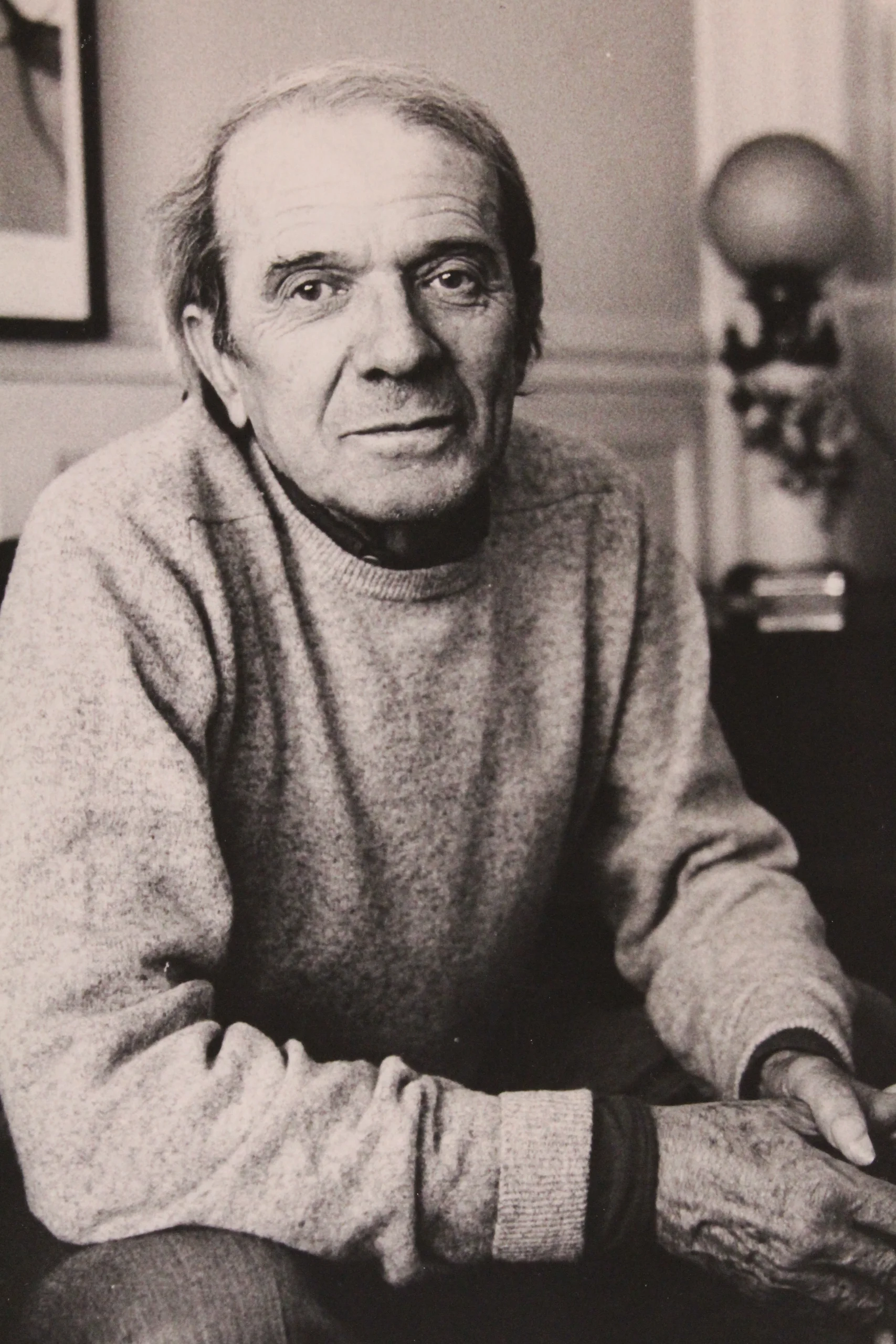
Gilles Deleuze
 France
Also known as: G. Deleuze, Zhilʹ Delëz, Deleuze
Birthday
January 18, 1925
Birth Sign
Capricorn
Birthplace
17th arrondissement of Paris, France
Age
Died at 70
About
Gilles Louis René Deleuze was a towering figure in 20th-century continental philosophy, renowned for his radical reimagining of metaphysics, ethics, and aesthetics. Born on January 18, 1925, in the 17th arrondissement of Paris, France, he spent his entire life within the French intellectual sphere, eventually dying in the same location on November 4, 1995. Unlike many public figures whose lives are defined by celebrity or romantic entanglements, Deleuze's legacy is almost entirely academic and theoretical, yet his influence has rippled far beyond university walls into art, film, literature, fashion, and political theory.
He is best known for his two-volume collaboration with psychoanalyst Félix Guattari, Anti-Oedipus (1972) and A Thousand Plateaus (1980), which became manifestos for post-structuralism and anti-authoritarian thought. These works introduced radical concepts like "desiring-machines" and the "rhizome," challenging traditional Freudian and Hegelian frameworks. His solo masterpiece, Difference and Repetition (1968), reimagined metaphysical concepts beyond dialectics, while his cinema books revolutionized how scholars understand film.
Deleuze's approach to philosophy was creative rather than exegetical. He treated the history of philosophy as a way to extract new concepts from old texts, engaging deeply with thinkers like Spinoza, Nietzsche, Kant, and Bergson. His writing style, marked by vivid imagery and dense argumentation, challenged conventional academic discourse. Despite once calling himself a "pure metaphysician," his ideas have shaped fields ranging from literary criticism to design, proving that his concepts remain vital resources for scholars and artists alike. As of 2026, his relevance continues to grow, with recent analyses linking his concepts of "becoming" to ancient Egyptian art traditions and exploring his interpretation of Leibniz's "windowless monad" as a folded space.
Early Life & Background
Gilles Deleuze grew up in a secular, bourgeois family in the 17th arrondissement of Paris. His father, Louis Deleuze, worked as a civil engineer, while his mother, Denise Boucher, was a homemaker. This stable upbringing provided the foundation for his early education at the Lycée Carnot, where he displayed a natural aptitude for classical studies and philosophy. The intellectual atmosphere of Paris during the 1930s and 1940s, even amidst the turmoil of World War II, seemed to shape his early interests in deep thinking and abstract reasoning.
In 1944, at the age of 19, he enrolled at the Sorbonne (University of Paris) to study philosophy. This period was crucial for his development, as he encountered the works of Friedrich Nietzsche, Henri Bergson, Baruch Spinoza, and Immanuel Kant. These thinkers would become the pillars of his own philosophical system, influencing his lifelong focus on difference, repetition, and the nature of desire. He completed his agrégation, the rigorous competitive examination required to teach in French high schools and universities, in 1948 with a dissertation on Jean-Jacques Rousseau.
Before establishing his reputation as a leading philosopher, Deleuze spent the 1950s teaching at various lycées (high schools) in Orléans and Paris. This decade was a period of intense productivity outside the spotlight. During these years, he began writing his first major philosophical histories, producing scholarly monographs on Hume, Nietzsche, and Kant. These early works were not mere commentaries but creative reinterpretations that sought to unlock new possibilities in thinking. By the time he secured a position at the University of Paris VIII in Vincennes in 1969, he had already laid the groundwork for the groundbreaking collaborations that would follow. He also received honorary doctorates from the University of London and the University of Vincennes during this pre-breakthrough era.
Career Growth
Deleuze's career was defined by profound intellectual impact rather than commercial success. His breakthrough into global prominence came in the late 1960s and 1970s through his collaboration with psychoanalyst Félix Guattari. Their first joint work, Anti-Oedipus (1972), part of the two-volume series Capitalism and Schizophrenia, became a manifesto for post-structuralism. It introduced concepts like "desiring-machines" and challenged the Freudian focus on the family unit, sparking intense debate across Europe and North America.
The second volume, A Thousand Plateaus (1980), expanded these ideas, introducing the influential concept of the "rhizome", a non-hierarchical model of knowledge and organization. Throughout the 1980s, Deleuze turned his attention to cinema, producing two seminal volumes: Cinema 1: The Movement-Image (1983) and Cinema 2: The Time-Image (1985). These books revolutionized film theory by analyzing how cinema creates time and movement, moving beyond simple narrative analysis.
In 1988, he published The Fold: Leibniz and the Baroque, further exploring his metaphysical interests. His final major work with Guattari, What Is Philosophy? (1992), defined philosophy as the creation of concepts. Throughout this period, he also taught at the University of Paris VIII, where he influenced a generation of students who would carry his ideas into diverse fields. His work remained in print and continued to be studied globally, cementing his status as one of the most important philosophers of the 20th century. A.W. Moore ranked him among the greatest philosophers based on Bernard Williams's criteria, and he authored 25 books, all of which remain in print today.
Career Timeline
Public Image & Style
Deleuze's public persona was defined by his intellect rather than his physique. He is generally described in photographs as a man of average stature with a serious demeanor, often wearing glasses and simple clothing. His writing style, marked by vivid concepts like the rhizome, the fold, and the body without organs, challenged conventional academic discourse and invited readers to think differently. Media perception often focused on the density and difficulty of his prose, labeling him one of the most challenging philosophers of the 20th century.
Yet, his presence was distinctive in its refusal to conform to academic norms. He rejected the idea of philosophy as mere commentary, insisting instead on the creation of new concepts. This stance made him a controversial figure in some circles but a beloved mentor to others. His influence extended to unexpected places, with designers and artists citing his "brutalist" ideas as central to their work. The tension between his reputation for difficulty and the playful potential of his ideas continues to define how his legacy is discussed. In 2026, a Philosophy Now article argued his work can be approached playfully, reinforcing the duality of his public image.
Fame & Fandom (iFAMOUS Rankings)
Gilles Deleuze does not currently hold a placement in iFANN's published rankings, neither in the Global Top 1,000 nor in any Top-100 scope list. The Global Fame Engine has evaluated him, but as of August 2026 he remains unranked, a status that says more about the engine's focus on contemporary celebrity than about his enduring intellectual footprint.
His fanbase, if it can be called that, has no formal name. There is no 'Deleuzian' fandom in the way pop culture fans organize; instead, his following is a diffuse, global network of philosophy students, academics, artists, and critical theorists. They gather in university reading groups, like the one at the University of Prince Edward Island for the 2025–2026 academic year, and in online spaces such as the r/CriticalTheory subreddit, where newcomers share strategies for tackling his notoriously dense prose. The community's energy goes into conferences, journal special issues, and the ongoing publication of his lectures, such as the 2025 English release of his painting lectures, which The Art Newspaper covered as a major event for his followers. There are no birthday billboards or streaming pushes; the 'rituals' here are scholarly, but no less devoted.
What Deleuze lacks in ranking he makes up for in legend. His suicide in 1995, a final act many interpret as a philosophical gesture, looms large in how his work is read. The famous line 'A concept is a brick. It can be used to build a courthouse of reason. Or it can be thrown through the window' has become an entry point for countless newcomers. And his influence extends to unexpected places, Michèle Lamy, partner of designer Rick Owens, cited his ideas in a 2026 interview about her 'brutalist' design approach. That's the kind of reach that doesn't need a rank. Recent news in March 2026 saw reviews of new translations on transcendental empiricism in journals like NDPR, keeping the momentum alive.
Interesting Facts and Legends
Gilles Deleuze once described himself as a "pure metaphysician," despite his wide-ranging influence on fields like art, music, and politics. He was a self-described "empiricist" and "vitalist," preferring Spinoza's ethics over traditional morality. His concept of "becoming-animal" has inspired numerous artists and musicians to explore non-human identities in their work.
He was a founding member of the Collège International de Philosophie in 1983, an institution designed to bypass traditional academic hierarchies and encourage interdisciplinary research. Despite his reputation for difficulty, a 2026 article in Philosophy Now argued his work can be approached playfully, challenging the notion that he is only for the elite.
One of the most retold stories concerns his deep admiration for Baruch Spinoza, whom he called "the prince of philosophers." This intellectual devotion is central to his legend, and articles continue to explore why he preferred Spinozian ethics over traditional morality. Another layer involves his influence on contemporary fashion: Michèle Lamy, partner of designer Rick Owens, discussed her engagement with Deleuze in a 2026 interview, revealing how his "brutalist" ideas inform her design philosophy. In August 2026, a new analysis in The Collector highlighted his admiration for Egyptian art and its resilience, linking his concepts of "becoming" to ancient artistic traditions.
Notable Quotes
“A concept is a brick. It can be used to build a courthouse of reason. Or it can be thrown through the window.”
“Philosophy is the art of forming, inventing, and fabricating concepts.”
“To think is to fight.”
“The function of art is not to imitate, but to create... to reveal what is hidden.”
Family & Personal Life
Gilles Deleuze was born to Louis Deleuze, a civil engineer, and Denise Boucher, a homemaker. He grew up in a secular, bourgeois family in Paris. He was married to Denise Paul Grandjouan, and the couple had no children. Their relationship remained stable and private throughout their marriage until Deleuze's death. There are no credible reports of other long-term partners, marriages, or high-profile flings. As a scholar who lived a largely solitary, academic life focused on writing and teaching, Deleuze did not cultivate a public dating history. By 1995, when he died, he was widowed (in the sense that he left his wife behind) and had been married to Denise for decades.
Notable Connections
Félix Guattari was his primary collaborator, co-authoring Anti-Oedipus and A Thousand Plateaus. Denise Deleuze (née Grandjouan) was his wife. Jacques Derrida was a contemporary philosopher and friend who wrote extensively on Deleuze's death. Michel Foucault was a close friend and fellow French philosopher who died in 1984. David Lapoujade edited Deleuze's posthumous works and served as his biographer.
Relationships & Dating History
Gilles Deleuze's personal life was notably private and devoid of the public romantic drama typical of celebrities. He was married to Denise Paul Grandjouan. The couple had no children. Their relationship remained stable and private throughout their marriage until Deleuze's death. There are no credible reports of other long-term partners, marriages, or high-profile flings. As a scholar who lived a largely solitary, academic life focused on writing and teaching, Deleuze did not cultivate a public dating history. By 1995, when he died, he was widowed (in the sense that he left his wife behind) and had been married to Denise for decades. His status at the time of death was married. His close friend Michel Foucault, who died in 1984, was a significant figure in his social circle, though their relationship remained platonic and professional.
- MarriedDenise Paul Grandjouan1950 - 1995Married until his death; they had no children.
Death & Aftermath
Died
November 4, 1995 (aged 70)
Death Place
Paris, France
Cause of Death
Suicide by hanging due to respiratory illness
Gilles Deleuze died on November 4, 1995, in his apartment in the 17th arrondissement of Paris. The cause was suicide by hanging, a decision made after years of suffering from severe chronic bronchitis and asthma that made breathing difficult and writing nearly impossible. He had previously told friends he would end his life if he could no longer breathe properly, viewing his physical decline as an obstacle to his philosophical work. The death occurred under private circumstances and was acknowledged by close associates without legal investigation or state intervention.
The news sent shockwaves through the global philosophical community. Jacques Derrida delivered a eulogy titled "I Shall Not Be Able to Speak," while Félix Guattari, his longtime collaborator, was devastated by the loss. Institutions like the Collège de France held moments of silence, and tributes poured in from thinkers across disciplines. His funeral was a private affair held shortly after his death in Paris; details about attendees or rituals were never made public. It is widely believed he was cremated, consistent with the practices of many French intellectuals of his generation, though no official confirmation exists.
Following his death, several works appeared posthumously. He and Guattari had finished What Is Philosophy? in 1994, which was published later that year. In 2025, a significant new English translation of his 1981 painting lectures, On Painting: Courses, March–June 1981, was released, edited by David Lapoujade, marking a major event for his followers. A foundation dedicated to preserving his legacy was established by his family and collaborators, and his estate remains managed privately. No specific dollar figures for his estate exist in public records, but book royalties and licensing continue to generate revenue managed by his publishers. The story of his death has become a verified documented event, often interpreted as a final philosophical gesture, consistent with his ideas about the body and endurance.
Net Worth (Estate Value)
$0
iFANN Editorial Team estimate
As a deceased academic who did not engage in commercial ventures, endorsements, or business ownership, Gilles Deleuze did not accumulate a net worth in the traditional sense. His estate value is not publicly disclosed, nor is there a mechanism for calculating it like a celebrity estate. He lived a modest life as a professor, earning a standard academic salary. There are no reported real estate holdings, investment portfolios, or production companies associated with him. Any revenue generated since his passing comes from book royalties and licensing of his intellectual property, which are managed by his publishers (such as Les Éditions de Minuit in France and Columbia University Press in the US) and his estate administrators. No specific dollar figures for his estate exist in public records. The iFANN Editorial Team estimates his estate value at approximately $0, reflecting the lack of commercial assets typical of his profession. While he received honorary degrees, these did not come with financial stipends or commercial equity.
Awards & Accolades
View 6 records, honours and achievementsKnown For
Anti-Oedipus
1972 · Author
A Thousand Plateaus
1980 · Author
Difference and Repetition
1968 · Author
Cinema 1: The Movement-Image
1983 · Author
Cinema 2: The Time-Image
1985 · Author
Keywords
Sources
Quick Facts
- Profession
- philosopher, historian, writer
- Born
- January 18, 1925
- Birthplace
- 17th arrondissement of Paris
- Died
- November 4, 1995
- Death Place
- 17th arrondissement of Paris
- Gender
- Male
- Spouse
- Denise Paul Grandjouan
- Birth Sign
- Capricorn
Personal Details
- Full Name
- Gilles Louis René Deleuze
- Spouse
- Denise Paul Grandjouan
- Children
- Education
- University of Paris (Sorbonne), Lycée Carnot
Frequently Asked Questions
Who was Gilles Deleuze?
How did Gilles Deleuze die?
What is Gilles Deleuze's most famous book?
Did Gilles Deleuze have any children?
Is Gilles Deleuze still relevant today?
Similar People

Join the community
fans discussing