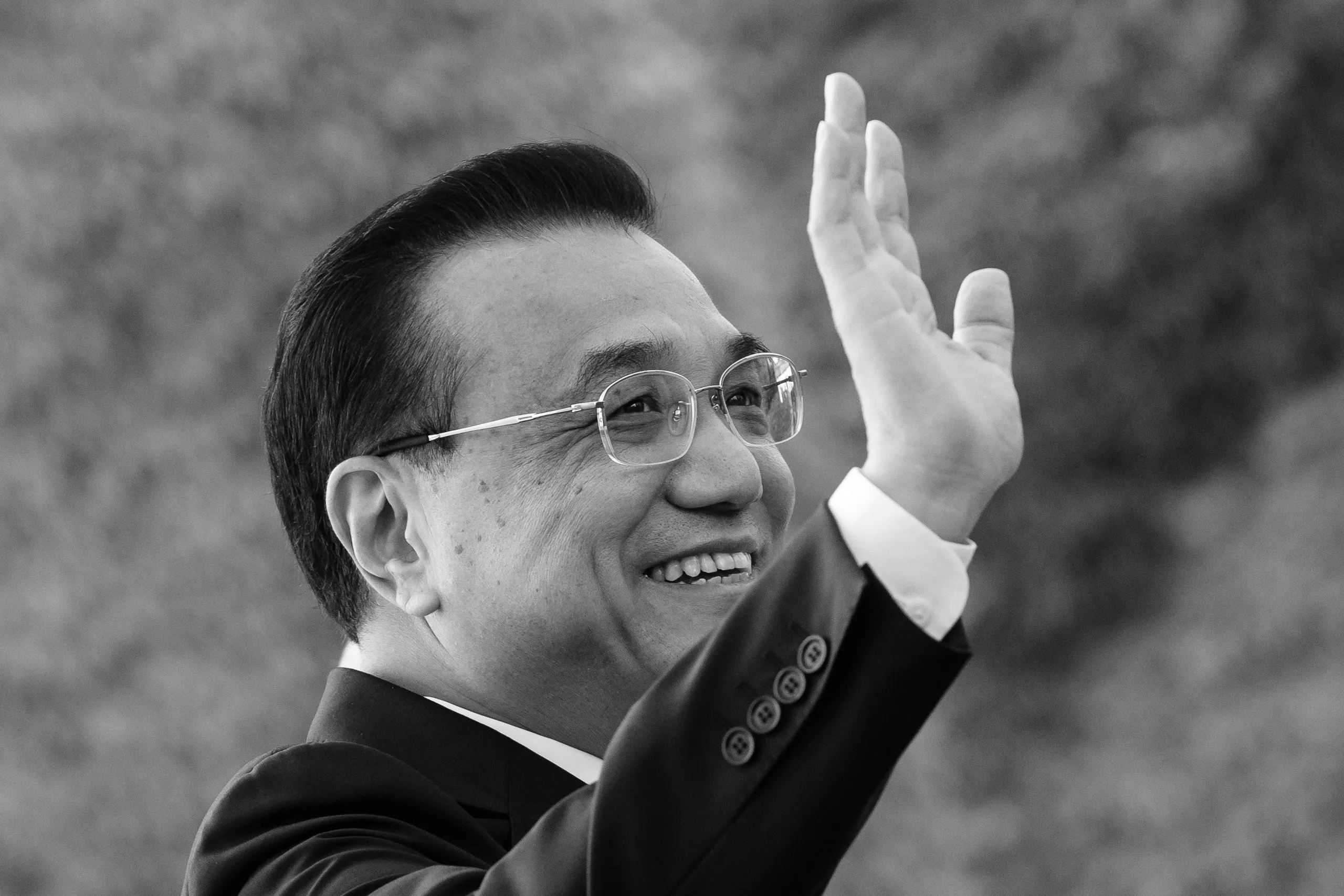
Li Keqiang
 China
Also known as: Li K'o-ch'iang, Lǐ Kèqiang, Keqiang big brother
Birthday
July 1, 1955
Birth Sign
Cancer
Birthplace
Dingyuan County, Anhui Province, China
Age
Died at 68
About
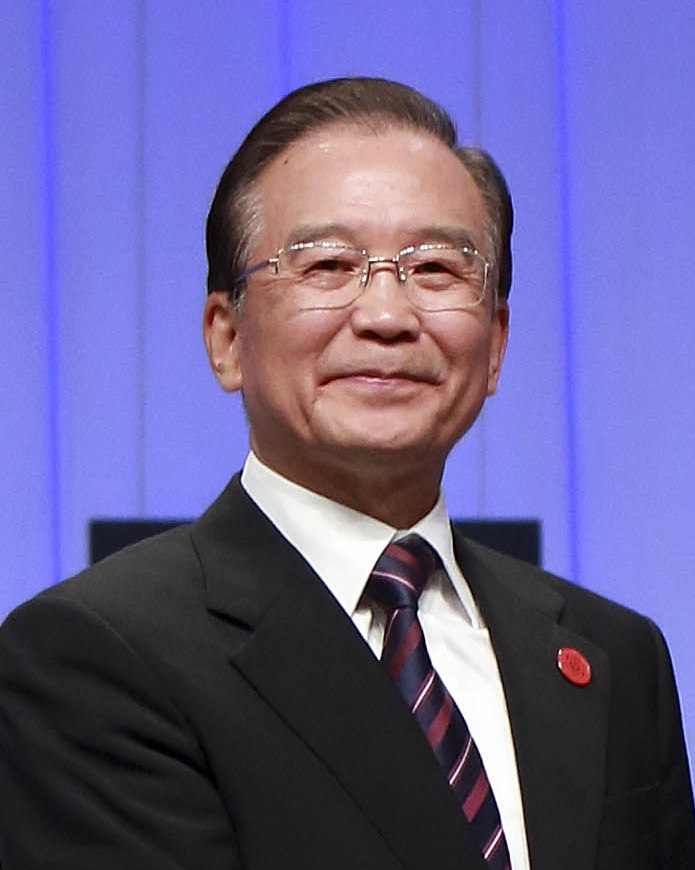
Li Keqiang was a Chinese politician and economist who served as Premier of the State Council of the People's Republic of China from 2013 to 2023. He was the second-ranking member of the Chinese Communist Party's Politburo Standing Committee from 2012 to 2022, making him for a decade the most powerful figure in the country after Xi Jinping.
He was the chief administrator of the world's second-largest economy through the slowdown of the mid-2010s, the trade war with the United States and the first three years of the COVID-19 pandemic. His name became attached to a way of reading the Chinese economy that bypassed official statistics: the Li Keqiang Index, built on railway freight volume, electricity consumption and bank lending, which economists still cite. Supporters remembered him for the mass entrepreneurship and innovation campaign he launched in 2014 and for a plain-spoken manner that stood out among senior officials.
He retired as premier in March 2023 and died in Shanghai on October 27, 2023, at 68, of a heart attack. His death brought crowds into the streets to lay flowers, an unusual sight in contemporary China.
Early Life & Background
Li Keqiang was born on July 1, 1955, in Dingyuan County, Anhui Province, into a modest household; his father was a local official. He came of age during the Cultural Revolution, when schools across China shut down, and as a teenager he was sent to the countryside as one of the sent-down youth, the zhiqing generation whose education was interrupted by the political campaigns of the era. That stretch of rural labor shaped him, and it is where he is said to have taught himself English, a skill almost no senior Chinese leader of his generation had.
When the national college entrance exam, the gaokao, resumed in 1977 after a decade-long suspension, Li was in the first cohort to sit it. He entered Peking University and took a bachelor's degree in law, then stayed on for a doctorate in economics. On campus he was active in student politics and led the university's student union, a role that put him on the radar of the party apparatus.
His career began inside the Communist Youth League of China, the training ground for a faction of officials later nicknamed the Tuanpai, or League faction. He climbed the League hierarchy steadily and served as its First Secretary from 1993 to 1998, which tied him to Hu Jintao, another former League leader, and marked him as a rising figure of that network.
The move from youth politics into provincial government came in 1998, when he was appointed governor of Henan, a populous agricultural province. He ran Henan until 2004, including a stint as party secretary, a post widely treated as an audition for national leadership. From 2004 to 2007 he was party secretary of Liaoning, the industrial northeast, where he handled state-owned enterprise restructuring and a set of sensitive corruption cases. In 2007 he joined the Politburo Standing Committee, and from 2008 to 2013 he served as first-ranked vice premier under Wen Jiabao, running economic affairs and building the record that carried him into the premiership.
Career Growth
Li Keqiang took office as premier in March 2013, succeeding Wen Jiabao, and spent the next decade managing the Chinese economy. One of his first signature moves came that same year with the establishment of the Shanghai Free-Trade Zone, a pilot meant to test looser rules on foreign investment and capital flows. In 2014 he launched the mass entrepreneurship and innovation campaign, a push to shift growth toward services, startups and domestic consumption rather than the export-and-investment model that had driven China for decades. The State Council under him also issued the Made in China 2025 industrial plan in 2015, aimed at moving Chinese manufacturing up the value chain.
He steered policy through a period of slowing growth, a stock market crash in 2015, and the tariff war with the United States that began in 2018. In 2020 he became the public face of the government's economic response to COVID-19, announcing relief measures and defending the country's employment targets. Through it all, the authority of the premiership narrowed as Xi Jinping consolidated control, and international coverage increasingly described Li as having been edged aside. He left the Politburo Standing Committee in October 2022 and retired as premier in March 2023. He died seven months later.
Career Timeline
Public Image & Style
Media coverage framed Li Keqiang as a pragmatic, reform-minded technocrat with academic habits and a mild, scholarly manner, a contrast to the more theatrical style of some colleagues. He was associated with Hu Jintao and the Tuanpai network, and his public persona leaned on competence rather than charisma: charts, targets, factory floors, disaster sites. He was photographed in shirtsleeves at flood zones and in meetings with foreign business leaders, and he gave the impression of a manager rather than an ideologue. As Xi Jinping centralized authority, that same image curdled in some coverage into a story of a premier whose office was shrinking, and Western outlets routinely described him as sidelined. After his death, the image flipped again. The mild technocrat became a symbol of a more open economic era, and his photograph, smiling at a crowd, turned into one of the most shared images in the mourning.
Fame & Fandom (iFAMOUS Rankings)
Li Keqiang's standing in the iFANN Global Fame Rankings is measured in the September 2026 cycle, and his placements have held steady. He is the 5th most famous person in China, the 38th most famous person from China globally, and the 53rd most famous person in East Asia. Those numbers track attention that has not faded since his death, driven heavily by Chinese-language readership and by international interest in the politics of his final years.
He never had a formal fanbase in the way an entertainer does, and no fandom name exists. What grew instead was a loose, unorganized following of ordinary citizens and urban professionals who called him Keqiang big brother, or simply a good premier. They traded his speeches and photographs on WeChat, adopted shorthand like Li Keqiang's economy for his pragmatic approach, and after October 2023 turned that network into a memorial, posting tribute videos and old quotes until censors began removing them. There were no fan campaigns, no birthday billboards, no charity drives in his name. The affection was quieter than that, and in the context of Chinese politics, more unusual for it.
Interesting Facts and Legends
Li's most famous idea in economic circles is the Li Keqiang Index, a set of proxies he reportedly preferred to official GDP figures while running Liaoning: railway cargo volume, electricity consumption and bank loan disbursements. Economists still use the term, and it did more than anything else to build his reputation as a numbers man who did not trust the numbers he was handed.
He was fluent in English, reportedly self-taught during his years as a sent-down youth, which made him an outlier in the top ranks of the party. On inspection tours he was known for taking unscripted questions, and he once told officials to cut the empty phrases and get to practical solutions, a line that circulated widely online.
After his death, mourners left flowers at the Diaoyutai State Guesthouse in Beijing and near his former residence, a spontaneous gesture that authorities partly obstructed. Supporters traded his old quotes and photographs on WeChat until the posts began disappearing. He was the earliest of all premiers since 1949 to die.
Family & Personal Life
Li Keqiang was married to Cheng Hong, an academic and translator who taught English-language education and worked in translation. The marriage lasted until his death and stayed almost entirely out of the public eye, a striking contrast to the visibility of political spouses in many other countries. The couple had one daughter, whose name and life were kept private. The family lived quietly in Beijing during his years in office, and Cheng Hong maintained her own academic career rather than taking on a public role. Li's personal life produced no scandals, no reported separations and no second marriages across a four-decade public career, which itself became part of how supporters talked about him.
Notable Connections
Li Keqiang's career was bound to Xi Jinping, under whom he served as the second-ranking figure while the premiership's authority narrowed, and to Hu Jintao, the fellow Tuanpai leader he was aligned with. Wen Jiabao preceded him as premier and was his boss during five years as vice premier. His wife, Cheng Hong, was his only documented partner. Foreign counterparts included Dmitry Medvedev of Russia, whom he met at Shanghai Cooperation Organisation gatherings. He is frequently confused with Li Qiang, the current premier and a different man.
Relationships & Dating History
Li Keqiang's public romantic history contains exactly one person: Cheng Hong, the academic and translator he married and stayed with until his death in 2023. There are no documented prior marriages, engagements or publicly acknowledged relationships before her, and no credible reports of affairs, separations or divorces at any point in his career. That absence is itself notable, given how closely Chinese political careers are scrutinized and how often personal lives become political liabilities.
Cheng Hong built her own reputation in English-language education and translation rather than in politics, and she kept a deliberately low profile throughout his years as vice premier and premier. The couple had one daughter, whose name and details were never made public. They lived quietly in Beijing, and the family gave no interviews about their private life.
At the time of his death on October 27, 2023, Li was married to Cheng Hong, and she survived him. He was not single, dating, engaged, separated or divorced at any point in the public record. As of 2026, Cheng Hong has not remarried publicly and has made no extended public statements about her husband's death.
- MarriedCheng Hong? - 2023Academic and translator; his only documented partner, married until his death in October 2023, with one daughter.
Death & Aftermath
Died
October 27, 2023 (aged 68)
Death Place
Shanghai, China
Cause of Death
Heart attack
Li Keqiang died at 00:10 CST on October 27, 2023, in Shanghai, roughly seven months after he stepped down as premier at the March National People's Congress. Xinhua reported the cause as a heart attack. He was 68. He was the youngest premier at the time he left office and the earliest to die of any premier since the People's Republic was proclaimed in 1949.
The announcement set off an outpouring that Chinese authorities did not stage and did not fully control. Residents left chrysanthemums outside the Diaoyutai State Guesthouse in Beijing and near his former residence, and similar piles of flowers appeared in other cities. Online, supporters shared his old speeches and the line about letting the market play a decisive role in allocating resources, along with photographs of him smiling at crowds. Censors moved to scrub some of the material, and the BBC ran an analysis headlined Why Li Keqiang's death is dangerous for Xi Jinping. Commentators drew comparisons to the mourning that followed Hu Yaobang's death in 1989, though the scale and outcome were very different.
The memorial service was held privately, with no public broadcast, in line with the protocol used for senior leaders. Attendance was limited to the top ranks of the party and government, and the date, venue and full guest list were not disclosed. Obituaries from the BBC, AP, Reuters, NPR and CNN described him as the second most powerful figure in the party for a decade and noted how abruptly he had been sidelined before his retirement. No posthumous books, recordings or commercial releases appeared in his name. His widow, Cheng Hong, survived him, and the family issued no extended public statement. Searches and page views for his biography spiked sharply in the days after the announcement.
Net Worth (Estate Value)
$2 Million
iFANN Editorial Team estimate
There is no reliable published figure for Li Keqiang's personal wealth, and the iFANN Editorial Team treats any number in this range as a rough estimate rather than a disclosed fact. Senior Chinese officials do not file the kind of public financial disclosures that make Western politicians' net worth calculable, and no Forbes-style valuation of his personal fortune exists. The Forbes profile that bears his name describes his political role, not a bank balance.
What can be said is that his income across a four-decade career came almost entirely from state salaries: League posts from the early 1980s, provincial governorships and party secretary roles in Henan and Liaoning, five years as first-ranked vice premier, and ten years as premier. Chinese leaders of his rank were provided housing, transport and security as part of the office rather than as personal assets. His wife, Cheng Hong, earned an academic salary as a professor and translator, a modest second income by any international standard.
He left office in March 2023 and died that October, so there was no period of post-political commercial activity, no board seats, no speaking circuit, no book deals. Posthumously, no estate sale, licensing arrangement or catalog transaction has been reported, and no foundation or commercial entity operates in his name. The iFANN Editorial Team's current estimate, based on the limited public record of official salaries and standard state provisions, puts his estate at approximately $2 Million. It is a placeholder for a life lived on a government payroll, not a reflection of assets anyone has actually seen.
Awards & Accolades
View 13 records, honours and achievementsKnown For
Premier of the State Council of the People's Republic of China
2013 · Premier
Mass entrepreneurship and innovation campaign
2014 · Initiator
Shanghai Free-Trade Zone
2013 · Architect
Li Keqiang Index
2007 · Namesake
Keywords
Sources
Quick Facts
- Profession
- politician, economist
- Born
- July 1, 1955
- Birthplace
- Dingyuan County, Anhui Province, China
- Died
- October 27, 2023
- Death Place
- Shanghai, China
- Cause of Death
- Heart attack
- Gender
- Male
- Spouse
- Cheng Hong
- Children
- One daughter
- Education
- Peking University (law, economics)
- Birth Sign
- Cancer
- Premiership
- 2013 to 2023
Personal Details
- Spouse
- Cheng Hong
- Children
- One daughter
- Education
- Peking University (bachelor's degree in law; doctorate in economics)
Frequently Asked Questions
How did Li Keqiang die?
Who was Li Keqiang's wife?
What was Li Keqiang best known for?
Was Li Keqiang the same person as Li Qiang?
What was the Li Keqiang Index?

Join the community
fans discussing