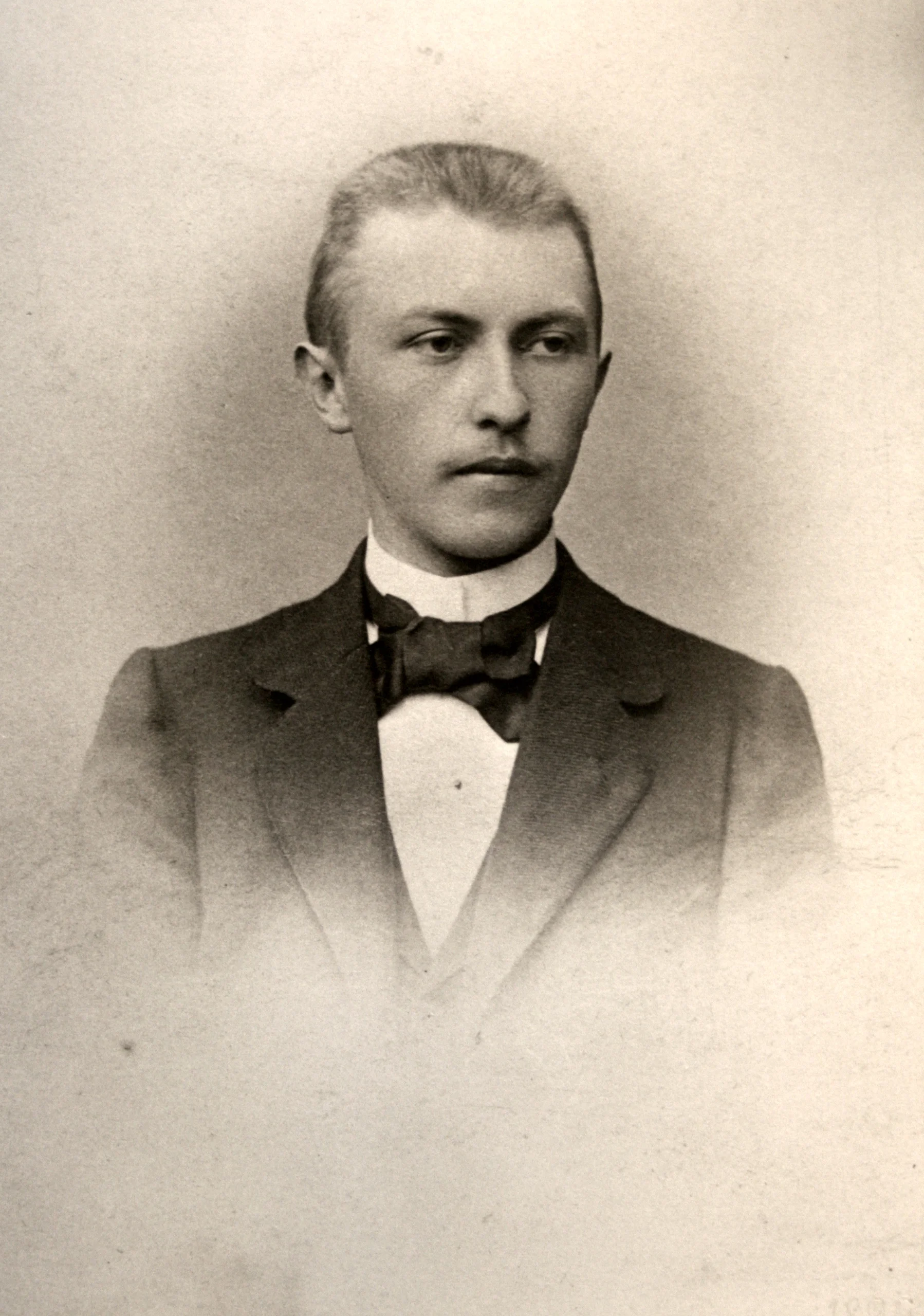
Konrad Adenauer
 Germany
Also known as: Der Alte, Konrad Hermann Joseph Adenauer, Father of West Germany
Birthday
January 5, 1876
Birth Sign
Capricorn
Birthplace
Cologne, Germany
Age
Died at 91
Height
6 ft 0 in (183 cm)
About
Konrad Adenauer was a German lawyer, mayor and statesman who served as the first Chancellor of the Federal Republic of Germany from 1949 to 1963. He was the longest-serving chancellor in the country's history and the founding leader of the Christian Democratic Union.
He is known today as the architect of West Germany's recovery: the man who presided over the Wirtschaftswunder, tied the new republic to NATO and the United States, and built the reconciliation with France that later became the spine of European integration. At 73 he took office; at 87 he left it, having turned a defeated and occupied territory into a stable democracy with a seat among the Western powers.
His public manner was austere and unhurried, and his authority rested on a reputation for judgement rather than charisma. In German political memory he is simply Der Alte, the Old Man, and the phrase still carries weight. He remains one of the most studied figures in modern European history, and the foundation bearing his name operates worldwide.
Early Life & Background
Konrad Hermann Joseph Adenauer was born in Cologne on January 5, 1876, the second of three children in a Catholic household. His father, Konrad Adenauer Sr., had risen from a modest background to become a lawyer and later a judge; his mother, Helene Scharfenberg, came from a family of bankers. The household was devout, frugal and disciplined, and Adenauer carried its habits, including a lifelong suspicion of debt, into his public career.
He attended the Apostelgymnasium in Cologne, then enrolled at the University of Freiburg in 1894 before moving to Munich and finally Bonn, where he took his doctorate in law in 1901 with a thesis on the technicalities of inheritance law. His early professional years were spent in the Cologne courts as an assessor, work he found slow and poorly paid.
A family connection changed his direction. In 1906 he joined the Catholic Centre Party, the political vehicle of German Catholicism, and in the same year was elected to the Cologne city council. He moved into the city administration, where his grasp of detail and his appetite for work caught the attention of the mayor's office. By 1909 he had become a deputy mayor, and the city's affairs, from harbour traffic to the new trade fair grounds, became his daily business.
The First World War made him indispensable in Cologne, where he organised food supply and kept the municipal machinery running. In 1917, with the war still undecided, the city council elected him mayor. He was 41, the youngest man to hold the office in Cologne in more than a century. A brief attempt to move into national politics in 1921, when he was sounded out about the chancellorship, came to nothing, and he returned to the Rhineland convinced that power lay in patient, local work. He also served as president of the Prussian State Council from 1921, giving him a platform in Berlin without leaving Cologne.
Career Growth
Adenauer's national career began in 1945, when the American occupiers restored him briefly as mayor of Cologne and then dismissed him within months for his independence. He turned to party building instead, co-founding the Christian Democratic Union that year and steering it toward a broad, cross-confessional appeal rather than a purely Catholic one. He became its first chairman and, in 1948, president of the Parliamentary Council that drafted the Basic Law of the new West German state.
In August 1949 the first Bundestag elected him Chancellor, by a single vote over his own party rival, and he held the office for fourteen years. The early record is dense: the Petersberg Agreement of 1949 that eased Allied controls, the Ruhr Statute, entry into the Council of Europe in 1950, and the reparations agreement with Israel in 1952. He also secured the release of thousands of German prisoners of war from the Soviet Union through the so-called Chancellor's diplomacy of 1955.
The middle years brought sovereignty. West Germany joined NATO and regained much of its state authority under the Paris Agreements of 1955, the Bundeswehr was re-established the same year, and the Bundesnachrichtendienst was created in 1956 under Reinhard Gehlen. In 1957 the Saarland voted to rejoin Germany, and Adenauer won an outright parliamentary majority, a result no later chancellor matched. He signed the Treaty of Rome that year, founding the European Economic Community alongside France, Italy, Belgium, the Netherlands and Luxembourg.
His foreign policy rested on two fixed points: alignment with the United States and reconciliation with France. The partnership with Charles de Gaulle produced the Élysée Treaty of January 1963, a formal framework for cooperation between the two countries. He refused to recognise the German Democratic Republic or accept the Oder-Neisse line, a stance that strained relations with allies who favoured engagement. Domestically, his later years were shadowed by the Spiegel affair of 1962, when his defence minister Franz Josef Strauss ordered the arrest of journalists; Strauss resigned, and Adenauer's own authority never fully recovered. He stepped down in October 1963, handing the chancellorship to Ludwig Erhard, and remained a Bundestag member and CDU chairman until his death.
Career Timeline
Public Image & Style
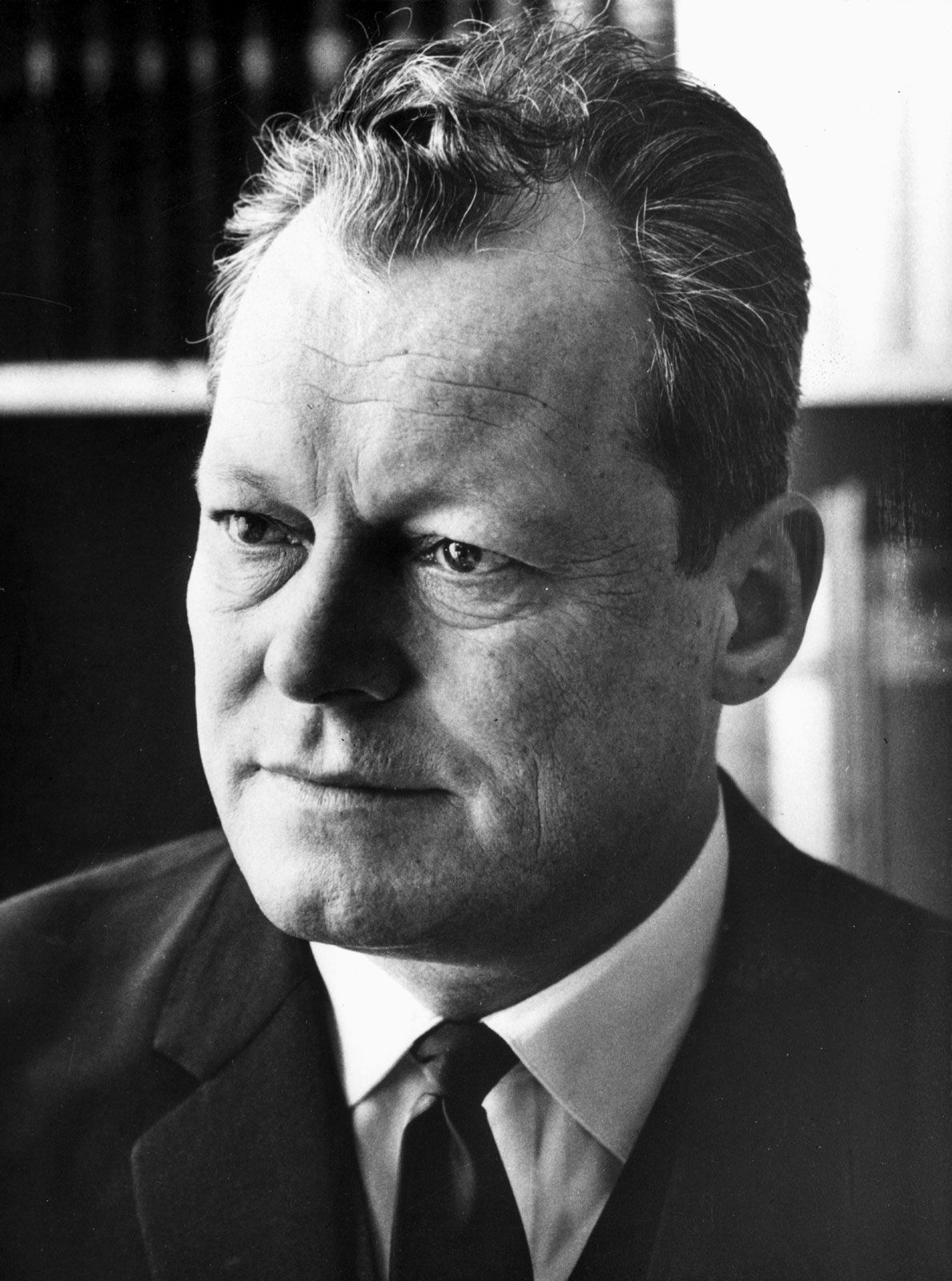
Adenauer presented himself as a man of gravity rather than warmth. His suits were dark and severe, his collars high, his expression in photographs usually closed. He wore a hat in nearly every outdoor image, and the silhouette of the small, upright figure with the walking stick became as recognisable in the 1950s as any party emblem.
His rhetoric matched the appearance: short sentences, concrete nouns, few adjectives. He avoided the mass rallies that had defined the Nazi era and preferred the radio address and the closed committee room. When television arrived, he used it sparingly and without evident pleasure, and commentators noted that he seemed to treat the camera as a witness rather than an audience.
The press treated him with a mixture of respect and frustration. He was called stubborn, devious and autocratic by opponents, and patient, prudent and unshakeable by admirers. The caricaturists fixed on the hat, the walking stick and the fox-like profile. His public persona, in the end, was that of a man who had seen one German republic collapse and was determined not to see another.
Fame & Fandom (iFAMOUS Rankings)
Konrad Adenauer's fame is of an unusual kind. He is not a figure who trends; he is a figure who is cited. In the September 2026 iFANN Global Fame Rankings, he holds two published placements: the 47th most famous person in Germany, up one place from the previous cycle, and the 72nd most famous person from Germany, a new entry. For a man who left office in 1963 and died in 1967, that is a durable position, sustained by the school curricula, the foundation, and the steady traffic of historians who return to his chancellorship whenever Europe argues about its own foundations.
There is no fandom name. No one calls themselves an Adenauer stan, and no fan organisation exists in any formal sense. The audience is instead a loose coalition: secondary-school pupils preparing for examinations, political scientists working on the Federal Republic, Christian Democratic activists, and the occasional visitor to the Rhöndorf house museum. What they share is not enthusiasm but attention. The Konrad-Adenauer-Stiftung, with its offices from Manila to Tashkent, functions as the closest thing to a community, running seminars and exhibitions that keep his name in circulation in countries he never visited. Fans of the man, if the word applies at all, tend to express it by reading his speeches and quoting the Élysée Treaty.
The relationship is therefore commemorative rather than participatory. There are no birthday campaigns, no streaming pushes, no merchandise. His memory is maintained through institutions, archives and the ordinary civic habit of naming things after him, which in Germany has produced a small geography of Adenauer streets, squares and bridges. In that sense his following is less a fanbase than a public that has agreed to remember.
Interesting Facts and Legends
He was nicknamed Der Alte, the Old Man, a label he tolerated and eventually used himself. His long public career began with a municipal appointment and ended in the Bundestag, a span of 61 years in office of one kind or another.
A story his colleagues liked to repeat concerned his first meeting with John F. Kennedy in 1961, when the American president, half his age, asked how he had managed to hold power so long. Adenauer is said to have answered that he had simply outlived his opponents. The exchange is retold in memoirs and museum exhibits, though its exact wording varies with the teller.
He was an enthusiastic gardener at Rhöndorf and took a personal interest in the cultivation of roses and vegetables, a pastime he described as the best remedy for political irritation. He also held a lifelong distrust of the telephone and preferred written memoranda, a habit that left an unusually rich paper trail for historians.
His height, around six feet, made him conspicuous in an era when most politicians were shorter, and photographs of him towering beside de Gaulle became a visual shorthand for the Franco-German partnership.
Notable Quotes
“The future belongs to those who believe in the beauty of their dreams.”
“Europe cannot be built if we do not reconcile with our neighbors.”
“We all live under the same sky, but we don't all have the same horizon.”
“A rearmed Germany is a necessary consequence of the division of Europe.”
Family & Personal Life
Adenauer's father, Konrad Sr., was a Prussian civil servant in the judicial branch, and the family's finances were comfortable but never grand. His mother, Helene Scharfenberg, died in 1919, the same year as his first wife. Of his siblings, one brother died in infancy, and his younger sister, Lilli, remained close to him throughout her life.
He married Auguste Zinz in 1902, and the couple had three children: Konrad, who died in infancy in 1903, Ernst, born 1904, and Ferdinand, born 1906. Auguste died of tuberculosis in 1919. In September of that year he married Emma Weyer, a widow with two children of her own, and they had five more children together: Ria, Max, Maria, Paul and Libet. Emma died in 1960 after a long illness.
His sons Ernst and Ferdinand both trained in law; Ernst became a lawyer and later a prominent figure in Cologne's Catholic lay organisations. The family home at Rhöndorf, which he built in the 1930s, remained his base until his death, and it is now a museum. He was a grandfather many times over, and visitors to Rhöndorf in his last years often found him in the garden with his grandchildren.
Notable Connections
Relationships & Dating History
Adenauer married Auguste Zinz in 1902, when both were in their twenties and he was still building a career in the Cologne courts. The marriage produced three children: Konrad, who died in infancy in 1903, Ernst in 1904, and Ferdinand in 1906. Auguste contracted tuberculosis and died in 1919, leaving him a widower with two young sons at the age of 43.
Later that same year, in September 1919, he married Emma Weyer, a widow whose first husband, Wilhelm Weyer, had died in the First World War. Emma was eleven years younger than Adenauer, and the marriage brought two stepchildren into the household alongside Ernst and Ferdinand. The couple went on to have five children together: Ria, Max, Maria, Paul and Libet. Emma died in 1960 after a long period of ill health, and Adenauer, then 84 and still chancellor, was widowed for the second time.
No further relationships followed. He remained a widower for the last seven years of his life, and there is no record of any engagement, courtship or rumoured attachment after Emma's death. His public life was conducted almost entirely without reference to his private circumstances, and he gave few interviews about his marriages. As of his death in 1967, he was widowed and had been for seven years. No romantic relationship of any kind has been documented after 1960.
- MarriedAuguste Zinz1902 - 1919His first wife, whom he married in 1902; she died of tuberculosis in 1919, leaving two surviving sons.
- MarriedEmma Weyer1919 - 1960His second wife, a widow, married in September 1919; she died in 1960, and he remained widowed until his own death in 1967.
Death & Aftermath
Died
April 19, 1967 (aged 91)
Death Place
Rhöndorf, Bad Honnef, Germany
Cause of Death
Natural causes associated with advanced age
Konrad Adenauer spent his final months at his home in Rhöndorf, above the Rhine, still holding the chairmanship of the CDU and a seat in the Bundestag even as his strength failed. He died in his sleep there on April 19, 1967, aged 91. Physicians present attributed the death to the natural consequences of advanced age rather than any single illness, and no autopsy or inquiry followed; the passing of a man who had already outlived most of his contemporaries required no official investigation.
The reaction was immediate and national in scale. President Heinrich Lübke and Chancellor Kurt Georg Kiesinger issued statements within hours, and Charles de Gaulle, who had signed the Élysée Treaty with Adenauer four years earlier, travelled to Bonn for the funeral. Lyndon B. Johnson, then in the White House, sent a delegation and a written tribute. Crowds lined the route as the coffin moved from Rhöndorf to Bonn, and the Bundestag adjourned in his honour.
The state funeral was held on April 25, 1967, at St. Lambertus Church in Bonn, the same church where he had worshipped as a young mayor. He was buried in the village cemetery at Rhöndorf beside his second wife, Emma, who had died in 1960. The grave, kept by the family, remains a modest one for a head of government.
What followed was institutional rather than personal. The Konrad-Adenauer-Stiftung, established in 1964 and renamed for him after his death, grew into one of Germany's largest political foundations, with offices on five continents. Streets, schools, bridges and a Cologne university hospital carry his name, and the Konrad-Adenauer-Brücke at Ludwigshafen is among the busiest Rhine crossings. His papers passed to the foundation's archive at Sankt Augustin, and the house in Rhöndorf opened as a museum. He left no fortune to litigate; the estate was settled quietly among his sons and their families.
Net Worth (Estate Value)
$1 Million
iFANN Editorial Team estimate
Adenauer's estate was never large, and the iFANN Editorial Team's review of the surviving records places its present-day equivalent at roughly $1 million. He drew a chancellor's salary, which was respectable but not accumulative, and he had no significant private investments, no land beyond the Rhöndorf property, and no commercial interests. His father's legal practice and judgeship left the family comfortable rather than wealthy, and Adenauer's own career in municipal and then federal service followed the same pattern.
The Rhöndorf house, which he built in the 1930s with money from the sale of his Cologne residence, was his principal asset. It passed to his family after his death and later became a museum administered by the Konrad-Adenauer-Stiftung, which removed it from any commercial market. Royalties from his memoirs and collected speeches, published in the 1960s and reissued since, generate modest but steady income for the estate, as do licensing arrangements for his image in historical publications and documentaries.
There is no comparable estate apparatus to those of modern political figures. No speaking fees, no consultancies, no board seats, no branded merchandise. The Konrad-Adenauer-Stiftung, which carries his name and runs programmes in more than 100 countries, is a publicly funded institution and not part of his personal estate; its budgets, which run into hundreds of millions of euros annually, belong to the foundation and not to his heirs. The family's financial position today rests on the professional careers of his descendants rather than on inherited capital. In the context of 2026, the Adenauer name carries institutional weight but negligible private wealth, and the figure of approximately $1 million reflects that reality rather than any recent change in the estate's fortunes.
Awards Won (4)
Adenauer received the Grand Cross of the Order of Merit of the Federal Republic of Germany in 1954 and was named an honorary citizen of Cologne, Bonn and Berlin. He was the first person awarded the Charlemagne Prize, in 1954, and received the Grand Cross of the Legion of Honour from France in 1962. He was nominated for the Nobel Peace Prize but never won it.
1954 · State honour
Lifetime public service
1954 · European unity
Contributions to European integration
Known For
First Chancellor of the Federal Republic of Germany
1949-1963 · Chancellor
Founding chairman of the Christian Democratic Union
1945-1966 · Party chairman
Mayor of Cologne
1917-1933 · Mayor
Treaty of Rome
1957 · Signatory for West Germany
Élysée Treaty
1963 · Signatory with Charles de Gaulle
Keywords
Sources
Quick Facts
- Full Name
- Konrad Hermann Joseph Adenauer
- Born
- January 5, 1876, Cologne, Germany
- Died
- April 19, 1967, Rhöndorf, Bad Honnef, Germany
- Age at Death
- 91
- Profession
- Lawyer, judge, statesman
- Chancellor Term
- 1949-1963
- Political Party
- Christian Democratic Union (CDU)
- Spouses
- Auguste Zinz (1902-1919), Emma Weyer (1919-1960)
- Children
- Ernst and Ferdinand (first marriage); Ria, Max, Maria, Paul, Libet (second marriage)
- Height
- 6 ft 0 in (183 cm)
- Birth Sign
- Capricorn
- Resting Place
- Rhöndorf cemetery, beside Emma Adenauer
Personal Details
- Full Name
- Konrad Hermann Joseph Adenauer
- Height
- 6 ft 0 in (183 cm)
- Spouse
- Emma Weyer (m. 1919; died 1960), Auguste Zinz (m. 1902; died 1919)
- Children
- Ernst Adenauer, Ferdinand Adenauer (from first marriage)
- Education
- University of Freiburg, University of Munich, University of Bonn (doctorate in law, 1901)
Frequently Asked Questions
Who was Konrad Adenauer?
How old was Konrad Adenauer when he died?
Was Konrad Adenauer married?
What was Konrad Adenauer's greatest achievement?
Is Konrad Adenauer still remembered in Germany today?
Similar People
Join the community
fans discussing