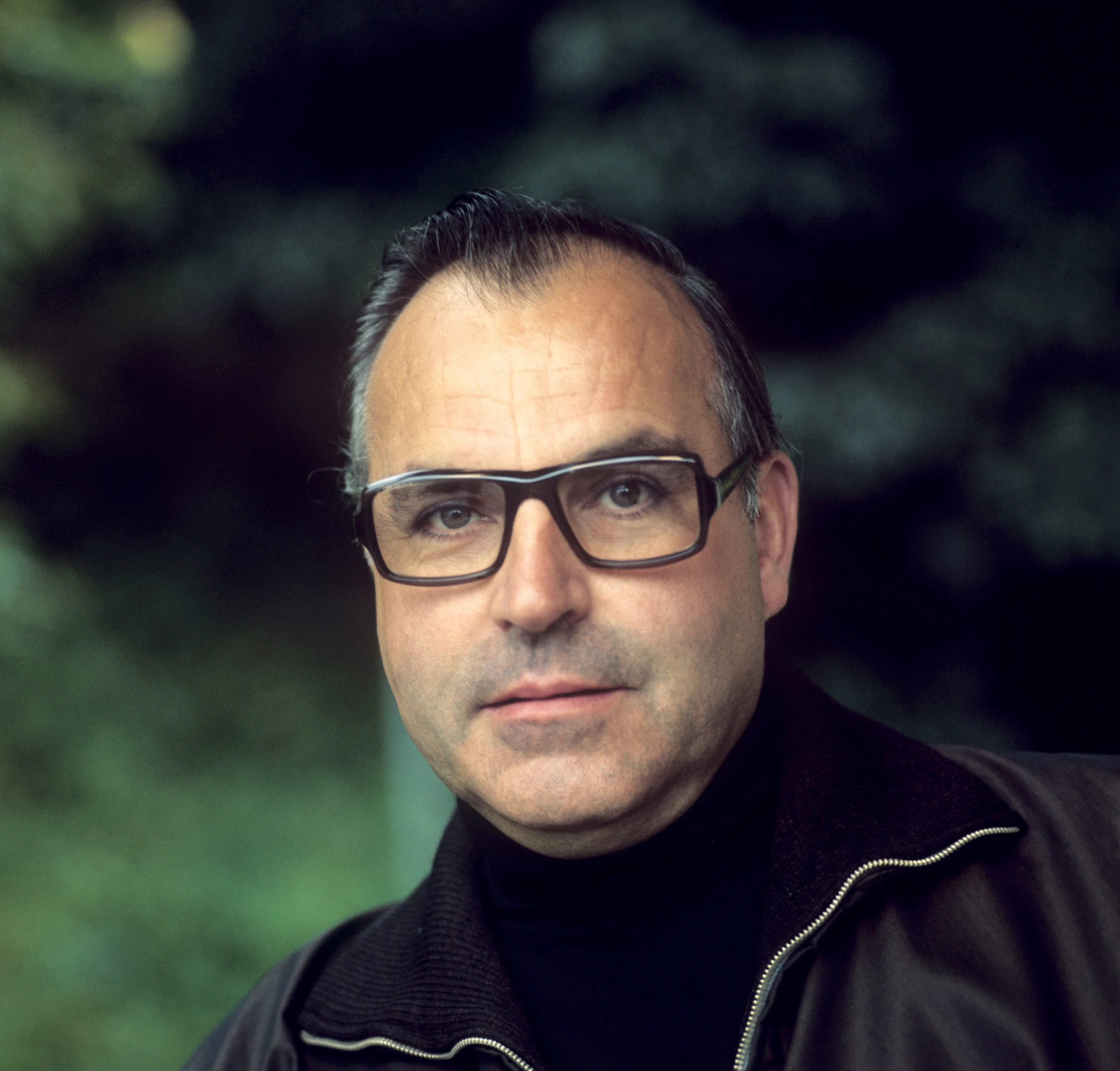
Helmut Kohl
 Germany
politician•historian•political scientist
Also known as: Helmut Josef Michael Kohl, Dr. Helmut Kohl, Kohl
Birthday
April 3, 1930
Birth Sign
Aries
Birthplace
Friesenheim (now part of Ludwigshafen am Rhein), Rhineland-Palatinate, Germany
Age
Died at 87
Height
6 ft 4 in (193 cm)
About
Helmut Kohl was a German politician and historian who served as the Chancellor of Germany from 1982 to 1998. Known as the "Chancellor of Unity," he is best remembered for orchestrating the peaceful reunification of East and West Germany in 1990 and for his pivotal role in establishing the European Union through the Maastricht Treaty. Kohl was the longest-serving chancellor in German history since Otto von Bismarck, holding office for 16 years. He passed away on June 16, 2017, at the age of 87.
A defining figure in modern European history, Kohl transformed the geopolitical landscape of the continent. His leadership style was often described as pragmatic and decisive, allowing him to navigate immense changes during the final years of the Cold War. He worked closely with French President François Mitterrand to deepen European integration, ensuring that a unified Germany would remain firmly anchored within a united Europe.
Early Life & Background
Helmut Kohl was born into a middle-class family in Friesenheim, which is now part of Ludwigshafen am Rhein in the Rhineland-Palatinate region. His father, Albert Kohl, was a civil servant and a member of the Centre Party, while his mother, Gertrud, was a homemaker. The family's political leanings were shaped by the turbulent times; the Centre Party was banned under the Nazi regime, and the family faced significant pressure during World War II. Kohl's childhood was marked by the devastation of the war; he witnessed the bombing of Ludwigshafen and the collapse of the Third Reich.
These early experiences instilled in him a deep commitment to democracy and European peace. After the war, Kohl attended the Ludwig-Erhard-Gymnasium in Ludwigshafen. He developed an early interest in history and politics, influenced by his father's stories and the post-war reconstruction efforts. In 1950, he enrolled at the University of Heidelberg, where he studied history, law, and political science. He earned his doctorate in 1958 with a dissertation on the economic development of the Palatinate region.
During his university years, he joined the Young Union, the youth organization of the Christian Democratic Union (CDU), in 1946 at the age of 16. This marked the beginning of his long political career. After completing his studies, he entered local politics in Rhineland-Palatinate. In 1959, he was elected to the state parliament at age 29, becoming the youngest member. This rapid ascent set the stage for his future dominance in German politics.
Career Growth
Kohl's political ascent continued steadily after his early success in the state parliament. From 1969 to 1976, he served as Minister President of Rhineland-Palatinate. During this time, he was viewed as a progressive force within the CDU, focusing on economic development and cultural initiatives. In 1973, he was elected Chairman of the CDU, a position he held for 25 years until 1998. This made him one of the longest-serving party leaders in German history.
In 1982, Kohl became Chancellor of West Germany following a constructive vote of no confidence against Helmut Schmidt. He led a coalition of the CDU/CSU and the Free Democratic Party (FDP). He was re-elected as Chancellor after winning federal elections in 1983 and 1987. His most defining moment came between 1989 and 1990 when he orchestrated the fall of the Berlin Wall and the subsequent reunification of Germany on October 3, 1990. This remains his most significant achievement.
Kohl was re-elected for a fourth term in 1994, defeating Oskar Lafontaine. However, in 1998, he lost the federal election to Gerhard Schröder, ending his 16-year tenure as Chancellor. Despite leaving office, he remained active in public life and international diplomacy until his death. His partnership with French President François Mitterrand was instrumental in the signing of the Maastricht Treaty in 1992, which established the European Union and laid the groundwork for the Euro currency.
Career Timeline
Public Image & Style
Kohl was portrayed as a man of immense physical presence and political appetite. Media often depicted him as a "giant" who could outmaneuver rivals. His image was a mix of paternal authority and provincial charm. He was often seen in traditional German attire or formal suits. His signature style included a warm smile and a distinctive laugh that endeared him to many Germans.
Despite the nickname "Birne," he maintained a serious demeanor in negotiations. His leadership style was pragmatic, often prioritizing consensus over confrontation. This approach allowed him to build strong coalitions and navigate complex political landscapes effectively.
Fame & Fandom
Helmut Kohl's true fandom was never a fan club, it was a nation. His support base was the CDU's grassroots machinery, party loyalists who saw him as the architect of unity. There was no formal name for his followers, no coordinated online campaigns or fan-run shrines; his era predated the internet's political organizing. The closest thing to a fan project is the Federal Chancellor Helmut Kohl Foundation, a state-sanctioned memorial institution preserving his papers and legacy, not a grassroots effort. His public moments were state events, not rallies, except one: the Dresden speech of December 1989, where an estimated 100,000 to 200,000 East Germans chanted his name, a spontaneous outpouring that accelerated reunification. That was the closest Kohl ever came to a rock-star reception.
Today, his fame is measured in history books and rankings. Helmut Kohl is the 79th most famous person in Germany, a placement that holds steady from the previous cycle, according to the iFANN Global Fame Rankings.
Interesting Facts and Legends
German satirists nicknamed Kohl "Birne" (the Pear) due to his large head and stature. Despite the mockery, he used the nickname to connect with voters, embracing his image as a "bumbling giant" who was actually a shrewd politician. He stood over 6'4" and was famously fond of the Palatine specialty Saumagen, a stuffed pig's stomach that became a media shorthand for his provincial roots.
His most iconic moment came on December 19, 1989, when he appeared in Dresden, East Germany. A crowd of up to 200,000 chanted "Helmut, Helmut" and "Germany, united fatherland," a reception that convinced leaders the time for unification was now. Two weeks earlier, he had stunned allies with a 10-point plan for German confederation, a unilateral move that seized the initiative.
At Verdun in 1984, Kohl and French President François Mitterrand stood hand-in-hand on the battlefield, a silent gesture that became a symbol of Franco-German reconciliation. His ability to maintain power for 16 years was unprecedented in post-war Germany, leading to the term "Kohl Era" to describe a period of stability and transformation.
Notable Quotes
“Germany must be united, and it must be united quickly.”
“We have to learn to live together again.”
“The future of Europe depends on the unity of Germany and France.”
Family & Personal Life
Helmut Kohl was married twice. His first wife was Hannelore Renner, whom he met while they were both students at the University of Heidelberg. They married in 1960. Hannelore was a teacher and supported Kohl throughout his early political career. The couple had two children: Angela (born 1961) and Peter (born 1963). Their marriage ended in divorce in 1995, reportedly due to Kohl's affair with Maike Kohl-Richter, which became public knowledge around that time. Hannelore Kohl passed away in 2001.
Maike Kohl-Richter was a former secretary and close aide to Kohl. She began working for him in the 1980s. Their relationship became public in the mid-1990s, leading to Kohl's divorce from Hannelore. They married in 1995. Maike was known for her loyalty and discretion, managing many of Kohl's personal affairs in his later years. They had no children together. Kohl died in 2017, leaving Maike widowed.
Notable Connections
François Mitterrand, Angela Merkel, George H.W. Bush, Gerhard Schröder, Maike Kohl-Richter.
Relationships & Dating History
Helmut Kohl was married twice. His first marriage was to Hannelore Renner, whom he met while they were both students at the University of Heidelberg. They married in 1960. Hannelore was a teacher and supported Kohl throughout his early political career. The couple had two children: Angela (born 1961) and Peter (born 1963). Their marriage ended in divorce in 1995, reportedly due to Kohl's affair with Maike Kohl-Richter, which became public knowledge around that time. Hannelore Kohl passed away in 2001.
Maike Kohl-Richter was a former secretary and close aide to Kohl. She began working for him in the 1980s. Their relationship became public in the mid-1990s, leading to Kohl's divorce from Hannelore. They married in 1995. Maike was known for her loyalty and discretion, managing many of Kohl's personal affairs in his later years. They had no children together. Kohl died in 2017, leaving Maike widowed.
- MarriedHannelore Renner1960 - 1995Met as students at Heidelberg University; divorced in 1995 due to Kohl's affair with Maike Kohl-Richter. Two children together.
- MarriedMaike Kohl-Richter1995 - 2017Former secretary and aide; married in 1995. No children together. Widowed upon Kohl's death.
Death & Aftermath
Died
June 16, 2017 (aged 87)
Death Place
Ludwigshafen am Rhein, Germany
Cause of Death
Complications from pneumonia and age-related illness
Helmut Kohl died peacefully in his sleep on June 16, 2017, at his home in Ludwigshafen am Rhein. He was 87 years old. The former chancellor had been suffering from pneumonia and other age-related health complications for some time prior to his passing. His family confirmed the death alongside the Christian Democratic Union, marking the end of a life that shaped modern Europe.
Tributes poured in from world leaders who called him the Chancellor of Unity and a giant of European history. German President Frank-Walter Steinmeier and French President Emmanuel Macron joined former US President George H.W. Bush in honoring the architect of reunification. Flags flew at half-mast across Germany as extensive retrospectives on his complex legacy dominated global news cycles. A state funeral took place on June 23, 2017, at St. Peter's Church in Speyer, where many German chancellors are buried. Dignitaries including Chancellor Angela Merkel attended the service before Kohl was interred in the crypt of the church.
Posthumously, the Helmut-Kohl-Stiftung continues to support political education and research, while the Helmut Kohl House in Ludwigshafen serves as a permanent memorial site dedicated to his life and work. His legacy remains a subject of debate, balancing his monumental achievements with the shadow of the donation scandal that tarnished his reputation after leaving office.
Net Worth (Estate Value)
$3 Million
iFANN Editorial Team estimate
As a politician, Helmut Kohl did not accumulate wealth in the manner of celebrities or business tycoons. His income came from his salary as a Member of Parliament and later as Chancellor, along with pensions and speaking fees after leaving office. Estimates suggest his net worth was modest compared to global elites, likely ranging between $1 million and $5 million USD, primarily consisting of real estate, savings, and pension rights.
Following his death, his estate was managed by his wife, Maike Kohl-Richter. The Helmut-Kohl-Stiftung (Foundation) continues to manage his legacy and papers, but does not generate significant commercial revenue. There are no major posthumous releases or licensing deals associated with his estate, unlike entertainment figures. The iFANN Editorial Team estimates his net worth at approximately $3 million based on available records of his earnings, assets, and pension benefits.
Awards Won (5)
Helmut Kohl received numerous accolades for his contributions to Germany and Europe. He was awarded the Charlemagne Prize in 1977 for his contributions to European integration. He also received the Grand Cross Special Class of the Order of Merit of the Federal Republic of Germany in 1982, the highest honor in Germany. Additionally, he was named TIME's "Man of the Year" in 1989 for his role in the fall of the Berlin Wall and reunification.
1977 · European Integration
Contributions to European unity
1982 · National Honor
Service to Germany
Known For
German Reunification
1990 · Chancellor
Maastricht Treaty
1992 · Architect
Fall of the Berlin Wall
1989 · Key Figure
Keywords
Sources
Quick Facts
- Profession
- politician, historian, political scientist
- Born
- April 3, 1930
- Birthplace
- Friesenheim
- Died
- June 16, 2017
- Death Place
- Ludwigshafen
- Gender
- Male
- Spouse
- Maike Kohl-Richter, Hannelore Kohl
- Birth Sign
- Aries
Personal Details
- Full Name
- Helmut Josef Michael Kohl
- Height
- 6 ft 4 in (193 cm)
- Spouse
- Maike Kohl-Richter, Hannelore Kohl
- Children
- Angela Kohl, Peter Kohl
- Education
- University of Heidelberg (PhD, History)
Frequently Asked Questions
How did Helmut Kohl die?
What was Helmut Kohl's most significant achievement?
Was Helmut Kohl married more than once?
Why was Helmut Kohl nicknamed "Birne"?
Did Helmut Kohl receive any major awards?
Join the community
fans discussing