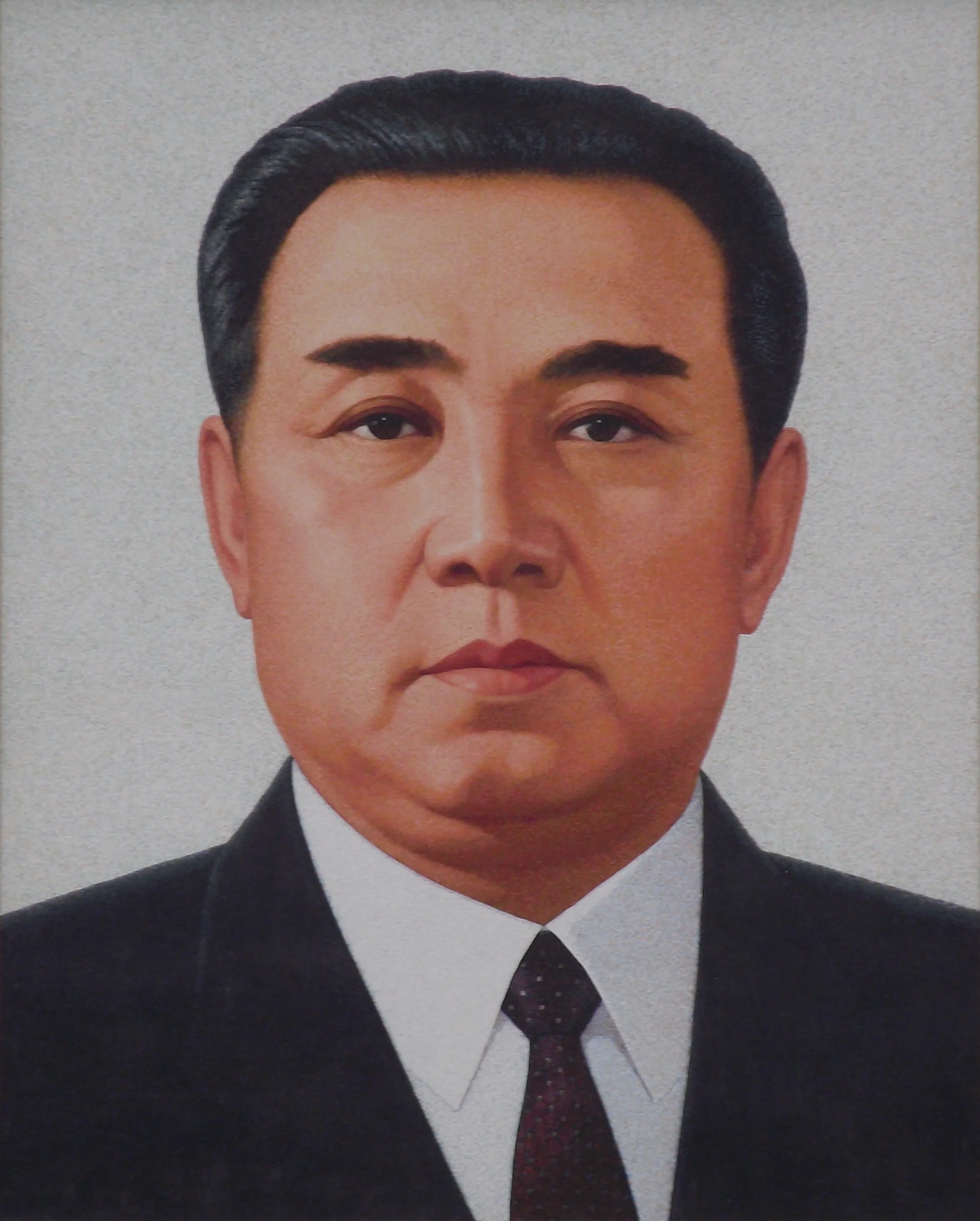
Kim Il-sung
 South Korea
Also known as: Kim Song-ju, The Great Leader, The Sun of the Nation, Father of the Nation
Birthday
April 15, 1912
Birth Sign
Aries
Birthplace
Mangyongdae District, Japanese-ruled Korea
Age
Died at 82
Height
5 ft 9 in (1.75 m)
About
Kim Song-ju, later known as Kim Il-sung, was the founding leader and dictator of the Democratic People's Republic of Korea who served as its head of state from its establishment in 1948 until his death in 1994. A communist revolutionary and military officer, he established a totalitarian regime characterized by the Juche ideology of self-reliance, a pervasive personality cult, and a dynastic succession that continues under his grandson, Kim Jong-un. He is credited with transforming North Korea into a centralized one-party state and maintaining power for over four decades.
His rule spanned more than 45 years, making him the third-longest-serving non-royal head of state in the 20th century. During his tenure, he authorized the invasion of South Korea in 1950, sparking a conflict that ended in a stalemate but left the peninsula divided. He introduced Juche as the state ideology, emphasizing political independence and economic self-sufficiency, though the country remained heavily dependent on aid from the Soviet Union and China until the collapse of the USSR in 1991.
Early Life & Background
Born Kim Song-ju on April 15, 1912, in Mangyongdae village near Pyongyang, he grew up during a time when Korea was under Japanese colonial rule. His father, Kim Hyong-jik, was an anti-Japanese independence activist who died when Kim Song-ju was young, leaving him to be raised primarily by his mother, Kang Pan-sok, a devout Christian who instilled in him a strong sense of national resistance. He attended a Korean elementary school before moving to Manchuria in the late 1920s, where he enrolled in a Chinese middle school. It was there that he was first exposed to Marxist-Leninist ideas and joined the Young Communist League of China in 1926.
By the early 1930s, he transitioned from political activism to armed resistance, joining anti-Japanese guerrilla units in the Jilin province. These years formed the core of his revolutionary mythos, portraying him as a legendary partisan fighting against Japanese imperialism for over a decade. In 1931, he officially aligned with the Chinese Communist Party, and in 1942, he joined the Soviet Red Army, rising to the rank of colonel and serving in the Soviet Far East during World War II. He adopted the name "Il-sung" (meaning "become the sun") later in life, a moniker that would become central to his cult of personality.
Career Growth
Following the end of World War II in 1945, Kim returned to Pyongyang under Soviet auspices. The Soviets installed him as the head of the Provisional People's Committee for North Korea in 1946 and subsequently as the Chairman of the Workers' Party of Korea in 1949. In 1948, he founded the Democratic People's Republic of Korea (DPRK) and became its Premier, initiating rapid industrialization and land reform while establishing a one-party state. A pivotal moment in his career was the launch of the Korean War in June 1950, which he authorized with the approval of Joseph Stalin to unify the peninsula under communist rule.
The war ended in a stalemate in 1953 with an armistice, but no peace treaty was signed. Throughout the 1950s and 1960s, he consolidated power by purging rival factions within the party, including the "Yan'an faction" and the "Soviet faction," to ensure absolute loyalty. In 1972, he assumed the title of President of the DPRK, a position he held until his death. His tenure lasted over 45 years, outlasting six South Korean presidents and ten US presidents, and he introduced Juche as the state ideology, emphasizing political independence and economic self-sufficiency.
Career Timeline
Public Image & Style
Kim Il-sung is portrayed in North Korea as the "Great Leader," the "Sun of the Nation," and the "Father of the Nation." His image is ubiquitous, appearing on currency, stamps, posters, and in every classroom. Internationally, he is viewed as a ruthless dictator responsible for human rights abuses and the Korean War. His style was formal, often wearing a suit or a military uniform, and his speeches were delivered with a distinct, authoritative tone. He cultivated a far-reaching personality cult centered around the title "Great Leader," ensuring his family maintained power after his death.
Fame & Fandom (iFAMOUS Rankings)
iFANN has not yet collected fame data for this person. There is no organized fandom in the traditional sense. Instead, he has a loyal base of supporters within North Korea, where his image is venerated as a god-like figure. Outside North Korea, there are academic and historical interest groups that study his life and regime, but these are not fanbases. The term "Kimilsungism" is sometimes used to describe the ideology, but it is not a fandom.
Interesting Facts and Legends
Despite being a staunch atheist and communist, Kim Il-sung was raised in a Christian household, and his mother was a devout Christian, a fact often downplayed in official narratives. He changed his name from Kim Song-ju to Kim Il-sung in the 1930s, adopting a name that would become synonymous with the sun and the nation. He is the only person in history to have a calendar named after him and a university named after him, both bearing his name. In 1968, his regime seized the American spy ship USS Pueblo, holding the crew captive for 11 months, an event that became a key part of his anti-imperialist mythology. A widely retold legend claims that a Soviet soldier threw himself on a grenade to save Kim Il-sung during a battle in the 1930s, a story that serves as a cornerstone of the heroic narrative surrounding his survival.
Notable Quotes
“We must rely on our own strength and not depend on others.”
“The people are the masters of the revolution and construction.”
“I am the sun of Korea.”
Family & Personal Life
Kim Il-sung was married twice. His first wife was Kim Jong-suk, whom he met during his guerrilla days in Manchuria. They married in 1932, and she gave birth to three children: Kim Jong-il, Kim Yong-ju, and a daughter who died in infancy. Kim Jong-suk died in 1949, reportedly due to complications from childbirth or illness, though official accounts often cite a heart attack or exhaustion from her revolutionary work. After her death, Kim Il-sung married Kim Song-ae in 1952. She was a former teacher and a member of the Workers' Party who served as the First Lady of North Korea until Kim Il-sung's death. Unlike his first wife, she did not have children with him but acted as a maternal figure to his existing children.
Notable Connections
Kim Jong-suk, Kim Jong-il, Kim Song-ae, Joseph Stalin, Mao Zedong, Kim Yong-ju.
Relationships & Dating History
Kim Il-sung was married twice. His first wife was Kim Jong-suk, whom he met during his guerrilla days in Manchuria. They married in 1932, and she gave birth to three children: Kim Jong-il, Kim Yong-ju, and a daughter who died in infancy. Kim Jong-suk died in 1949, reportedly due to complications from childbirth or illness, though official accounts often cite a heart attack or exhaustion from her revolutionary work. After Kim Jong-suk's death, Kim Il-sung married Kim Song-ae in 1952. She was a former teacher and a member of the Workers' Party who served as the First Lady of North Korea until Kim Il-sung's death. Unlike his first wife, she did not have children with him but acted as a maternal figure to his existing children. There are no public records of other romantic relationships, flings, or engagements outside these two marriages. As a totalitarian ruler, his personal life was strictly controlled and used for propaganda purposes. He is widely reported to have been widowed following the death of Kim Jong-suk and married to Kim Song-ae until his own death. Therefore, his status at the time of death was married, and he has been deceased since July 8, 1994.
- MarriedKim Jong-suk1932 - 1949First wife; fellow partisan; mother of Kim Jong-il and Kim Yong-ju; died in 1949.
- MarriedKim Song-ae1952 - 1994Second wife; former teacher; First Lady until his death; no biological children together.
Death & Aftermath
Died
July 8, 1994 (aged 82)
Death Place
Pyongyang, North Korea
Cause of Death
Massive heart attack (myocardial infarction)
Kim Il-sung passed away on July 8, 1994, at his official residence in Pyongyang after a period of declining health that had kept him largely out of public view since early that year. The Workers' Party of Korea announced the cause as a massive heart attack, attributing it to exhaustion from decades of leadership and stress. State media immediately declared a period of mandatory mourning across the nation, requiring citizens to weep openly in the streets while erecting memorial murals. A grand funeral procession took place on July 17, 1994, featuring military parades and millions of mourners lining the route, attended by foreign dignitaries from China and Russia.
Following the ceremony, his body was embalmed and placed in a crystal coffin inside the Kumsusan Palace of the Sun, a mausoleum converted specifically for this purpose that remains a primary pilgrimage site today. His son Kim Jong-il succeeded him as the leader of the country, cementing the dynastic rule that continues under his grandson. Posthumous films, books, and awards further deified his status, and state-controlled foundations continue to operate in his name to ensure his legacy remains central to national identity.
Net Worth (Estate Value)
$0
iFANN Editorial Team estimate
As a head of state of a command economy, Kim Il-sung did not possess a personal net worth in the conventional sense. The state controlled all resources, and his wealth was effectively synonymous with the state's assets. Estimates of the value of the North Korean state itself vary wildly, but there is no credible data on his personal liquid assets. The estate of Kim Il-sung is managed by the state and his family, with revenues coming from state-controlled industries, arms sales, and foreign aid. No specific dollar figure exists for his personal estate, as such a concept does not apply to a totalitarian leader whose life was dedicated to the state.
Awards Won (9)
Kim Il-sung received numerous state honors and international accolades, many bestowed by socialist allies. He was awarded the Hero of the Soviet Union in 1972, multiple Orders of Lenin, and the Order of the Red Banner. He also received the Order of the National Flag, the highest honor in North Korea, and the Lenin Peace Prize in 1970. Additional distinctions included the Order of Karl Marx from East Germany, the Order of Sukhbaatar from Mongolia, the Order of the Star of Ethiopia, and the Order of the White Elephant from Thailand. Posthumously, he was declared "Eternal President" of the DPRK in 1998.
1972 · Military Honor
Contributions to the fight against fascism
1972 · State Honor
Service to the state
Known For
Democratic People's Republic of Korea
1948 · Founder and Leader
Korean War
1950 · Commander-in-Chief
Juche Ideology
1972 · Creator
Keywords
Sources
Quick Facts
- Profession
- politician, writer, partisan
- Born
- April 15, 1912
- Birthplace
- Mangyongdae District
- Died
- July 8, 1994
- Death Place
- Pyongyang
- Gender
- Male
- Spouse
- Kim Jong-suk, Kim Song-ae
- Birth Sign
- Aries
Personal Details
- Full Name
- Kim Song-ju
- Height
- 5 ft 9 in (1.75 m)
- Spouse
- Kim Jong-suk, Kim Song-ae
- Children
- Kim Jong-il, Kim Yong-ju
- Education
- Korean elementary school; Chinese middle school in Manchuria
Frequently Asked Questions
Who was Kim Il-sung?
How did Kim Il-sung die?
What is the Juche ideology?
Who succeeded Kim Il-sung?
Did Kim Il-sung have children?
Join the community
fans discussing