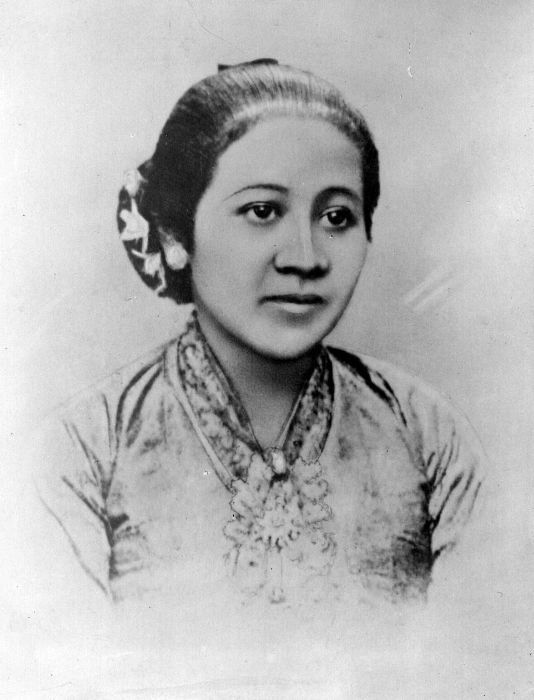
Kartini
 Indonesia
women's rights activist•textile artist
Birthday
+1879-04-21
Birth Sign
Sagittarius
Birthplace
Jepara
Age
Died at 25
About
Raden Adjeng Kartini, also known as Raden Ayu Kartini, was a pioneering Indonesian advocate for women's rights and education. Born on April 21, 1879, in Jepara, Java, she came from an aristocratic Javanese family in the Dutch East Indies. After attending a Dutch-language primary school, Kartini aspired to further her education, but Javanese women were barred from higher learning at the time. Instead, she entered a period of seclusion mandated for teenage girls until marriage. During this time, she educated herself by reading books and corresponding with Indonesian and Dutch acquaintances. Her father allowed her to rejoin the community in 1896, though she remained unmarried. Kartini openly opposed the seclusion of teenage girls and the practice of polygamy. Kartini's advocacy extended beyond her personal circumstances. She met with officials and influential figures, including J.H. Abendanon, and, along with three of her sisters, began the tradition of founding and operating schools for girls. After her death on September 17, 1904, at the age of 25, a foundation established in the Netherlands built more schools, and her Indonesian friends founded the Kartini Schools. Her letters, which detailed her thoughts on women's rights and education, were published in a Dutch magazine and later compiled into the book Door Duisternis tot Licht (From Dark Comes Light), translated into English as Letters of a Javanese Princess. In 1964, Kartini was declared a National Hero of Indonesia, and her birthday is celebrated annually as Kartini Day in her honor.
Fame & Fandom
For over a century, the spirit of Raden Adjeng Kartini has resonated far beyond the borders of her birthplace in Jepara. Today, she stands as the 11th most famous person in Indonesia, a position she has held steady through multiple cycles of global attention. Her influence extends across the archipelago and into the wider region, marking her as the 33rd most famous person from Indonesia and the 41st most famous person in Southeast Asia, having climbed two spots since the last assessment. These placements reflect the enduring power of her letters and the relentless advocacy for women's education that defined her short life, tracked by the iFANN Global Fame Rankings as a measure of cultural weight across media and consumption signals worldwide.
While modern pop stars often boast organized fan clubs with specific names, Kartini's legacy operates differently. There is no formal fandom name or parasocial group dedicated to her; instead, her admirers are students, scholars, and citizens who engage with her work through civic observance rather than fan rituals. The community honoring her does not gather for birthday billboards or streaming campaigns but marks April 21st as Hari Kartini, a national holiday where women don traditional kebaya attire to celebrate her vision. This engagement manifests in state-sponsored events, academic study, and artistic tributes like the 2017 film *Kartini: Princess of Java*. Recent initiatives continue this tradition, such as the 2026 refurbishment of the Kartini Room at the University of Amsterdam and Microsoft's application of her philosophy to artificial intelligence, proving that her following remains deeply rooted in inspiration rather than celebrity worship.
Interesting Facts and Legends
Raden Adjeng Kartini spent her teenage years in seclusion, a custom known as harem, which restricted her movement until marriage. Despite these constraints, she educated herself extensively by reading books and writing letters to Dutch acquaintances. Her correspondence, written between 1899 and 1903, was published posthumously in 1911 under the title *Door Duisternis tot Licht* (Out of Darkness into Light) by J.H. Abendanon. This publication transformed her from a local noblewoman into an international symbol of the Indonesian independence movement and women's rights.
A central legend surrounding her life focuses on her tragic death at age 25. She passed away on September 17, 1904, just five days after giving birth to her first son. This event cemented her status as a martyr, as she died shortly after finally gaining the freedom to travel to Batavia to give birth. The narrative that she died too young to see her schools established adds emotional weight to her legacy, making her a perpetual symbol of unfulfilled potential and sacrifice.
In recent years, commentators have begun deconstructing the romanticized "Kartini fairy tale," noting that her brilliance was often celebrated while the systemic costs of her struggle were overlooked. Yet, her image remains ubiquitous in public life, from the Kartini Reactor in Yogyakarta to batik classes held in Hualien, Taiwan, ensuring her story remains a vital part of cultural discourse.
Death & Aftermath
Died
+1904-09-17 (aged 25)
Death Place
Mayong, Rembang Regency, Indonesia
Cause of Death
Complications from childbirth
In the quiet village of Mayong within Rembang Regency, Kartini spent her final days in traditional seclusion mandated by Javanese custom after marrying R.M. Joyodiningrat. The atmosphere that had once fueled her correspondence gave way to the strict confines of domestic life, where she awaited the birth of her only child. On September 13, 1904, she delivered her son, but the physical toll proved too great for the young noblewoman to withstand. Just four days later, on September 17, 1904, she passed away from complications arising from childbirth, a fate shared by many women of that era.
The cause of death was established through family statement and medical observation by local midwives and physicians rather than a formal autopsy or coroner's ruling. While some modern interpretations suggest her passing may have been hastened by the psychological distress of being removed from her intellectual pursuits, this remains an unconfirmed view rather than a medically verified fact. Her funeral was conducted privately in Mayong shortly after her passing, adhering to Javanese Islamic traditions customary for a woman of her aristocratic status. She was laid to rest in the Village Cemetery of Bulu near Rembang, a site that would eventually become a place of pilgrimage.
At the time, the immediate reaction was confined to mourning within her noble family and close circle. It was years later that her brother C.J.A. Pepels and friend Stella Zeehandelaar collected her letters, publishing them in 1911 under the title Door Duisternis tot Licht. This work sparked the Kartini Movement, leading to her recognition as a National Hero of Indonesia, the establishment of schools bearing her name, and the annual celebration of Kartini Day on April 21.
Awards & Accolades
Keywords
Quick Facts
- Profession
- women's rights activist, textile artist
- Born
- +1879-04-21
- Birthplace
- Jepara
- Died
- +1904-09-17
- Death Place
- Rembang
- Gender
- Female
- Birth Sign
- Sagittarius
Join the community
fans discussing