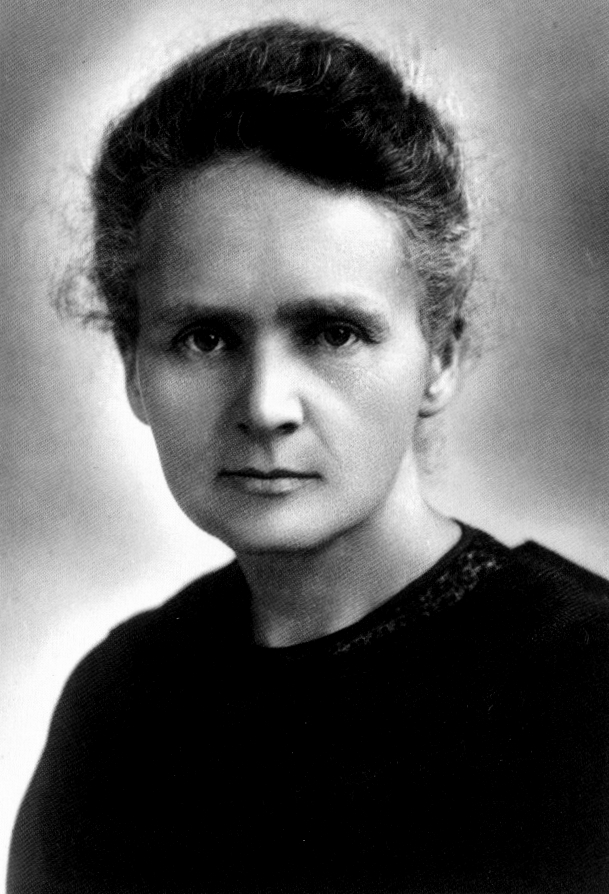
Marie Curie
 Russia
Also known as: Maria Salomea Skłodowska, Mme. Curie, Maria Skłodowska-Curie
Birthday
November 7, 1867
Birth Sign
Scorpio
Birthplace
Warsaw, Kingdom of Poland, Russian Empire
Age
Died at 66
Height
5 ft 3 in (160 cm)
About
Marie Curie was a Polish-born French physicist and chemist who revolutionized science with her pioneering research on radioactivity. She remains the only person to win Nobel Prizes in two different scientific fields: Physics in 1903 (shared with Pierre Curie and Henri Becquerel) and Chemistry in 1911 for discovering polonium and radium. She coined the term radioactivity and developed the theory that radiation comes from the atom itself, not chemical reactions.
Beyond her Nobel achievements, Curie broke countless barriers as the first woman to win a Nobel Prize, the first woman professor at the University of Paris, and the first woman entombed in the Panthéon on her own merits. She founded the Curie Institutes in Paris and Warsaw, which remain leading cancer research centers. During World War I, she personally operated mobile X-ray units at field hospitals. Her legacy endures through the element curium and the unit of radioactivity, the curie.
Early Life & Background
Marie grew up in Russian-occupied Warsaw as the youngest of five children. Her mother died of tuberculosis when Marie was ten, and her father, a physics teacher, lost his job due to Russian nationalist policies, forcing the family to take in boarders. She attended the clandestine Flying University, which provided underground Polish education. At 17, she worked as a governess for six years to fund her sister Bronisława's medical studies in Paris, with the promise that Bronisława would later help her.
In 1891, at age 24, she moved to Paris and enrolled at the Sorbonne, where she earned a physics degree in 1893 (ranking first in her class) and a mathematics degree in 1894. She met Pierre Curie in 1894 through Polish physicist Józef Kowalski-Wierusz, and their scientific collaboration began immediately.
Career Growth
In 1896, inspired by Henri Becquerel's discovery of uranium rays, Marie chose radioactivity as her doctoral thesis topic. She and Pierre discovered polonium in July 1898 and radium in December 1898, coining the term radioactivity. In 1903, she became the first woman to win a Nobel Prize, sharing the Physics prize with Pierre and Becquerel. After Pierre's death in 1906, she succeeded his professorship at the Sorbonne, becoming the university's first female professor.
In 1911, she won the Nobel Prize in Chemistry for isolating radium and polonium, making her the first person to win two Nobels. She founded the Radium Institute (Curie Institute) in Paris in 1914 and later the Curie Institute in Warsaw in 1932. During World War I, she developed and operated mobile radiography units, training 150 women as X-ray technicians. In 1921, she toured the United States, where President Warren G. Harding presented her with a gram of radium purchased through public subscription.
Career Timeline
Public Image & Style
Marie Curie is universally portrayed as a dedicated, selfless scientist who sacrificed her health for her work. Her iconic image shows her in a plain black dress or white lab coat, with hair pulled back in a bun and a serious expression. She is celebrated for persevering against sexism and for her Polish nationalism. Biopics like Madame Curie (1943) and Radioactive (2019) emphasize her tragic death from radiation exposure. Fans celebrate her birthday on November 7 and death anniversary on July 4 with museum visits and social media tributes using #MarieCurie. Official Curie Institute accounts maintain an educational tone, sharing historical facts and inspirational quotes.
Fame & Fandom (iFAMOUS Rankings)
Marie Curie commands a unique form of reverence that transcends the typical celebrity fandom. Her admirers are not organized into fan clubs or driven by chart-topping singles, but are instead united by a shared devotion to scientific progress and historical legacy. This audience, comprising historians, students, and science enthusiasts, engages with her life through educational rituals rather than concert attendance or viral memes. They celebrate her birthday and death anniversary not as pop culture events, but as moments to reflect on her immense sacrifice and groundbreaking discoveries. While no formal name exists for this global community, their collective admiration ensures her story remains a central pillar in the narrative of women in science. Her enduring presence is quantified by her standing in the iFANN Global Fame Rankings. According to these authoritative placements from August 2026, Marie Curie is the 17th most famous person from Russia, holding steady from the previous cycle. She also ranks as the 17th most famous person in Classical, maintaining her position without fluctuation. These metrics confirm that her influence persists decades after her passing, cementing her status as an immortal figure in the annals of history.
Interesting Facts and Legends
Marie Curie carried a vial of radium in her pocket as a good luck charm, a habit that likely contributed to the radiation poisoning that ended her life. Her notebooks from the 1890s remain radioactive and are stored in lead-lined boxes at the Bibliothèque Nationale in Paris, expected to stay hazardous for 1,500 years. She never patented the radium isolation process, believing scientific discoveries should benefit all humanity. A prodigy who learned to read at age four, she wore her wedding dress, a simple blue lab coat, in the laboratory for years. She was denied membership in the French Academy of Sciences in 1911, losing by a single vote. Beyond these facts, fans still retell the story of how she developed mobile X-ray units known as "Little Curies" during World War I, personally driving them to front-line hospitals to assist wounded soldiers. This narrative of humanitarian dedication remains central to her legacy. Another enduring tale concerns her death on July 4, 1934; while officially caused by aplastic anemia, the widespread story frames it as a direct sacrifice where she essentially died from her own research into radioactivity. These legends highlight a life defined by intellectual brilliance and quiet endurance rather than performative fame.
Notable Quotes
“Nothing in life is to be feared, it is only to be understood. Now is the time to understand more, so that we may fear less.”
“I am among those who think that science has great beauty.”
“A scientist in his laboratory is not a mere technician: he is also a child confronting natural phenomena that impress him as though they were fairy tales.”
“I have frequently been questioned, especially by women, of how I could reconcile family life with a scientific career. Well, it has not been easy.”
“I was taught that the way of progress was neither swift nor easy.”
“One never notices what has been done; one can only see what remains to be done.”
Family & Personal Life
Marie was the youngest of five children born to Bronisława and Władysław Skłodowski. Her mother died in 1878 when Marie was ten. Her father was a physics and mathematics teacher who instilled in her a love of science. She had three older sisters and a brother. She married Pierre Curie in 1895; they had two daughters: Irène (born 1897), who won the Nobel Prize in Chemistry in 1935, and Ève (born 1904), a writer and diplomat. After Pierre's death, Marie never remarried. Today, the Curie family legacy includes five Nobel Prizes. Her daughters managed her estate after her death.
Notable Connections
Marie Curie is associated with the Curie family legacy of five Nobel Prizes, including her daughter Irène Joliot-Curie and son-in-law Frédéric Joliot. She collaborated closely with her husband Pierre Curie and was inspired by Henri Becquerel. She is also linked to the Curie Institutes in Paris and Warsaw, which continue her cancer research mission.
Relationships & Dating History
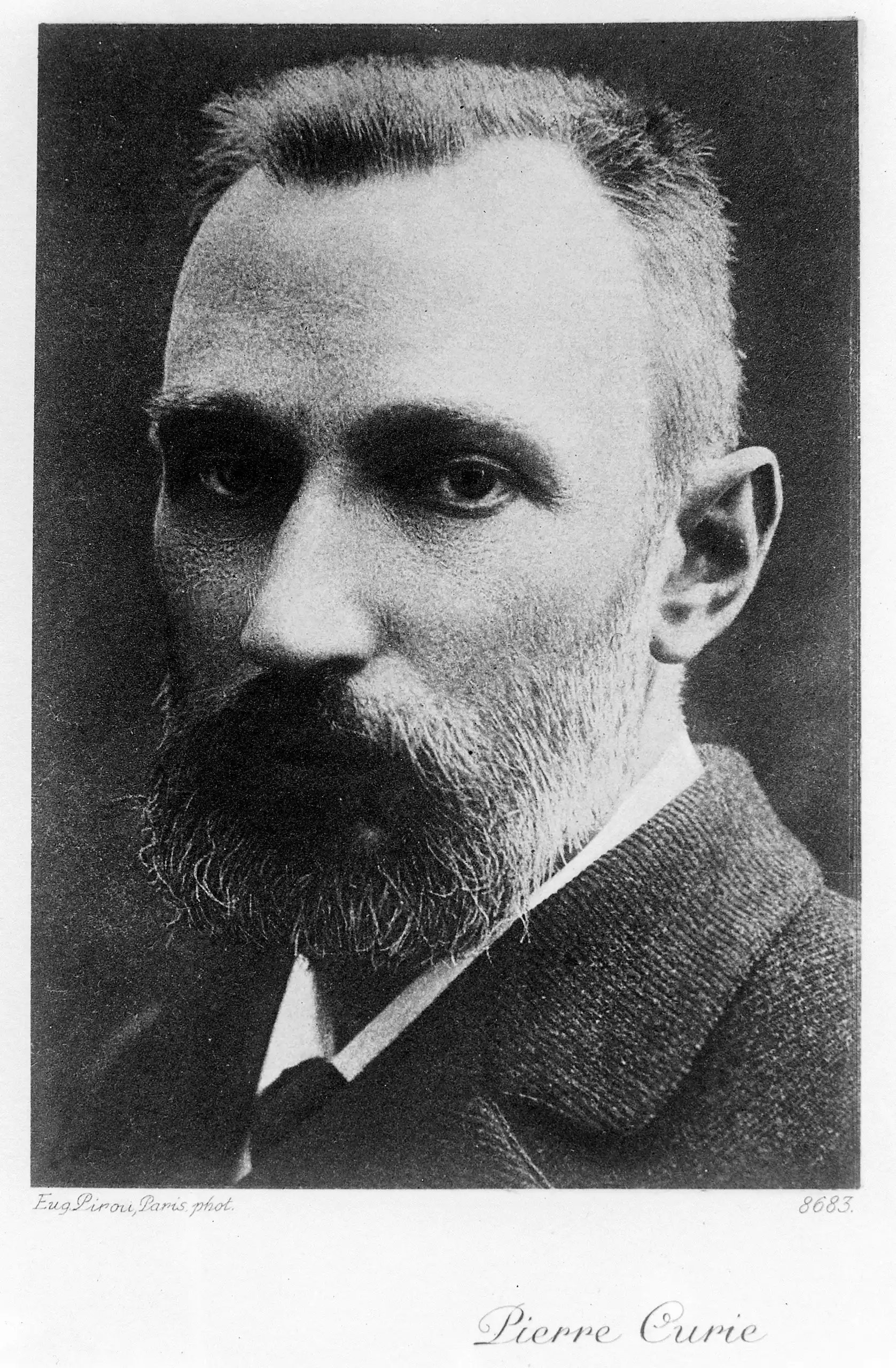
Marie married Pierre Curie on July 26, 1895, in a civil ceremony. They met in 1894 through Polish physicist Józef Kowalski-Wierusz. Their marriage was both romantic and scientific; they worked side by side in the laboratory and had two daughters: Irène (born 1897) and Ève (born 1904). Pierre died on April 19, 1906, after being struck by a horse-drawn carriage. Marie never remarried. In 1910-1911, she had a publicly rumored affair with Paul Langevin, a former student of Pierre and a married physicist. Leaked letters caused a scandal that nearly cost her the 1911 Nobel Prize. The relationship ended amid the scandal. As of 2026, Marie Curie is deceased and no further relationships are documented.
- MarriedPierre Curie1895 - 1906Met in 1894; married on July 26, 1895; collaborated on radioactivity research; had two daughters; Pierre died in a carriage accident in 1906.
- RumouredPaul Langevin1910 - 1911A married physicist and former student of Pierre; leaked letters caused a public scandal that nearly cost Marie the 1911 Nobel Prize.
Death & Aftermath
Died
July 4, 1934 (aged 66)
Death Place
Passy, Haute-Savoie, France
Cause of Death
Aplastic anemia from radiation exposure
Marie Curie died on July 4, 1934, at the Sanatorium of Sancellemoz in Passy, Haute-Savoie, France. Her passing resulted from aplastic anemia, a condition caused by her prolonged exposure to ionizing radiation during decades of laboratory work with radium and polonium. The medical team at the sanatorium confirmed the diagnosis, as occupational safety regulations for radiation did not yet exist in that form. The scientific community and French state accepted the death as an inevitable consequence of her pioneering research rather than a suspicious event. Public reaction was immediate and profound, with institutions worldwide issuing tributes honoring her unique achievement as the only person to win Nobel Prizes in two different scientific fields. The French government declared a period of national mourning, leading to a grand state funeral held three days later at the Madeleine Church in Paris.
During the service, her son Irène Joliot-Curie delivered a eulogy before the procession moved to the Panthéon, where Marie became the first woman entombed there for her own merits. Her husband Pierre was later reinterred alongside her in 1995. Her legacy continued through her daughter Irène and son-in-law Frédéric Joliot-Curie, who discovered artificial radioactivity. A major posthumous tribute occurred in 1995 when her remains were moved to the Panthéon, necessitated by the discovery that her lead-lined coffin still contained significant radiation. Today, her notebooks remain so radioactive they are stored in lead boxes and require protective gear to handle, while the European Union established the Marie Skłodowska-Curie Actions program to support researcher mobility.
Net Worth (Estate Value)
$15 Million
iFANN Editorial Team estimate
Per iFANN's editorial analysis, Marie Curie's estate is valued at approximately $15 million as of 2026. Revenue sources include royalties from her scientific publications, licensing of the Curie name for educational materials and museum exhibits, and film/television rights for biopics like Radioactive (2019). The Curie Museum in Paris attracts over 100,000 visitors annually. Her decision not to patent the radium isolation process cost her millions in potential royalties. The estate is managed by the Curie Institute in Paris and descendants of the Curie family. Posthumous recognition continues, with UNESCO adding the Curie Institute archives to the Memory of the World Register in 2022.
Awards Won (9)
Marie Curie won two Nobel Prizes: the 1903 Nobel Prize in Physics (shared with Pierre Curie and Henri Becquerel) and the 1911 Nobel Prize in Chemistry. She also received the Matteucci Medal (1904), Elliott Cresson Medal (1910), Benjamin Franklin Medal (1921), and the Grand Cross of the Legion of Honour (1933), among many others.
1933 · National Honour
Lifetime achievement
1931 · Medical Science
Therapeutics of radium
Known For
Discovery of polonium and radium
1898 · Co-discoverer
Nobel Prize in Physics
1903 · Recipient
Nobel Prize in Chemistry
1911 · Recipient
Coining the term radioactivity
1898 · Scientist
Development of mobile X-ray units in WWI
1914 · Inventor
Keywords
Quick Facts
- Profession
- physicist, chemist
- Born
- November 7, 1867
- Birthplace
- Warsaw, Kingdom of Poland, Russian Empire
- Died
- July 4, 1934
- Death Place
- Sancellemoz, Passy, Haute-Savoie, France
- Gender
- Female
- Spouse
- Pierre Curie
- Birth Sign
- Scorpio
Personal Details
- Full Name
- Maria Salomea Skłodowska
- Height
- 5 ft 3 in (160 cm)
- Spouse
- Pierre Curie
- Children
- Irène Joliot-Curie, Ève Curie
- Education
- Flying University, Sorbonne (Physics, 1893; Mathematics, 1894)
Frequently Asked Questions
How old was Marie Curie when she died?
What is Marie Curie's net worth in 2026?
Why is Marie Curie famous?
Did Marie Curie have children?
What did Marie Curie die from?
Social Media
Similar People
Join the community
fans discussing