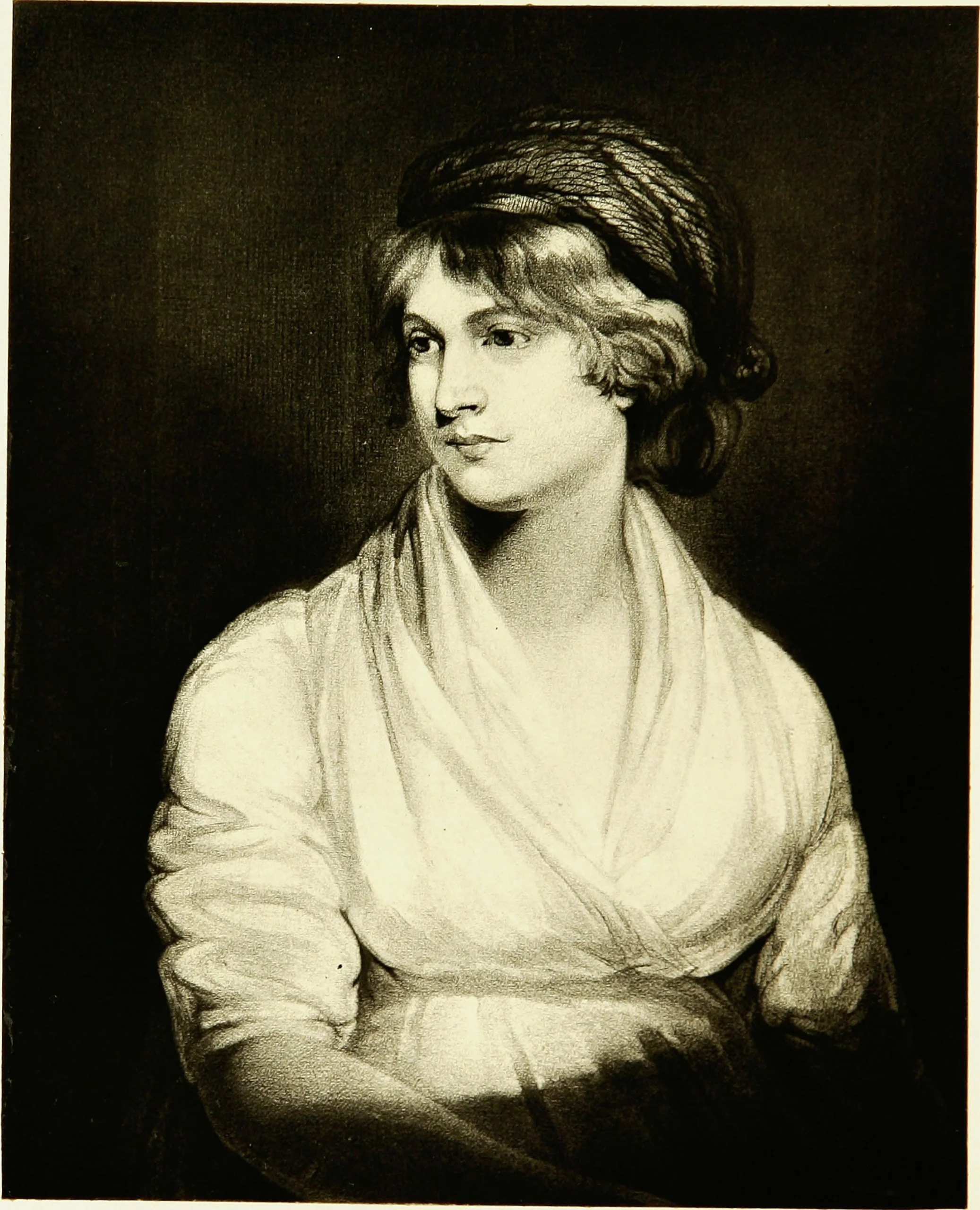
Mary Wollstonecraft
writer•philosopher•feminist advocate
Also known as: Mrs. Godwin
Birthday
April 27, 1759
Birth Sign
Sagittarius
Birthplace
Spitalfields, London
Age
Died at 38
About
Mary Wollstonecraft emerged from Spitalfields in London on April 27, 1759, to become a defining voice for women's rights during an era that rarely listened to female perspectives. She worked as a translator, historian, and philosopher while navigating a life that defied the strict social codes of eighteenth-century England. Her career spanned novels, treatises, travel narratives, and histories, yet she remains best known for A Vindication of the Rights of Woman. In this 1792 work, she argued that women were not naturally inferior to men but appeared so only because they lacked education. She called for a society built on reason where both sexes could thrive as rational beings.
Early Life & Background
Born into a family of modest means in Spitalfields, Mary faced a childhood marked by financial instability and domestic turmoil. Her father, Edward Wollstonecraft, struggled with alcoholism and erratic employment, often mistreating his wife. As the second eldest of six children, Mary stepped into a caretaker role early, managing the household and caring for her younger siblings after her mother suffered a mental breakdown. This burden fostered independence but also instilled a deep resentment toward the subjugation of women within the family structure.
Unlike her brothers, who were sent away for formal schooling, Mary remained at home with limited access to education. She devoured books from her father's library, developing a sharp intellect in literature, history, and philosophy despite the lack of structured academic training. Her first steps toward a career came through employment as a governess and companion to wealthy families in the late 1770s. These experiences highlighted the precarious economic position of educated but unmarried women, fueling her later arguments for female autonomy and education.
Career Growth
Wollstonecraft's professional rise began in the 1780s when she moved to London to work as a translator and editor. Her early works included translations of French texts and contributions to the Analytical Review, a radical journal where she honed her journalistic voice. In 1788, she published Original Stories from Real Life, a children's book aimed at teaching moral lessons through reason rather than religious dogma. However, her breakthrough moment arrived in 1790 with the publication of A Vindication of the Rights of Men, a response to Edmund Burke's conservative critique of the French Revolution.
The pinnacle of her career was the 1792 publication of A Vindication of the Rights of Woman. In this seminal treatise, she argued that women were not naturally inferior to men but appeared so only because they lacked access to education. She called for a national system of co-educational schools and a society built on reason where both sexes could thrive as rational beings. The book caused a sensation, drawing both praise from radicals and fierce condemnation from conservatives. Following this, she traveled to France during the height of the French Revolution, where she wrote An Historical and Moral View of the Origin and Progress of the French Revolution (1794). She also attempted to write a novel, Maria: or, The Wrongs of Woman, which was published posthumously.
Career Timeline
Public Image & Style
Mary Wollstonecraft is portrayed as a visionary and a rebel. Her public image has evolved from a controversial figure in the 18th century to a revered icon of feminism in the 21st century. Media portrayals emphasize her intellectual brilliance, her courage in challenging societal norms, and her tragic yet inspiring life story. She is often depicted as a woman who refused to conform to the expectations of her time, prioritizing her ideas and independence over social acceptance.
Fame & Fandom
iFANN has not yet collected fame data for this person. While there is no official fandom name for Mary Wollstonecraft in the same way as modern celebrities, her supporters are often referred to as feminists, philosophy enthusiasts, or literary scholars. Fan campaigns and projects include educational initiatives organized by universities and organizations to celebrate her life and work. Social media campaigns using hashtags like #Wollstonecraft and #FeministHistory promote her ideas and connect with a global audience. Some groups organize charity drives in her name to support women's rights and education.
Interesting Facts and Legends
Mary Wollstonecraft's daughter, Mary Shelley, wrote Frankenstein at the age of 18, inspired by ghost stories told around a fire at Villa Diodati in 1816. Before her marriage to Godwin, Wollstonecraft attempted suicide by drowning in the Thames River after being abandoned by Gilbert Imlay. She survived this ordeal and later recovered emotionally. Her marriage to William Godwin was unique for its time, as they entered into it without a church ceremony and with a mutual agreement to maintain their individual freedoms. She was one of the first to argue for the co-education of boys and girls, believing that separate schooling perpetuated gender stereotypes.
Notable Quotes
“I do not wish them [women] to have power over men; but over themselves.”
“No man chooses evil because it is evil; he only mistakes it for happiness.”
“My own sex, I hope, will excuse me, if I...”
“Women are told from their infancy, and taught by the example of their mothers, that a little knowledge of human weakness... is all they need.”
Family & Personal Life
Mary was the second eldest of six children born to Edward and Elizabeth Wollstonecraft. Her father was a farmer and wine merchant whose financial mismanagement and abusive behavior created a turbulent household. Her mother suffered a mental breakdown, leaving Mary to care for her siblings. She had a sister named Everina Wollstonecraft, who remained a close confidante throughout her life. Mary had two daughters: Fanny Imlay, born from her relationship with Gilbert Imlay, and Mary Shelley, born from her marriage to William Godwin.
Notable Connections
Relationships & Dating History
Mary Wollstonecraft's personal life was as revolutionary as her writing, characterized by a series of high-profile romantic entanglements that defied the conventions of her time. She met American businessman and speculator Gilbert Imlay in Paris in 1792 while covering the French Revolution for the Morning Chronicle. Their relationship began as a partnership of convenience and evolved into a passionate romance. They had a daughter, Fanny Imlay, born in May 1794. When Imlay became distant and unfaithful, Wollstonecraft suffered a severe emotional crisis, attempting suicide by drowning in the Thames in 1795. Though she survived, the heartbreak contributed to her declining health. Imlay eventually abandoned her, leaving her to manage their financial affairs alone.
In 1796, Wollstonecraft reconnected with William Godwin, a philosopher and author whose work Political Justice had influenced her. Their relationship was based on mutual intellectual respect and shared radical ideals. They married on March 29, 1797, just months before Wollstonecraft's death. Their union was notable for being a marriage of equals, free from traditional legal constraints, though they did not have a large wedding ceremony. Together, they planned to raise Wollstonecraft's daughter Fanny and any future children together. Wollstonecraft died on September 10, 1797, ending her marriage to Godwin.
- DatedGilbert Imlay1792 - 1795Met in Paris during the French Revolution; split due to Imlay's infidelity and abandonment; Child: Fanny Imlay (born 1794).
- MarriedWilliam Godwin1797 - 1797Intellectual partners who married later in life; no children together; Godwin managed her estate after her death.
Death & Aftermath
Died
September 10, 1797 (aged 38)
Death Place
Somers Town, London
Cause of Death
Puerperal fever (childbed fever)
Mary Wollstonecraft spent her final days in London recovering from a difficult childbirth that occurred on August 30, 1797, shortly before her health deteriorated rapidly due to an infection of the uterus. She passed away at the age of thirty-eight on September 10, 1797, with the cause officially recorded as puerperal fever by her husband William Godwin and attending physicians who observed her condition.
Public reaction was complicated by the publication of Godwin's Memoirs of the Author of A Vindication of the Rights of Woman in 1798, which detailed her personal life and relationships and led to a temporary decline in the popularity of her work among Victorian readers. Her funeral was a private affair held in September 1797 at the graveyard of St Pancras Old Church, attended only by close friends and family including her sister Everina, and her grave remained unmarked for many years. Posthumously, Godwin managed her estate and published her unfinished novel Maria: or, The Wrongs of Woman along with her letters, while her legacy gradually evolved into a central position in feminist history through academic study and various dedications.
Net Worth (Estate Value)
$0
iFANN Editorial Team estimate
As a historical figure who died in 1797, Mary Wollstonecraft did not accumulate a net worth in the modern sense. Her financial situation was often precarious, relying on the earnings from her writing and the support of her family. Any figures associated with her 'net worth' today refer to the value of her literary estate and the royalties generated by her works, which are managed by various publishers and estates.
Awards & Accolades
View 6 records, honours and achievementsKnown For
A Vindication of the Rights of Woman
1792 · Author
A Vindication of the Rights of Men
1790 · Author
Maria: or, The Wrongs of Woman
1798 · Author
Keywords
Sources
Quick Facts
- Profession
- translator, philosopher, historian
- Born
- April 27, 1759
- Birthplace
- Spitalfields, London
- Died
- September 10, 1797
- Death Place
- Somers Town, London
- Gender
- Female
- Spouse
- William Godwin
- Birth Sign
- Sagittarius
Personal Details
- Full Name
- Mary Wollstonecraft
- Spouse
- William Godwin
- Children
- Mary Shelley, Fanny Imlay
- Education
- Self-taught; limited formal schooling
Frequently Asked Questions
What is Mary Wollstonecraft best known for?
Who was Mary Wollstonecraft's husband?
How did Mary Wollstonecraft die?
Did Mary Wollstonecraft have children?
Is Mary Wollstonecraft considered the first feminist?
Similar People
Join the community
fans discussing