 Germany
About
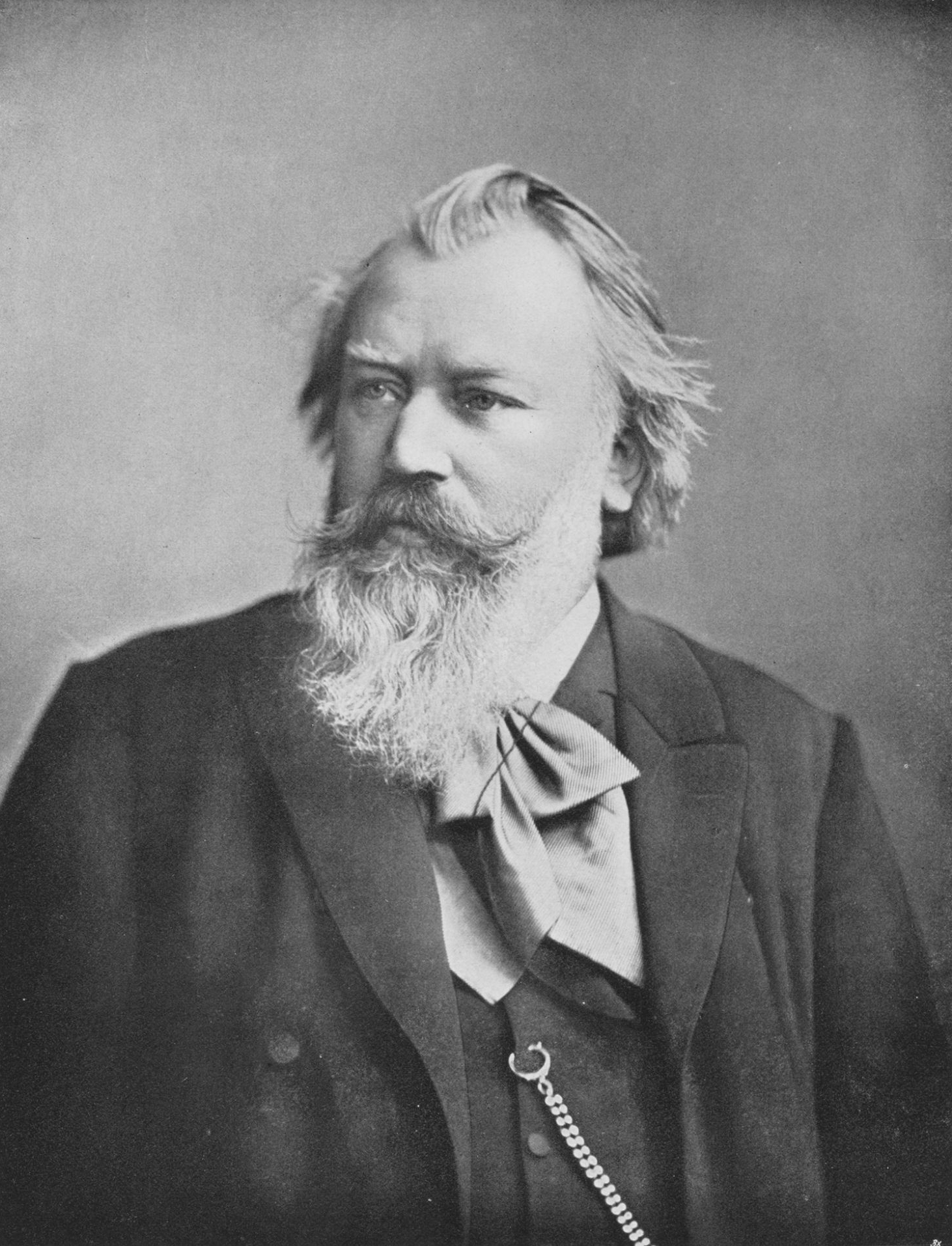
Born in Hamburg on May 7, 1833, Johannes Brahms became one of the most significant composers of the Romantic era, also excelling as a pianist and conductor. His musical language is characterized by intricate counterpoint, daring dissonance, energetic rhythms, and a deep respect for classical forms. Throughout his career, he produced a substantial body of work, including four symphonies, four concertos, the profound German Requiem, numerous chamber pieces, and a wealth of Lieder and folk song arrangements. Brahms's early years were spent composing and performing in his native city. His talent soon led him to tour Central Europe as a pianist, introducing his own compositions to new audiences and meeting prominent figures like Franz Liszt. A pivotal friendship with the violinist Joseph Joachim introduced him to the influential Robert and Clara Schumann. He developed a particularly close bond with Clara following Robert's mental health struggles and subsequent commitment to an asylum, and their deep connection continued even after Robert's death. Brahms himself never married, dedicating his life almost entirely to his composing, often wrestling with intense self-criticism. Despite his innovative approach, Brahms was sometimes perceived as a conservative figure during the "War of the Romantics," a label he himself regretted. Nevertheless, his compositions steadily gained recognition and a devoted following. Critics like Eduard Hanslick championed his music as pure, absolute art, while conductor Hans von Bülow famously called him the successor to Bach and Beethoven, a sentiment that drew mockery from Richard Wagner. Later in life, Brahms took on conducting roles in Vienna, leading the Singakademie and the Gesellschaft der Musikfreunde, where he programmed music from earlier periods that he deeply admired. He contemplated retiring from composition but continued to write chamber music for his musician friends until his death on April 3, 1897. His relationships with contemporaries like Antonín Dvořák and Johann Strauss II were marked by mutual respect. A younger generation of composers, including Max Reger and Alexander Zemlinsky, began to integrate his style with the more dramatic flair of Wagner. Arnold Schoenberg, too, found inspiration in Brahms, particularly in the sophisticated structural logic of his music. Today, Brahms's works remain central to the classical concert repertoire, continuing to inspire musicians and audiences alike.
Fame & Fandom
Johannes Brahms remains a figure of enduring global resonance, his influence tracked across centuries of media coverage and cultural consumption. According to the August 2026 cycle of the iFANN Global Fame Rankings, which monitors attention through diverse international signals, he holds specific standing in both national and industry categories. He is currently the 48th most famous person in Germany, a position that has held steady from the previous cycle. Within the artistic sphere, he ranks as the 11th most famous person in Art & Design, maintaining his prior standing without fluctuation. These placements reflect a legacy that transcends the immediate moment, sustained by the continued performance of his symphonies and chamber works. Regarding his audience, there is no formal name for his fanbase; the community consists primarily of musicologists, conductors, and classical enthusiasts rather than an organized group with a specific moniker. His status is often codified not through grassroots campaigns but through his permanent enshrinement in the "Three Bs" triumvirate alongside Bach and Beethoven. While modern institutions like Bard College have launched rediscovery initiatives in 2026 to celebrate 19th-century German composers, these are educational efforts rather than fan-driven movements. The relationship between Brahms and his listeners was historically mediated entirely through his correspondence and music, with no records of the direct interaction or viral rituals seen in pop culture.
Interesting Facts and Legends
The composer's early entry into public consciousness was marked by a verified declaration in 1853, when Robert Schumann wrote in the Neue Zeitschrift für Musik that Brahms would give the world a new one. This endorsement established the foundation for his career long before his first major works were published. A pervasive piece of folklore within the classical community identifies him as part of the "Three B's," a shorthand grouping that represents the synthesis of the Baroque, Classical, and Romantic eras. Among general audiences, the melody of Wiegenlied (Lullaby, Op. 49, No. 4) serves as the primary link to his work, creating a unique dichotomy where he is revered as a complex symphonist yet recognized globally for a simple nursery rhyme. Biographical narratives frequently highlight his lifelong, unrequited devotion to Clara Schumann, a story that has captivated readers for centuries despite his reclusive nature. Unlike rock stars of later generations, there are no verified accounts of crowds rioting at his performances; the extraordinary reactions he received were intellectual and critical, stemming from contemporaries like Wagner and Liszt. His relevance persists in modern programming, with orchestras such as the Milwaukee Symphony Orchestra releasing new albums of his symphonies in 2026.
Death & Aftermath
Died
+1897-04-03 (aged 63)
Death Place
Vienna, Austria
Cause of Death
Liver cancer (hepatoma)
The announcement of Johannes Brahms' passing triggered profound mourning across Europe and the United States, with tributes pouring in from peers, institutions, and officials immediately. Clara Schumann, his lifelong friend, collapsed upon hearing the news. Fan vigils gathered in major cities, particularly within Germany and Austria where he stood as a national treasure, while sales of his sheet music saw a significant spike and libraries reported increased requests for his scores. A memorial service held at the Musikverein in Vienna on April 6, 1897, featured performances of his choral works just three days after his death.
Brahms died on April 3, 1897, in Vienna, Austria, at the age of sixty-three. His final days were spent in relative seclusion at his home, attended by his sister Ottilie and Dr. Carl von Noorden, who treated him for liver cancer diagnosed as hepatoma. The composer had suffered from jaundice and severe physical decline since late 1896, following his last public appearance conducting a concert of his own works in Hamburg earlier that year. Thousands of mourners, including Gustav Mahler, Hugo Wolf, and members of the Vienna Philharmonic, attended the funeral at the Zentralfriedhof on April 6, 1897.
The ceremony featured a performance of the fourth movement from the German Requiem, titled Wie lieblich sind deine Wohnungen, which the composer himself had selected. Following the service, Brahms was buried in a grave that remains a site of pilgrimage for classical music enthusiasts. Posthumously, his estate passed to his sister and nephew, with bequests to charitable organizations and publishers, while the Brahms-Gesellschaft now administers his legacy through scholarship programs and the maintenance of his birthplace museum.
Awards & Accolades
Keywords
Quick Facts
- Profession
- composer, conductor, pianist
- Born
- +1833-05-07
- Birthplace
- Hamburg
- Died
- +1897-04-03
- Death Place
- Vienna
- Gender
- Male
- Birth Sign
- Taurus
Join the community
fans discussing