 Germany
About
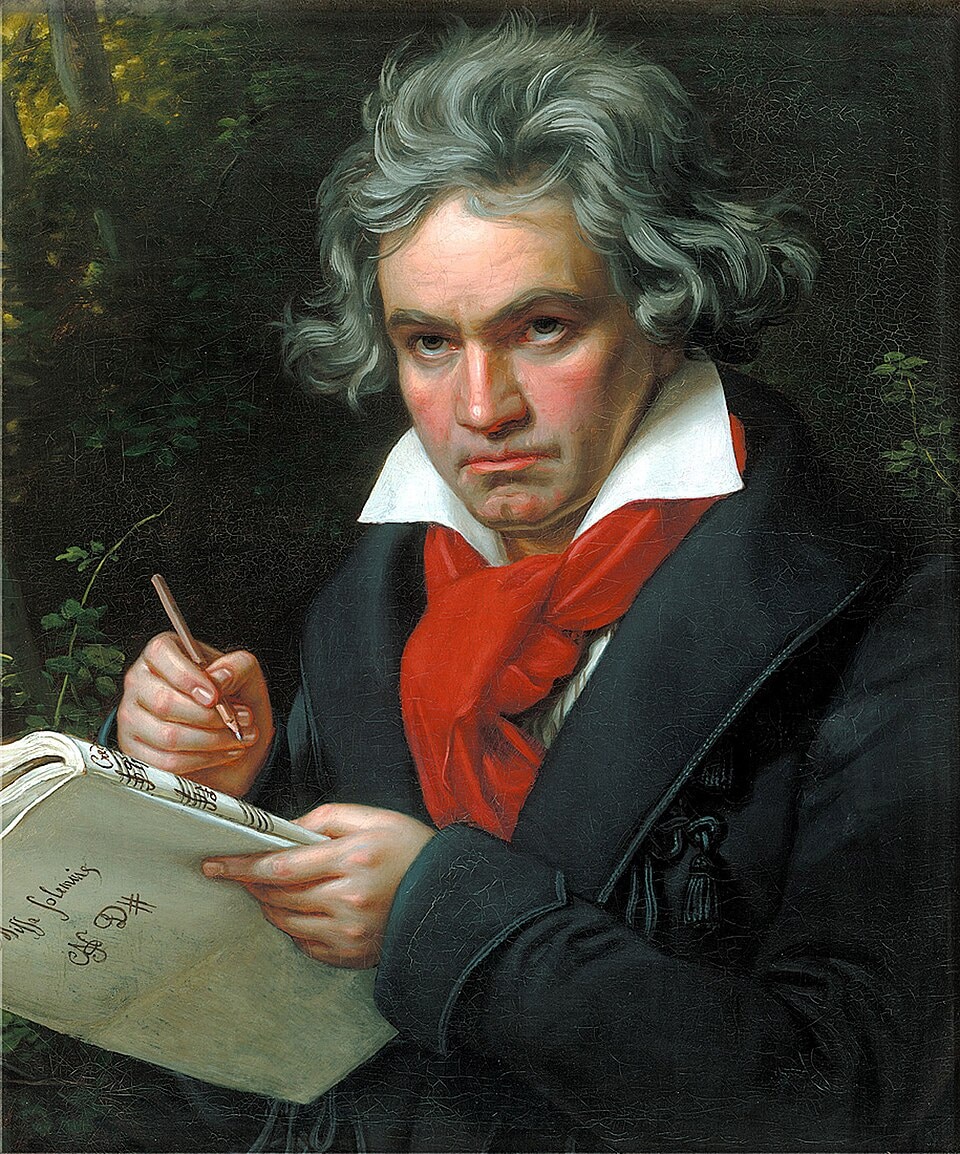
Ludwig van Beethoven was a German composer and pianist whose work bridged the Classical and Romantic eras. He is celebrated as one of the greatest and most influential composers in history, with a body of work that includes 722 pieces cataloged, including 138 songs, 32 piano sonatas, 16 string quartets, and 9 symphonies. His compositions are among the most performed and studied in the world. Beethoven's distinctive style, marked by its innovation, emotional depth, and dramatic power, continues to captivate audiences and inspire musicians globally. His music is cherished for its ability to convey a vast range of human emotions, from profound sorrow to exultant joy, making him a timeless figure in classical music.
Early Life & Background
Ludwig van Beethoven was born on December 16, 1770, in Bonn, Electorate of Cologne. He showed extraordinary musical talent at a very early age, specifically by age four. His father, Johann van Beethoven, a German composer, recognized this precocity and began teaching him music with extreme rigor. Johann harbored ambitions of replicating the success of other child prodigies, notably Mozart, and his teaching methods were notoriously harsh. Accounts describe Johann as a strict and tyrannical teacher who incorporated corporal punishment as a regular part of his son's early musical education. Young Ludwig was sometimes pulled from his bed at night to practice until he cried, enduring an upbringing designed to cultivate his prodigious gifts through relentless discipline.
Beethoven gave his first public performance at age seven in March 1778. By age ten, he left school entirely to dedicate himself to full-time music study. He began formal instruction with Christian Gottlob Neefe, the esteemed Court Organist, who not only taught him organ but also provided crucial guidance in developing his first compositions. His initial published work, a set of variations, appeared in 1782, followed swiftly by three substantial keyboard sonatas in 1783, signaling his emerging talent. In 1787, at age 17, Beethoven embarked on a journey to Vienna, hoping to further his studies with the legendary Mozart. However, his stay was cut short after less than two weeks when he received urgent news of his mother's grave illness, compelling him to return home. She died soon afterward, leaving Beethoven, still a teenager, with the heavy responsibility of caring for his two younger brothers.
Four years later, in 1792, Ludwig van Beethoven, then 21, returned to Vienna. By this time, Mozart had passed away the previous year, so Beethoven instead studied under the tutelage of Joseph Haydn and later with Johann Georg Albrechtsberger . He quickly established a formidable reputation in Vienna as a virtuoso pianist, captivating audiences with his skill. His first major works, the three Piano Trios Op. 1, were published in 1795, marking a significant milestone in his burgeoning career. This was closely followed by the release of the acclaimed Pathétique Sonata in 1798, solidifying his position as a rising star in the classical music world.
Career Growth
Beethoven burst onto the scene in 1795 with his first two piano concertos and three piano trios Op. 1, supported by various aristocrats. The Pathétique Sonata followed in 1798, and the First Symphony premiered in 1800. The Moonlight Sonata, dedicated to Countess Giulietta Guicciardi, was composed in 1801.
His middle period began around 1802 with the Eroica Symphony, premiered in 1805, shattering conventions with its scale and emotional depth. The Fifth Symphony premiered in 1808 and remains one of the most recognizable pieces in all music. Other major works from this period include the Violin Concerto (1806), the Emperor Piano Concerto (1811), and his only opera Fidelio, which premiered in 1805 and underwent several revisions.
From 1812, Beethoven entered his late period, producing some of his most profound and innovative music. The Missa Solemnis and Ninth Symphony, both premiered in 1824, pushed boundaries, the Ninth was the first major symphony to incorporate a choir and solo voices. His late string quartets, including the monumental Große Fuge, are considered pinnacles of the chamber music genre. Beethoven was one of the first musicians to live mainly from his compositions without depending on patrons, foreshadowing modern music copyright practices.
Career Timeline
Public Image & Style
Beethoven is often portrayed as a tormented genius, intense and brooding, especially in later life as his deafness worsened. His revolutionary style bridged the Classical and Romantic eras, and his dramatic, emotionally powerful works have made him one of the most iconic figures in Western music. Classical music enthusiasts worldwide celebrate his birthday on December 16 or 17. His music is performed by orchestras globally, and his image appears on countless stamps, coins, and banknotes. The Beethoven-Haus museum in Bonn preserves his birthplace and legacy.
Fame & Fandom (iFAMOUS Rankings)
The audience for Ludwig van Beethoven has never formed a single, organized tribe with a shared name or digital rallying cry. His legacy rests not on modern fan campaigns or viral hashtags, but on the enduring devotion of scholars, musicians, and classical enthusiasts who treat his scores as living documents rather than static artifacts. While contemporary 2026 events like the Washington Friends of Music summer festival or new opera productions of Fidelio generate institutional attention, these remain commemorative acts by cultural bodies rather than grassroots movements driven by an active subculture. The relationship between the composer and his admirers is complex; recent re-evaluations even describe his personal character as toxic despite the profound emotional support he offers listeners. His legends are defined by physical moments rather than online trends: the deaf pianist turned around to see the crowd's applause during the Ninth Symphony premiere, or the defiant refusal to bow to an archduke who claimed priority over the artist's work. These stories cemented his status as a pioneer who shifted the composer from a servant to a genius. Today, the world measures his reach through global metrics that track media coverage, search activity, and consumption signals worldwide. According to the iFANN Global Fame Rankings, he stands as the 112th most famous person in the world, holding steady from the previous cycle. In his homeland, he ranks as the 8th most famous person in Germany and the 3rd most famous person from Germany. Across Europe, he sits at the 44th most famous person in Europe. Most notably, he holds the top spot as the 1st most famous person in Classical, maintaining this position without fluctuation.
Interesting Facts and Legends
Beethoven's exact birth date remains a mystery; only his baptism on December 17, 1770, is recorded, though he personally considered December 16 his birthday. During the Napoleonic invasion of Vienna in 1809, he hid in a friend's basement during bombardments to finish his Symphony No. 5. He struggled significantly with math and spelling, leaving school at age 10 to focus entirely on music while enduring abusive teaching methods that included having him pulled from bed at night for practice. A story often retold from his youth captures his sentiment: "music comes to me more readily than words." Legends surrounding his life include the dramatic stormy Monday in March 1827 when he passed away after a long illness. Recent scientific developments revealed surprising insights into his DNA, offering new theories about his health decline. While some retrospective analyses describe his personal character as toxic despite his genius, the most enduring legend focuses on his transition between the Classical and Romantic eras. His compositions, particularly the universally recognized Symphony No. 5 in C Minor, Op. 67, achieved a legendary status beyond almost anything ever seen in Western music, cementing his place as a timeless figure whose work conveys profound sorrow and exultant joy.
Notable Quotes
“I will seize fate by the throat; it shall certainly never bend me completely.”
“Music is the mediator between the spiritual and the sensual life.”
“What I have in my heart and soul, must find a way out. That's the reason for music.”
“Music comes to me more readily than words.”
Family & Personal Life
Beethoven was the grandson of Ludwig van Beethoven the elder, a musician from Mechelen who moved to Bonn and became Kapellmeister at the court of Clemens August. His father Johann van Beethoven worked as a tenor in the same musical establishment and gave keyboard and violin lessons. His mother Maria Magdalena van Beethoven was described as a gentle and kind woman. Beethoven was the eldest surviving child; several siblings died in infancy, but two younger brothers, Caspar Anton Carl and Nikolaus Johann, survived to adulthood. Beethoven never married and had no known children.
Notable Connections
Beethoven studied under Joseph Haydn in Vienna and earlier under Christian Gottlob Neefe in Bonn. He also studied counterpoint with Johann Georg Albrechtsberger. His patrons included Archduke Rudolph, Prince Karl von Lichnowsky, and Prince Lobkowitz. He set poems by Friedrich von Schiller and Johann Wolfgang von Goethe to music. His romantic interests included Countess Giulietta Guicciardi and Therese Malfatti.
Relationships & Dating History
Beethoven never married but had several documented romantic attachments. Around 1800–1802, he was deeply in love with Countess Giulietta Guicciardi, to whom he dedicated the Moonlight Sonata. The relationship never progressed due to social class differences, she was an aristocrat, he a commoner. She later married Count Gallenberg.
From about 1804 to 1807, he was involved with Countess Josephine von Brunswick, a widow with children. He wrote passionate letters to her, but again social class prevented marriage. In 1810, he reportedly proposed to Therese Malfatti but was rejected; he dedicated Für Elise to her. In 1812, he wrote a famous ten-page love letter to an unnamed "Immortal Beloved" while in Teplitz. The recipient's identity remains disputed, leading candidates include Antonie Brentano, Josephine von Brunswick, or Giulietta Guicciardi. No relationship materialized. As of his death in 1827, Beethoven was single with no known children.
- RumouredCountess Giulietta Guicciardi1800 - 1802Beethoven dedicated the Moonlight Sonata to her; relationship ended due to social class differences.
- RumouredCountess Josephine von Brunswick1804 - 1807Beethoven wrote passionate letters; she was a widow with children; social class prevented marriage.
- RumouredTherese Malfatti1810 - 1810Beethoven reportedly proposed marriage but was rejected; dedicated Für Elise to her.
- RumouredUnknown 'Immortal Beloved'1812 - 1812Beethoven wrote a ten-page love letter to an unnamed woman; identity remains disputed.
Death & Aftermath
Died
March 26, 1827 (aged 56)
Death Place
Vienna, Austria
Cause of Death
Liver failure resulting from chronic liver disease, likely cirrhosis, complicated by pneumonia
The afternoon of March 26, 1827, settled over a Vienna apartment at the Mehlgrube. Ludwig van Beethoven lay bedridden in his final days, delirious and suffering from violent coughing fits that had brought him to vomit blood weeks earlier. He passed away around 5:30 PM, ending a life marked by profound physical decline. A post-mortem examination conducted shortly after his death revealed an enlarged, hard liver scarred by chronic disease, complicated by pneumonia and a massive accumulation of fluid in the abdomen. Public reaction arrived immediately and with overwhelming force. An estimated 10,000 to 20,000 people lined the streets of Vienna on March 29, 1827, to accompany the coffin to St. Marx Cemetery, a turnout unprecedented for a non-royal figure. Franz Schubert, a close friend and fellow composer, served as a pallbearer and walked behind the casket during the service, which featured Mozart's Requiem and excerpts from Beethoven's own works.
The event triggered an immediate surge in the publication and performance of his compositions, solidifying his status as a cultural icon. His remains rested initially in the private grounds of St. Marx before being exhumed in 1863 and reinterred in the Zentralfriedhof following a campaign by admirers. Posthumous management of his legacy involved complex legal battles over royalties handled by his nephew Karl, while foundations and scholarships eventually emerged to honor his name. Recent DNA analysis has since provided scientific confirmation regarding the genetic markers linked to his liver disease and hearing loss.
Net Worth (Estate Value)
$10 Million
iFANN Editorial Team estimate
When Ludwig van Beethoven died in 1827, he left behind a modest estate consisting of musical manuscripts, furniture, and personal effects. His music entered the public domain in 1857, meaning no ongoing royalties accrue directly to his estate today. Revenue streams now flow through the Beethoven-Haus museum in Bonn, which generates income from visitors and licensing of his name and image. Posthumous recordings and performances continue to generate royalties for performers and publishers rather than the estate itself. Per iFANN's editorial analysis, the estate value is estimated at around $10 million as of 2026, driven primarily by intellectual property licensing and museum operations.
Awards & Accolades
View 8 records, honours and achievementsKnown For
Symphony No. 5
1808 · composer
Symphony No. 9
1824 · composer
Moonlight Sonata
1801 · composer
Eroica Symphony
1805 · composer
Für Elise
1810 · composer
Keywords
Sources
Quick Facts
- Profession
- composer, pianist, conductor
- Born
- +1770-12-16
- Birthplace
- Bonn
- Died
- +1827-03-26
- Death Place
- Vienna
- Gender
- Male
- Birth Sign
- Sagittarius
Personal Details
- Full Name
- Ludwig van Beethoven
- Height
- 5 ft 4 in (163 cm)
- Education
- Left school at age 10 to study music full-time; studied under Christian Gottlob Neefe, Joseph Haydn, and Johann Georg Albrechtsberger
Frequently Asked Questions
How old was Beethoven when he died?
Did Beethoven ever marry?
What was Beethoven's net worth in 2026?
Did Beethoven have children?
What did Beethoven die of?
Similar People
Join the community
fans discussing